
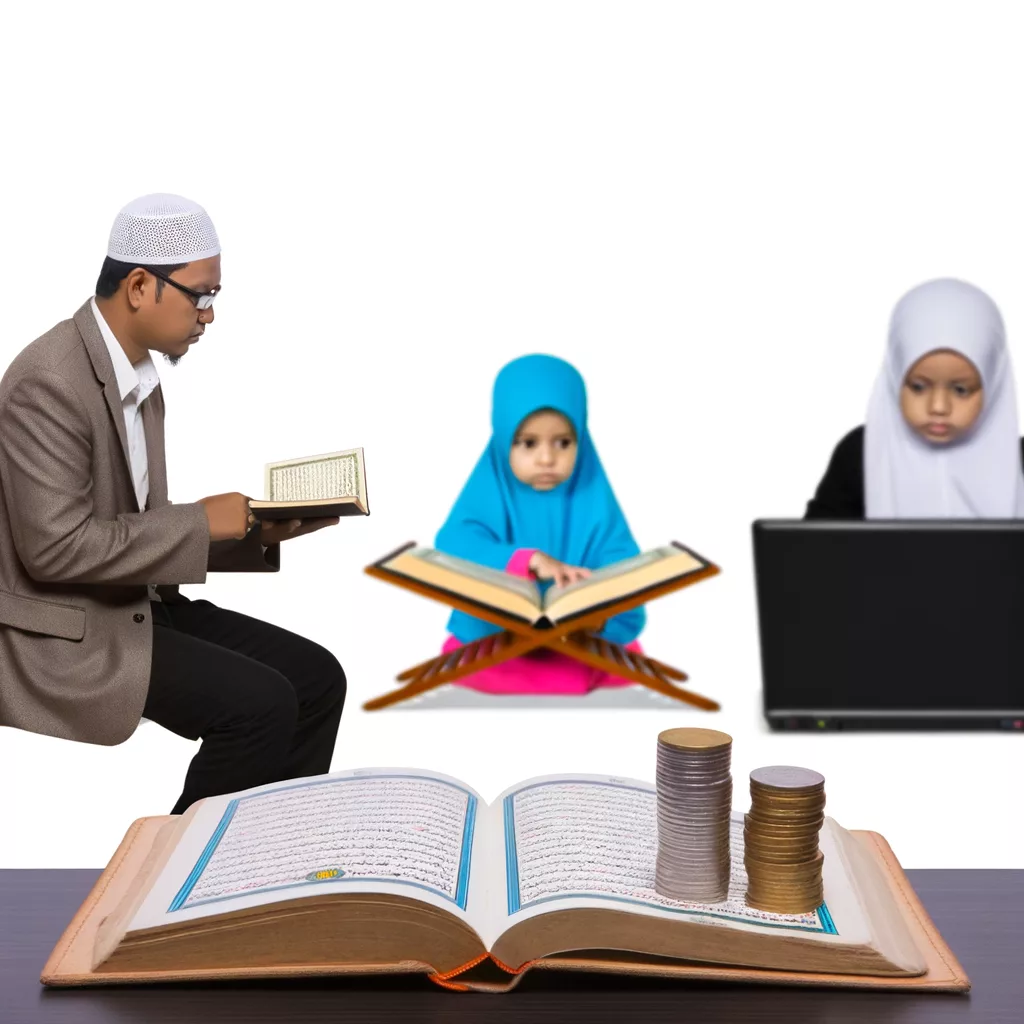
Managing your budget according to the principles of Islamic finance: rediscovering the balance between spirituality and earthly responsibilities
Learning Arabic to taste the wisdom of the Qur’an, meditating on the meaning of the hadiths, performing prayer in Islam with khushu, or passing on the beauty of our spirituality to our children… For many Muslims, these steps embody the living link between faith and daily life. Yet there is one area where this intimate connection between deep beliefs and concrete actions takes on particular significance: the management of money, the family budget, solidarity and financial choices. Far from being a mere accounting operation, organising your finances according to Islamic ethics becomes an act of worship, a path of sincerity in Islam and love of Allah, a test of our ability to combine Muslim faith, discipline and responsibility.
This path often begins with reading the Qur’an in Arabic, with seeking the meaning while listening to a verse on sharing or patience in Islam, or with immersion in the story of the companions of the Prophet who embodied integrity and generosity. It invites us to go far beyond the figures: it is about learning to manage every dinar or euro according to values drawn from the source of Islamic spirituality: justice, moderation (wasatiyya), rejection of usury, honesty, community mutual aid, ecology in Islam and the fight against waste.
Islamic finance thus offers us a soothing vision of our relationship with money. A vision in which zakat, sadaqa and halal trade, but also the education of children in Islam on financial ethics, become powerful means of drawing closer to Allah, acquiring inner peace and building a strong community. Through learning literary Arabic, memorising the Qur’an, and studying fiqh, the sunna, the tafsir of the Qur’an or the sciences of hadith, a whole world of exemplary conduct and clarification of actions unfolds, offering the believer and the Muslim family solid reference points for navigating between dunya and spirituality.
How, then, can we draw living principles from the sacred texts to guide every expense, every investment and every donation? How can we pass on to the new generation, through immersive teaching of the Arabic language and Islamic culture, this ability to combine moderation and generosity, financial intelligence and piety? This journey, immersed in Islamic ethics and the heritage of the Prophet, offers a concrete and luminous answer to the challenge of managing our resources: a return to the essentials, to faithfulness to our Muslim identity, and to serenity in organising our daily lives.
The Spiritual Foundations of Budget Management: When Islamic Finance Meets Spirituality and the Qur’an in Arabic
Budget management, when illuminated by the light of Islamic finance, goes far beyond the simple material organisation of resources. It becomes a living expression of Islamic spirituality, a committed act of faith that respects the teachings of the Qur’an in Arabic and of the Sunna. Learning Arabic and immersing yourself in reading the Qur’an without translation allows you to grasp the ethical scope and subtle wisdom of the verses dealing with wealth, spending, sharing and gratitude towards Allah. The practice of immersion in Arabic, particularly when memorising the Qur’an or through tajwid and the tafsir of the Qur’an, connects the believer to the authentic source of economic guidance: every carefully articulated word recalls the temporary nature of material goods and the moral responsibility of the one who has them at his disposal.
The hadiths relating to the management of wealth – passed on through the science of hadith and the daily example of the Prophet Muhammad, his companions and the ahl al-bayt – insist on sincerity in the use of one’s assets, patience in Islam in the face of fluctuating wealth, sincerity in Islam when giving (sadaqa, zakat), and moderation in Islam (wasatiyya) in consumption and halal trade. Islamic finance, anchored in fiqh and the sharia, forbids usury and selfish accumulation, valuing balance, Islamic solidarity and community mutual aid. Thus, every use of money is no longer just an economic act but an act of worship, part of the dynamic of spiritual well-being and inner peace in Islam.
It is through this ethic, which you fully discover by deepening your literary Arabic and your knowledge of the Islamic sources, that the daily budgeting routine reaches another dimension: that of dhikr, of gratitude, and of controlling anger in Islam in the face of the temptation of excess. It follows in the footsteps of the great figures of Islamic civilisation, from the generosity of the companions of the Prophet with zakat during Ramadan to fair management in the time of the Andalusian caliphate. Learning Arabic, through listening, Islamic reading or exposure to living Islamic culture, rekindles the intention to be a clear-sighted, responsible and sincere steward before Allah – for oneself, one’s Muslim family and one’s Muslim community, and for the preservation of the trust placed in the believer.
Immersion in Islamic Financial Ethics: Learning to Manage Your Finances According to the Sunna, Fiqh and the Practice of Islam
Immersing yourself in Islamic financial ethics is much more than learning rules or prohibitions: it means discovering a whole way of being and of managing your resources, inspired by the Sunna, fiqh and the living practice of Islam. This immersion is reminiscent of learning Arabic, where, in order to understand the Qur’an in Arabic and taste the richness of literary Arabic, it is not enough to translate word for word. It is about feeling, listening and absorbing an overall wisdom in which every financial act, from giving zakat to the effort not to waste, carries within it a dimension of Muslim faith and sincerity in Islam.
When you learn to manage your budget according to the prophetic tradition, you discover how intertwined economic principles and Islamic spirituality are: every expense, every act of sharing and every intention to invest becomes an opportunity to practise gratitude towards Allah and patience in Islam, and to anchor love of the Prophet in daily life. The hadiths and the science of hadith pass on to us the inspiring example of the companions of the Prophet and of the ahl al-bayt, who lived moderation (wasatiyya), Islamic solidarity and the rejection of waste in Islam.
Managing your finances according to these principles also means cultivating a balance that transforms material routine into an act of worship. The scholars of Islam, the fatwas on Islamic finance, and the history of Islamic civilisation, from the Andalusian caliphate to Islamic universities such as Al-Azhar or Zaytouna, remind us that there is a living tradition in which halal trade, Islamic ethics and community mutual aid are intrinsically linked to faith.
This immersive approach fosters a deep awareness: every coin spent, every sadaqa given, every purified intention nourishes Islamic spirituality and the believer’s inner peace. Like memorising the Qur’an or seeking khushu in prayer (salat), Islamic financial management then becomes a training ground for morality and purification of the heart, in harmony with the Friday prayer, Islamic invocations, or the cycles of Ramadan and hajj.
This journey does not belong only to specialists in fiqh or students at Islamic universities; it concerns every Muslim couple, every Muslim family and every member of the Muslim community who wishes to align their material resources with their spiritual well-being and the ethics inherited from the Prophet. By adopting this immersion, you go far beyond simply managing a budget: you shape a meaningful Muslim identity, open to baraka and to the serenity of tawakkul – that serene trust, rooted in history and in the light of the Qur’an, passed on in Arabic and lived in its depth.
From Reading the Qur’an to Daily Application: Zakat, Sadaqa and Economic Responsibility in the Life of the Muslim
Reading the Qur’an in literary Arabic is not limited to an act of devotion or the pursuit of sacred knowledge; in reality, it opens the way to a deep understanding of the great principles governing the life of a Muslim. Through immersion in Arabic, without translation, you perceive the subtlety of terms such as zakat and sadaqa, which go far beyond their simple translation as « alms » or « charity ». Understanding the Qur’an in Arabic means diving into a universe of overall meaning in which every word reveals divine wisdom and shapes our daily practice of Islam.
Zakat and sadaqa, anchored in the Qur’an and the sunna, are not mere one-off acts but a true system of economic responsibility, intended to purify wealth, soothe hearts and create authentic Islamic solidarity. Learning Arabic allows you to grasp the essence of the Qur’anic calls to generosity, sobriety and responsibility towards others. When you memorise the Qur’an, refine your pronunciation through tajwid and deepen your knowledge of the tafsir of the Qur’an, the verses relating to zakat, sadaqa and economic moderation take on a living, active dimension in the believer’s daily life.
The companions of the Prophet, the ahl al-bayt and the scholars of Islam have always taught that wealth is not an end in itself but a means of worshipping Allah through virtuous management and fair redistribution. It is through learning Arabic and regular reading of the Qur’an that you discover the recommended balance: safeguarding your rights, protecting your family, honouring your social commitments, while guarding against avarice and waste, scourges denounced both in the sciences of hadith and in the practice of Sufism and Islamic spirituality.
Integrating these values into the economic life of a modern Muslim requires daily application: calculating zakat, giving sadaqa regularly, supporting the mosque and community mutual aid, and refusing illicit transactions out of respect for Islamic finance and halal food. This practice is reinforced by a living Muslim faith, nourished by sincere prayer (salat), gratitude towards Allah, love of the Prophet and attention to ecology, moderation (wasatiyya) and spiritual well-being. From memorising the Qur’an to social action, managing your budget according to Islamic ethics then becomes a permanent act of worship, a path of inner peace and justice in the service of the community.
Teaching Islamic Finance in the Family: Transmission, Community Mutual Aid and a Model of Immersion for the New Generation
Education in Islamic finance begins first of all at home, where example is embodied and learning becomes natural, almost instinctive. In the Muslim family, passing on the ethical principles of money management allows each member, from childhood, to develop a healthy view of material goods, in harmony with the Muslim faith. This education is limited neither to the theoretical explanation of halal and haram nor to the mechanical repetition of rules drawn from the sharia or fiqh. It relies on immersion in daily life: sharing resources, zakat, sadaqa, transparency, justice and community mutual aid. At the table, in the family business, during an act of generosity or when managing a child’s small budget, every situation becomes a subtle opportunity to teach the deep meaning of Islamic ethics and respect for others.
Passing on these values requires much more than imposing obligations or prohibitions: it is about cultivating sincerity in Islam, right intention and the pursuit of spiritual well-being in every exchange. This living teaching method echoes the method of immersion in Arabic as it is used for learning the Qur’an and the sunna, focused on example, repetition and understanding the overall meaning – without systematically going through translation. Likewise, reading the Qur’an as a family, memorising the Qur’an, and discovering tajwid, the tafsir of the Qur’an and the stories of the companions of the Prophet naturally anchor inner reference points, while opening up the richness of Islamic spirituality.
In this dynamic, money management is an integral part of Islamic education. Through gradual immersion, the child understands what gratitude towards Allah for His blessings involves, the importance of moderation in Islam (wasatiyya), the prohibition of waste, and the encouragement of patience and responsibility in consumer choices. Values as precious as the love of Allah, patience in Islam, modesty and justice in relationships find their echo in simple gestures: giving sadaqa, taking part in an Islamic solidarity project, discussing the meaning of zakat or getting involved in Muslim volunteering.
Family transmission is the foundation on which a close-knit and conscious Muslim community can be built. Each person, at their own level, becomes the living model of what they teach. This approach, similar to immersion in Arabic without translation, invites the new generation to fully embody the principles of Islamic finance, not out of obligation but out of coherence and love of the good. It thus prepares children and young people to build, tomorrow, homes founded on ethics, justice and respect, as responsible actors in both halal trade and community mutual aid, inspired by the Qur’an in Arabic and the tradition of the scholars of Islam.
In the contemporary world, where the temptation of consumerism and individualism lie in wait for every home, reconnecting with this immersive teaching method offers a peaceful way to shape fulfilled families, balanced Muslim children and Muslim youth anchored in their spirituality. Teaching Islamic finance in the family means passing on a benefit that touches every dimension of life: faith, the practice of Islam, relationships with others and attachment to the prophetic model, for happiness in this world and the balance of society as a whole.
Further reading: discover our online Arabic courses for adults, or also read “Learning Arabic in the light of the Prophet’s sira” and “The best books for understanding hadith and the sunna“.
Conclusion
Managing your budget in the light of Islamic finance is much more than a question of calculation or material foresight. It is a journey that intimately links every act of management to the Muslim faith and Islamic spirituality. By immersing ourselves in the principles drawn from the Qur’an in Arabic and the prophetic sunna, we rediscover this unique link between the enrichment of our earthly goods and the elevation of our souls. Zakat and sadaqa, which reading and memorising the Qur’an place at the heart of spiritual life, then become gestures anchored in gratitude towards Allah, community solidarity and the overall well-being of the Muslim.
This immersive approach, inspired by the authentic transmission of the science of hadith and of fiqh, invites us to learn Arabic, to deepen our understanding of the Qur’an in Arabic and to live Islamic ethics fully in our daily financial decisions. Learning literary Arabic, without the barrier of translation, thus allows you to enter into the depth of the Qur’anic teachings and grasp all the subtlety of notions such as justice, equity (adl), sincerity (ikhlâs) and patience (sabr) in the practice of Islam.
Within the family, passing on these values becomes a founding act of Islamic education, a model of immersion for Muslim children, a foundation of living Islamic culture linking the generations. From the earliest age, it helps to build a serene, aware Muslim identity, engaged in society and able to meet the challenges of the modern economy, in the spirit of wasatiyya and moderation advocated by the Prophet and the companions of the Prophet, in harmony with the tradition of the ahl al-bayt and the heritage of the scholars of Islam.
Adopting Islamic finance therefore means placing every expense and every economic choice within a spiritual routine that nourishes inner peace, confidence in tawba, the strength of du’a and constant awareness of the Love of Allah. This way of life, in which we pay attention to the ethics of halal trade and to halal food, while rejecting waste and valuing generosity, reminds us that no wealth is lasting unless it is purified by zakat and illuminated by sincerity in Islam.
Whether it is Ramadan, preparing for hajj or the daily life of the Muslim couple, managing the budget by the standard of Islam weaves a new coherence between our material ambitions and our spiritual quest. It is a path of balance, peace and gratitude, in which every dinar spent or saved becomes an opportunity to draw closer to Allah, to work for one’s community and to pass on a heritage of love, respect and light to future generations. On this journey, learning Arabic and immersing yourself in its beauty open the doors to an intelligence of the heart and mind, to understand the Qur’an from within, taste the sweetness of prayer in Islam, and shape, day after day, a life aligned with the simplicity and greatness of Islam.



