
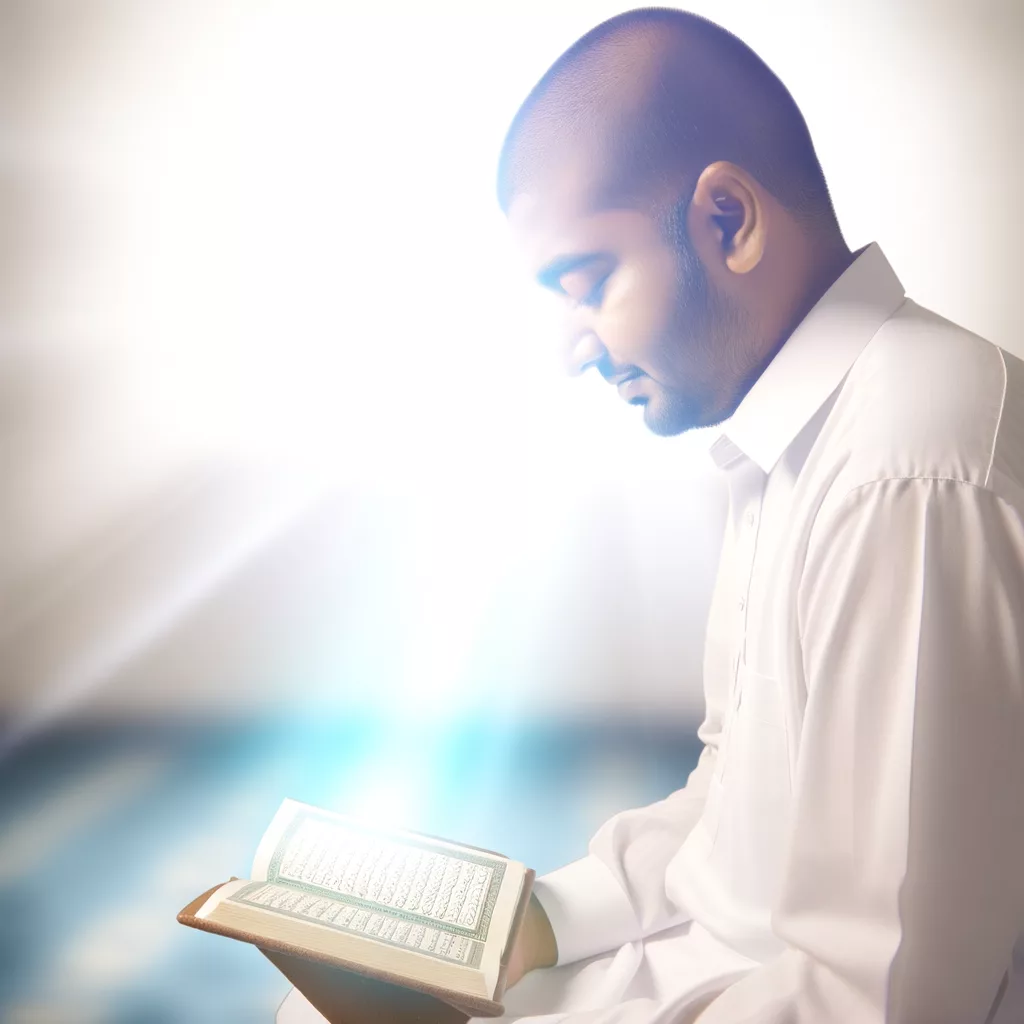
At the heart of the Islamic tradition beats an often overlooked treasure: the purification of the heart. Long before it is a simple duty or an abstract discipline, Islamic spirituality invites every Muslim to question their intentions, to recognise their weaknesses and to seek an authentic closeness to Allah. Yet this inner journey is only possible if you understand the true meaning of the sacred texts – the Qur’an in Arabic and the hadiths of the Prophet, passed down in their original language. Learning Arabic then becomes an essential quest for examining and healing the depths of the soul.
What separates us from sincerity in the practice of Islam and from khushu in prayer? Why, despite our invocations, our reading and our efforts, do certain spiritual diseases such as pride, heedlessness or anger persist in our hearts? Perhaps we have not yet tasted the power of reading the Qur’an in Arabic, of immersion in literary Arabic or of an intimate understanding of dhikr and du’a. Perhaps we have approached the Muslim faith through the surface of words, without diving into the ocean of their deeper meaning.
Exposing yourself to Arabic without translation, hearing the verses of the Qur’an resonate, savouring the science of hadith, rediscovering the meaning of the invocations handed down by the sunna: this opens the way to an authentic inner purification. Learning Arabic then becomes much more than a simple language project: it turns into a process of tawba (repentance in Islam), of gratitude to Allah, of love for the Prophet, and a bridge towards true patience in Islam.
Immersion in Arabic thus offers a unique doorway to understanding the Qur’an, tajwid and memorising the Qur’an, but also to the tafsir of the Qur’an and the diagnosis of the diseases of the heart, illuminated by the wisdom of the scholars of Islam, the companions of the Prophet and the ahl al-bayt. This process, at once intellectual, spiritual and emotional, irrigates the whole life of a Muslim: from prayer in Islam to the Islamic education of children, from Ramadan to hajj, from the adhan to Islamic solidarity.
In a world shaken by stress, distraction and the search for meaning, purifying your heart according to the prophetic way means finding inner peace (salām), rediscovering the original light of the fitra and living an embodied, deep and serene faith. This journey begins with a simple key, available to everyone: learning Arabic, to open within us the doors of divine mercy and reconnect with the beauty of Islam in all its depth.
Purification of the heart: the key of Islamic spirituality for understanding the Qur’an and living the practice of Islam
The purification of the heart holds a central place in Islamic spirituality and is the indispensable starting point for anyone who wishes to reach a deep understanding of the Qur’an and a living practice of Islam. By cultivating a pure heart, the believer opens up to the light of Allah, to an authentic faith, to sincerity in dhikr, du’a and prayer in Islam, a prayer in which khushu settles, transforming every salat into a moment of intimate connection with the Creator. Purifying your heart also means preparing your soul to receive the divine teachings conveyed by the Qur’an, whether through daily reading of the Qur’an, memorising the Qur’an, or the study of tajwid and the tafsir of the Qur’an. Yet this intimate access to the meaning of the Qur’an in Arabic only comes fully with learning Arabic, especially literary Arabic, through immersion in Arabic. Learning Arabic without translation, steeping yourself in the language as the companions of the Prophet and the ahl al-bayt did, means rediscovering the authentic spirit of the sunna: the ability to feel, meditate on and love the Word of Allah in its original form. This inner purification is then reflected in every dimension of Muslim spiritual life: patience in Islam, gratitude to Allah, repentance and tawba, but also in the way you live within the Muslim community, solidarity, respect for the family, the Muslim couple, the education of children in Islam, or taking part in the great occasions such as Ramadan, hajj, eid al-fitr or eid al-adha. The pure heart thus becomes the clear mirror in which the values of Islamic civilisation are reflected, whether through Islamic reading, the transmission of hadiths and the science of hadith, or in Islamic conduct, good akhlaq, modesty, inner peace and the search for spiritual well-being. Without constant purification, it becomes difficult to approach the sira of the Prophet, the teachings of the scholars of Islam and the richness of the history of Islam with depth, humility and openness. The purification of the heart, supported by gradual and immersive Arabic learning, opens the door to a fulfilled spiritual life, in the service of the love of Allah and the love of the Prophet, and to a living and transformative understanding of the Qur’anic message.
Spiritual diseases in the light of the Qur’an in Arabic and the hadiths: learning Arabic to diagnose and heal them better
When we reflect on the purification of the heart and the healing of spiritual diseases such as jealousy, pride or excessive attachment to this lower world, how can we not return to the authentic sources of Islamic spirituality? Learning Arabic then becomes an irreplaceable key for diving into the understanding of the Qur’an in Arabic and of the hadiths in their original depth. For it is through reading the Qur’an, illuminated by the tafsir of the Qur’an and by memorising the Qur’an according to the rules of tajwid, that we discover the subtle map of our inner states: Allah speaks of sealed hearts and of the disease (marad) of the heart, and offers precise remedies, while providing living examples in the sunna of the Prophet and the sira of the Prophet, as well as through the experience of his companions and the ahl al-bayt.
But how can we diagnose these diseases precisely if we settle for a translation, which is imperfect by nature? Immersion in Arabic, without a filter, lets you feel the force of the words, the nuance of the warnings, the hope contained in each exhortation. It is by understanding literary Arabic, the language of the Qur’an and of the sciences of hadith, that you truly gain access to the living teaching on sincerity in Islam (ikhlas), patience in Islam (sabr), tawba (repentance) or the humility required to reach inner peace in Islam. Islamic invocations (dhikr and du’a) then take on a new flavour: reciting them in the language of the Revelations awakens a deep resonance and sets the believer’s whole spiritual routine in motion.
Learning Arabic is therefore not a mere tool, but a journey that touches the very essence of the Muslim faith. When you savour the verses on gratitude to Allah, on modesty in Islam, on anger in Islam, or on the values of Islamic solidarity, your whole Muslim spiritual life is transformed. Daily practices, from prayer in Islam to jumu’a, through Ramadan and Islamic reading, are enriched with a new light. The ability to understand the Qur’an in Arabic, to live the sunna authentically and to anchor yourself in the tradition of the scholars of Islam becomes the best antidote to the troubles of the soul, offering reference points, strength and guidance on the way to a pure and peaceful heart.
Immersion in Arabic and reading the Qur’an: rediscovering the meaning of khushu in prayer and dhikr
In the quest to purify the heart, immersion in Arabic and reading the Qur’an hold a central place in rediscovering true khushu in prayer and dhikr. Learning literary Arabic, without going through the mediation of translation, directly opens the doors to the original and deep meaning of the Qur’an in Arabic. When the sacred words resonate in their first language, the nuances of tajwid, the rhythmic beauty and the semantic richness of the text reveal a spiritual dimension of unequalled intensity. During the salat or dhikr, familiarity with the Qur’anic language transforms listening and recitation into a lived experience, in which every verse touches the heart even before it is fully understood intellectually.
By committing to Arabic learning based on immersion — that is, regular exposure to the language of the Qur’an, the sunna and the hadiths, without relying on word-for-word translation — you foster a more intimate bond with the revelation and with Islamic invocations. Memorising the Qur’an then takes on a whole new flavour: it is no longer a simple memory exercise, but a slow and deep impregnation that shapes the heart and disciplines the soul. Thus, in daily prayers as on great occasions such as Ramadan, Jumu’a or special nights such as Laylat al-Qadr, presence of mind and heart (khushu) is truly nourished by a direct and intuitive understanding of the divine message.
This immersive experience also makes it easier to grasp the meaning of the tafsir of the Qur’an, of the sira of the Prophet and of the words of the companions (sahaba) and the ahl al-bayt, by accessing the exact words passed down through the generations. It sheds light on the practice of Islam and strengthens the Muslim faith by constantly bringing the soul back to sincerity, gratitude to Allah, tawba (repentance) and patience in trials. Understanding the depth of du’a, the beauty of the adhan, or feeling the force of the exhortations of Friday prayer becomes a source of inner stability, peace and fulfilment on the paths of Islamic spirituality.
Thus, learning Arabic through immersion, centred on listening, the resonance of the verses and inner meditation, works silently towards healing spiritual diseases and building an awakened, humble and loving heart, in the image of the prophetic tradition and of Muslim community life.
Learning literary Arabic and the tafsir of the Qur’an: paths to sincerity, gratitude to Allah and inner purification
Learning literary Arabic and exploring the tafsir of the Qur’an open a unique path towards sincerity and gratitude to Allah, essential pillars of the purification of the heart. When you commit to immersion in Arabic, without constantly resorting to translation, the sacred text unveils itself in all its power, its breath and its subtlety. It is the light of the Qur’an in Arabic that illuminates our inner being, revealing the hidden beauty of the divine message, the delicacy of tajwid, the depth of dhikr, and the precision of the Islamic invocations that soothe and reform. Understanding the nuances of the tafsir of the Qur’an, feeling the significance of a word revealed to the beloved Prophet and his companions, tasting the science of hadith and the spiritual trajectory of the Sira: this means reliving the history of Islam at its source, without screen or alteration.
Learning literary Arabic then becomes an inner discipline, a doorway to authentic Muslim faith and living Islamic spirituality. Every verse memorised, every phrase recited with khushu in prayer, every word spoken as part of the practice of Islam shapes the heart, refines the intention and develops an ever-renewed love for Allah and His Prophet. Reading the Qur’an, practised regularly and without a filter, invites tawba, nourishes patience and sculpts gratitude to Allah by offering a direct understanding of the divine exhortations to act well, to forgive, and to humble oneself before His greatness.
This path of purification is not only personal ; it irrigates the bond with the Muslim community, the mosque, the imam, the Muslim family and the universal brotherhood of believers. The Islamic education of children, dialogue within the Muslim couple, and the example passed on to Muslim youth take on a new flavour when you draw directly from the source of the Arabic of the Qur’an. In this way, Islamic reading, dhikr, the Jumu’a salat, and the invocations of Ramadan or hajj come alive with heightened attention, genuine humility and unwavering inner peace. Learning Arabic through immersion means nourishing your spiritual health, opening up to the wisdom of the scholars of Islam and to the subtleties of fiqh and aqida, and taking part in passing on a deep Muslim identity, rooted in tradition yet alive today, in the love of the Qur’an and the light of the sunna.
To go further: discover our online Arabic classes for adults, or also read “Learning Arabic through Muslim culinary traditions” and “Learning Arabic and strengthening your Muslim identity in the digital age“.
Conclusion
Over the course of this journey to the heart of spiritual purification, a gentle but powerful truth emerges: learning Arabic, in all the depth of immersion in Arabic without translation, is not merely an intellectual pursuit, but a true return to the source of meaning for every Muslim. A living understanding of the Qur’an in Arabic, the exploration of the authentic hadiths of the sunna, and meditation on the sira of the Prophet and his companions open the doors to a regenerated Islamic spirituality. It is there that the diseases of the heart are no longer abstract concepts, but become tangible, identifiable and—by the grace of Allah—curable.
Reading the Qur’an and memorising the Qur’an, carried out in the original literary Arabic, restore khushu in prayer and reawaken the forgotten echo of Islamic invocations (du’a, dhikr). Through learning Arabic and listening attentively to tajwid, the spiritual routine takes on a new taste of sincerity and gratitude to Allah. Repentance (tawba), patience and kindness, drawn from the science of the tafsir of the Qur’an and the luminous example of the ahl al-bayt, breathe life into a serene way of living, always turned towards balance of the heart and inner peace.
Continuous immersion in this noble language shapes the soul, illuminates the practice of Islam in daily life—in the salat, Friday prayer, Ramadan, the call to prayer (adhan), family and community life—and renews at every stage the thread of love for Allah and the Prophet. Reading in Arabic, without a filter, reveals the unique flavour of the narratives, exhortations and wisdom passed down from generation to generation, offering the Muslim community in France and elsewhere a strong identity, anchored in an Islamic civilisation rich in meaning and humanity.
Learning Arabic is therefore no longer a mere academic tool, but a path of inner purification, a living ethic for facing the trials, temptations, stress and anger of daily life, and for nurturing kindness within the Muslim couple, the Muslim family or Muslim youth. It is a path back to the light, where every reader, every reciter, every sincere heart rediscovers the fragrance of spiritual well-being, wonder at Islamic art and sacred calligraphy, and the deep unity of the Muslim community around the Book of Allah.
Whether it is a matter of enriching the Islamic education of children, strengthening Muslim identity, honouring the memory of the scholars of Islam, or passing on the cultural and ethical treasures of Islamic civilisation, learning Arabic remains the key to a fulfilled spiritual life, guided by the light of the Qur’an, animated by the sunna, and soothed by the certainty that behind every word lie the infinite mercy and wisdom of Allah.



