
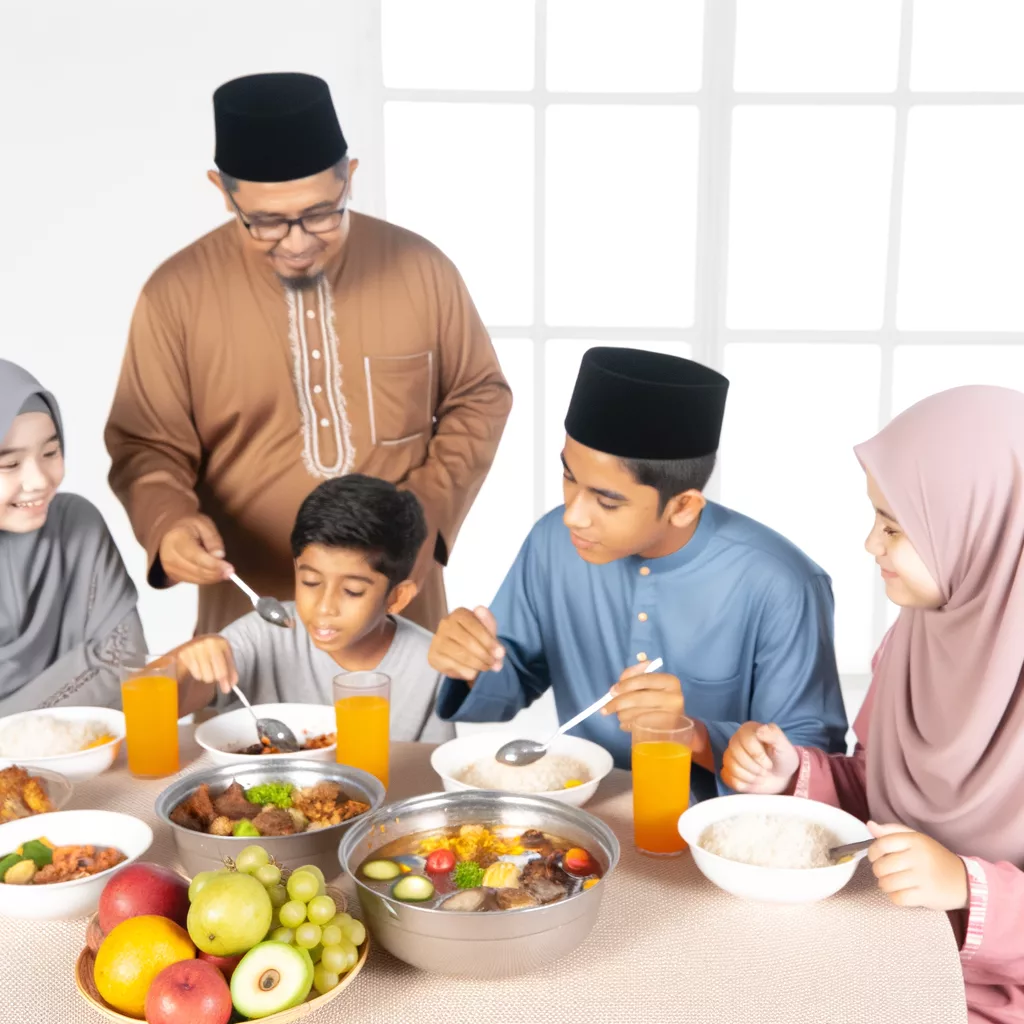
Learning Arabic opens the door to a world of shared flavours, traditions and spirituality, far beyond the letters of the Qur’an or the sacred words of prayer. All over the planet, the Muslim community gathers around a table, weaving invisible bonds between generations, between continents and between hearts, thanks to a cuisine as diverse as its history. Set to the rhythm of Ramadan, the eid festivals, Friday prayer or family gatherings, every dish, every aroma, every gesture recalls a wisdom passed down by word of mouth since the revelation of the Qur’an in Arabic more than fourteen centuries ago. But to be savoured in their depth, these culinary traditions call for a gaze capable of absorbing the meaning, the culture and the faith that bring them to life.
Diving into learning Arabic means embracing precisely this sensory and spiritual immersion: understanding the blessing of shared bread, grasping the gratitude that rises from a simple glass of water after a day of fasting, feeling the beauty of an invocation recited before breaking the fast at maghrib. The words that connect, the expressions that soothe, the intention that purifies every mouthful: all of this reveals itself without translation, through encounters and customs. For learning literary Arabic offers far more than theoretical access to the science of hadith or the sira of the Prophet; it brings to life the transmission of values, of Islamic etiquette, of respect for halal food, of modesty and of gratitude to Allah expressed through a thousand everyday gestures.
In every home, in France as elsewhere, Islamic ethics finds its way into the kitchen: the choice of food, prayer in Islam before and after meals, sharing with those most in need, learning patience and serenity during Ramadan, practising tawba and sincerity in Islam around a table set for breaking the fast. Islamic culture and the history of Islam, from the Andalusian caliphate to the culinary traditions of the Maghreb, Asia or Africa, are expressed in the recipes, rites and vocabulary passed down in their original beauty through immersion in Arabic.
This article invites you on a sensory and spiritual journey through the food practices of Islamic civilisation: from taste to gratitude, from prayer to sharing, from the first mouthfuls when breaking the fast to festive meals, discover how learning Arabic, lived without translation, illuminates daily life and shapes a deeply living Muslim identity. Together, let us explore how food, when it is in tune with the rhythm of faith, becomes a true language of the heart, a means of transmission, renewal and inner peace, woven over the centuries by the Muslim community the world over.
When cooking brings people together: immersion in Arabic and culinary traditions at the heart of the Muslim community
Sometimes all it takes is a set table, fragrant dishes or a shared plate to feel the heart of the Muslim community beating around you. Cooking, in its unifying dimension, weaves invisible bonds that go far beyond simply sharing food: it shapes a common memory, strengthens Muslim identity and gives flesh to Islamic spirituality in daily life. During Ramadan meals, the evening iftar or the feasts of eid al-fitr and eid al-adha, the diversity of culinary traditions reflects the richness of the history of Islam, from the Andalusian caliphate to the steppes of Central Asia, from the Maghreb to Indonesia. Around these convivial tables, immersion in Arabic takes on its full meaning: you savour the conversations, discover culinary terms, Islamic invocations (du’a) before and after the meal, and traditional, universal formulas of gratitude to Allah. Bringing the Muslim family together, talking across generations, recalling the sira of the Prophet, telling anecdotes of the companions of the Prophet or the ahl al-bayt: all of this often happens through the Arabic language, which carries the memory of the Qur’an and the sunna. Muslim children thus naturally absorb the sounds and poetry of the Qur’an in Arabic, the melodious tajwid and the intimacy of dhikr. More than a linguistic transmission, learning Arabic in these shared moments, without translation, nourishes patience in Islam, sincerity in Islam and khushu in prayer ; it becomes a precious key to understanding the Qur’an and the hadiths, celebrating the Muslim calendar, and practising Islam in its full community and spiritual dimension. Cooking, by bringing people together and opening them to others, reminds us that literary Arabic, like the culinary arts, is lived first through immersion, practice, listening and meaning, before rules and theory. Thus every moment spent together at the tables of the Muslim community becomes both an act of Islamic solidarity and of Islamic education, a space of spiritual well-being in which the love of Allah, a rooted identity and a taste for knowledge naturally merge.
Tasting the history of Islam: food culture, the practice of Islam and learning Arabic through the centuries
The Muslim table, rich in aromas and flavours, is never limited to the plate: it embodies the continuity of a history, the transmission of a spirituality and the affirmation of multiple identities that have intertwined over the centuries. From the advent of Islam, food rites brought daily life closer to the sacred: sharing bread at the first suhur meals of Ramadan, breaking the fast with dates, invoking Allah before every mouthful; all these culinary traditions weave a living bond between the Muslim faith, Islamic culture and the simple gestures of everyday life. Every meal reveals patience in Islam, gratitude to Allah for the sustenance granted, and sincerity in moderation, values upheld by the sunna of the Prophet Muhammad and the inspiring example of the companions of the Prophet and the ahl al-bayt.
But behind every traditional dish there is also the trace of a language, literary Arabic, which carried the founding texts, transmitted the hadiths and structured the science of fiqh. Learning Arabic means gaining access to a deep understanding of the Qur’an in Arabic, tasting the beauty of tajwid in reading the Qur’an, and entering into the spiritual meaning of Islamic invocations, of dhikr and of the formulas of du’a whispered around a family table. Immersion in Arabic, far from being limited to the study of words, makes it possible to instinctively absorb the cultural and ritual dimension of halal food, to understand the dietary prohibitions in Islam, and to embrace the wisdom of the scholars of Islam on moderation, waste and community solidarity. Learning Arabic through everyday experience, without translation, reminds us that the table is a space where the history of Islam, Andalusian gastronomic refinement, the splendours of Islamic civilisation and the Islamic education of children meet, extending the prophetic tradition into the contemporary world. Tasting the history of Islam thus means nourishing your heart, your reason and your identity, by rediscovering the Islamic spirituality that lives in every adhan called, every zakat shared, every eid festival, and every smile exchanged around a meal.
Ramadan, eid and the cuisine of the Muslim world: understanding the festivals and their flavours in connection with Islamic spirituality
Every year, when the month of Ramadan lights up the Muslim calendar, a symphony of flavours, aromas and Islamic spirituality awakens at the heart of homes around the world. Wherever the Muslim community lives, from the Maghreb to Indonesia, from Senegal to Turkey, fasting in Islam is not merely a suspension of meals; it comes with gestures, recipes and acts of sharing full of meaning, weaving a deep bond with faith. Learning Arabic and immersing yourself in the sacred language here make it possible to grasp the living reality of the maghrib invocations, the du’a whispered at iftar, or the recitation of the Qur’an in Arabic that accompanies the night and the break of day. The foods of Ramadan — braided bread, blessed dates, fragrant chorba, golden sweets — thus become more than food: they are an invitation to patience in Islam, to gratitude to Allah, to moderation and to love of the Prophet, for every mouthful shared is part of the sunna and of the memory of the companions of the Prophet and the ahl al-bayt.
The festivals of eid al-fitr and eid al-adha, high points of the Muslim calendar, also reveal the richness of festive cuisine: tables overflowing with traditional dishes, spiced sweets and meat sacrificed in the name of tawhîd during hajj or umrah recall the history of Islam, the sira of the Prophet and the generosity of zakat. Taking part in these celebrations means reconnecting with the community and solidarity dimension of the practice of Islam, illustrated by sharing food with those most in need, sadaqa, or weaving bonds between neighbours and loved ones. Immersion in Arabic, without the obstacle of translation, opens unsuspected doors to an intimate understanding of the meaning of dhikr, of reading the Qur’an, and of the prayers in Islam said one after another before breaking the fast. Grasping the words of tajwid, tasting the beauty of literary Arabic in the Friday invocations or at the eid prayer, means feeling, far beyond culinary traditions, the sweetness of inner peace in Islam, spiritual well-being, collective joy and the depth of the bond with Allah and the community. Through recipes passed down from generation to generation, Ramadan and the festivals of Islam become a living school of the heart, the soul and the language.
Etiquette, gratitude and halal food: Islamic ethics and the transmission of values through learning Arabic
In the Islamic tradition, every meal becomes an act of faith, of gratitude to Allah and of ethics lived day to day. Halal food is not limited to compliance with dietary rules: it embodies a global vision of life, in which every mouthful recalls the mercy of the Creator and the dignity of the human being. This subtle art of etiquette, passed down from generation to generation within the Muslim community, takes on its full depth when approached through learning Arabic and immersion in Arabic, the language of the Qur’an and the sunna of the Prophet.
Learning literary Arabic gives you access to the ancestral wisdom that permeates the slightest gesture at the table, from the bismillah said before eating to the dhikr of gratitude that punctuates every meal. Through reading the Qur’an in Arabic, the believer discovers the praise of pure and lawful food, the recommendation not to waste, and the notion of tawba and sincerity in all acts, including the simplest. The hadiths of the Prophet – transmitted and memorised through the science of hadith in Arabic without translation – are full of teachings on patience in the face of hunger, generosity towards guests, moderation (wasatiyya) and Islamic solidarity embodied in sharing a meal. Understanding these texts in their original language lets you grasp the full richness of the fiqh relating to halal food, from fair trade to distinguishing the dietary prohibitions in Islam, thus offering a practice rooted in Islamic ethics.
Within the family circle, the education of children in Islam involves the living transmission of this sacred relationship with food. Through immersive Arabic learning, each family member learns to name the blessings received, to thank Allah, to distinguish halal from haram, to be grateful for what is received and to nurture a pure intention in every act. Beyond the table, a whole Muslim identity is built, combining spiritual knowledge, physical well-being and psychological balance. The milestones of Ramadan – a time of awakening of the heart and of fasting in Islam –, the joy of the festivals of eid al-fitr and eid al-adha, and the patience of dhul hijjah during hajj all become privileged moments of renewal, in which Arabic regains its place as the vehicle of Muslim faith, gratitude and the sense of effort.
By delving into the Islamic sources through immersion in Arabic, the believer opens up to the nuances of the tafsir of the Qur’an, the subtlety of Islamic invocations (du’a), and the science of the salat and of khushu in prayer. Food then becomes the living reflection of an embodied Islamic spirituality: every act at the table, every exchange with the Muslim community, every wish for inner peace resonates with the Islamic ethics that the Arabic language helps to revive, from the mosque to the home, from contemplation to shared generosity. Thus the art of eating well in Islam proves inseparable from the art of living together, in the light of a deep gratitude to the Creator, renewed by the original word and the beauty of Arabic.
To go further: discover our online Arabic classes for adults, or also read “Learning Arabic to purify the heart and heal the diseases of the soul” and “Learning Arabic and understanding the Qur’an: the virtues of patience“.
Conclusion
Through the richness and diversity of the Muslim culinary traditions of the world, a universal truth emerges: cooking does not only nourish the body, it heals the soul, weaves the bonds of the community and transmits values handed down for centuries. Beyond the flavours and aromas, every dish tells a story – that of the Muslim faith, of gratitude to Allah, of an Islamic spirituality intimately linked to the practice of Islam and to the collective memory that is carried on from generation to generation.
Living Ramadan, celebrating Eid al-Fitr or Eid al-Adha, sharing an iftar with family or neighbours, respecting halal food: all these gestures are part of a heritage in which the Arabic language holds a precious place. Learning Arabic is much more than understanding written recipes or invocations whispered before a meal. It means accessing the deep meaning of gratitude, strengthening your bond with the sunna, opening up to Islamic culture and discovering the hidden beauty of the words exchanged, the hadiths told, and the Qur’an recited in literary Arabic at the most sacred moments.
Immersion in Arabic, far from being solely an intellectual exercise, then becomes a living bridge between past and present, between East and West, a link that lets you feel the history of Islam in all its closeness. Understanding the Qur’an in Arabic, tasting the wisdom of the sira of the Prophet, drawing inspiration from the science of hadith, grasping the subtle nuances of fiqh, passing on the love of Allah and the Prophet – it all begins with a simple mouthful, a shared word, a smile exchanged around the table.
Muslim culinary traditions, while forming a heritage shaped by faith, Islamic ethics and belonging to a great Muslim community, remind us that learning Arabic is not an end in itself, but a path towards authentic understanding, inner peace and the joy of belonging to a story that is told every day, in every home where people learn to give thanks, to love and to share. Arabic without translation, attentive listening, reading the Qur’an, practising invocations and discovering the treasures of Islamic civilisation: so many ways to nourish the mind and heart, while honouring the memory of those who, before us, wove the bonds of knowledge, generosity and spiritual well-being around a table.
Thus every meal shared, every word learned, every tradition honoured is never insignificant. They are a living form of dhikr, a way of anchoring Islamic spirituality in daily life, of passing on the essence of Muslim identity, and of humbly writing your own story into the great fresco of Islam.



