
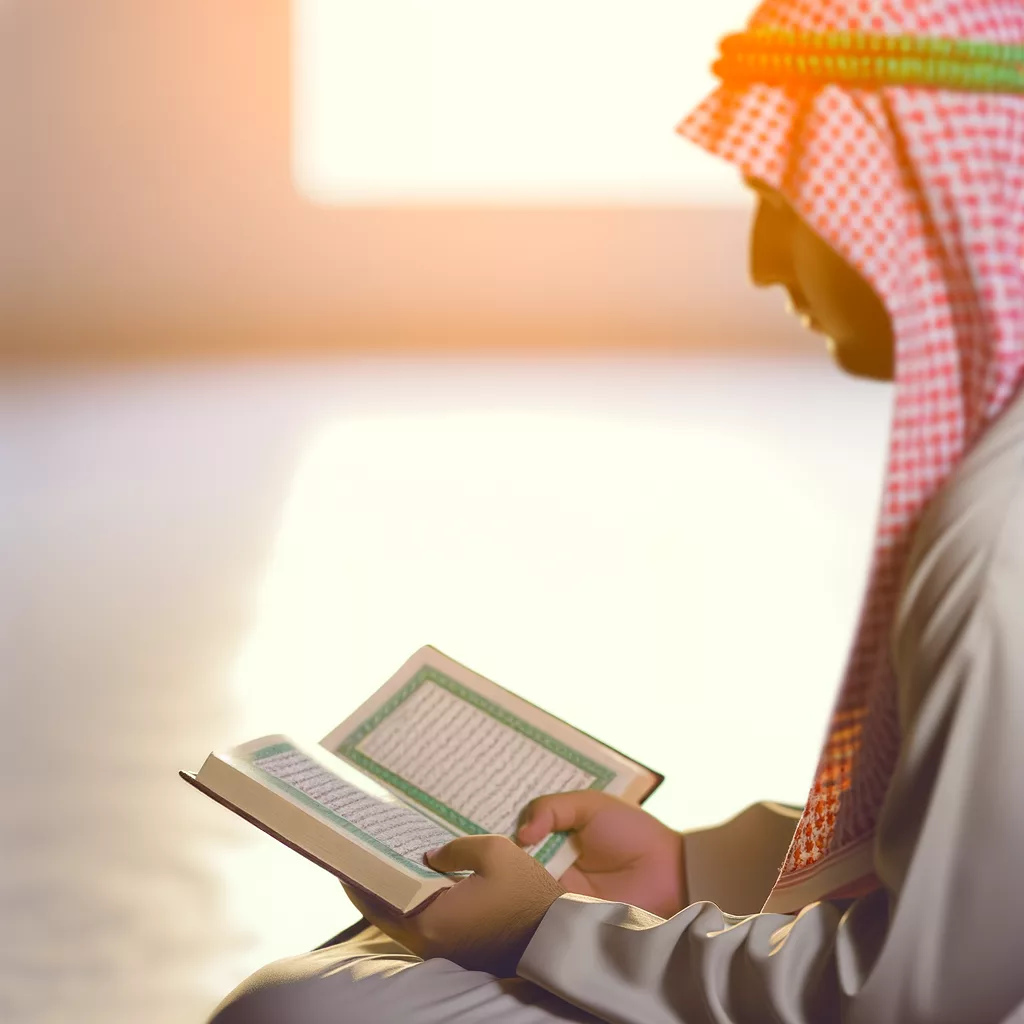
At dawn, the world seems suspended: the first light, the hushed silence, the pure air that for a moment erases the heaviness of the day before. It is in this gentle interlude that many believers draw their spiritual energy and their direction for the whole day. But what would happen if you gave these first hours an even deeper meaning, by linking them to learning Arabic and to discovering the sacred sources directly?
Setting up a morning spiritual routine is far more than working through a sacred schedule. It means offering your heart, your mind and your home an intimate and luminous opening onto the Qur’an in literary Arabic, the authentic hadiths, and prayer in Islam in all its strength and beauty. For learning Arabic, not merely as an intellectual exercise but as a living immersion in Islamic spirituality, transforms every gesture, every word and every breath of the morning.
Imagine waking your mind with the recitation of the Qur’an, savouring the sounds of tajwid, feeling the peace of dhikr, and grasping at the source the meaning of an invocation or a verse – with no intermediary and no translation. This immersion in Arabic, practised day after day, becomes a path towards inner peace, an invitation to the love of Allah and to sincerity rediscovered in prayer (khushu). A path that touches at once your individual spiritual quest, the Islamic education of your children, the vitality of your Muslim marriage and the passing on of the values of Islam to your family.
For many Muslims, in France as elsewhere, learning Arabic remains a sometimes distant dream, held back by the barrier of translation or the fear of difficulty. Yet there is a smoother, more natural way: immersion in Arabic, in which the language becomes the golden thread between you and the divine word, between your daily life and the vast history of Islamic civilisation. Through a well-designed spiritual routine, every sunrise can become an appointment with the light of the Qur’an, the wisdom of the sunna and the inexhaustible gentleness of dhikr.
In the pages that follow, discover how to establish your morning spiritual routine, draw from the source of Islamic knowledge and bring your Muslim faith to life with new freshness and intensity. Because beyond habits, a true inner rebirth very often begins even before the sun rises.
Diving into immersion in Arabic: a morning routine to learn Arabic and nourish your Islamic spirituality
Starting your day by diving into immersion in Arabic turns a simple morning routine into a true act of connection with Islamic spirituality. Even before dawn, with the heart still soothed by the calm of the night, sitting down before a few verses of the Qur’an in Arabic creates a moment in which language and inner light mingle. Learning Arabic without translation from the first hours of the morning gives you the chance to enter the original dimension of the divine message, to feel the rhythm of tajwid, and to taste the incomparable beauty of revealed literary Arabic. This regular exposure, even in small doses, opens the door to understanding the Qur’an, to meditating on Qur’anic tafsir, to listening to hadiths and to studying the sira of the Prophet and of the Companions of the Prophet. By gently feeding your ear with authentic phrases, repeating short passages to memorise the Qur’an, or savouring the sweetness of an invocation in Arabic, you shape not only your religious knowledge but also your deepest Muslim identity.
This immersion in Arabic, lived in the calm of the morning, makes it possible to establish sincerity in Islam (ikhlas) as the foundation of the whole day’s practice of Islam. It is in this atmosphere that patience in Islam is learned, that gratitude towards Allah is cultivated, that the Muslim faith takes root. The heart opens to the love of Allah and the love of the Prophet, while the mind connects the practice of salat, khushu in prayer and Islamic invocations to their original source. Every word heard and repeated becomes a precious pearl, a light for the whole day. Diving into learning Arabic on waking means inviting the Qur’an in Arabic, the sunna and the sciences of hadith to guide your thoughts, emotions and choices, and to soothe your soul in the face of stress or modern uncertainties. Thus the spiritual routine becomes a daily source of inner peace, presence and balance, connected to the deep roots of Islamic civilisation and to the universal beauty of Muslim spiritual life.
Reading and memorising the Qur’an on waking: understanding the Qur’an in literary Arabic from the very first hours
Starting the day by immersing yourself in reading the Qur’an in literary Arabic is far more than a symbolic ritual: it is a deep awakening, an opening of the heart to the light of the divine Word from the very first hours. For those who aspire to understand the Qur’an in its original language, learning Arabic, particularly through immersion in Arabic, turns this morning moment into a source of peace and meaning. Approaching the sacred Book without systematically resorting to translation allows a more natural and spiritual contact with the revelation: every sound and every word of the Qur’an in Arabic resonates differently, carried by the rhythm, the beauty of tajwid and the depth of prophetic language.
Reading the Qur’an on waking is not a mere intellectual exercise; it nourishes the soul and guides the practice of Islam throughout the day. Memorising verses, even gradually, fosters khushu in prayer, strengthens the Muslim faith, develops patience in Islam and inspires sincerity in every act. Through memorising the Qur’an, the heart absorbs the messages that run through the sira of the Prophet, the sunna, and the teachings of the Companions of the Prophet and the ahl al-bayt. This special time fosters gratitude towards Allah and love of Allah and of the Prophet, and nourishes the Islamic spirituality of the whole Muslim family, encouraged by the example of the first believers.
Diving into understanding the Qur’an in literary Arabic on waking also means giving yourself the means to deepen your knowledge of Qur’anic tafsir, to be introduced to the science of hadith, and to revisit Islamic civilisation, Islamic culture and Islamic art. The further you advance in learning Arabic without translation, the more natural access becomes to the major works of the Islamic library and to the words of the great scholars of Islam: Islamic education then takes on its full dimension, connecting past and present and recalling the greatness of the history of Islam, from the Andalusian caliphate to Islamic universities such as Al-Azhar, Zaytouna or Qayrawan.
In a society where the search for meaning and the quest for inner peace are everywhere, establishing a spiritual routine centred on reading and memorising the Qur’an at daybreak offers a compass. It is a path of brotherhood within the Muslim community, an act of spiritual well-being, a source of balance and resilience in the face of stress, racism, Islamophobia or everyday tensions. Every moment of immersion in Arabic built into your morning routine illuminates the practice of prayer in Islam, nourishes Islamic invocations (dhikr, du’a), patience in adversity, modesty and authenticity in conduct (akhlaq).
Thus reconnecting each morning with the Qur’an in Arabic means reconnecting with the life-giving source of faith, hope and universal love. It means working towards excellence – ihsan – in the Muslim spiritual routine, in the practice of salat, in family relationships and in every aspect of modern life, from Muslim youth to Islamic solidarity and the building of a harmonious Muslim identity in France or elsewhere. The choice to learn Arabic and to commit to authentic immersion then makes reading the Qur’an on waking the starting point of a day deeply aligned with the ethics and beauty of Islam.
From dhikr to du’a: invocations and practices to cultivate khushu and inner peace in prayer in Islam
Whether for a seasoned believer or a soul in search of meaning, the morning offers a special space to nourish the heart through dhikr and du’a. From the first moments after waking, the quiet repetition of dhikr – those formulas of gentle remembrance of Allah – acts as a balm for the mind and an anchor for the Muslim faith. SubhanAllah, Alhamdulillah, Allahu Akbar…: these words, when they spring from the heart in literary Arabic, resonate in one’s inner life and introduce the mind to khushu, that presence and concentration essential to prayer in Islam. Learning Arabic then becomes far more than a simple language goal: it is a direct bridge to the deep meaning of the words one murmurs in the morning, without the barrier of translation, in full immersion in Arabic.
Du’a, for its part, is an intimate dialogue with Allah, shaping the spiritual routine and weaving bonds of love of Allah and gratitude towards the Creator. In its authenticity, supplication draws on the sunna of the Prophet and on the invocations of the Companions of the Prophet, taken from the richness of the Qur’an in Arabic and the collections of hadith. Making these original invocations your own by learning Arabic, and pronouncing them with sincerity and humility, invites Islamic inner peace and spiritual well-being from the morning onwards, whether at the mosque, at home or within the Muslim community.
To cultivate khushu in prayer, in reading the Qur’an or in repeating dhikr, it is therefore essential to grasp, even simply, the beauty of each word, each little formula drawn from the Qur’an, the hadiths, and the sciences of Qur’anic tafsir or tajwid. There is no need to wait for perfect mastery: immersion in Arabic, even gradual, frees you from dependence on translation and reveals the subtle flavour of Islamic invocations, such as those of patience in Islam (sabr), repentance in Islam (tawba) or gratitude (shukr). Making dhikr and du’a part of your morning spiritual routine means walking, step by step, towards sincerity in Islam and the deep peace that Islamic spirituality promises.
Letting your Muslim faith shine: the link between a morning spiritual routine, love of Allah and everyday Islamic education
When dawn gently crosses the threshold of our lives, every Muslim feels the instinctive need to align their first actions of the morning with the light of their faith. The morning spiritual routine then becomes fertile ground for letting one’s Muslim faith shine and for weaving a concrete link between love of Allah and everyday Islamic education. This routine is neither a mechanical succession of acts nor a mere ritual, but a silent declaration of belonging, a moment when the heart is filled with Islamic spirituality and gratitude towards Allah from the first moments of the day.
Opening their eyes before dawn, the Muslim encounters their own fragility but also their nobility: the fajr salat, recited with khushu and sincerity, awakens the soul and establishes a confidential dialogue with the Creator. It is in these silent minutes that love of Allah takes root, that one draws the strength of tawba, patience in Islam and full trust in divine mercy. Quiet dhikr, a du’a murmured at dawn or reading the Qur’an in literary Arabic, even just a few verses, plant a soothing certainty in the heart – every word brings one closer to the true meaning of the divine message, nourishes tawhid and refines inner beauty through a living understanding of the Qur’an.
Islamic education takes shape every morning, especially when the routine includes learning Arabic or immersion in Arabic without translation. Learning Arabic in this way, directly exposed to the words of the Qur’an, offers a unique path to absorbing their deep meaning rather than remaining a spectator of an outside translation. Whether you revise the rules of tajwid, explore Qur’anic tafsir, listen to a lesson on the sira of the Prophet, or meditate on the words of the Companions of the Prophet and the ahl al-bayt, everything contributes to shaping an authentic Muslim identity, rooted in the original tradition.
This routine, lived alone or as a Muslim family, makes faith living and visible. Muslim children who grow up watching the Qur’an being read every day and memorised step by step naturally receive Islamic culture and love of the Prophet. The education of children in Islam begins with these repeated gestures, these sincere intentions on waking, through which the Muslim couple and the whole Muslim community build homes where Islam shines even in the simplest habits.
By linking a morning spiritual routine, immersive learning of Arabic, and a conscious opening to the Sunna and the Islamic sciences, the believer gains a shield against the stress of modern life, anchors their identity and enjoys invaluable spiritual well-being. It is a silent invitation to make every dawn the start of a day shaped by the light of Allah, one more step towards inner peace and the growth of Islamic spirituality, at the very heart of the daily practice of Islam.
To go further: discover our programme for learning to read Arabic (adults), or also read “Learning Arabic to rediscover the meaning of the Eid prayer” and “Learning Arabic to ease stress through invocations“.
Conclusion
Setting up a morning spiritual routine means offering your heart an inexhaustible source of balance, light and inner peace from dawn onwards. It also means choosing, each morning, to reconnect with the depth of the Islamic heritage, to draw on the richness of the sacred texts and to let literary Arabic resonate in the rhythm of your daily life. Immersing yourself in learning Arabic at daybreak—through reading and memorising the Qur’an, attentive recitation with tajwid, meditation on tafsir, invocations, dhikr or du’a—nourishes far more than the intellect: it subtly transforms one’s awareness, Muslim faith, love of Allah and closeness to the Prophet Muhammad, peace and blessings be upon him, his noble family and his Companions.
In this silent moment before the bustle of the world, the doors to a real understanding of the Qur’an in Arabic gently open. Immersion without translation, attentive listening and regular repetition bring out the beauty of the divine words and the authentic hadiths. This morning appointment with the Word of Allah makes it possible to anchor Islamic spirituality in prayer (salat) and to refine khushu, patience, sincerity and gratitude. It reconnects every believer with the deep world of the sunna, the sira of the Prophet, the accounts of the Companions and the teachings of the scholars. Thus learning Arabic is not limited to acquiring a linguistic key, but opens the way to a life rich in meaning, emotion and values, a way of life shaped by the Qur’an, the science of hadith, the wisdom of past generations and the tradition of Islamic education.
Adopting this routine means gradually letting your faith shine, along with your love of Allah, Muslim brotherhood and a sense of community, from the mosque to the family, from the couple to circles of Muslim youth. It means passing on to each generation the beauty of literary Arabic and the richness of Islamic civilisation; it also means sowing the seeds of kindness, modesty, rigour and inner peace in a world often unsettled by doubt or distraction.
In the light of the morning spiritual routine, Muslim identity blossoms in all its delicacy and wisdom, between living tradition, the aspiration to inner peace, and the sincere desire to understand, to love and to live one’s faith fully, through the practice of Islam in all its depth. Learning Arabic and cultivating this intimate connection with the Qur’an and the sunna every day means moving humbly towards the soothing joy of closeness to the Divine, with the certainty that every small step taken in the morning is a seed sown for eternity.



