
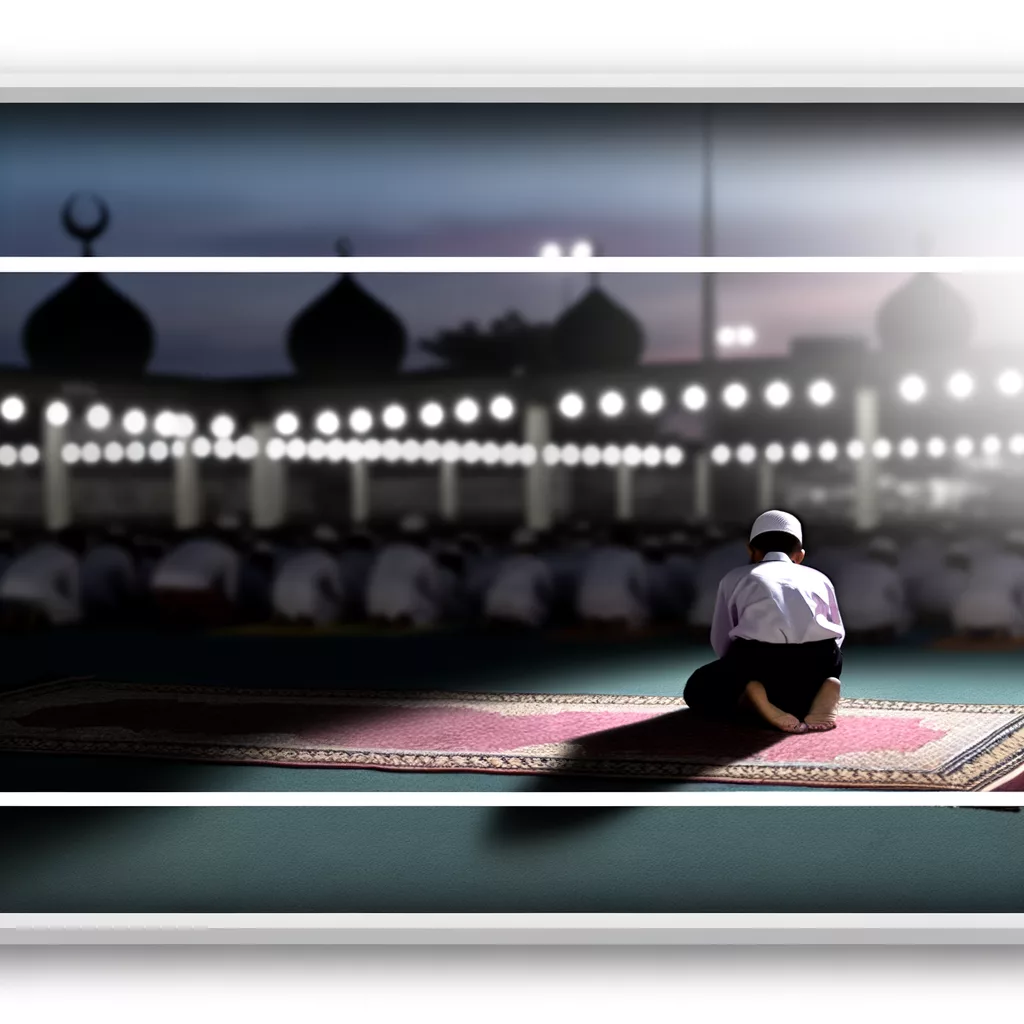
The morning light brushes faces, hearts tremble with hope, and everywhere greetings full of fervour ring out: the Eid prayer, a moment of unity like no other, rises every year in the lives of Muslims. This prayer, distinct and majestic, is not just one liturgical act among others. It carries the narratives of the Qur’anic tradition, the memory of the Prophet Muhammad, thankfulness to Allah, and the deep sense of belonging to a community that shares the Muslim faith in its most authentic splendour. Beyond the rite, Eid gathers, consoles, reconciles and renews the soul in gratitude and brotherhood. But how many of us truly taste the depth of the words recited, of the invocations spoken, of the dhikr vibrating between each takbir ?
Learning Arabic means crossing the threshold that separates distracted listening from living understanding; it means embracing the essence of the Eid prayer without filter or barrier. For immersive learning of literary Arabic opens unsuspected horizons: it offers the fragrance of the Qur’an in Arabic, the flavour of a sunna passed down without alteration, the joy of prayer in Islam lived with khushu — that presence of heart so eagerly sought. Understanding every word and every intonation of the Eid salat means approaching the realm of sincerity, patience and gratitude to Allah. It becomes an act of tawba, a rebirth, an inner peace.
On this journey, we will explore why the Eid prayer resonates so powerfully at the heart of Islamic spirituality. We will discover how immersion in Arabic, without systematic recourse to translation, brings to life the meaning of the Qur’an and the hadiths, the beauty of du’a and Islamic invocations, and transforms the spiritual routine of the Muslim community. From Muslim children enchanted by the songs of Eid to the scholars of Islam meditating on the wisdom of the tafsir of the Qur’an, Eid embodies the collective memory, the kindness of the Prophet towards his family (ahl al-bayt) and his companions, and Islamic history and culture in all their nuances.
Follow this path towards understanding and light, to the rhythm of the Muslim calendar, so that the Eid prayer is never again a mere gesture, but an inexhaustible source of love of Allah, inner peace, and rootedness in the great brotherhood of Islam, lived and felt in its true greatness.
The Eid prayer: an act of Islamic spirituality between Qur’anic tradition and community
The Eid prayer, whether for Eid al-Fitr, which celebrates the end of Ramadan, or for Eid al-Adha during Dhul Hijjah, embodies a deep junction between Qur’anic tradition, the sunna of the Prophet and the cohesion of the Muslim community. This act, lived by millions of believers in mosques or in the open air, connects each believer to the history of Islam and to authentic Islamic spirituality. When the imam calls the adhan and then leads the specific Eid salat, the sacred dimension of the moment illuminates the Muslim faith of each person: gratitude to Allah, thankfulness for the blessings of Ramadan or hajj, sharing and Islamic solidarity come alive in an atmosphere of inner peace and collective joy. The Eid prayer is more than a simple rite; it is an opportunity to reconnect with the sunna, to anchor learning literary Arabic in daily practice, to listen to Islamic invocations and to understand the Qur’an recited with tajwid, without the filter of translation. Taking part in this event means tasting the beauty of the Muslim community gathered around the same divine word, drawing inspiration from the sira of the Prophet, drawing closer to the ahl al-bayt and the companions of the Prophet, and cultivating humility, patience in Islam, sincerity in Islam, tawba and dhikr in a spirit of unity. In this, the Eid prayer passes on to young and old alike, far beyond mere ritual, a precious heritage of Islamic education, Muslim identity and intergenerational transmission, illustrating how every word of the Qur’an in Arabic comes alive in the reality of the practice of Islam and of contemporary Muslim spiritual life.
Understanding the Eid prayer through immersive learning of literary Arabic
The beauty of the Eid prayer is not limited to its visible movements; it reveals itself fully when you gain a deep understanding of its words, its meaning and its spirituality. Approaching this experience through immersive learning of literary Arabic opens a new horizon: you no longer merely repeat words, but breathe the same air as the first companions of the Prophet, in the shade of the sunna and of Islamic spirituality as it was originally lived. Immersion in Arabic, without going through translation, lets you enter the Eid prayer with a more present heart, a purer intention and a stronger khushu – the contemplation that every believer seeks in the salat, but also in Islamic invocations, dhikr and du’a.
When you understand the Eid takbir in its original language, every word resonates differently. The praises, gratitude to Allah, the request for forgiveness and the recognition of His greatness take on a vibrant relief, inseparable from living Muslim faith and the richness of the practice of Islam. Learning Arabic through immersion forges a unique intimacy with the founding texts, making it possible to live the Eid prayer with an awareness of the bond that unites the believer with the Muslim community across time and space, from Medina to the heart of the mosques of France today.
It is also a journey towards understanding the Qur’an in Arabic, the hadiths, the tafsir of the Qur’an and the wisdom passed down by the scholars of Islam. You perceive the depth of the gratitude expressed in the Eid prayer after a month of Ramadan or at the heart of dhul hijjah, the fulfilment of patience in Islam, sincerity and repentance, eternal values embodied in every rak’a. In this linguistic clearing, the community dimension and Islamic culture come alive again: the sira of the Prophet, love of the Prophet and the ahl al-bayt, and the traditions of the companions of the Prophet merge into the moment of prayer lived in Arabic.
Beyond mere recitation, learning literary Arabic through immersion transforms the Eid prayer into a moment of full presence before Allah, in which you gain access to Islamic ethics, gratitude, forgiveness, inner peace and the authentic joy that unites the Muslim family and the community during these Islamic festivals. Learning without translation then becomes a discreet and powerful key, inviting a Muslim spiritual life that is rooted, luminous and deeply meaningful.
At the heart of Qur’anic eloquence: meaning, dhikr and invocations in the Eid prayer
When believers gather for the Eid prayer, they taste the unique beauty of Qur’anic eloquence, where meaning, dhikr and invocations become the very substance of spiritual feeling. Learning literary Arabic lets you enter this experience with the keys to a deep understanding: every word of the takbir, every verse recited, every whispered du’a carries a charge of meaning and light. Learning Arabic through immersion, without translation, invites you to open up to the flavour of the Qur’an in Arabic and to capture the musicality of tajwid, the science of authentic recitation that shapes the reading of the Qur’an during prayer.
In the Eid prayer, dhikr and Islamic invocations take on a collective dimension, a shared vibration, set to the rhythm of the praises repeated to Allah: « Allahu akbar, Allahu akbar, la ilaha illa Allah… ». Understanding these words in their original language magnifies gratitude to Allah, the feeling of tawba and humility, and the sincerity in Islam breathed into the moment. The meaning of the invocations and the depth of the verses recited can truly transform the practice of Islam: it is then no longer about performing a rite, but about absorbing a living and vibrant Islamic spirituality.
An intimate connection with these moments is built gradually: by becoming familiar with the sira of the Prophet and the hadiths of the Prophet related to the festivals and to dhikr, you gain access to the wisdom of the companions of the Prophet and to the authentic tradition passed down through the sunna. Rediscovering the poetry and power of the Qur’anic formulas, learning to meditate on their tafsir, means giving your heart the chance to purify itself, to strengthen your Muslim faith and to experience khushu in prayer, that attitude of contemplation and inner peace specific to Muslim spiritual life.
Learning Arabic thus opens direct access to the riches of the text, without the filter of translation, so that you can live the Eid prayer with renewed awareness. Attentive reading, memorising the Qur’an, knowledge of fiqh, and love of Allah and the Prophet are reflected in every word spoken, making this moment a summit of awakening and unity for the Muslim community. It is by immersing yourself in Arabic, the language of the Qur’an and the heart of Islamic civilisation, that prayer recovers all its original flavour, beyond words, in the silence of the soul and the light of the heart.
The Eid prayer as a reflection of Muslim faith, gratitude to Allah and community brotherhood
Every year, the Eid prayer presents itself as one of the most powerful mirrors of the Muslim faith. Above all, it embodies gratitude to Allah, a gratitude that runs through every Takbir and every sujud and that flows naturally from the depths of the heart in this singular moment. Gathered in mosques, in large squares or in parks transformed for the occasion, Muslims form a true sea of unity, uplifted by the feeling of belonging to a community bound together by the practice of Islam, dhikr, the sunna and the collective memory of the companions of the Prophet. This bond of love and brotherhood is expressed not only through prayer in Islam, but also through greetings, embraces and the exchange of wishes for peace and happiness, living reflections of an authentic Islamic solidarity.
Eid, whether eid al-fitr at the end of Ramadan or eid al-adha at the heart of dhul hijjah and the pilgrimage, reminds us how much Islamic spirituality draws its strength from simplicity and sincerity in Islam. The celebration is rooted in reading the Qur’an, reciting the takbir with khushu in prayer and listening to the imam’s sermon, and extends to sharing zakat al-fitr or the sacrifice, weaving a thread between every Muslim family, young or old, learned or novice, while uniting hearts. This collective act then becomes a moment of Islamic education: Muslim children, inspired by the joy around them, discover the importance of gratitude to Allah, inner peace and patience in Islam, as well as the deep meaning of repentance, du’a and generosity.
The Eid prayer, steeped in literary Arabic and set to the rhythm of the words inherited from the Qur’an in Arabic, invites, even modestly, immersion in Arabic and learning Arabic without translation. It offers a foretaste of the beauty of the sacred language in reading the Qur’an, memorising the Qur’an and tajwid, encouraging you to open up to the meaning of every word and to a deep understanding of the tafsir of the Qur’an, the hadiths, the sira of the Prophet and the whole of Islamic culture. Thus the Eid prayer goes beyond mere ritual to become a total, living and radiant experience, nourishing faith and tightening the bonds of the vast Muslim community around the world.
The Eid prayer, far more than a simple ritual, embodies the deep beauty of Islamic spirituality, connecting every Muslim to the essence of their faith and to the vitality of the community. Through this collective act, the whole memory of the Qur’an in Arabic, the prophetic sunna, the sira of the Prophet and the companions is made manifest and irrigates our identity. Truly understanding the Eid prayer, grasping its nuances, its invocations, its dhikr, its moments of gratitude to Allah and its call to brotherhood, requires going beyond translation to anchor yourself in the original word : literary Arabic.
By committing to learning Arabic through immersion, without a language barrier, the meaning of the surahs recited during the salat, the depth of du’a and the vibrant praises of the takbir become a reality lived and felt at the heart of every prayer. It is learning Arabic that opens the door to understanding the Qur’an in Arabic, to the inspiring richness of tajwid, to the contemplation of the tafsir of the Qur’an, and to authentic access to the hadiths, the science of hadith and fiqh. In this way a renewed love of Allah and His Messenger awakens, along with a more present sincerity in Islam, a more conscious gratitude and a more intense khushu.
The Eid prayer then becomes the reflection of an Islamic spirituality lived in depth : it bears witness to the Ramadan just past, to voluntary fasting, to the memory of laylat al-qadr, and to the lessons of tawba, patience and solidarity drawn throughout the year. It brings together Muslim families, children, parents, couples and elders in the same mosque, in the light of a practice rooted in Muslim spiritual life and Islamic culture. This unique moment crystallises the values of community mutual aid, brotherhood, compassion, fairness and modesty so dear to Muslim identity throughout its history and civilisation.
By bringing the Eid prayer to life through a direct understanding of the invocations, the dhikr and the teachings drawn from the Qur’an and the sunna, every Muslim welcomes the festival in its noblest dimension : that of praise, legitimate joy and sharing, in the image of the ahl al-bayt and the scholars of Islam. Whether you are a beginner or advanced in learning Arabic, whether you live in France or elsewhere, in the plurality of the Muslim world, the search for meaning, culture, spiritual well-being and inner peace runs through this unique bond with the language and the tradition.
The Eid prayer, lived with understanding and with a heart soothed by the word of Allah, connects every believer to the living chain of the Muslim faith and embodies the universality of the Islamic message. It places each person within the Muslim calendar and marks the strength of both the collective and the individual, in harmony with the beauty of Islamic spirituality and the yearning for Peace. Learning Arabic means giving your soul direct access to the source, and making every prayer, every Eid al-Fitr, every Eid al-Adha and every moment of life an opportunity to renew your gratitude to Allah and illuminate your existence.
To go further: discover our programme for learning to read Arabic (adults), or also read “Learning Arabic to ease stress through invocations” and “Learning Arabic to perform a valid and sincere prayer“.



