
Creating a prayer space at home: the key to a deep spirituality and to learning Arabic
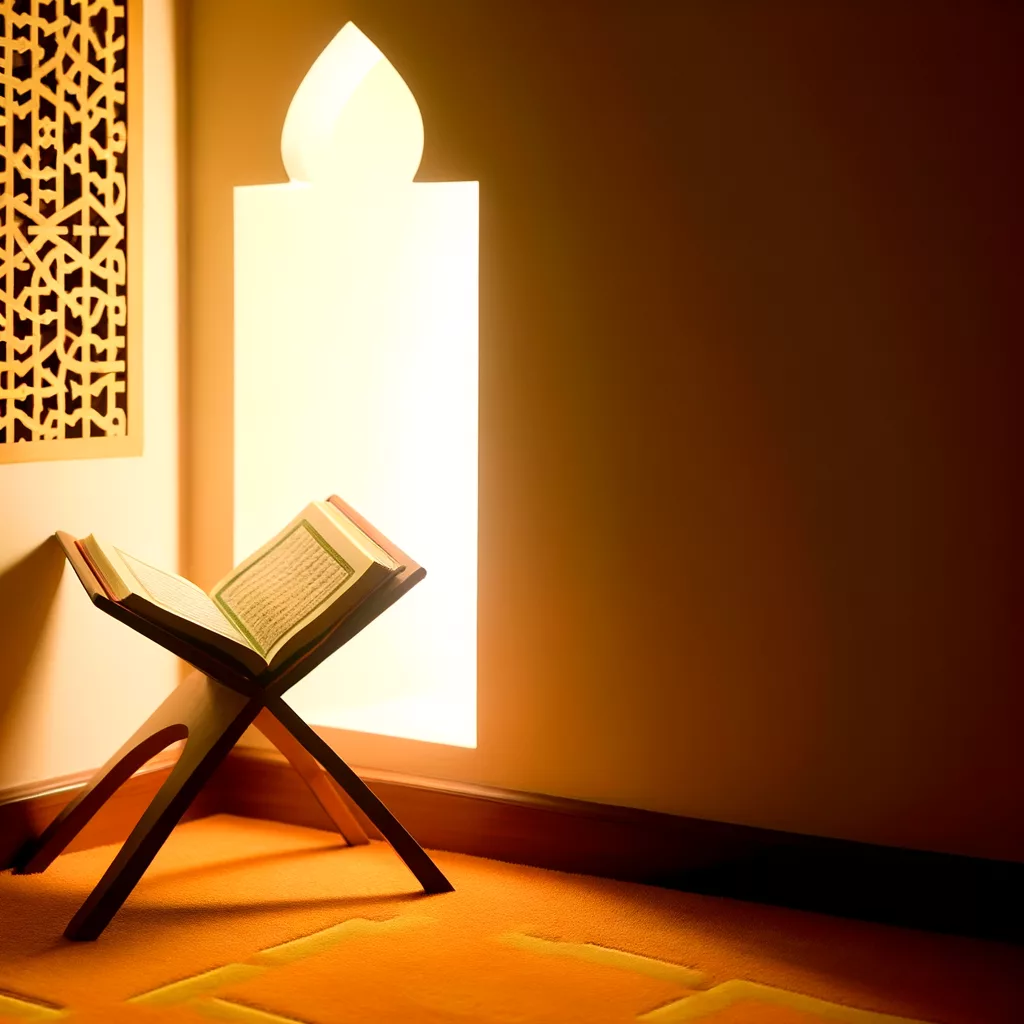
Close your eyes for a moment and imagine a peaceful corner, bathed in soft light, where every object evokes the remembrance of the Qur’an, the tranquillity of prayer and the authenticity of the Islamic tradition. This space, however humble, can become at once a sanctuary for contemplation, an anchor point in your Muslim faith, and a true gateway to an intimate understanding of literary Arabic. In the sometimes hectic everyday rhythm of modern life, creating your own prayer space at home means opening a door to a calm Islamic spirituality, rooted in the silent and deep practice of the salat, attentive listening to the Qur’an in Arabic and natural immersion in the language of the Prophet Mohammed, peace and blessings be upon him.
Why do so many Muslims around the world feel this need to rediscover the meaning and beauty of prayer in their homes? Because beyond the gestures and words, prayer in Islam is a moment of union with Allah, where every rak’a pronounced in Arabic, every verse recited or listened to, every word of du’a becomes a source of light and transformation. But this central act of faith gains in depth and sincerity (the khushu that so many seek) when you access the original meaning, without the barrier of translation, in a living relationship with the sacred language and text.
Creating a prayer space in your home invites you to much more than a routine: it means offering yourself, your children and your Muslim family a true workshop of immersion in Arabic, a cocoon for learning Arabic through the surahs, the invocations (du’a), dhikr and the subtleties of tajwid. This space then becomes the cradle of memorising the Qur’an, studying the hadiths, passing on the sunna, discovering the tafsir of the Qur’an, and deepening aqida, fiqh, the sira of the Prophet and the accounts of the Companions.
Through the days and the seasons, through Ramadan, the night prayers of laylat al-qadr, invocations of repentance and gratitude to Allah, preparations for Eid or simply the daily salat, this space will accompany you on the path of spiritual well-being, moderation, inner peace and a living understanding of your religion. It will be a bulwark against stress, a source of serenity and, for children and Muslim youth, a silent school where Arabic and Islam are lived and learned naturally.
Establishing this personal or family sanctuary means making the heart of your home a starting point for learning Arabic, immersing yourself in the beauty of the Qur’an, passing on Islamic culture and strengthening faith every day. What if this place became the source of a gentle and lasting revolution in your relationship with Islam, with Arabic, with your identity and with the Muslim community? Let us discover together how this prayer space can transform your life, your family and your intimate bond with the divine words.
The prayer space at home: a sanctuary for deepening Islamic spirituality and learning Arabic
At a time when outside demands invade our homes, setting up a prayer space at home becomes more than a simple practical arrangement: it means offering your family a sanctuary, a haven where Islamic spirituality flourishes and where learning Arabic is lived every day. This space, even a modest one, makes it easier to connect deeply with the practice of Islam, the intention of khushu in prayer, and renewal through dhikr, Islamic invocations (du’a) or reading the Qur’an in Arabic. The salat, performed in a calm and dedicated atmosphere, becomes a renewed source of sincerity in Islam, humility and gratitude to Allah. What is more, a prayer corner invites the members of the Muslim family, young and old, to try immersion in Arabic, to live Arabic without translation, tasting the beauty of Qur’an recitation, learning tajwid or memorising verses. This place fosters understanding of the sunna, listening to or studying the sira of the Prophet Muhammad, remembering the Companions of the Prophet and the ahl al-bayt, and guides towards a respectful discovery of the hadith sciences, the tafsir of the Qur’an or the worlds of fiqh. It is also the place where the family comes together around Ramadan, shares the joy of the Friday prayer or of the adhan during festivals such as eid al-fitr or eid al-adha, passes on essential values to Muslim youth and cultivates a serene and conscious Muslim identity. By founding this domestic sanctuary, every Muslim reconnects with the deep meaning of patience (sabr), repentance in Islam (tawba) and inner peace in Islam, builds a spiritual routine that protects against modern stress, and opens the way to a natural immersion in literary Arabic, in order to better understand the Qur’anic message and embody it in daily life.
Discovering the beauty of the Qur’an in Arabic: creating a place suited to reading, listening and memorisation
In the intimacy of a prayer space at home, the soul finds a true refuge in which to open itself to the deep meaning and beauty of the Qur’an in Arabic. Here every detail counts: soft light, a carefully unrolled mat, a small corner dedicated to reading the Qur’an, to listening attentively to the verses or to memorising the Qur’an according to the rules of tajwid. This serene environment invites immersion in Arabic, learning Arabic and gradually tasting literary Arabic without systematically going through translation. Learning Arabic in this setting naturally becomes an act of Islamic spirituality, a sincere effort to understand the Qur’an in Arabic, to grasp the secrets of the tafsir of the Qur’an, to deepen the sunna and the science of hadith, or to rediscover the sira of the Prophet and the wisdom of the Companions of the Prophet and of the ahl al-bayt.
Creating this place of contemplation also means offering your Muslim family, your children or the Muslim youth around you an authentic Islamic education, a direct link with the heritage of Islamic civilisation. Regular reading in this environment helps cultivate gratitude to Allah and develop patience in Islam, sincerity in Islam and khushu in prayer, especially during the salat or the Friday prayer, the jumu’a. Islamic invocations, dhikr and du’a take on a particular dimension here. This space naturally fosters a spiritual routine, repentance in Islam, the search for inner peace and spiritual well-being amid the turmoil of daily life.
When you include listening to the Qur’an in Arabic, Islamic calligraphy or Islamic art, and contemplation, it becomes possible to turn learning Arabic into a sensory and emotional experience, where the meaning of the verses meets the sonic and visual beauty of the revelation. With the family, alone, as a Muslim couple or with friends, this place becomes a starting point for studying the scholars of Islam and historic Islamic universities such as Al-Azhar, Zaytouna or Qayrawan, or a portal for exploring the history of Islam, Sufism, or the practice of Islamic finance and the values of Islamic ethics. Whether during Ramadan, on the Night of Decree (laylat al-qadr), as eid al-fitr or eid al-adha approaches, or during the blessed days of Dhul Hijjah, this space accompanies and enriches every stage of Muslim spiritual life, strengthening Muslim identity, Islamic solidarity, modesty in Islam and love of the Prophet.
In this cocoon, immersion in Arabic, understanding the Qur’an in Arabic, and studying the madhahib or fiqh become so many doors that you push open naturally, out of love for Allah and a desire to draw intimately closer to the source of the Muslim faith. This place, suited to Islamic reading, listening to the Qur’an, memorisation or simply silent contemplation, illuminates the daily practice of Islam with the light of the language of the Qur’an, and weaves an unalterable bond between spirituality, knowledge and inner serenity.
From salat to du’a: living prayer in Islam at home, between immersion in Arabic and khushu
In the intimacy of the home, prayer in Islam, from the salat to du’a, becomes a living link with the heart of Islamic spirituality. Setting up a space dedicated to the practice of Islam is much more than marking out a place for prostration; it means breathing into your home a spirit of immersion in Arabic, of love for the prophetic tradition and of the quest for khushu, that deep concentration which calms and elevates the soul. Learning Arabic takes on its full meaning here: every word of the salat, every verse of the Qur’an in Arabic and every formula of dhikr vibrates differently, revealing its original beauty. When you seek to understand the Qur’an, even in the night readings of Ramadan or during the Friday prayer (jumu’a), immersion in literary Arabic, without going through translation, opens direct access to the Source and awakens patience in Islam, gratitude to Allah and sincere awareness in every gesture.
Within this space, the boundary fades between silent invocation (du’a), repentant return (tawba), meditative recitation, memorising the Qur’an and reflecting on the hadiths. Learning Arabic also means tasting the language that shaped the sira of the Prophet, touched the hearts of the Companions, the ahl al-bayt and the scholars of Islam, and passed down through the generations the strength of fiqh, the teachings on zakat and the wisdom of the sunna. This linguistic bath, through listening and repetition, allows the Muslim faith to be passed on naturally within the Muslim family, from the youngest Muslim child to the eldest, and gradually shapes a Muslim identity rooted in understanding the Qur’an, practising the rites, and meditating on the history of Islam, the sira, patience and gratitude.
Du’a, from then on, is no longer a simple request: it becomes a living dialogue, rich in words learned and savoured in their original language, drawing on the science of hadith or meditating on accounts of the Andalusian caliphate or the scholars of Al-Azhar. It is a moment in which you explore true humility, sincerity in Islam and inner peace, offering everyone, alone, as a Muslim couple or as a family, the chance to feel the Muslim community, the call of the adhan or the Islamic solidarity of volunteering, at the very heart of the sacred space of the home. Thus the immersive learning of Arabic becomes an act of love for Allah and the Prophet, a gesture of gratitude, and a path towards balance (wasatiyya) and moderation in Islam in every aspect of daily life.
A family spiritual life: passing on the Qur’an, tajwid and literary Arabic to children and to the Muslim couple
At the heart of a Muslim home, spiritual life takes on a deep dimension when the prayer space at home becomes a true place of learning and transmission. A place of contemplation, it is transformed every day into a living school where the Qur’an in Arabic is recited, meditated upon and memorised. In this atmosphere, parents and children walk together on the path of Islamic education: here, learning Arabic is not reduced to academic study, but is part of an immersion in Arabic in which every word, every verse and every du’a invocation is lived and felt. Tajwid, the fundamental science of reading the Qur’an, is not reserved for an elite: it is taught naturally, through the attentive ear of the child listening to the voice of the father, mother, brother or sister reciting. Learning literary Arabic then takes on its full meaning, because it allows the family to understand the Qur’an without translation, to taste the beauty of the sunna and the hadiths, to discover the depth of the tafsir of the Qur’an and the science of hadith, and to draw inspiration from the sira of the Prophet and the sublime stories of the Companions of the Prophet, the ahl al-bayt and the scholars of Islam.
In this domestic sanctuary, the routine of practising Islam is transformed: the salat becomes a shared moment of khushu, the Friday prayer a moment of family unity, Ramadan a period of spiritual renewal, memorising the Qur’an a shared project, and dhikr a silent symphony that soothes hearts. Learning Arabic as a family, through immersion, means preserving your Muslim faith, strengthening Muslim identity in the face of contemporary challenges, and carrying on Islamic culture with sincerity, patience and love of Allah. This spiritual dynamic nourishes gratitude to Allah, spreads inner peace, shapes Islamic conduct (akhlaq), and shapes Muslim youth around the pillars of kindness, modesty and humility. Founded on transmission, the prayer space at home thus becomes a serene fortress for the practice, transmission and flourishing of Islamic spirituality, where the education of children in Islam and the life of the Muslim couple come together freely in the present tense of the heart.
At the end of this reflection on creating a prayer space at home, it is clear that this special place holds much more than a simple ritual function. It becomes the beating heart of Islamic spirituality in daily life, a sanctuary where every member of the Muslim family finds a haven for prayer in Islam, listening to the Qur’an, dhikr or Islamic invocations. It is at once a source of inner calm and a silent driver of spiritual well-being.
Setting up at home a space dedicated to the salat, to reading the Qur’an in Arabic and to meditating on the sunna or the sira of the Prophet naturally creates the conditions for an authentic immersion in Arabic. There, learning Arabic or deepening literary Arabic is no longer a mere academic exercise: it becomes an act of faith, a quest for closeness to the Words of Allah. Learning Arabic without translation in this intimate setting makes a real understanding of the tafsir of the Qur’an, of memorising the Qur’an and even of the science of hadith easier, while gradually filling the heart with the spirit of the Muslim faith.
Through this approach, the spirituality of adults grows firmer, that of Muslim children takes root, and the passing on of Islamic education within the Muslim family takes on its full meaning. The regular practice of prayer, tajwid, du’a and dhikr shapes the Islamic personality little by little, sowing sincerity, gratitude to Allah, patience and modesty. It invites awareness of tawba, the search for khushu in prayer, and the discovery of the beauty of the Qur’an, of the accounts of the Companions of the Prophet and of the ahl al-bayt, and of great moments such as Ramadan, laylat al-qadr, the hajj or Eid.
This prayer corner, far from being cut off from the world, places the whole family within the vast Muslim community, aware of its identity, its history, the richness of Islamic culture and the diversity of Islamic civilisation, whether you live in France or elsewhere. It becomes, modestly, the reflection of the house of the Prophet, of the homes of the scholars of Islam, or even of a small Andalusian mosque, nourishing the soul of every believer. There, patience in Islam in the face of trials is lived, along with the drive towards knowledge, dialogue with others, and everyday Islamic solidarity.
By setting up this personal sanctuary, daily routine is adorned with meaning, the Friday prayer and family celebrations are adorned with light, and a healthy emulation emerges in learning Arabic, understanding the Qur’an, practising fiqh or a madhhab, and enriching the Muslim calendar. It is not about reaching an unattainable perfection, nor about turning your home into an Islamic university, but simply about inviting a sacred presence into the heart of your life, so as to walk with peace, sincerity and love of Allah towards an authentic spiritual life.
Ultimately, setting up a prayer space at home means giving everyone the chance to live Islam in its fullness, to weave strong bonds with the Qur’an, the Arabic language and the prophetic tradition, and to find, even in the midst of trials, the strength, patience and serenity needed for faith to grow. It means turning every moment into an opportunity for gratitude, every activity into dhikr, and every word learned or recited in Arabic into a precious pearl poured into the treasure of a fully embraced Muslim spiritual life.
Further reading: discover our Arabic programmes for children, or read “Learning Arabic and preparing for the arrival of a baby according to Islam” and “Learning Arabic as a family to strengthen bonds and spirituality“.



