
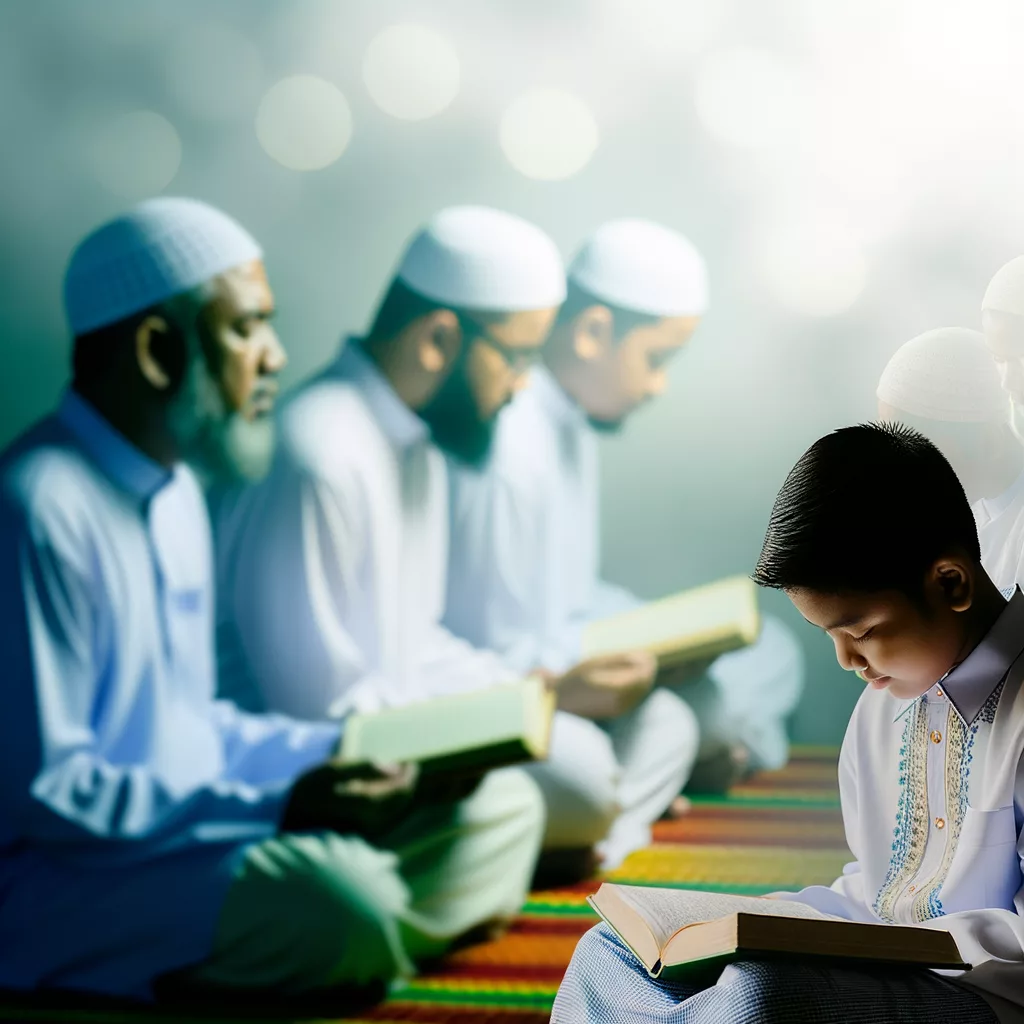
Strengthening family bonds in the light of Islamic teachings is much more than preserving a tradition or fulfilling a religious duty. It means lighting, every day, a light in the home that brightens the heart, softens relationships and makes the Muslim faith grow. For many, the Muslim home is life’s first school, the place where the love of Allah takes root, where values are passed on, where we learn the movements of prayer in Islam and the words of the Qur’an in Arabic, and where every smile and every trial is lived with a spiritual intention. Yet in an age of digital distractions, a frantic pace and the particular challenges faced by Muslims in France or in the diaspora, the genuine connection between family members sometimes wears thin, creating distance where warmth should reign.
How many parents dream of rediscovering, around the table, the unity and inner peace experienced by the companions of the Prophet? How many couples, longing for more Islamic spirituality, wonder how to preserve the love of Allah, gratitude, patience, sincerity and dhikr together in daily life? At a time when Muslim identity faces a thousand questions, the home becomes a haven: a space to learn Arabic, to pass on the faith, to discover together the sira of the Prophet or the sacred moments of Ramadan, the hajj or eid al-fitr.
What if the path to family unity were first of all a return to the sources: reading the Qur’an in Arabic, meditating on tafsir with your children, savouring the beauty of literary Arabic without going through translation, sharing the joy of memorising the Qur’an, exploring the history of Islam, praying side by side with khushu, encouraging supplications and generosity, and building a routine where worship and tenderness become natural? Learning Arabic, lived as a family, offers a powerful key: one that opens wide the heart and the mind, gives access to the science of hadith and the wisdom of the sunna, and shapes each day a real, deep love that goes beyond the moment.
This journey, demanding and magnificent, is not reserved for an elite or for a bygone past. It begins at home, with small gestures, sometimes faltering, but carried by the sincere intention to draw closer to Allah and to one’s loved ones. In this article, let us discover how, in the light of the Qur’an, the sunna and experiences lived within the Muslim family, immersive Arabic learning, shared spirituality and Islamic education can turn the home into a refuge and a school of the heart. Let us explore together the luminous paths that lead to strength, to unity… and to peace regained.
Understanding the Muslim family: strength and unity in the light of the Qur’an in Arabic and the hadiths
Living as a Muslim family means grasping the beauty of a collective strength that draws its source from the Qur’an in Arabic and from the teachings of the Prophet Muhammad, handed down through the hadiths and the sunna. Family unity cannot be improvised: it is rooted in a deep understanding of the sacred texts, which learning Arabic makes accessible in their original light. Learning Arabic means entering the very heart of the divine message, where every word of the Qur’an, heard and pondered without translation, weaves harmony between the Muslim faith and daily life. Through reading the Qur’an, memorising the Qur’an with the rules of tajwid, and the tafsir of the Qur’an passed on by the scholars, the family draws its values: respect between parents and children, compassion, patience in Islam, sincerity in Islam, gratitude towards Allah, love of the Prophet — hardy roots for building a shared life guided by Islamic spirituality.
The accounts of the sira of the Prophet and the examples of the companions of the Prophet speak of the strength of family solidarity, the importance of the Islamic education of children, peace in the Muslim couple and dignity towards elders: so many lights for savouring the meaning of marriage in Islam, commitment to raising children in Islam, or kindness within the Muslim family. Immersing yourself in literary Arabic means discovering Arabic without translation, where Islamic supplications (dhikr, du’a) and the formulas of tawba wrap around daily life, and where salat, lived with khushu in prayer, binds hearts together around Allah. The science of hadith, handed down and studied from generation to generation in Islamic universities and centres of Islamic studies, inspires a living model: the Muslim family, much more than a household, then becomes the cradle of a solid Muslim identity, vibrant with modesty, Islamic solidarity, Islamic ethics and balance. Thanks to immersive Arabic learning, every member of the family is inwardly enriched and contributes, at their own level, to building a united and peaceful Muslim community, where the practice of Islam turns everyday relationships into a source of inner peace and spiritual well-being.
Learning Arabic as a family: uniting hearts around immersion in Arabic and reading the Qur’an
In our age, when screens sometimes isolate more than they bring together, choosing to learn Arabic as a family becomes a unique act of unity and love. It means giving yourselves, together, an open door to the very heart of the Muslim faith and of Islamic culture. Immersion in Arabic, far from translation-based methods, makes it possible to share daily moments of sensory discovery, where every word, every sound, every verse of the Qur’an becomes the cement of a new closeness between parents and children. Through reading the Qur’an in literary Arabic during evening gatherings or memorising a few surahs before bedtime, the home gently becomes a space for supplications (dhikr and du’a), for reflection on the sunna, for listening to the sira of the Prophet and for conversations about the companions of the Prophet and the ahl al-bayt.
This shared adventure, which sometimes begins with tajwid recitation on Fridays or with discussing a hadith in the evening, creates powerful memories and gives meaning to the Islamic education received at home. Learning Arabic also offers every member of the family the chance to taste the depth of the tafsir of the Qur’an, to ask questions about the practice of Islam, patience and gratitude towards Allah, or to feel the beauty of khushu in prayer (salat). For the Muslim couple, it is a path of closeness that grows stronger through study, through shared wonder at the science of hadith or through discovering the history of Islam, from the Andalusian caliphate to Islamic civilisation. Muslim children then understand that Muslim identity, lived well in France or elsewhere, draws its strength from the ability to understand and love the Qur’an, to recognise the unique voice of the adhan, to celebrate the joy of eid al-fitr or of the hajj, to make sure of halal and ethical food, and to value every act of Islamic solidarity.
This learning of Arabic without translation forges an inner language unique to the family, made of soothing words, humility, compassion and inner peace, values passed on by regular practice of the Qur’an, fasting in Islam, supplications and community mutual aid. Diving together into the treasures of the Islamic library, experiencing spiritual well-being and gratitude in all circumstances, parents and children build a legacy that will go beyond the simple framework of education: they sow the seeds of a shared spirituality, where dialogue, respect and sincerity become the norm. So, more than a language skill, immersion in Arabic cements family bonds in the light of the prophetic message and the eternal values of Islam.
Shared spirituality: meditating on the tafsir of the Qur’an, the sunna and Islamic supplications to strengthen family bonds
At the heart of the Muslim family, shared spirituality is like a golden thread that links every member in a deep unity, far beyond mere blood ties. Meditating together on the tafsir of the Qur’an, diving into the teachings of the sunna, or reciting Islamic supplications (du’a, dhikr) in unison gives the family the unique opportunity to be steeped in a common light, that of authentic Muslim faith. Learning Arabic as a family, even in small daily touches, lets you discover together the beauty of the Qur’an in Arabic, its musicality through tajwid, and the subtlety of supplications said in their original language, without the intermediary of translation. This is when immersion in Arabic takes on its full meaning: every moment devoted to reading the Qur’an, memorising the Qur’an or studying the hadiths becomes an experience of collective connection, where little by little we understand the wisdom of the sira of the Prophet, the greatness of the companions of the Prophet and the ahl al-bayt, patience, sincerity, gratitude towards Allah, the sweetness of Ramadan or the fervour of the nights of laylat al-qadr.
Even the youngest Muslim children can feel the strength of these shared moments: a surah recited together before sleep, a dhikr whispered in the early morning, a sincere discussion about a verse whose meaning we seek, in the light of tafsir, in accessible literary Arabic. These gestures, sometimes simple in appearance, foster learning Arabic, strengthen the practice of Islam through prayer in Islam and salat lived with khushu, and plant in every heart a seed of faith that will blossom in each person’s life. Meditating on the divine word, reflecting on a saying of the Prophet through the science of hadith, talking about the history of Islam or the wisdom of a scholar from the family’s Islamic library: all this nourishes Muslim identity, anchors inner peace and brings kindness into the relationships of the Muslim couple, of parents with their children, or between brothers and sisters.
As the days go by, this spiritual routine creates an atmosphere where patience in Islam, repentance (tawba) and gratitude become natural. In the Muslim family, these shared moments of immersion in Arabic, Islamic studies, the Friday prayer at the local mosque, or lively discussion around a memorised verse forge reassuring landmarks in the face of society’s winds. They remind us that Islamic spirituality is intimately linked to family balance, to the love of Allah and to humility, but also to openness to interfaith dialogue and to Islamic solidarity within the Muslim community, encouraging every member to shine, at home as in society.
Passing on the faith and the practice of Islam to our children: Islamic education, values and the joy of memorising the Qur’an together
Passing on the faith and the practice of Islam to our children is not only an educational mission: it is an act of love, a source of light and stability for the whole Muslim family. In a world where landmarks are fading, giving our children an Islamic education rooted in spirituality, knowledge and tenderness means giving them a compass to go through life with confidence. The joy of memorising the Qur’an, shared between parents and children, creates sacred moments: repeating together the verses of the Qur’an in Arabic, feeling the melody of tajwid, discovering the deep meaning through reading in literary Arabic before opening up to the tafsir of the Qur’an. All this is not only intellectual learning, but a nourishing family adventure.
When immersion in Arabic is part of daily life – through Islamic supplications, dhikr, prayer in Islam lived together with khushu, or the Friday salat at the mosque – the child naturally absorbs Arabic without translation, develops a love for the Prophet and his companions, and identifies tenderly with the sunna and with akhlaq. The great stages of Muslim spiritual life, such as Ramadan, eid al-fitr or the festival of sacrifice, then become moments of learning and celebration in which Islamic culture, the rites, fasting in Islam and a taste for gratitude towards Allah are lived in a concrete, joyful and deep way. Memorising the Qur’an together also means growing in patience in Islam, learning sincerity, and discovering the science of hadith and the beauty of the history of Islam through the sira of the Prophet or the story of the ahl al-bayt.
This education of children in Islam is not limited to passing on knowledge: it nourishes the Muslim faith, strengthens Muslim identity, and creates within the home an atmosphere of inner peace and spiritual well-being. It makes it possible to approach the sharia and fiqh gently as a family, to explore the madhahib, to talk about the lives of the scholars of Islam or to reflect together on ecology in Islam and waste in Islam. In this way, every shared moment becomes an open door to Islamic culture and Islamic civilisation. By anchoring the learning of Arabic in the family routine through prayers, Islamic reading or the celebrations of the Muslim calendar, we prepare children to understand the Qur’an in Arabic, to pray with depth, to feel tawba, repentance in Islam, and to walk in gratitude and love of Allah. This is where passing on the faith becomes a family art, a breath of spirituality and a treasure that accompanies the child throughout their life.
Further reading: discover our Arabic programmes for children, or also read “Creating a prayer space at home and learning Arabic as a family” and “Learning Arabic and preparing for a baby’s arrival according to Islam“.
Conclusion
Strengthening family bonds in the light of Islamic teachings is a quest of unsuspected depth, gentleness and meaning. Over the centuries, Muslim families have drawn their strength and unity from reading the Qur’an in Arabic, the science of hadith, the sunna and the living practice of Islam within the home. This heritage of love, empathy, solidarity and faith is not passed on only through words, but through a shared life, set to the rhythm of prayers, dhikr, Islamic supplications, moments of teaching and the warmth of Islamic spirituality lived day to day.
Learning Arabic opens a new dimension here. Immersion in Arabic, without systematic translation, becomes a subtle bridge: it allows you to understand the Qur’an at the source, to be moved by the recitation, to hear the call of the adhan or the imam’s supplications in the mosque, and to savour the beauty of the prophetic language during Ramadan or the Friday prayer. It also offers every member of the family, young or adult, access to the wisdom of the tafsir of the Qur’an, the precision of tajwid, the richness of the sira of the Prophet and the depth of the words of the companions of the Prophet and the ahl al-bayt.
Learning Arabic as a family invites a shared adventure, full of joy and closeness: reading the Qur’an together, memorising verses, meditating on patience and sincerity in Islam, sharing stories from Islamic civilisation, moments of gratitude towards Allah and of repentance. Every moment of study or prayer becomes a source of love and unity, a concrete ground for Islamic education where the practice of Islam, kindness, patience and modesty are discovered naturally, far from theory alone.
Passing on the Muslim faith is therefore much more than passing on knowledge: it means building an identity, cultivating inner peace, and making family life rich in meaning and hope. Whether celebrating Eid al-fitr or eid al-adha, the luminous days of Dhul Hijjah, sharing during fasting in Islam or prayer in Islam, every moment becomes an opportunity to strengthen this unbreakable bond between hearts and generations. Learning Arabic contributes discreetly and humbly, like a golden thread linking memory to the future and the heart to the light of revelation.
By relying on the teachings of the Qur’an in Arabic, the authentic hadiths and the luminous example of the Prophet and the scholars of Islam, every Muslim family can move forward with confidence, build peace in its home and radiate spiritual well-being around it. Raising children in Islam, Islamic solidarity, respect for values, the practice of dhikr, gratitude and the love of Allah then become so many landmarks for getting through trials and tasting a peaceful life, rooted in Islamic culture and the prophetic tradition.
This is the path on offer, both simple and noble: choosing love, transmission and immersion in Arabic as a source of light for the Muslim family, the foundation of a secure, stable and fulfilling future, for today and tomorrow, here and in the hereafter.



