
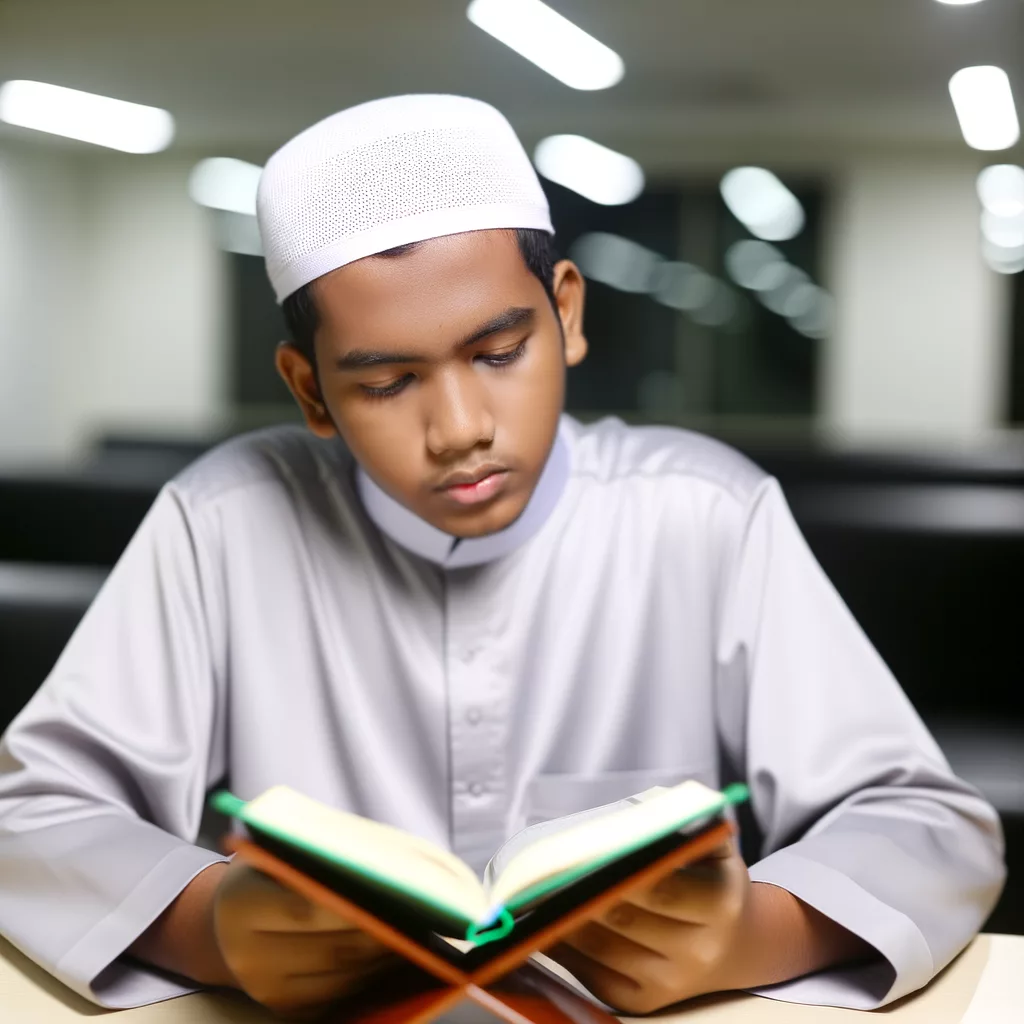
Learning Arabic opens the door to a unique world, where the echo of the first verses of the Qur’an crosses the centuries to dwell in the hearts of believers. For Muslim youth, on the threshold of adult life, these words are not just a breath from somewhere else: they are a root, a backbone, a solid landmark when the storm of modern society rises. In a world where identities waver, where time races by and where the pressure to fit in, to consume and to please weighs on everyone, learning literary Arabic becomes more than a simple school project: it embodies a search for meaning, a refuge, a source of resilience.
How do you find your place when Islam is often misunderstood, sometimes stigmatised, and when society, in France or elsewhere, seems to speak a language you only half recognise? How do you nurture an authentic Muslim faith, rich in Islamic spirituality, dhikr, patience, sincerity and love of Allah, in an environment where superficiality invades daily life? Faced with these challenges, many young people feel a deep need to rediscover the essence of their deen, not through the filters of translations or shortcuts, but directly at the source: in the language of the Qur’an, through immersion in Arabic, in a living understanding of the teachings of the Prophet, his companions and the ahl al-bayt.
What happens when you approach reading the Qur’an in Arabic for the first time, memorising the Qur’an with tajwid, contemplating the tafsir of the Qur’an without going through a translation? It is not only the surface meaning of the texts that opens up to us, but a whole heritage, the warmth of an Islamic culture passed from family to family, from generation to generation. Invocations, dhikr, du’a, the taste of prayer in Islam and khushu in prayer become more intense, more alive, more authentic. Every word learned, every hadith studied, every word of the sunna, every fragment of the sira of the Prophet then takes root, not as something foreign, but as an integral part of one’s Muslim identity.
In this modern society, where Muslim youth are often confronted with secularism (laïcité), Islamophobia, the temptation to forget or the pressure to integrate, learning Arabic without translation restores meaning, pride and stability. It is an elegant, quiet and powerful way to resist uprooting, to remember the nobility of Islamic conduct, of akhlaq, of modesty, of effort during Ramadan, of the joy of Eid al-fitr and Eid al-Adha, of the call of the adhan in the mosque. Above all, it is an invitation to explore in depth the history of Islam, Islamic civilisation, Islamic ethics and the immense legacy of the scholars of Islam across the centuries.
This article invites you on a journey to the heart of these contemporary challenges, sharing how immersive Arabic learning is the key to a strong Muslim identity, a peaceful spiritual life and an inspiring engagement in today’s society. Whether you are a parent, a student, an educator or simply a seeker of meaning, you will discover, step by step, why and how reconnecting naturally with literary Arabic opens the doors not only to the language, but also to a living faith, to brotherly solidarity and to a deep understanding of the universal message of Islam.
Learning Arabic: a key to identity and resilience for Muslim youth
In the turmoil of modern society, marked by plurality, identity challenges and a secularisation that sometimes raises questions, learning Arabic proves to be, for Muslim youth, a fundamental key to resilience and self-affirmation. Learning Arabic means reconnecting with the essence of Islamic culture, planting your roots in the language of the Qur’an, the hadiths and the sunna of the Prophet Muhammad. Immersion in Arabic, lived without systematically going through translation, makes it possible not only to understand the Qur’an in Arabic in all its depth, but also to taste the singular beauty of literary Arabic, which shaped the history of Islam, from the sira of the Prophet to the moving accounts of the companions and the ahl al-bayt.
This approach gives Muslim youth a precious anchor: every reading of the Qur’an, every recitation with tajwid, every moment of khushu in prayer or du’a lived in the original language becomes an intimate and formative experience. Memorising the Qur’an, studying tafsir, the science of hadith, or meditating on Islamic invocations then take on another meaning. Arabic is no longer a barrier but a living bridge to Islamic spirituality, to the practice of Islam and to the intellectual legacy left by the scholars of Islam, from Al-Azhar to Zaytouna.
In a context where Muslim youth in France, and elsewhere, rub shoulders every day with secularism, Islamophobia and the temptation to withdraw into themselves, this immersion in Arabic offers a soothing and luminous answer. It helps strengthen Muslim identity – not as a mere cultural inheritance, but as a choice of faith, sincerity and gratitude towards Allah. It nourishes love of the Prophet and knowledge of the Muslim rites, from Ramadan to hajj, from voluntary fasting to festivals such as eid al-fitr or eid al-adha.
This natural learning, far from sterile methods based on simple translation, invites young people to inhabit the sacred language, to open themselves to the beauty of Islamic calligraphy, to the poetry of the adhan, to the strength of collective dhikr at the mosque or to the depth of interfaith dialogue. It becomes a source of inner peace, spiritual well-being, patience and moderation — all values essential in the struggle against modern stress, and in questions of ecology or Islamic solidarity.
Learning Arabic lived in this way is more than a language skill: it is a path towards spiritual maturity, community engagement and the ability to pass on, tomorrow, a Muslim identity that is confident, open and fully rooted in contemporary society.
Understanding the Qur’an in Arabic: spirituality, landmarks and challenges for young Muslims today
In today’s context, Muslim youth face many essential questions linked to understanding the Qur’an in Arabic. Grasping the Word of Allah in its original language is not merely a matter of academic learning: it is a deep encounter with Islamic spirituality, a living link with the history of the Prophet Muhammad, the companions, the ahl al-bayt and the whole of Islamic civilisation. Learning Arabic means accessing the authentic meaning of dhikr, the subtlety of tajwid when reading the Qur’an, the flavour of invocation and the beauty of du’a. For many young people, the ambition to read the Qur’an in literary Arabic and to taste the unequalled sweetness of salat, of khushu in prayer or of Ramadan springs from the desire for a more intimate connection with the Muslim faith and the practice of Islam.
However, learning Arabic, when it relies on word-for-word translation, often remains frustrating. The words lose their breath, immersion in Arabic does not take hold: spirituality becomes mechanical, landmarks crumble. Understanding the Qur’an requires much more than a dictionary or a bilingual edition: it is a sensory journey, an immersive learning, where the ear grows used to the sounds of the Book, where the mouth trains to the rhythm of the hadith and the sunna, where the memory absorbs the verses for memorising the Qur’an, for tafsir and for application in daily life.
Faced with secularism, the speed of modern society and the flood of contradictory information, Muslim youth sometimes feel torn between two worlds. Many dream of finding in the language of the Qur’an deep roots, a clear identity, a way of life shaped by the science of hadith, the history of Islam and fiqh, but also by Islamic culture, calligraphy, the chants of the adhan and Sufi poetry. Mastering Arabic without translation, even gradually, then provides landmarks and a quiet strength: it makes it possible to better understand the Friday sermons (joumoua), to deepen patience, gratitude towards Allah and sincerity in practice, and to sharpen spiritual intelligence in the face of challenges such as Islamophobia, racism or a crisis of meaning.
On this living path, every word, every verse recited, every commentary from the scholars – classical or contemporary – becomes a light. Islamic education, whether at home, at the mosque or in illustrious universities such as Al-Azhar, Zaytouna or Qayrawan, gains in depth. By opening themselves to immersion in Arabic, Muslim youth gradually learn to savour inner peace, to cultivate spiritual well-being and to find, in the very act of understanding the Qur’an, a compass in the face of modernity. The challenges remain real: a lack of suitable resources, a rushed routine, family expectations; but the path, however demanding, offers a unique promise: that of a peaceful heart, living in harmony with the love of Allah, of the Prophet and of the whole Muslim community.
Immersion in Islamic culture: between family transmission and the stakes of modern society
In a world where Muslim youth move between sometimes contradictory landmarks, immersion in Islamic culture takes on a precious, almost vital dimension. For a long time, learning Arabic, memorising the Qur’an and passing on Islamic values relied mainly on the family circle, where every parent and every grandparent embodied a living link with the spiritual heritage of the companions of the Prophet and the ahl al-bayt. Around the family table, in the gentleness of a mosque, or alongside an imam during the Friday prayer, young people learned to recite the adhan, to develop khushu in their salat, to savour the beauty of dhikr and to grow up in gratitude towards Allah. These moments forged a solid and luminous Muslim identity, feeding both love of the Prophet and everyday Muslim faith.
But the challenges of modern society are upending this traditional pattern. The influence of screens, secularisation, laïcité and the geographical dispersion of families expose young people to the dilution of authentic Islamic culture. The risk is no longer only forgetting the invocations, fasting in Islam or the practice of the sunna, but also the gradual loss of the language and of the deep meaning of the teachings, from the tafsir of the Qur’an to the science of hadith. Yet rediscovering the taste for immersion in Arabic, learning Arabic without translation, diving into literary Arabic, means restoring this sacred thread with the word of Allah and the founding values of Islamic civilisation.
It is through immersion in the rites, the study of the stories of the prophets (sira), the understanding of fiqh, the discovery of the generosity of the sahabas, or taking part in Islamic festivals such as Ramadan and eid al-fitr, that Muslim youth can reaffirm their identity and strengthen their Islamic spirituality. The practice of Islam, far from being a mere series of rituals, then becomes a living experience, enriched by reading the Qur’an in Arabic, the gradual mastery of tajwid, meditation on patience, repentance and sincerity, or, at times, by contemplating Islamic art and calligraphy, which bear witness to the beauty of the history of Islam.
In the face of the trial of modernity, Islamic education can no longer be limited to passive transmission. It must become a community project, bringing together the Muslim family, the teacher, the mosque, the scholars of Islam and even initiatives such as Islamic universities or Islamic libraries, so that every young person can take root in a living Islamic culture while engaging in a calm dialogue with society at large. Immersion therefore concerns not only the language but the whole of Muslim spiritual life: from sharing the iftar meal to zakat, from caring for ecology to learning halal trade, every aspect of daily life becomes ground for growth, spiritual well-being and inner peace. By finding the path back to literary Arabic, by living Islamic culture with sincerity and love, Muslim youth turn challenges into opportunities to grow, to love Allah and to radiate a confident and peaceful identity.
Patience, sincerity, solidarity: cultivating Muslim faith in the face of contemporary pressures
In the face of the many pressures of modern society, Muslim youth discover that the path of Muslim faith is built patiently, sincerely and collectively. Cultivating patience in Islam means welcoming every difficulty as an exercise in trust in Allah, like the companions of the Prophet who, long before us, went through adversity with steadfastness and hope. This patience, anchored in reading the Qur’an in Arabic, is refined through the regular practice of salat and the art of dhikr, small acts of remembrance that calm the mind and refocus the intention. Sincerity in Islam, for its part, is nourished by an inner quest: every prayer, every du’a, every effort to learn Arabic without translation in order to taste the authentic flavour of the Qur’an becomes a springboard for spiritual elevation. When the meaning of the tafsir of the Qur’an and the subtleties of the sunna are revealed through immersion in Arabic, we understand that the practice of Islam is not limited to appearances: it demands truthfulness, modesty and gratitude towards Allah in everyday actions. Finally, in a world where individualism is gaining ground, Islamic solidarity binds Muslim youth together around the values of community mutual aid and sadaqa, creating a quiet strength in the face of loneliness and uncertainty. Whether by listening to the adhan, taking part in joumoua, or getting involved in the Islamic education of Muslim children, the community protects Muslim identity and enriches Muslim spiritual life. Young people, strengthened by the history of Islam, the sira of the Prophet and the model of the ahl al-bayt, draw from tradition a light to face contemporary challenges with inner peace, humility and renewed confidence.
Throughout the generations, Muslim youth have always stood at a crossroads, between rootedness and adaptation, heritage and renewal. Today more than ever, in a world swept by rapid change, they face unprecedented challenges – whether social, identity-related, spiritual or moral. Yet at the heart of this turmoil, one key remains: learning Arabic is never reduced to the mere acquisition of a language. It means opening the door to understanding the Qur’an in Arabic in all its depth, rediscovering the authentic flavour of tajwid and of the tafsir of the Qur’an, opening yourself to the living wisdom of the hadith, the sunna and the sira of the Prophet, and anchoring your Muslim identity in a rich, nuanced and universal Islamic culture.
Learning Arabic, especially literary Arabic, offers more than a communication tool: it weaves a bond of heart and mind between Muslim youth and their roots. Entering into immersion in Arabic, without going through translation, gives back its original flavour to prayer in Islam, to salat filled with khushu, to invocations (dhikr, du’a), to sincere repentance (tawba) that soothes, renews and strengthens Muslim faith. Thanks to this reconnection with the sacred text and the Islamic sciences – the science of hadith, usul al-fiqh, madhahib, marja’iyya –, young people find landmarks, an inner light and renewed confidence in the face of pressure from a society that shares neither their codes nor their spirituality.
But learning Arabic in depth also means passing it on: to your children, to your family, to the Muslim community. In the mosque, during Ramadan, at the Friday prayer (joumou’a), or on the great nights such as laylat al-qadr, the echo of the Qur’anic language shapes a unique solidarity, nourishes love of Allah, gratitude and the quest for inner peace, and deepens belonging to a life-giving umma. This is how Muslim youth draw on the patience so dear to the prophetic message, cultivate sincerity (ikhlas) in their intentions, strengthen gratitude (shukr), and build a bridge between their faith and the demands of the modern world.
While debates on Muslim identity, secularism and the place of Islam in France or in Europe run through people’s minds, young people are invited to find in immersive Arabic learning a path of resilience. Far from any closing in, this approach awakens intellectual curiosity, spiritual openness and the deep intuition that Islamic culture, in what it has that is most noble – its poetry, its calligraphic art, its history, its wasatiyya (moderation), its sciences, its ethical and human values – offers itself to them as a source of balance and radiance.
Amid the turmoil, learning Arabic, reading the Qur’an and memorising its verses become fruitful pauses of spiritual well-being, confidence and inner grounding. Walking this path means honouring the living tradition of the scholars, of the companions of the Prophet and of the ahl al-bayt, and responding with dignity to the challenges of your time. It means drawing strength and serenity from patience, gratitude and dhikr, learning to combine knowledge and wisdom, tradition and modernity, engagement and inner peace.
So may every young person, whatever their situation or path, draw from this immersive learning the inspiration to shape, in the present, the future of a radiant, open and generous Muslim community, faithful to the essence of its message. Learning Arabic ultimately means letting blossom within yourself the light of an identity that is embraced, brotherly and rooted, able to weather storms and always strive towards excellence and peace.
Further reading: discover our online Arabic courses for adults, or read “Learning Arabic to strengthen your faith through personal crises” and “Learning Arabic to understand funeral rites in Islam“.



