
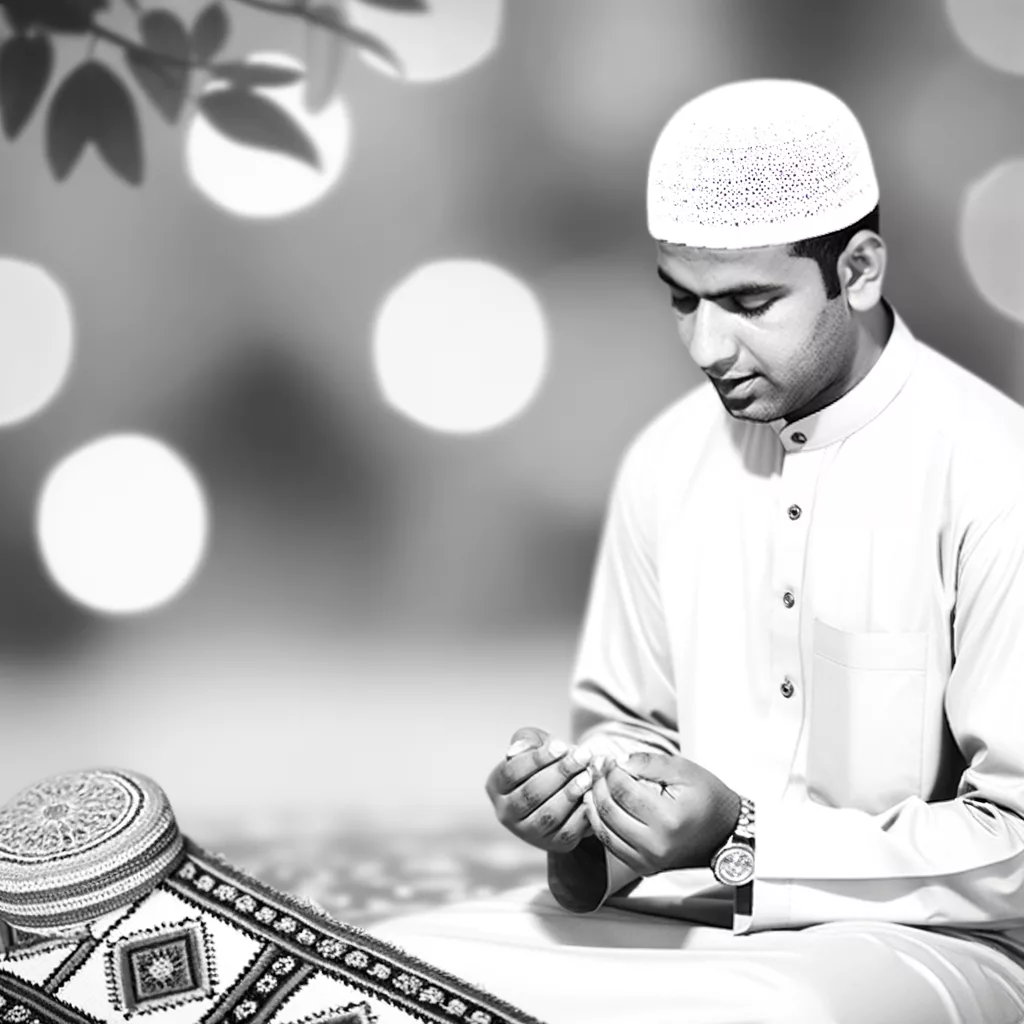
In the daily whirlwind of working life, many Muslims sometimes feel a slight tension between their spiritual commitment and the demands of the office. How can you preserve your Muslim faith, honour the practice of Islam, perform the prayer (salat) with khushu and stay faithful to halal food, while thriving in a secular and sometimes unaccommodating environment? This deep and personal question runs through the hearts of thousands of men and women who want to stay connected to Allah even when the schedule seems to stand in the way of the tranquillity of dhikr or the serenity of the Friday prayer, jumu’a.
Beyond the breaks squeezed between two meetings and meals eaten on the go, the reality of modern work raises questions about the place of Islamic spirituality and of the Muslim community in professional life. Savouring a break for du’a, recognising the times set aside for supplication, taking care over halal food in standardised canteens… these simple gestures are also pillars of our Muslim identity. But how can we anchor them lastingly, without faith fading behind the demands of efficiency or the anonymity of the group?
More than a logistical challenge, keeping up the practice of Islam at work reveals a deep desire for consistency between inner life and presence in the world. For understanding the Qur’an in Arabic, memorising a verse during a short break, or even reflecting on the sunna and the words of the companions of the Prophet are all ways of rekindling the light of faith where it might flicker. This is where learning Arabic, immersing yourself in the sound of Classical Arabic without systematically resorting to translation, takes on its full meaning: praying in Arabic in the middle of an ordinary day, living spirituality differently, enriching your spiritual routine without separating it from your working reality.
This article aims to offer a space for reflection and advice, combining inspiration, teaching and kindness. It invites you to explore new spiritual habits at work, to redefine the balance between Muslim identity and the professional world, and to discover how learning Arabic, care over halal food, and the salat performed with presence and gratitude towards Allah nourish far more than a ritual: they build inner serenity and lasting peace, even at the heart of modern activity.
Throughout these pages, whether you are a beginner in the practice of Islam, a traveller in the world of immersion in Arabic, or an experienced soul on the path of spiritual well-being, let yourself be guided towards an authentic way of combining faith, work and harmony. For preserving your Islamic spirituality at work is not only possible: it is an opportunity to elevate your daily life, with love of Allah, sincerity and light.
Bringing prayer into working life: nourishing your Muslim faith despite the constraints of work
Bringing prayer into your working life is an act as discreet as it is powerful, shaping the Muslim faith in all its aspects, even at the heart of the obligations of the working world. Many fear that the constraints of timetables, the pressure of tasks or the unfamiliarity of those around them will become obstacles to performing the salat. Yet the salat was conceived as a breath for the soul, a regular appointment with the Most High that brings serenity and meaning, even in the midst of agitation.
Stopping for a few moments to perform the prayer means summoning the essence of Islamic spirituality where we often miss it most: in the routine and tension of daily life. The salat, with the khushu it seeks, recalls patience in Islam, gratitude towards Allah, humility and the eternal perspective of things. Each prostration then becomes a source of inner peace, a precious anchor for resisting stress and keeping a clear mind. In this space, the practice of prayer in Islam transcends the mere ritual gesture to nourish lasting spiritual well-being, transforming the experience of work into a form of continuous worship.
Learning Arabic, or starting immersive learning of Arabic without translation, can intensify this connection through the direct recitation of the Qur’an in Classical Arabic, reciting Islamic supplications (du’a) or dhikr with real understanding, and reflecting on tajwid. Understanding the Qur’an better, even just a few surahs, gives depth to every unit of prayer, as does holding to the sunna in your posture and to the science of hadith for your intention. Even the break for jumu’a, dedicated to the Friday prayer, then becomes an opportunity to reconnect with the Muslim community and to draw inspiration from the sira of the Prophet and the companions of the Prophet, strengthening the consistency between Muslim identity and professional life.
In this routine, prayer takes its place not as a hindrance but as a sacred common thread. It recalls the wisdom of moderation (wasatiyya), the strength of sincerity in Islam, the importance of repentance (tawba) and the continuous effort to remain present to Allah. When every break becomes a moment of contemplation, faith unfolds, irrigates every decision and offers the peace known only to those who place Allah at the centre of their lives, whatever their environment and responsibilities.
Spiritual breaks and halal food: keeping up the practice of Islam and Islamic spirituality in the workplace
In the frantic pace of daily work, preserving your Muslim faith is not simply a matter of will, but of a conscious commitment to keep Islamic spirituality alive at the very heart of the working day. Finding meaning and peace through spiritual breaks such as the salat – those precious moments when you reconnect with Allah in gratitude, sincerity and khushu – acts as an inner breath. Every prayer, every dhikr, every du’a whispered discreetly between two tasks becomes a source of balance, patience and inner peace, offering a pause of spiritual well-being in the midst of stress. The jumu’a prayer also has a community dimension, recalling the importance of being rooted in the umma, even in the workplace, where you sometimes share this moment with Muslim colleagues, thus strengthening Islamic solidarity and brotherhood.
Keeping up the practice of Islam is not limited to prayer; it is also embodied in respecting halal food, an act of fidelity to your Islamic ethics and to your spiritual health. Taking care to consume products that respect the dietary prohibitions of Islam is a form of continuous tawba, a concrete way of living your faith right down to your plate, even when the working environment does not always offer an obvious solution. It invites vigilance, community mutual help – sometimes by sharing a halal meal with other colleagues – and gratitude towards Allah for His blessings.
It is often in these moments of recharging that the desire to deepen your bond with the Qur’an emerges spontaneously. Many take advantage of a quiet break to read the Qur’an in Arabic, strengthen their memorisation of the Qur’an or perfect their recitation with tajwid. Learning Arabic, through immersion in Arabic and listening to passages without translation, allows the words of Allah to touch the heart without a filter, reawakening the original beauty of the revelation. The break at work can then become a privileged space for understanding the Qur’an, reflecting on the sunna, revisiting an episode of the sira of the Prophet or drawing inspiration from the patience and akhlaq of the companions. Little by little, the working routine takes on a subtle spiritual dimension, linking material demands to the essence of inner life.
In this way, every break and every choice becomes part of a personal journey, nourishing the Muslim faith, cultivating lasting spiritual well-being and reaffirming a Muslim identity that is calm, generous and focused on excellence in the practice of Islam, however complex the professional world may be.
From prayer in Arabic to understanding the Qur’an: why learning Arabic and immersion matter for living your faith at work
Practising your faith at work is not limited to performing the prayers in Arabic or respecting halal food. At a deeper level, it is also the search for meaning and authenticity in every act. Learning Classical Arabic then appears as a living bridge to the heart of Islamic spirituality. When you immerse yourself in Arabic without translation, prayer is no longer reduced to mere recitation but becomes an intimate conversation, full of khushu and presence to Allah. Understanding the Qur’an in Arabic reveals the nuanced beauty of the divine message: every word read in the Qur’an, every verse memorised, resonates differently when you grasp its subtleties, its images and its own music. Immersion in Arabic thus offers a deep spiritual experience, whether during the Friday prayer, in Islamic supplications or in silent dhikr between two meetings.
This gradual mastery also makes it possible to deepen your knowledge of the tafsir of the Qur’an, the science of hadith, the sunna and the sira of the Prophet, in order to bring their teachings into your working routine. Patience in Islam, gratitude towards Allah, sincerity at work, moderation in behaviour: all these aspects of Muslim ethics take shape and meaning when they are lived in the mother tongue of the revelation. Far from feeling isolated in the tumult of the professional world, the believer anchors their practice of Islam in a living understanding of the texts and in the memory shared with the companions of the Prophet, the ahl al-bayt and the whole Muslim community over the centuries. Learning Arabic thus becomes a daily source of inner peace, spiritual well-being and a calm Muslim identity, even under the pressure of modern life. It turns the break room or the office into a space where love of Allah, the remembrance of the Prophet and the inexhaustible light of the Qur’an in Arabic flow, infusing every moment of work with authentic spirituality.
Muslim community, Islamic ethics and well-being: finding the balance between professional demands and Muslim identity
Daily working life can sometimes seem like a testing ground for those who want to keep a strong Muslim identity while meeting the demands of modern life. Yet there is a subtle balance between commitment at work, the practice of Islam and personal well-being, a balance the Muslim community never stops cultivating, even in a minority context. The values of Islamic ethics such as sincerity in Islam, patience, modesty and setting an example then take on their full meaning: they guide conduct in the salat, strengthen khushu in the Friday prayer, call for gratitude towards Allah after a success and for repentance in Islam after a mistake. Fitting harmoniously into your working environment does not mean putting your faith on hold. It is also often an opportunity to forge strong bonds with your peers, to highlight Islamic culture and to share the principles of justice, solidarity and respect championed by Islamic civilisation.
Talking with other Muslims at your workplace, living key moments such as Ramadan or jumu’a together, organising halal meals or simply discussing Islamic education and Islamic spirituality all help strengthen this sense of belonging to the Muslim community. It encourages everyone to live their faith with complete peace of mind and to face stress and professional challenges with renewed serenity. Understanding the deep meaning of the rites, from the salat to Islamic supplications, taking root in the wisdom of the companions of the Prophet and in the sira of the Prophet, drawing on reading the Qur’an in Classical Arabic or memorising the Qur’an while practising tajwid, all nourish this search for balance and inner peace. Learning Arabic and immersion in Arabic, without translation, also make it possible to absorb the nuances of the divine message and to deepen the science of hadith or the tafsir of the Qur’an, so as to better integrate the principles of Islamic ethics into every aspect of professional life.
Over time, these efforts not only enrich individual practice but also help to show Islam in France in a positive light, encouraging dialogue, solidarity and recognition of diversity within the working world itself. Muslim identity, far from hindering performance and integration, then becomes a source of inspiration for cultivating spiritual well-being, emotional balance and professional success, in keeping with the universal values carried by Islam.
Ultimately, maintaining your Muslim faith in a professional setting is much more than a daily discipline: it is an intimate journey in which prayer in Islam, halal food and the constant care of Islamic spirituality become essential landmarks in a world on the move. Throughout our working days, our prayer breaks, our commitment to halal food and our efforts to preserve Islamic ethics are not mere gestures but the discreet foundations of a rich and aligned inner life, even beyond the familiar walls of the mosque or the family home.
Learning Arabic, especially through immersion in Arabic and natural exposure to Classical Arabic without translation, opens deeply transformative horizons for faith at work. Understanding the Qur’an in Arabic, savouring the beauty of tajwid when reading the Qur’an, memorising verses, reflecting on the tafsir of the Qur’an, deepening the science of hadith and the sunna of the Prophet, going through the accounts of the sira, drawing inspiration from the wisdom of the companions of the Prophet and the ahl al-bayt: all of this nourishes a direct bond, without intermediary, with the sources of Islamic spirituality. Language thus becomes a living bridge between the intellect and the heart, between formal worship and the light of khushu in prayer.
Finding the balance between professional demands and Muslim identity also means realising that faith does not stop at the office door. It is in everyday gestures, in patience in Islam in the face of adversity, sincerity in Islam in dealings with colleagues, and gratitude towards Allah even in difficulty, that the strength of a spiritual routine is revealed. Islamic supplications, discreet dhikr, du’a whispered in silence and constancy in tawba all pave the way to deep well-being, far more lasting than simple stress management.
This consistency between faith and professional life nourishes the soul and has an impact on the Muslim community as a whole. It recalls the nobility of an authentic Islamic ethic, inspired by centuries of Islamic civilisation, the Andalusian caliphate, Islamic science and art, and strengthened by the traditions of Ramadan, fasting in Islam, the hajj and Eid. It prepares us to pass on, by example, a calm Muslim identity to Muslim youth, to Muslim children engaged in their Islamic education, to the Muslim couple and to every Muslim family facing the realities of Islam in France.
Finally, preserving your faith at work means rediscovering the strength of Islamic solidarity, community mutual help, modesty in Islam and respect for secularism, while honouring your history, your Islamic culture, your inner peace and your constant love of Allah and His Prophet. It means cultivating, every day, this intimate light — whether you are in front of the computer, facing colleagues or just before the call to the jumu’a prayer — for a professional and spiritual life reconciled, guided by the memory and vitality of the original sources of Islam.
Further reading: discover our online Arabic courses for adults, or read “Learning Arabic to cultivate gratitude towards Allah every day” and “Learning Arabic to verify the authenticity of hadiths“.



