
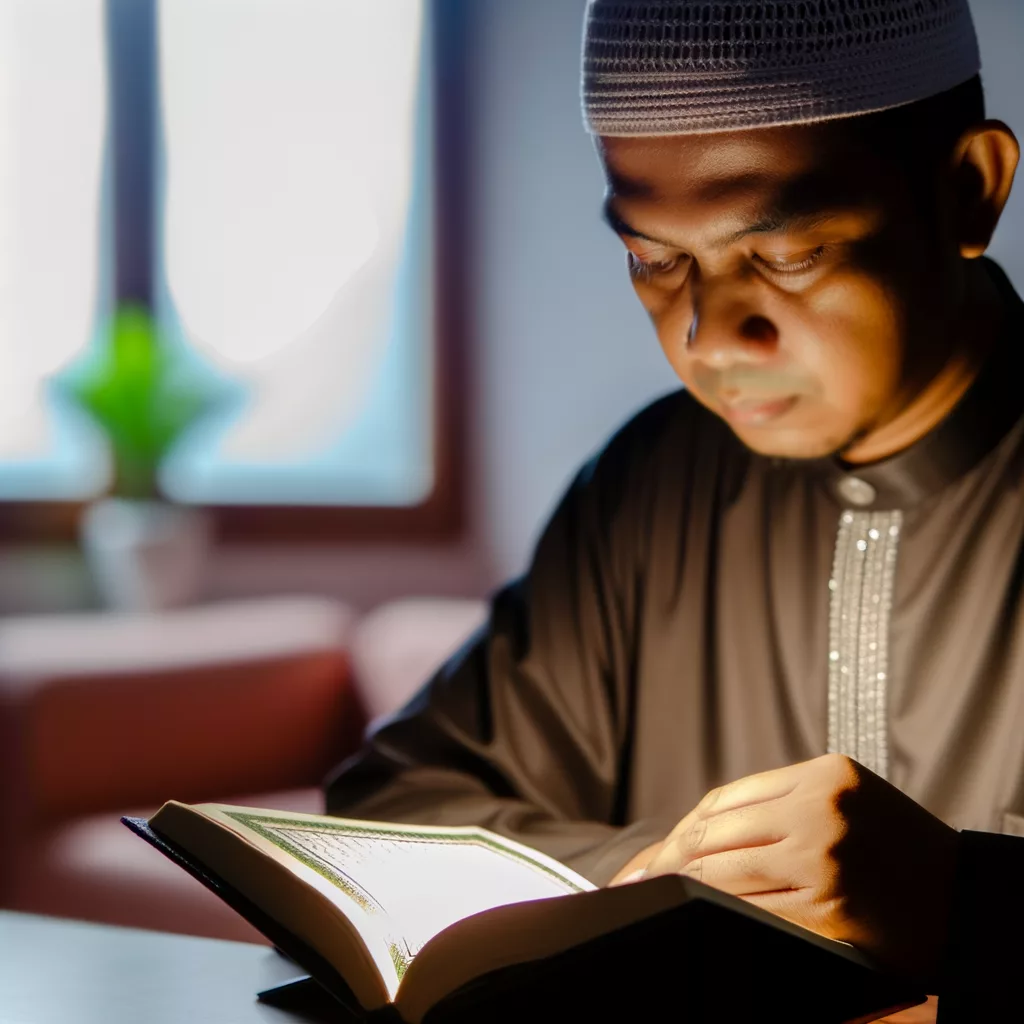
Every day, between the tumult of the world and the rush of our lives, a subtle and silent light waits to be awakened in our hearts: gratitude towards Allah. For the believer, gratitude is not a mere thank-you uttered in haste. It resonates like a silent prayer, reflecting the deep beauty of the Muslim faith, from the first revealed verses of the Qur’an in Classical Arabic to the discreet gestures of daily prayer. How can we learn to feel this gratitude, place it at the centre of our Islamic spirituality and turn it into habits that enrich our daily lives? Learning Arabic and immersion in Arabic open a unique door to understanding the Qur’an in its original language, absorbing the sunna of the Prophet and catching the subtle nuance of every supplication, every dhikr, every breath of thanks.
Entering the authentic dimension of gratitude towards Allah means, for every Muslim man and woman, weaving a new bond with the primary sources of Islam: reading the Qur’an, the echo of the hadiths, the living memory of the sira of the Prophet and the inspiring accounts of the companions. Far from methods based on mechanical translation, direct immersion in Arabic invites us to feel the intensity of a word, the warmth of a supplication, the depth of a verse recited with tajwid and contemplated in the light of the tafsir of the Qur’an.
But how can we bring this gratitude into our daily lives? How can we let it emerge in every moment through the practice of the salat, dhikr or du’a? And above all, how can we nourish it, root it and amplify it through a truly immersive approach to learning Arabic, one that brings meaning to life before the word? It is in this quest that small routines begin, inspired by the companions of the Prophet and the ahl al-bayt and running through the history of Islam: love of the Prophet, the Ramadan fast, patience in trials, or the vibrant breath of the Friday prayer at the mosque.
Rediscovering gratitude towards Allah means reconnecting with the very essence of Islamic spirituality, but also with a rich educational tradition that values immersion, understanding the Qur’an in Arabic and the enlightened practice of Islamic supplications. As you read these pages, explore how these daily exercises transform the way we see the world, soothe the heart and invite deep spiritual well-being. You will discover a path of balance, peace and awareness, open to every sincere person who wishes to open up to the light of meaning, the beauty of the word and true gratitude towards the Creator.
Rediscovering gratitude towards Allah: Qur’anic roots and immersion in Classical Arabic
Rediscovering gratitude towards Allah means anchoring yourself in the very roots of the Qur’an and of Islamic spirituality. When you seek to deepen your practice of gratitude, the Arabic language – and especially immersion in Classical Arabic – becomes a true travelling companion. The Qur’an in Arabic, in its original beauty, reveals nuances of meaning and spiritual treasures that translation struggles to convey. For example, the term “shukr” – gratitude towards Allah – recurs in different forms throughout the Qur’an, the sunna of the Prophet and the teachings of the companions of the Prophet and the ahl al-bayt. Each verse offers a palette of words and expressions that precisely describe the states of the heart and the various subtleties of the Muslim faith, often untranslatable into another language.
Living immersion in Arabic and learning Arabic without translation is like entering a garden where every flower is a revealed secret: every Qur’anic root, every Islamic supplication (du’a, dhikr), every verse recited with careful tajwid becomes an opportunity to connect with Allah with renewed sincerity. Learning Arabic, in its Qur’anic dimension, widens access to the tafsir of the Qur’an, the science of hadith and the richness of the sira of the Prophet. This direct connection to the sources turns mere words into a living and conscious practice, immersing the believer in gratitude, khushu in prayer and active recognition of every divine blessing, whether spiritual health, patience in Islam, the Muslim family or Islamic solidarity.
Restoring gratitude to its authentic depth also means turning to the daily recitation of the Qur’an, memorising verses and bringing Classical Arabic into your spiritual routine. Knowledge then becomes not only intellectual: it nourishes the heart, inspires the Islamic education of children, strengthens the practice of voluntary fasting and reflection during Ramadan or at the Friday prayer (jumu’a), and invites a deeper love of Allah, rooted in a subtle understanding of the divine words. Learning Arabic opens a door to the light of the Qur’an, so that gratitude is lived not as an abstract concept but as a living impulse every day, at the very heart of the practice of Islam and Muslim spiritual life.
Expressing gratitude in daily practice: dhikr, du’a and prayer in Islam
Expressing gratitude to Allah in daily practice is a living art, an attitude that permeates every moment of the believer’s life. Whether through dhikr, those formulas of remembrance recited softly or in silence, or through du’a, personal and sincere supplication, gratitude becomes an invisible thread linking the heart to its Creator. In prayer in Islam, the salat, every prostration is an opportunity to reconnect deeply with the source of our existence, feeling humble gratitude for all the visible and hidden gifts that Allah grants day after day. This bond grows stronger as you make the effort to learn Arabic and immerse yourself in Classical Arabic, because understanding the Qur’an in Arabic, grasping the beauty of tajwid during recitation or reflecting on a verse in the tafsir of the Qur’an gives gratitude a new dimension: it becomes intimate and meaningful, lived with the heart and no longer only with the tongue. The hadiths, handed down with precision by the companions of the Prophet and members of the ahl al-bayt, abound in examples where gratitude shapes the Muslim faith and flows through Islamic spirituality. Practising Islam in this way, letting gratitude infuse every rukū‘, every sujūd and every word of supplication, invites inner tranquillity and renewed awareness. The days of Ramadan, the night vigils of Laylat al-Qadr and the Friday prayer (jumu’a) are all opportunities to refine this practice and to educate the heart, and Muslim children, in gratitude, so that it becomes second nature, a spiritual routine rooted in every Muslim family and every morning of the Muslim community. Gratitude is thus not limited to an emotion but becomes a light guiding our actions, a breath that elevates the soul and purifies intention, a pledge of love of Allah and attachment to the prophetic tradition, at the very heart of daily life.
Learning Arabic to feel gratitude at the heart of the Qur’an and the hadiths
Feeling gratitude towards Allah in the depths of your heart can only be fully lived by immersing yourself in the divine language. Learning Arabic then opens a unique door: a direct connection with the Qur’an in Arabic, the hadiths, supplications, prayer and the history of the companions of the Prophet, without filter or translation. This immersion in Arabic plunges the believer’s heart into the original revelation, in an intimate dialogue where every word, every rhythm and every breath of the sacred text resonates differently and feeds the feeling of gratitude. As you progress in learning Classical Arabic, you discover that gratitude towards Allah is not a mere moral recommendation but a vital force that shapes aqida, inspires patience and sincerity in Islam, raises prayer in Islam to true khushu and guides repentance towards authentic tawba.
Reading or memorising the Qur’an in its original language, pronouncing its verses correctly thanks to tajwid, and tasting the sweetness of dhikr and du’a while understanding each call of the heart, places gratitude at the centre of your spiritual routine. Without this intimate understanding, even the most beautiful recitation loses some of its light, because only immersion lets you feel love of Allah, love of the Prophet and the breath of the sunna that drives Muslim spiritual life. Learning Arabic turns listening to the adhan at the mosque, the Friday salat and the great milestones of the Islamic year, from Ramadan to Eid al-Fitr or the hajj, into deeply meaningful experiences. For then every word, every supplication and every phrase spoken carries a living meaning, reconnecting with the prophetic tradition, the sira and the science of hadith, and weaving an unbreakable bond with the Muslim community.
Through reading the Qur’an in Arabic, reflecting on tafsir, diving into the history of Islam, planning a journey to Makkah for the umrah or the hajj, educating Muslim children or seeking spiritual well-being in modern daily life, learning Arabic becomes an act of gratitude in itself. It means choosing, out of humility and love, to honour the word of Allah as it was revealed, to place your Muslim faith in the continuity of the generations and to pass this light on to those close to you, in the Muslim family or the community. Learning Arabic is not only about broadening your knowledge: it is about being stirred, moved and transformed in the light of the most beautiful of languages, and making gratitude a joyful pillar of your spiritual health.
Immersive gratitude exercises: routines inspired by the sunna and the companions of the Prophet
Adopting a routine of gratitude towards Allah, a true key to spiritual well-being in Muslim life, takes on a unique depth when it draws on the authentic practices of the sunna and the companions of the Prophet. At the heart of this routine, immersion in Arabic plays a fascinating role: it lets you live dhikr, du’a and the salat in the language of the Qur’an, weaving an immediate and sincere bond with the sacred text. The companions of the Prophet, may Allah be pleased with them, naturally wove expressions of gratitude into each of their daily actions and were careful to thank Allah with simple words, but in Classical Arabic, such as al-hamdu lillah, subhanAllah or shukr lillah. Recreating such a routine at home means beginning and ending the day with Islamic supplications in Arabic, consciously pronouncing each word to feel its deep resonance, far beyond mere translation.
This way of learning Arabic without direct translation nourishes the soul, because every formula memorised becomes a bridge to understanding the Qur’an in Arabic and to intimate access to the tafsir of the Qur’an, the science of hadith and all the treasures of the Islamic tradition. It is valuable, for example, to practise pronouncing the formulas of gratitude regularly and then reflect on their meanings by listening to tajwid when reading the Qur’an, or to absorb the context and wisdom of the supplications reported in the hadith. These immersive exercises naturally develop sincerity in Islam and patience in Islam, two qualities so strongly recommended by the Prophet, by strengthening khushu in prayer and awareness of the heart during each salat.
For Muslim families, setting up collective moments of gratitude, reciting together the references to gratitude scattered through the sira of the Prophet and sharing edifying episodes from the companions of the Prophet or the ahl al-bayt, supports the Islamic education of Muslim children and shapes character and Muslim identity from an early age. Even outside the family, listening attentively to the adhan at the mosque followed by silent thanks to Allah, or regularly writing a shukr journal in Arabic, are habits inspired by the pious generations that anchor the Muslim faith in a living and dynamic practice, far beyond theoretical learning.
At every stage of the day—after eating, receiving good news or even overcoming a trial—the first Muslims expressed their gratitude, linking each moment to Allah and His mercy. Immersing yourself in this tradition means choosing to make gratitude an art of living, nourished by the language of the Qur’an, refined by the practice of a spiritual routine, and rooted in authentic Islamic spirituality as it shone under the breath of the Prophet and his companions.
At the end of this journey through the importance of gratitude towards Allah, a luminous thread links every aspect of our lives to this founding value of the Muslim faith. Rediscovering gratitude in the light of the Qur’an in Classical Arabic means opening yourself to an authentic, deep and vibrant understanding of the divine word. Learning Arabic, far from being reduced to a mere linguistic effort, then becomes a path to the heart of the Qur’an, the hadiths and the sunna of the Prophet, a door to the science of hadith, the sira and the teachings of the companions of the Prophet and the ahl al-bayt. By living this immersion in Arabic, without systematically resorting to translation, the true meaning of dhikr, du’a, prayer in Islam and daily supplications reveals itself more intensely to our soul and nourishes our Islamic spirituality.
Integrating gratitude into your routine also means living it every day, through the salat, khushu in prayer, reciting and memorising the Qur’an with tajwid, but also through moments of patience, sincerity and repentance in Islam. Every supplication, every smile exchanged for the love of Allah, every silence filled with gratitude brings us closer to a more intimate and sincere relationship with our Creator. Immersive exercises, inspired by the sunna and the biography of the Prophet and his companions, give gratitude a living, concrete and tangible dimension at every stage of life: whether a moment of trial through tawba, a moment of joy during Ramadan or reading the Qur’an on the nights of Laylat al-Qadr, a Friday prayer at the mosque, or sharing zakat and sadaqa.
For those who aspire to understand the Qur’an at the source, learning Arabic without translation becomes an act of love for Allah, for His Messenger and for the prophetic tradition. It means reconnecting with the spiritual, intellectual and cultural ecosystem of Islam and opening up to the beauty of fiqh and the madhahib, the wisdom of the scholars, everyday Islamic ethics and the great history of Islamic civilisation. It means giving meaning to every small act of gratitude, every whispered prayer, every gift of charity and every gesture of kindness towards the Muslim family, the community, children and young people, even in a contemporary or minority context such as Islam in France.
Gratitude towards Allah is not limited to a feeling or a word. It takes root in practice, grows through understanding, shines in the language and shapes the inner peace every believer seeks. By reconnecting with immersion in Arabic and diving into reading, studying and reflecting on the Qur’an and the hadiths in their original language, gratitude becomes breath, light, stability and a source of spiritual well-being that flows through the believer’s whole life. Whether through raising children, married life, volunteering, mutual help or simply daily routine, it invites moderation, a balanced wasatiyya and modesty, in keeping with the teachings of the Prophet.
Ultimately, cultivating gratitude towards Allah through genuine immersion in Arabic and a practice rooted in the living tradition of Islam offers your heart a space of deep peace and inner light. The believer then finds in every word, every act and every moment a renewed opportunity to say “alhamdulillah” with sincerity, understanding and presence — and to flourish fully in Islamic spirituality, here and now.
Further reading: discover our online Arabic courses for adults, or read “Learning Arabic and living your faith calmly at work” and “Learning Arabic to understand fiqh, aqida and tafsir“.



