
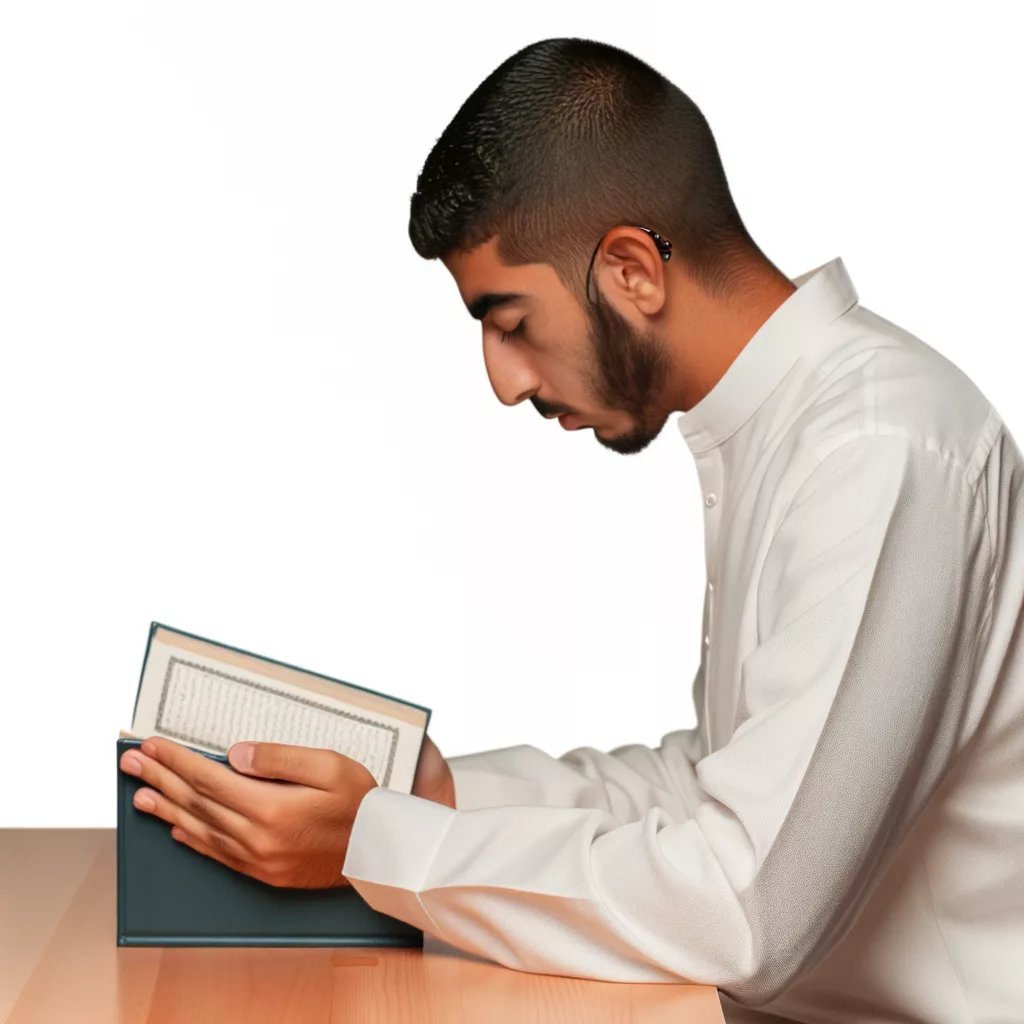
In the heart of every Muslim resonates a deep desire: to understand, to love and to live in the light of the life of the Prophet Muhammad (peace and blessings be upon him). His existence was a succession of key moments, overwhelming revelations, sublime trials and gestures of universal love, whose echo continues to illuminate Islamic spirituality to this day. But behind the well-known outlines — the revelation of the Qur’an, the Hijra, the battles, the brotherhood in Medina, patience in the face of trials — how many details, subtle meanings and spiritual resources are accessible only to those who choose to learn Arabic, the living language of the Qur’an and the authentic hadiths?
Diving into the sira of the Prophet without going through translation means treating yourself to an immersion in Arabic, a direct experience that transforms the way you see and understand. It means discovering the force of the original words, the unequalled beauty of literary Arabic, the depth of the Qur’an in Arabic recited with tajwid, the finesse of the science of hadith and the fraternal warmth of the companions of the Prophet. Every word pronounced or heard in the language of the Messenger reveals a part of the miracle: history comes alive, tradition takes root, and the heart travels from the desert of Mecca to the lively streets of Medina, following the prophetic epic as close to reality as possible.
Why do so many believers, Muslim families, young people and children in France and elsewhere aspire to this unique connection with their heritage? Because they sense that the ultimate meaning of the Qur’an, the understanding of the sunna and the light of the Muslim faith can only fully blossom through immersive learning of Arabic. Understanding the Qur’an in Arabic, savouring every verse, grasping the precision of a hadith, tasting khushu in prayer or the depth of a du’a invocation: all this shapes a living, authentic Islamic spirituality.
This article is an invitation to walk in the footsteps of the Messenger, to rediscover the decisive moments of his life, their teachings and their formative power, through the precious prism of learning Arabic without translation. More than a language, it is about reconnecting with the soul of a civilisation, a history and a community; about rediscovering, in reading the Qur’an, recitation, dhikr, patience in Islam and gratitude towards Allah, a heritage of wisdom that guides us today, from the intimacy of salat to the great festivals of the Muslim calendar, from Ramadan to the brotherhood of the pilgrimage. Through this immersion, the prophetic past illuminates the present and opens horizons of peace, love, gratitude and spiritual well-being, for the whole Muslim community and for every sincere heart in search of meaning.
Understanding the sira of the Prophet: why learning Arabic changes the way we see the Messenger’s life
Entering the sira of the Prophet (PBUH) means placing your heart as a witness to the founding moments of the history of Islam, but above all it means seeking to understand deeply the mission of the Messenger and the richness of his teachings. Yet through mere translation, a subtle mist comes between us and the clarity of his lived experience: the nuance of a word, the force of an invocation recited during a trial, or the beauty of a decision taken in the light of revelation. This is where learning Arabic radically transforms our relationship with the life of the Prophet. Learning Arabic, and even more so living an immersion in Arabic, means rediscovering the sira no longer as a series of distant events, but as a living, vibrant account that springs forth in its original language.
Imagine hearing the words of the Messenger during the hijra, feeling the significance of the pact of al-‘Aqaba in the tone of literary Arabic, tasting the patience shown during the trials of Mecca, understanding the hadiths in their authentic form, without the artificial intermediary of translation or the vagueness of approximations. This direct link offers a kaleidoscope of meaning that only the language of the Qur’an in Arabic can unfold: the subtlety of the word sabr, the gentleness of tawba, the promises of hope in the verses revealed in the face of adversity, or the tenderness of the Prophet’s invocations in the depths of the night. Each of these expressions carries within it a world that only learning Arabic allows you to enter.
Learning Arabic without translation means internalising the sira of the Prophet and opening yourself to an Islamic spirituality fully embodied in the words chosen by Allah and passed on by His Prophet. A deep understanding of these words shapes the practice of Islam, nourishes the Muslim faith, and invites you to live patience in Islam, gratitude towards Allah and love of the Prophet with renewed sincerity. In attentive listening to the Qur’an in Arabic, in reading the Qur’an and memorising the Qur’an, every detail takes on meaning, every verse connects to the story of the Prophet and his companions, and every account becomes a path towards khushu in prayer and inner peace in Islam.
Following the sira in literary Arabic brings you closer to the source, sheds new light on the sunna, and gives substance to the Islamic education of children or to the practice of dhikr and du’a. It also means embracing the whole transmission of the Islamic sciences: the science of hadith, the tafsir of the Qur’an, fiqh, aqida – so many treasures placed in the language of the Messenger, which vibrate with a unique flavour for anyone who takes the immersive path. In this way, learning Arabic becomes a key to the prophetic tradition, to the history of Islam, and to that Muslim identity shaped by revelation as it was lived, passed on and meditated upon in the very language of mercy.
From the revelation of the Qur’an to the first companions: immersion in Arabic and the authentic transmission of teachings
When the Revelation came down upon the Prophet Muhammad (peace and blessings be upon him), a new breath of life swept through the Arabian peninsula. The Qur’an, passed on in literary Arabic, became the first and unaltered source of the Muslim faith, of Islamic spirituality and of the practice of Islam. The first companions of the Prophet – Muslim men, women and children – were plunged without transition into a total immersion in Arabic, understanding every verse and every word without the filter of translation. Their learning of Arabic happened naturally, at the pace of the revelations, setting the rhythm of their prayer in Islam, their Islamic invocations, their dhikr and even their daily lives.
It was by listening attentively to the recitation of the Qur’an in Arabic, often during the Friday prayer at the mosque or in the quiet of the home, that the companions acquired the taste, the intonation and the deep meaning of the divine word. This immersion allowed them not only to anchor their memorisation of the Qur’an, but also to taste the beauty of tajwid and the subtlety of the tafsir of the Qur’an that were developed later. Their relationship with the sunna of the Prophet and with the science of hadith followed on from this sensory experience: learning Arabic in its authenticity in order to grasp the exact teaching of the sira of the Prophet, of the ahl al-bayt and of the scholars of Islam. Arabic, passed on by word of mouth, then became the cement of the Muslim community, forging a shared Muslim identity and uniting hearts in love of the Prophet and gratitude towards Allah.
Through this living transmission, it was not only a matter of understanding the Qur’an in Arabic or practising salat in accordance with the sharia and fiqh. Above all, it was about anchoring faith in the heart, feeling khushu in prayer, and learning patience in Islam, sincerity, tawba and moderation through the Ramadans, hajj, voluntary fasts or the invocations of Laylat al-Qadr. In the face of the trials of the history of Islam, this method of immersion in Arabic fostered the faithful preservation of doctrine (aqida), the transmission of hadith and even the development of the whole of Islamic civilisation – from the education of children in Islam to Islamic ethics, by way of art, Islamic calligraphy and the Islamic library that would nourish future generations. Thus, from the first companions of the Prophet to the Muslims of France today, the living link of the Arabic language remains the key to a rooted, deep and luminous Muslim spiritual life.
The Prophet’s great trials and learning patience in Islam: spiritual strength is born from listening to literary Arabic
The great trials of the Prophet Muhammad (PBUH) run through his whole sira and resonate to the very heart of our Muslim faith. The persecutions in Mecca, the boycott, the painful loss of those close to him – Khadija, his beloved wife, and Abu Talib, his protector –, the exile to Medina, the loneliness of the night at Ta’if, but also the moments when some companions did not understand, or the suffering of seeing his community attacked: all this makes up a path of trials that the Prophet illuminated through his patience, his constancy and his absolute trust in Allah. But how can you, as a French-speaking Muslim, feel the depth of this patience and benefit from it in your own Islamic education? An essential key lies in learning literary Arabic, in that immersion in Arabic which gives direct access to the words of the Qur’an and the sayings of the Prophet without filter or translation.
When you listen to the recitation of the Qur’an in Arabic, even without understanding everything at first, the melody of tajwid and the deep rhythm of every verse carry an invisible force. The Prophet himself found comfort and certainty in reading the Qur’an. By exposing yourself patiently to the sacred text and practising Arabic without translation, you adopt the method he passed on: reading, listening, meditating, sometimes weeping under the effect of a surah, feeling the warmth of patience (sabr) in every word that consoles and uplifts. The meaning of the word sabr, often translated as « patience », takes on its full relief and power when you meditate on it in literary Arabic, drawn from the source of the tafsir of the Qur’an and the hadiths, where every word opens up a horizon of meanings.
Learning Arabic then becomes much more than an intellectual ambition: it is a true path of spiritual transformation. The accounts of the Prophet’s life, dhikr, du’a and the whole vocabulary of faith and hope take root in immersion in Arabic. This approach sheds light on moments of doubt or trial: during a bereavement, when facing illness in the Muslim family, during the nights of Ramadan or at the dawn of hajj, understanding the surahs revealed in adversity becomes a source of peace and restored confidence. Memorising the Qur’an and Islamic invocations in their original language means cultivating patience in Islam as it was lived, not as mere waiting, but as an active energy, a source of khushu in prayer, gratitude towards Allah and unwavering love for the Prophet.
Thus, the great trials of the Prophet are not distant stories, but schools of life accessible to anyone who takes the step of learning Arabic. Through the Qur’an, the sunna and the sira, patience in Islam reveals itself as an art of serene endurance, whose strength is born of sincerity, presence and direct contact with the original language of revelation. Deepening your Arabic means reconnecting, as a child to a parent, with the prophetic tradition, reliving the trials and triumphs of the Messenger of Islam with overwhelming closeness, and placing your own life within this great chain of Islamic spirituality.
Inheriting the sunna, living Islamic spirituality: how Arabic without translation illuminates practice, prayer and dhikr every day
Living Islamic spirituality fully means inheriting the sunna of the Prophet, not only in rituals and outward practice, but above all through the deep presence, meaning and intention of every act. Many Muslims feel a distance between the beauty of the texts and their daily lives, as if an invisible veil separated them from the light of the prophetic message. This barrier often comes from learning Arabic through translation, where every word is captured but the spirit escapes. Yet learning Arabic through immersion, opening yourself to literary Arabic without a filter, allows you to taste the spiritual savour of the words of the Qur’an, the hadiths and the invocations without the mental distortions that translation produces.
Immersion in Arabic offers the unique feeling of entering into closeness with the Prophet and his companions, of hearing the Qur’an in Arabic as they heard it, of grasping the weight of the words in prayer, and of feeling the living breath of dhikr and du’a. When reading or memorising the Qur’an becomes a sensory, living experience, given rhythm by tajwid, every verse touches the heart before passing through the analysis of the intellect. Understanding the Qur’an in Arabic gives access to its richness, nuance after nuance, whether through the tafsir of the Qur’an, the study of the science of hadith, or contemplation of the wisdom of the sira of the Prophet.
In the practice of salat, when the surahs recited are no longer perceived as formulas to be carried out, but as living addresses to Allah, awareness (khushu) settles in naturally. Islamic invocations then take on a new depth: repentance (tawba), patience (sabr), gratitude (shukr), hope (raja), the love of Allah and of the Prophet — everything becomes more immediate, more embodied. The great moments of the Muslim calendar, from Ramadan to the pilgrimage (hajj, Umrah), become charged with meaning when their story and their rites are understood in the original language, that of revelation and of the prophetic tradition.
There is an inner peace in rediscovering the unity of actions and meaning, in recognising in every word of the Friday prayer (jumu’ah), in the muezzin’s adhan, or in the teachings of the scholars of Islam, the closeness of the whole Muslim community of yesterday and today. Learning Arabic without translation then becomes a path of sincerity in Islam and spiritual well-being, a soothing routine for the health of the heart. It also lights the way for transmission, at home, in the Islamic education of children, in sharing within the couple and the Muslim family, and in collective life at the mosque. The light that emanated from the Prophet’s household, from his akhlaq (conduct) and his serenity, then discreetly shines back on the learner’s awareness, inviting them to live Islamic spirituality as a living, humble and radiant heritage, at every moment of daily life.
Exploring the sira of the Prophet (PBUH) through the Arabic language means undertaking an inner journey where knowledge, light and trust meet. When you choose to learn Arabic, it is much more than simple language learning: it is an opening onto the depth of the Messenger’s life, onto the patience of the companions of the Prophet and the sincerity of the ahl al-bayt. Immersion in Arabic connects us to the original truth of the Qur’an, to the soothing strength of the sunna and to the humility of the great trials lived through in the Muslim faith.
Discovering the story of the Prophet without going through translation means fully experiencing the freshness of revelation, feeling the thrill of dhikr, moving towards khushu in prayer and tasting the authenticity of the science of hadith. The heart is then imbued with the nuances of gratitude towards Allah, love of the Prophet and the beauty of patience in Islam, as it is celebrated in every verse and every word of the Qur’an in Arabic. Learning literary Arabic becomes a bridge to Islamic spirituality, revitalising the spiritual routine and the practice of Islam in daily life.
Over time, Arabic without translation illuminates your understanding of tajwid, deepens the study of the tafsir of the Qur’an and brings memorising the Qur’an to life. It accompanies Islamic invocations, sincere repentance (tawba) and the breath of recitation during the nights of Ramadan, from Laylat al-Qadr to Eid al-Fitr. It shapes the soul during the high points of the Muslim calendar, from prayers at the mosque to the Friday jumu’ah, from hajj to Umrah, connecting you to the Muslim community all over the world.
As the immersion goes on, Arabic becomes a living link between faith and knowledge, between Islamic ethics, love of the good, and Islamic culture in all its diversity. It brings life to Islamic education, the Muslim couple, the family, the education of children in Islam, and even Muslim youth in search of meaning. It builds bridges between the eras of Islamic civilisation, from the Andalusian caliphate to the great Islamic universities such as Al-Azhar and Zaytouna.
The sira of the Prophet, lived in its own language, reveals balance (wasatiyya), modesty and inner richness, down to the deepest inner peace in Islam and the spiritual well-being sought by every believer. At every stage, immersive learning of Arabic renews the light in reading the Qur’an and in the practice of salat, and fosters repentance, humility, Islamic solidarity and dialogue. Learning Arabic means honouring the memory of the Prophet (PBUH), embracing the beauty of Islam in all its depth, and bringing to life every moment of your Muslim spiritual life, today and for ever.
Further reading: discover our online Arabic courses for adults, or also read “Sport, halal food and a healthy lifestyle: balance in Islam” and “Learning Arabic and managing your budget according to Islamic finance“.



