
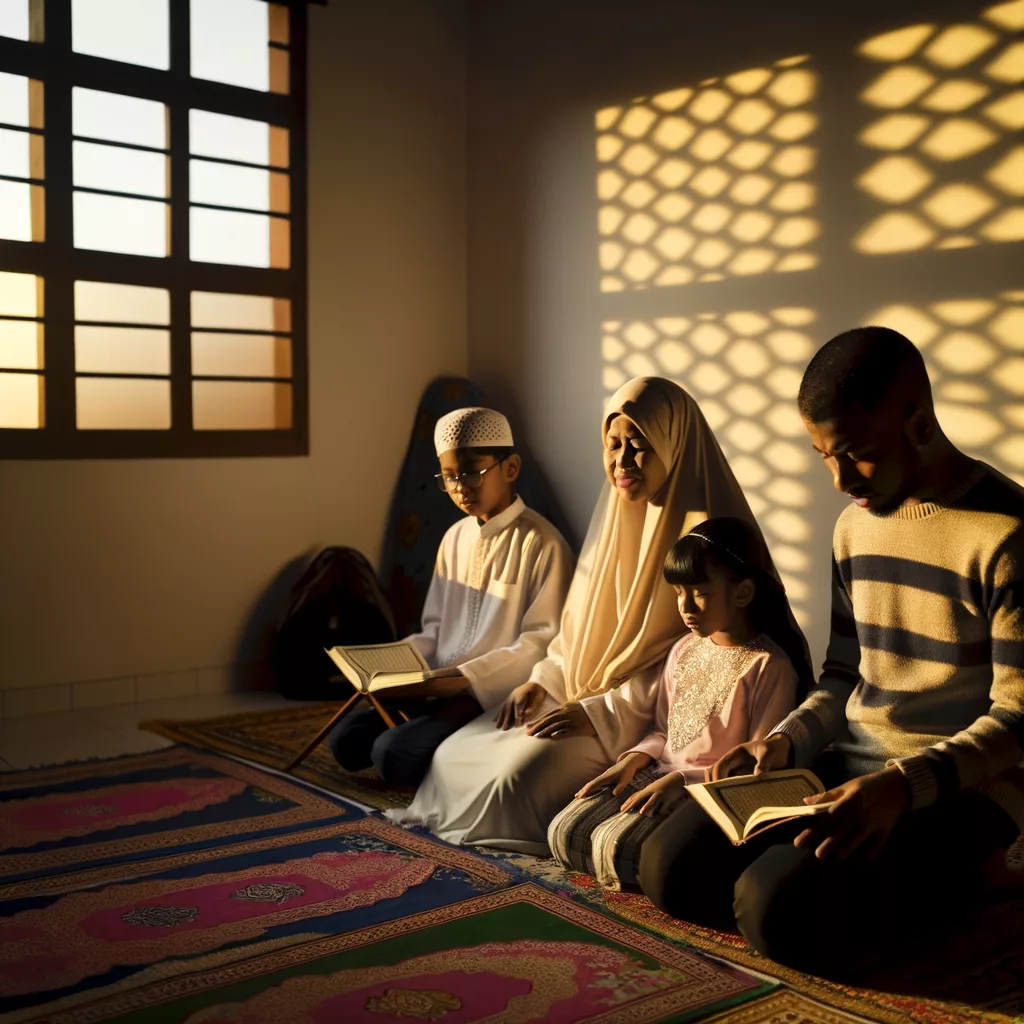
Imagine yourself standing in the coolness of a Ramadan morning. The first light filters through the window as the fajr adhan rises, gentle and soothing. Around you, the house is slowly waking: murmured du’a, the preparation of suhoor, and in every heart the sincere intention to fast, to draw closer to Allah, and to understand the Qur’an more deeply, read attentively in literary Arabic over the blessed days. This picture, full of spirituality and unity, is no accident, but the result of being firmly anchored in the Muslim calendar, that discreet and precious reference point that sets the rhythm of the believer’s life, from the sacred month of Ramadan to glorious Dhul Hijjah, from the trials of hajj to the renewed joy of the Eids.
For many, learning Arabic and living the Muslim faith to the full involve a gradual immersion, in which every date, every festival and every commemoration teaches much more than a mere religious fact: they reveal the depth of an Islamic spirituality anchored in sacred time. Thanks to the Muslim calendar, each event marks a stage on the inner path: prayer in Islam is savoured differently with awareness of Friday (jumu’ah), modesty is reflected upon in the light of the stories of the Prophet and the companions in the sira, gratitude is cultivated at each Eid al-Fitr, patience grows while waiting for hajj, and sincerity finds its meaning in the nights of Laylat al-Qadr.
But how can you avoid missing these precious appointments in a fast-paced modern life, where dates pile up without us often grasping their significance? How can you structure your year, your practice of Islam, your time for learning Arabic, and your moments of passing things on to your Muslim children, in the light of this age-old heritage? The Muslim calendar is not just a planning tool, but a discreet companion that guides you towards knowledge of the Qur’an in Arabic, love of the sunna, and the regular discovery of the Islamic sciences – from tajwid to the science of hadith, from daily dhikr to the great acts of solidarity such as zakat or Muslim volunteering.
This article invites you to explore how to use the Muslim calendar to live every important date, strengthen Islamic education, nourish your faith and learn Arabic in its natural context, as close as possible to its sacred meaning, without translation. Between spiritual grounding and practical advice, discover how this calendar can transform your relationship with time, with the Muslim community, with the history of Islam and with Islamic culture, so you can move forward each day with intention, gratitude and clarity.
The Muslim calendar: an essential reference point for the practice of Islam and spiritual education
The Muslim calendar, much more than a simple tool for measuring time, is a true reference point that sets the rhythm of spiritual life and the practice of Islam. Every month and every date is imbued with deep meanings that nourish the Muslim faith and frame the individual and collective spiritual routine. Using this calendar mindfully means entering an ancestral heritage and connecting your daily life to the history of Islam, of the companions of the Prophet and of the great stages of the sira. It also means giving your year its rhythm with Ramadan, fasting in Islam, the sacred days of Dhul Hijjah, hajj, and festivals such as Eid al-Fitr and Eid al-Adha.
Beyond the obligations, the Muslim calendar is a reminder of the importance of time and organisation in making progress in Islamic education and Islamic spirituality. It structures prayer in Islam, and encourages inner preparation for reading the Qur’an, memorising the Qur’an or the attentive practice of tajwid. At each key moment, it invites you to deepen dhikr, du’a, tawba, gratitude towards Allah or patience in Islam. In Muslim families, it serves as a common thread for passing on the values of Islam and for making Muslim children and Muslim youth aware of the richness of Islamic culture.
Learning Arabic, the true key to understanding the Qur’an in Arabic, studying the hadiths and connecting deeply with the sunna, fits naturally into this spiritual agenda. Thanks to immersion in Arabic, without translation, every event in the calendar becomes a living opportunity to explore literary Arabic, to discover the tafsir of the Qur’an, or to anchor the science of hadith in the heart. This is how the Muslim calendar, far from being a series of abstract markers, establishes itself as an irreplaceable travelling companion in the quest for spiritual well-being, inner peace and excellence in religious practice.
Learning Arabic and understanding the Qur’an through the key dates of the Islamic year
Over the months of the Muslim calendar, each key date opens a unique door to learning Arabic and to a deep understanding of the Qur’an in Arabic. Ramadan, for example, invites you to read the Qur’an in its original language, which naturally encourages immersion in Arabic. Sacred nights such as Laylat al-Qadr, or moments of dhikr and du’a, become concrete opportunities to experience literary Arabic, fostering a living practice that goes well beyond simply memorising the Qur’an or mastering tajwid. During prayer in Islam, at festivals such as Eid al-Fitr and Eid al-Adha, or in the spirituality of Hajj and Umrah, the invocations and formulas passed on by the sunna, the hadiths and the sira of the Prophet are all essential passages of the Muslim faith, anchored in the original beauty of Arabic without translation.
The Muslim calendar is therefore not limited to marking events: it guides the spiritual routine, structures the reading of the Qur’an, and sets the pace of recitation and meditation on the sacred texts. By preparing for each important spiritual appointment, such as the Friday prayer (jumu’ah), you gradually absorb the vocabulary of the Qur’an, the rhetoric of the companions of the Prophet and the teachings passed on by the ahl al-bayt. The link between ritual practices and learning Arabic then becomes natural: praying, reciting and listening to the adhan at the mosque reactivate the memory of words and sounds, following a logic of immersion in Arabic that anchors meaning before translation.
This gradual appropriation, carried by the rhythm of the Muslim calendar, enriches faith and the practice of Islam: it develops khushu in prayer, refines the understanding of the surahs, brings subtlety to the tafsir of the Qur’an and the science of hadith, and fosters sincerity in Islam as well as a growing love of Allah and of the Prophet. Through this organic learning, the Muslim couple, the Muslim family, and also Muslim youth and the whole Muslim community reconnect with a living Islamic education, faithful to the tradition of Islam, by living each sacred season as a step towards understanding, feeling and passing on the light of the Qur’an.
Living the Muslim faith to the rhythm of festivals and sacred moments: Ramadan, Hajj, Eid and more
Living the Muslim faith to the rhythm of festivals and sacred moments is a deeply embodied experience, nourished by attentively following the Muslim calendar. Each important date, from Ramadan to the season of Hajj, by way of the two Eids and the blessed days of Dhul Hijjah, sets the rhythm of the daily practice of Islam and sheds light on it. Following these sacred moments means aligning yourself with the sunna, feeling the fervour of the Muslim community, reconnecting with the history of Islam and reviving family ties around a living and shared spirituality. The month of Ramadan in particular, prepared for with a mixture of anticipation and reverence, calls each year for patience in Islam, gratitude towards Allah, sincere repentance and the intensity of fasting in Islam. Eid al-Fitr joyfully celebrates the end of these days of fasting, while Eid al-Adha, inscribed in the memory of hajj, recalls the love of the Prophet Ibrahim and attachment to the companions of the Prophet and the ahl al-bayt.
Understanding these moments also means opening yourself to immersion in Arabic and to learning literary Arabic: reading the Qur’an in Arabic during prayer in Islam, memorising the Qur’an with a mastery of tajwid, and making your own the Islamic invocations (du’a, dhikr) and the formulas of the tradition, without the intermediary of translation. The most beautiful memories of Ramadan, from tarawih to the call to prayer (adhan) at the heart of the mosque, carry within them the unique flavour of an Islam lived in the original language of the Qur’an — like an invitation to deepen your learning of Arabic, to understand the tafsir of the Qur’an, to grasp the depth of the hadiths and to pass on this treasure of cultural and spiritual identity to your Muslim children and to Muslim youth.
Using the Muslim calendar is therefore more than organising your practice of the Friday prayer, voluntary fasting or funeral rites in Islam: it means entering a sacred rhythm, cultivating awareness of every moment, living a spiritual routine aligned with the prophetic tradition of the sira, and making every festival an occasion for introspection, sharing, Islamic solidarity and connection with the knowledge of the scholars of Islam. This is how the Muslim faith takes root in life, guided by the luminous reference points of the calendar and the timeless wisdom of the Arabic language.
Structuring your family, educational and community life with the Muslim calendar: practical tips and immersion in Arabic
Structuring your life around the Muslim calendar is much more than a practical organisation of days and events: it is a living immersion in Islamic culture and the spiritual rhythm of the year. For the Muslim family, this calendar becomes a common thread for the Islamic education of children and for strengthening family ties. Each of the great stages, from Ramadan to Eid al-Fitr, from hajj to the Friday prayer, makes up a unique fresco that structures time, effort and intention. By linking each key date to a ritual, an Islamic invocation or a passage from the sira of the Prophet, you breathe a deep dimension of Islamic spirituality into the family routine.
To truly immerse yourself in this tradition, learning Arabic takes on particular importance. Living the Muslim calendar in literary Arabic not only fosters a better understanding of the Qur’an but also gives direct access to tajwid, the tafsir of the Qur’an or the science of hadith for each occasion. Muslim children, used to hearing the Qur’an in Arabic, the hadiths or invocations such as du’a or dhikr in their original context, develop an authentic connection to their Muslim identity. Immersion in Arabic, without translation, when memorising the Qur’an or reading a passage about a historical event such as Dhul Hijjah or Laylat al-Qadr, awakens in them love of Allah, love of the Prophet and gratitude towards Allah, while structuring their time around the practice of Islam.
There is no shortage of practical tips for anchoring this calendar in reality: displaying a bilingual Muslim calendar at home, preparing activities around the Islamic festivals in advance, or organising readings of the Qur’an and collective dhikr sessions as a family at each key stage. Introducing children to Islamic calligraphy or Islamic art on festival days, linking the daily salat to the highlights of the year, or connecting each month to a lesson drawn from the life of the companions of the Prophet or the ahl al-bayt: all these practices create an environment of immersion in Arabic, encourage natural learning and make shared time meaningful and spiritual. For the Muslim community, harmonising educational programmes and the imam’s talks on the Qur’an in Arabic, the history of Islam or Islamic ethics during community events strengthens Islamic solidarity and the sense of a shared identity.
Structuring your family, educational and community life with the Muslim calendar therefore means choosing to anchor every everyday gesture in the heritage of the Muslim faith, while offering everyone — from the youngest to the oldest — a sincere and lasting dive into spirituality, the Arabic language and Islamic culture.
The Muslim calendar, far from being a mere time-management tool, turns out to be a subtle common thread linking the practice of Islam, spiritual education and the daily flourishing of the Muslim faith. Relying on this age-old reference point means anchoring every act – whether salat, fasting in Islam or taking part in the Islamic festivals – in a meaningful space and time, in harmony with the history of Islam and the wisdom of the sunna.
But the usefulness of the Muslim calendar does not stop at keeping track of dates and rituals. For anyone who wishes to learn Arabic and deepen their understanding of the Qur’an in Arabic, every significant event becomes a living gateway to immersion in Arabic: Ramadan deepens the bond with reading the Qur’an, the night of Laylat al-Qadr comes to deepen tajwid and the memorisation of the Qur’an, while Dhul Hijjah awakens the memory of the sira of the Prophet, of hajj and of the companions of the Prophet – so many opportunities to awaken a love of Allah and of the Prophet rooted in the sources in literary Arabic, without depending on translation.
Family, educational and community organisation is also transformed. The Muslim calendar delicately structures the life of a Muslim family, makes the components of their Muslim identity visible to a child, and shapes the passing on of dhikr, patience in Islam or gratitude towards Allah through shared moments. It becomes the discreet ally of a harmonious integration of practices, Islamic invocations, fiqh or sharia into a spiritual routine suited to everyone – from Muslim youth to couples, from active volunteers to those seeking inner peace in Islam.
Knowledge of the Muslim calendar is ultimately part of learning to live together spiritually: it gives meaning to individual action and weaves the invisible bond of a Muslim community, whether at the heart of a mosque, around the Friday prayer, at the gatherings of Eid al-Fitr and Eid al-Adha, or through everyday gestures – sharing zakat, respecting the dietary prohibitions of Islam, eating halal, engaging in Islamic solidarity or a spirit of community mutual aid.
Approaching the Muslim calendar in this way means reconnecting with a living tradition, while giving everyone the opportunity to learn Arabic without translation and to deepen the science of hadith, the tafsir of the Qur’an or the history of Islamic civilisation to the rhythm of the sacred moments that mark the year. It means rediscovering coherence between Islamic spirituality, spiritual well-being, Islamic culture and balance in life. And it means, finally, giving yourself the chance to grow your Muslim faith, day after day, in the light of the reference points passed on by the prophetic heritage – in the language and experience of authentic Islam, for an inner peace that irrigates the heart and daily life.
Further reading: discover our online Arabic courses for adults, or also read “Learning Arabic to meditate on the names of Allah every day” and “Learning Arabic through the most beautiful mosques in France“.



