
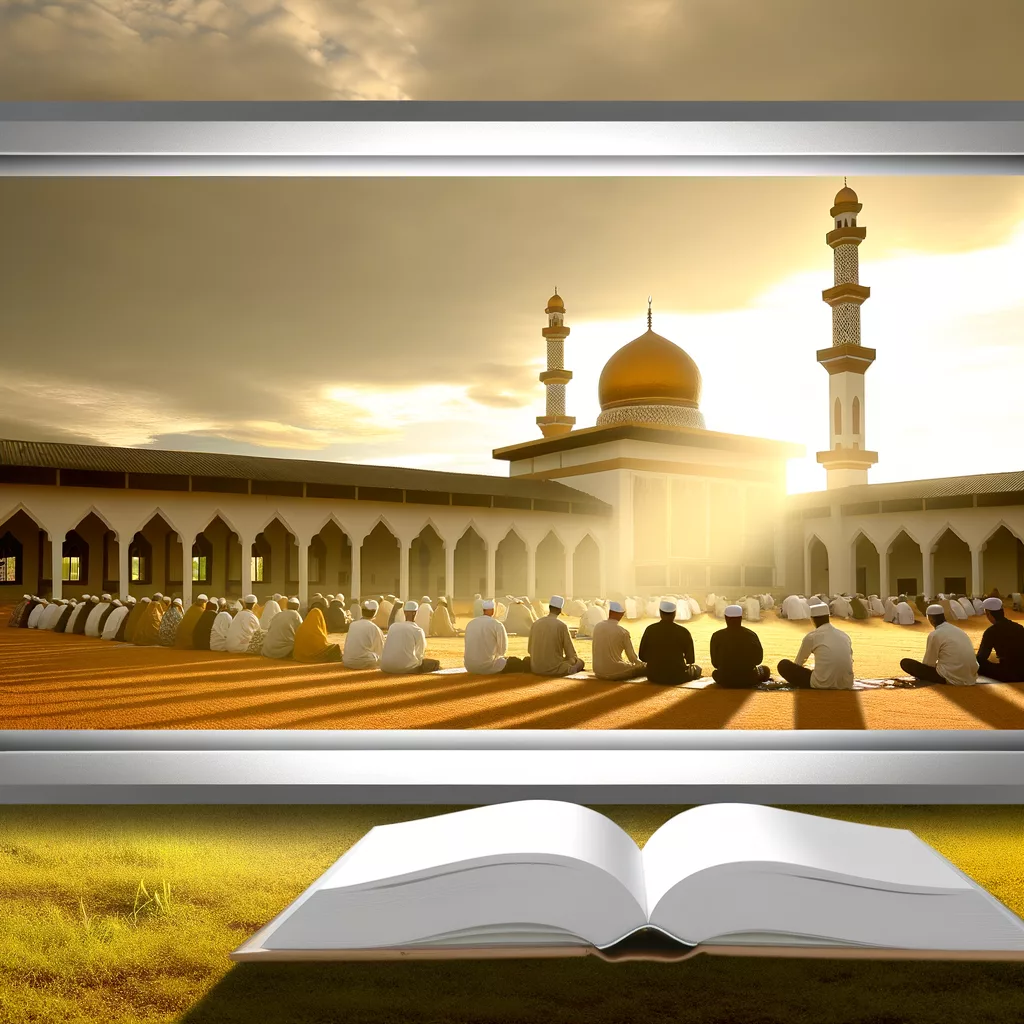
There are places that shape the depths of our being, spaces where the soul is renewed and where the heart seeks refuge in the certainty of its faith. The mosque is one of these unique places, the pivot of Islamic spirituality and an irreplaceable meeting point for the Muslim community. But how, in modern life with its frantic pace, can we keep this bond with the mosque alive, to the point of making it the beating heart of our existence? How can we make this sacred space much more than a simple place of prayer, an inexhaustible source of knowledge, brotherhood and light?
Staying attached to the mosque means rediscovering every day the deep meaning of Muslim spiritual life. It means entering a dynamic of growth in which learning Arabic blends with understanding the Qur’an, in which the transmission of hadith awakens our commitment, in which the practice of salat is uplifted by khushu and in which the Muslim family grows stronger in love of Allah and gratitude. It also means taking your place in the living history of Islamic civilisation, inheriting the wisdom of the companions of the Prophet and drawing inspiration from the generosity of the ahl al-bayt.
In this world where isolation and superficiality threaten spiritual rootedness, the mosque offers much more than the Friday prayer or group dhikr. It opens the door to immersion in Arabic, to learning literary Arabic without the barrier of translation, to taking part in memorising the Qur’an, tajwid and the tafsir of the Qur’an, but also to sharing in solidarity during Ramadan, to the conviviality of fasting in Islam, to preparing for hajj or Umrah, to passing on the finest values of Islamic ethics, and to building a solid and balanced Muslim identity.
You make this journey every time you cross the threshold of the mosque. It is not reserved for scholars or the most observant, but is humbly offered to anyone who aspires to understand, to get involved and to shine at the heart of the Muslim community. Whether you are seeking the Qur’an in Arabic to nourish your children’s faith, looking for an authentic practice of Islam, or simply longing for inner peace, a living bond with the mosque can transform your daily life.
In the lines that follow, explore how to (re)connect with this sacred space, reinvent your involvement in local activities, and make the mosque the foundation of your Islamic education, your spiritual well-being and your immersion in Arabic. Throughout this article, let yourself be guided towards a renewed attachment to the mosque, for a deep, living and enlightening Islam – for you, your family and your community.
Rediscovering the Mosque: A place of spirituality, of learning Arabic and of rootedness in the Muslim community
The mosque is not only a space of prayer where the faithful perform the salat in search of khushu and inner peace. It is the beating heart of the Muslim community, a true home of learning and of rootedness in one’s identity. Within its walls echo sacred knowledge and the living transmission of Islamic ethics. Here, learning Arabic takes on a particular meaning: it is not an abstract discipline, but a natural path towards understanding the Qur’an in Arabic, mastering literary Arabic without translation, and gaining direct access to tajwid, the tafsir of the Qur’an, the hadiths and the history of the sunna and the sira of the Prophet. Sitting alongside other members of the community, the adult, the child or the young Muslim is nourished by an immersion in Arabic that brings the deep meaning of the texts to life, connects them to the memory of the companions of the Prophet and wraps everyone in a living Islamic spirituality – the very one that unites people in dhikr, in gratitude towards Allah or in the Friday invocations at jumu’ah. The mosque welcomes every Muslim family on its journey towards an authentic Islamic education, accompanies Muslim youth in their search for identity, and offers everyone the opportunity to grow in sincerity, patience and love of Allah. It protects against isolation, makes Islamic solidarity possible, builds strong bonds and opens up to interfaith dialogue. As in the great cities of Islamic civilisation in the past, today’s mosque remains a centre of Islamic studies and community life, where reading the Qur’an, memorisation, listening to the adhan, and reflection on fiqh or aqida take root in collective experience. In finding the mosque again, you discover much more than a physical space: you join a spiritual and intellectual heritage that elevates the practice of Islam to nourish heart and mind.
Getting Involved in Local Activities: Between immersive Arabic learning, passing on the Qur’an and Islamic solidarity
Getting involved in the mosque’s local activities is much more than simply being physically present: it means taking a full part in building a living community, united around the Muslim faith and spiritual development. For many, the mosque becomes a home where they discover the beauty of learning Arabic in an authentic context, encountering literary Arabic at the heart of prayer in Islam, reading the Qur’an and hadith circles. This immersive learning of Arabic, without the constant filter of translation, offers direct access to the Qur’an in Arabic, to the richness of tafsir, to the science of hadith and to the sira of the Prophet, immersing the believer in the living source of Islamic spirituality. Here, every word, every verse and every invocation takes on a special flavour, because they make the heart of the tradition resonate.
In this setting, exchange between generations becomes a pillar: the elders pass on to the younger ones the art of tajwid, memorising the Qur’an, khushu in prayer and the wisdom of the companions of the Prophet, while the younger ones bring energy and innovation. Muslim children, in this immersive atmosphere, gradually make the language and Muslim identity their own, developing a natural bond with the practice of Islam and Islamic culture. Muslim families enrich one another by sharing moments of Islamic solidarity, Muslim volunteering and sadaqa, sometimes organised around educational projects, preparation for Ramadan, or workshops on patience in Islam, gratitude towards Allah, or purification through tawba.
Everyone thus finds their place: some deepen their Islamic studies, exploring sharia and fiqh, or develop a passion for the history of Islam and Islamic civilisation; others take part in the daily life of the mosque, prepare the Friday prayer or help out during Islamic festivals such as Eid al-Fitr and Eid al-Adha. Through learning Arabic and through encounters, bonds of community mutual aid are woven, uniting hearts in the face of the challenges of our time — racism and Islamophobia, interfaith dialogue, the affirmation of Muslim identity in society. Getting involved in this way also means walking the path of sincerity in Islam, inner peace and love of Allah, while honouring the memory of the scholars of Islam and the richness of our collective heritage. Within the mosque, every activity becomes an opportunity to strengthen one’s spiritual well-being, to cultivate one’s faith and to rediscover the unique flavour of immersion in Arabic, the language of the Qur’an and a link with centuries of light and knowledge.
Mosque and Family: Nourishing children’s Muslim faith and strengthening the spiritual life of the Muslim family
The mosque, the true beating heart of the Muslim community, plays an irreplaceable role in the Islamic education of children and in strengthening family spirituality. It is within these walls that the Muslim faith can grow, carried by collective practices such as prayer in Islam, salat as a family or regular attendance at the Friday prayer (jumu’ah). For Muslim children, learning Arabic in a lively community setting, within the mosque, offers privileged access to reading the Qur’an, to memorising it and to a deep understanding of the Qur’an in Arabic, without systematically depending on translations.
Immersion in Arabic from a very young age, through listening to recitations, learning tajwid or taking part in circles of tawba, dhikr and Islamic invocations, nourishes curiosity and love of the prophetic message. The child naturally absorbs the sunna of the Prophet, the science of hadith and the sira of the Prophet as if immersed in a living, concrete culture, surrounded by the Muslim family and by the companions of the Prophet and the ahl al-bayt evoked in the teachings.
The moments shared at the mosque, whether during Ramadan, during collective memorisation of verses or during Islamic education workshops, create a space where Muslim families support one another in the practice of Islam. The spiritual routine is then built around the Qur’an, gratitude towards Allah, shared dhikr and du’a invocations that soothe the heart and strengthen patience in Islam.
Through the Islamic festivals, such as Eid al-Fitr or Eid al-Adha, or during major milestones such as hajj and Umrah, Muslim spiritual life is passed on through example and shared experience, encouraging sincerity in Islam, modesty, and a deep love of Allah and of the Prophet. Getting involved in the mosque means offering your children more than a religious education: it means enlisting them in a human and spiritual adventure in which language, Islamic culture, the history of Islam and the values of Islamic solidarity help them build a strong Muslim identity, rooted in inner peace and kindness.
By cultivating a regular bond with the mosque, taking part in Islamic calligraphy workshops or exploring the treasures of the local Islamic library, every member of the family – from the youngest to the eldest – finds their place within a great chain of transmission. The mosque then becomes a pillar of family balance, spiritual well-being and emotional stability, a refuge where we learn, where we forgive and where we grow together, under the kind gaze of Allah.
From Salat to the Sira of the Prophet: Cultivating your practice of Islam through immersion in Arabic and the Islamic sciences
In the living heart of the mosque, attachment is not limited to its walls; it is nourished and intensified by a deep immersion in the practice of Islam and in learning Arabic in its noblest forms. From the salat onwards, with its khushu, comes the need to understand every word addressed to Allah. Learning Arabic is then no longer a mere linguistic exercise, but a bridge to Islamic spirituality, the Friday prayer, the Islamic invocations, dhikr, du’a, tawba and repentance in Islam. Living prayer in Islam in literary Arabic lets the heart vibrate with the recitation of the Qur’an, memorising the Qur’an and tajwid, and experience the beauty of the tafsir of the Qur’an according to classical or contemporary exegetes. Learning Arabic without translation, through immersion in Arabic, gives you the privilege of diving into the science of hadith, meditating on the sunna, and approaching the history of Islam, the sira of the Prophet and the lives of the companions of the Prophet or the ahl al-bayt, an inexhaustible source of teaching for every Muslim family or for Muslim youth in search of identity.
Every word of the Qur’an in Arabic and every hadith in its original language then becomes a new light on the path of the practice of Islam. Reading the Qur’an is no longer just a sound recitation, but becomes an intimate dialogue with meaning, a meditation that nourishes patience in Islam, sincerity in Islam, gratitude towards Allah, love of Allah and love of the Prophet. By getting involved in the mosque’s activities, taking part in study circles on the sira or in tajwid classes, you build solid bonds with the Muslim community, the imam, Muslim children and Muslim couples, thereby raising Islamic education and Muslim spiritual life. The sacred periods of Ramadan, voluntary fasting, Laylat al-Qadr, Eid al-Fitr, Eid al-Adha or the days of Dhul Hijjah, and the pilgrimage (hajj, Umrah), then resonate with a special meaning: that of a total commitment, rooted in the text, the rite, Islamic culture, the history of Islam and Islamic civilisation. Educating yourself through literary Arabic, Islamic studies, Islamic reading or Islamic calligraphy becomes a true spiritual routine, a bulwark against stress and a path to inner peace. Through immersion in Arabic, the whole dimension of the practice of Islam regains its fullness, its rightness and its light, at the mosque but also in daily life.
Further reading: discover our online Arabic courses for adults, or also read “Learning Arabic to understand the place of women in Islam” and “Organising a spiritual weekend with friends around Arabic and the Qur’an“.
Conclusion
Over the centuries, the mosque has been much more than a simple building: it remains the beating heart of spiritual and social life in Islam, fuelling the Muslim faith, knowledge, brotherhood and solidarity. Staying attached to the mosque means reconnecting with this living tradition, in which every Muslim and every family finds their place and their momentum. Through involvement in local activities, the simple act of learning Arabic in study circles, immersing yourself in reading the Qur’an in Arabic, and discovering tajwid, the tafsir of the Qur’an, the science of hadith and the sira of the Prophet, a whole universe opens up to us, between age-old heritage and contemporary richness.
The mosque then becomes a space where learning Arabic is lived through listening and sharing, where you gradually approach the meaning of the Qur’an in Arabic without translation. In the eyes of Muslim children, in the enthusiasm of Muslim youth, in the kind guidance of the imam and the community, everyone rediscovers a part of their Muslim identity and their Islamic culture. Conversations after the Friday prayer, exchanges of advice on fiqh or invocations (du’a), the songs of Ramadan or the memory of the lives of the companions of the Prophet forge a discreet but deep attachment to the mosque.
Getting involved in local activities also means cultivating, step by step, sincerity in Islam, love of Allah and of the Prophet, patience in Islam and gratitude towards Allah. This involvement gives Islamic spirituality a daily dimension: it illuminates prayer in Islam, brings khushu to the salat, nourishes repentance (tawba), calms anger, fosters inner peace and prepares the heart for the test of Ramadan, fasting in Islam, zakat or the pilgrimage. The mosque then instils a lasting spiritual well-being, a healthy routine and enriching Islamic reading, strengthens the education of children in Islam and enriches the Muslim couple in respect and modesty.
It is in this atmosphere of Islamic solidarity, Muslim volunteering, mutual aid and dialogue that transmission lives on: Islamic universities, the Islamic library, the calligraphy circle, discussions on wasatiyya and moderation in Islam, shared reflection on ecology in Islam or Islamic finance. Everyone finds an example in the history of Islam, in the Andalusian caliphs and the scholars of Islam, but also in a flourishing and inclusive Islamic civilisation.
Attaching yourself to the mosque thus means connecting your daily life to the light of the East: it means seeing immersive Arabic learning and, beyond it, understanding the message of the Qur’an, not as a school subject, but as a journey of the soul. Rooted in the Muslim community, everyone then discovers the quiet strength of Islam: an embodied spirituality, a living education, a shared culture, and a universal aspiration to peace and deep transformation.
The journey is only just beginning, to the cadence of the prayers, the rhythm of the Muslim festivals and the warmth of simple gatherings – in the reassuring echo of the adhan, in the kind shade of the mosque.



