
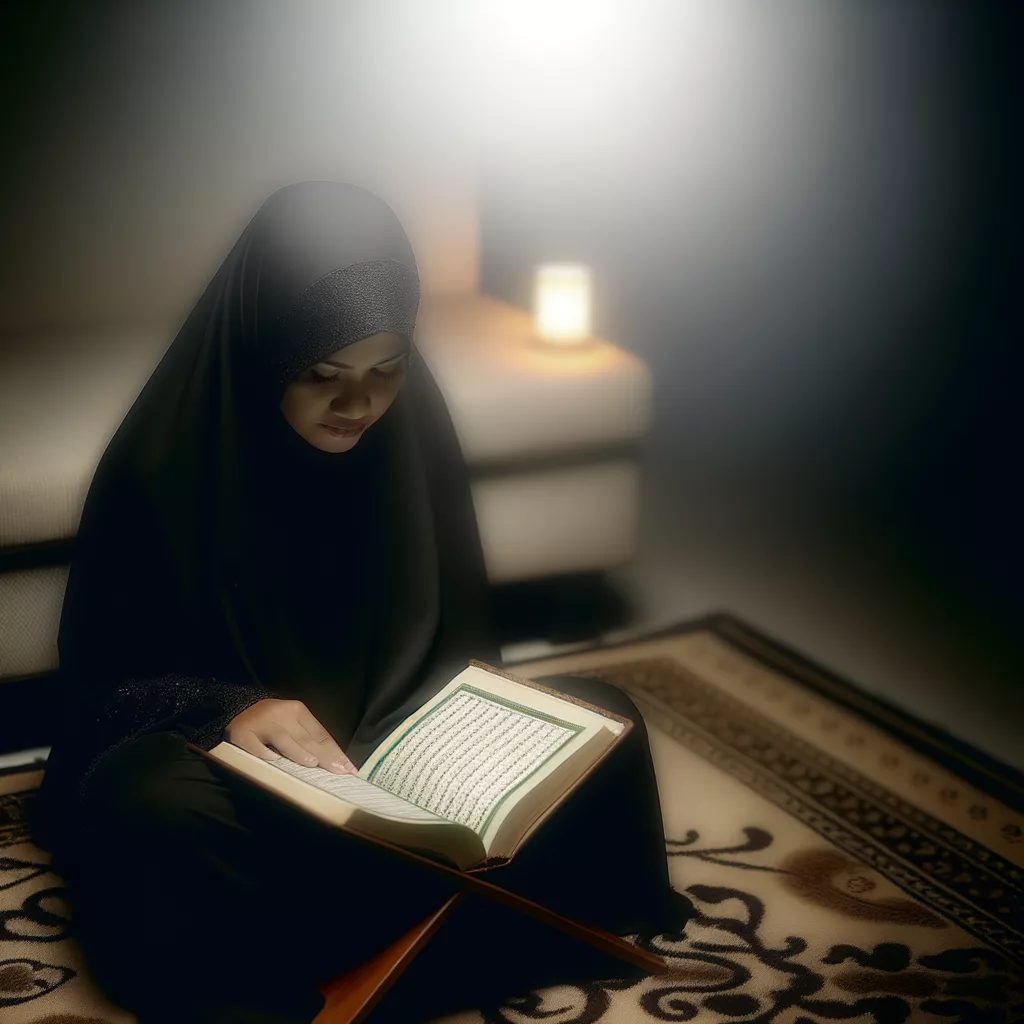
In our time, marked by the speed of opinions and the force of prejudice, the question of the place of women in Islam holds a singular position. On one side, persistent clichés, hasty judgements and partisan discourse. On the other, a rich spiritual and intellectual heritage, unfolded across fourteen centuries of Islamic history and carried by the voice of the Qur’an in Arabic, by the Sunna of the Prophet, and by the living transmission of Islamic civilisation. Between these two worlds, the essential is often lost: pure and authentic understanding, the kind that is born from a direct encounter with the Texts in their original language.
Many aspire to grasp the reality of the Muslim woman — her role, her status, her dignity, her rights and her responsibilities — but run up against the language barrier. Translations, however precious, are often imprecise or incomplete. The words of the Qur’an, the nuances of the hadiths and the wisdom of the scholars take on a whole new meaning when you open yourself to learning literary Arabic. Not only does learning Arabic give access to reading the Qur’an, to the science of hadith, to the tafsir of the Qur’an or to the sira of the Prophet, but above all it allows you to hear the divine message without a filter, to immerse yourself in Islamic spirituality and to taste the depth of its tradition.
Immersion in Arabic is not merely a linguistic exercise. It is an inner journey, a transformation in which you leave clichés behind to draw closer to the source. Understanding the notions of modesty in Islam, of hijab, of ethical conduct (akhlaq), of patience in Islam or of love of Allah and of the Prophet means discovering all the richness of a story that is at once universal and singular, in which women have always been indispensable pillars: from the mothers of the believers to Fatima al-Zahra, from the female companions of the Prophet to the scholars, poets, educators and benefactors of Islamic civilisation.
Why does learning Arabic transform the way we see the place of women in Islam? Because the language of the Qur’an is the key to an authentic reading in which you perceive the strength, gentleness, wisdom and dignity conferred upon women, far from reductive discourse. Immersion in Arabic, the effort to go beyond simple translation, makes it possible to restore to the Muslim faith, to the practice of Islam, to salat, to the Ramadan fast, to Islamic education and to community life all the subtlety intended by the sources. This is how you come to understand the deep meaning of justice (adl), of mercy (rahma), and of respect for the rights and responsibilities of each woman and each man within the sacred balance of the Muslim family and of society as a whole.
This article invites you on a journey to the heart of the texts: learning Arabic to understand the place of women in the Qur’an and the Sunna, immersing yourself in the original meaning to move beyond received ideas, exploring the role of women through the sira of the Prophet and the richness of Islamic civilisation, and drawing inspiration, models and hope for every generation from Islamic spirituality. May this path of immersion in Arabic be, for each of us, a source of light, of deep understanding and of inner peace.
Learning Arabic to understand the place of women in the Qur’an and the Sunna
Learning Arabic is not only a key to accessing the richness of the Islamic heritage; it is also an act of intellectual sincerity and spiritual quest, especially when it comes to understanding the place of women in Islam. Contemporary debates on this subject are often laden with prejudice, approximations and even projections from other cultural contexts. Yet understanding the Qur’an in Arabic, enriched by the study of the Sunna and the science of hadith, allows you to come as close as possible to the original intention of the texts, to the historical realities, and to the linguistic beauty that escapes literal translation. Learning literary Arabic, particularly through immersion in Arabic, offers the possibility of reading the Qur’an directly in Arabic, of savouring the precision of the vocabulary, the subtlety of the nuances, and the spiritual depth of the concepts linked to dignity, justice, the Muslim family, or the place of women in society.
Reading the Qur’an in the light of authentic tafsir, together with memorising the Qur’an with tajwid, opens unsuspected doors onto the contexts of revelation, the interactions between the Prophet and the women of his time, his wives, the companions, and the respect these women enjoyed. Through the hadiths of the Sunna, it becomes clear that the sira of the Prophet Muhammad – peace and blessings be upon him – abounds in examples of educated women, involved in Muslim spiritual life, consulted for their wisdom and agents of social change. Learning Arabic without translation also means going beyond the surface of the words, feeling the force of the accounts of the ahl al-bayt and of the community of pioneering women believers, and perceiving the real place of women, far from the reductive clichés spread through ignorance or ideology.
Entering this approach to Islamic education through the language of the Qur’an means tasting the flavour of dhikr and of du’a uttered with khushu in prayer, praying with sensitivity and intelligence, and sharpening your critical mind in the light of the sources. Immersion in Arabic thus makes it possible to connect the practice of Islam and the understanding of the rulings on marriage in Islam, the family, lineage and community life to their authentic root, within the dimension of mercy and mutual recognition. Then every verse, every invocation, every account of Ramadan or of the hajj, every page of the history of Islam takes on a new and living meaning, in which women regain the place that God has granted them, in balance, kindness and Islamic spirituality.
Immersion in Arabic: moving beyond clichés through direct reading of the Islamic texts
When you seek to understand the place of women in Islam, it quickly becomes clear that translations, even faithful ones, offer a truncated and sometimes distorted view of the sacred texts. Learning Arabic, and more specifically immersion in Arabic, opens unsuspected doors: those of a direct and intimate understanding of the Qur’an, the hadiths and the sunna, without the intermediary of a linguistic or cultural filter. Diving into the Qur’an in Arabic means accessing its literary beauty, the subtlety of its nuances, its wordplay and the contexts rooted in classical literary Arabic, where every term carries historical, spiritual and emotional weight.
Many prejudices about Muslim women arise from a fragmentary reading or from quotations taken out of context, amplified by a lack of knowledge of the tafsir of the Qur’an or of the science of hadith. By immersing your mind in the original language, you grasp the deep logic of the revelation, its progression, its wisdom, and the nuanced way in which it addresses the dignity, rights and worth of women in Muslim society. Reading the Qur’an in Arabic, together with efforts to memorise the Qur’an or to study tajwid, brings not only a better spiritual connection but also a powerful intellectual assent: many discover the universal dimension of the principles of justice, kindness and balance that run through the practice of Islam.
Immersion in Arabic offers an effective remedy for the reductive simplifications often relayed in public debates about Islam in France. Far from stereotypes, direct study of the sources awakens a healthy curiosity for the history of Islam, the lives of the companions of the Prophet and of the ahl al-bayt, the contribution of women to Islamic civilisation, or their roles in transmitting fiqh and the Islamic sciences. This living reading helps to distinguish between custom and prescription, between local culture and spiritual norms; it questions received ideas about marriage in Islam, raising children in Islam, or the place of women in the mosque and in Muslim spiritual life. A daily relationship with literary Arabic also nourishes khushu in prayer, sincerity in Islam, and even gratitude towards Allah, for it is in the revealed language that every invocation finds its full space.
Learning Arabic without translation means choosing to go beyond the surface and enter into the depths. It also means accepting that a language is a universe of living meanings, a key to understanding the message of the Prophet, the wisdom of the scholars of Islam and the coherence of the rites: from Ramadan to the Friday prayer, from the hajj to Islamic ethics, from sharia and fiqh to patience and love of Allah. Ultimately, rekindling the flame of Islamic reading in the original language means opening a path of inner peace, trust and balance, where every word spoken aloud or laid down in the heart resonates with the original impulse of the Muslim faith.
The role of women through the sira of the Prophet, the hadiths and Islamic civilisation
The role of women through the sira of the Prophet Muhammad, the hadiths and Islamic civilisation extends far beyond the clichés and simplifications often conveyed in our time. Learning Arabic and immersing yourself in the original language of the sacred texts makes it possible to go beyond sometimes incomplete translations and to access the depth of the sira of the Prophet, the science of hadith and early Islamic culture. When you read the Qur’an in literary Arabic, you discover the direct mention of women who were models of Muslim faith, intelligence and courage. Khadija, the first wife of the Prophet, was not only the first believer but also a respected businesswoman, running her trade with rigour and Islamic ethics. Aisha, an eminent figure of the sira and of the Muslim community, transmitted more than one thousand two hundred hadiths, taking an active part in the science of hadith, Islamic education, the tafsir of the Qur’an and the teaching of the sunna.
Their scholarship sheds light on the central place of women in the transmission of knowledge, from memorising the Qur’an to the science of tajwid, through to initiation into aqida and fiqh, and even reflection on spiritual well-being in the everyday practice of Islam. Far from a superficial reading, learning Arabic without translation opens up the richness of the vocabulary for thinking about notions such as patience in Islam, sincerity in Islam, or gratitude towards Allah, all embodied by great female figures such as Fatima az-Zahra, Asma bint Abu Bakr or Umm Salama, companions of the Prophet and members of the ahl al-bayt.
In the classical era of Islamic civilisation, from Baghdad to Cordoba, from Damascus to Qayrawan or the Zaytuna mosque, many women taught in the great Islamic universities, held diplomas (ijaza) in the religious sciences, and took part in social life, medicine, Islamic calligraphy and Islamic art. From reading the Qur’an aloud in the family circle to giving counsel within the Muslim family, women were a pillar of spiritual transmission and of raising children in Islam.
Immersion in Arabic, through prayer in Islam (salat), recitation with khushu, dhikr, Islamic invocations (du’a) or during Ramadan and the hajj, helps to reconnect every man and every woman with the authentic dimension of the Islamic message. By returning to the sources and to the living history of the first generations, all Muslims, men and women, can draw inspiration from these models of modesty, knowledge, moderation (wasatiyya), inner peace and community engagement. Those who undertake immersive Arabic learning discover a reality: the dignity, intelligence, patience and strength of women are never marginal in the Islamic tradition, but lie at the heart of Muslim identity and of Islamic civilisation.
Islamic spirituality and female role models: from the ahl al-bayt to the education of Muslim generations
Over the centuries, Islamic spirituality has been marked by exceptional female figures, sources of inspiration and wisdom for the whole Muslim community. Beginning with the great ladies of the ahl al-bayt, the family of the Prophet Muhammad, who each in her own way embody piety, knowledge and patience in Islam. Fatima az-Zahra, daughter of the Messenger, remains an unequalled model of devotion to family, of sincerity in Islam and of spiritual strength in the face of trial, while Khadija bint Khuwaylid, the first wife of the Prophet, represents excellence in Islamic education, ethical enterprise and unfailing support for the nascent revelation. These women, like Aisha bint Abi Bakr – an eminent narrator of hadith and an expert in fiqh –, paid particular attention to understanding the sacred texts: they passed on to later generations a taste for learning literary Arabic, a love of reading the Qur’an in Arabic, of the tafsir of the Qur’an and of the science of hadith, but also a passion for the sunna and the sira of the Prophet.
For these great figures, immersion in Arabic was the vehicle of a living Muslim faith, able to nourish khushu in prayer and to cultivate gratitude towards Allah amid the trials of daily life. It is because they understood the Qur’an in Arabic, without resorting to translation, that they felt the depth of Islamic invocations, the beauty of perfect tajwid and the power of dhikr in their spiritual well-being. Their life was a school in which patience in Islam, sincere repentance (tawba), love of the Prophet and community mutual aid were practised. Their legacy, passed on through raising children in Islam and the shaping of the Muslim family, still nourishes the spirituality of Muslim youth today.
In the transmission of faith within families, these female role models remind us how much learning Arabic, immersion in Islamic culture and understanding the texts reveal, far beyond clichés, the living and formative dimension of Islam. At a time when French society is questioning the presence of Muslims in France, laïcité and Islam, and also the role of women, drawing inspiration from these examples makes it possible to reclaim the power of Muslim identity: an identity shaped by inner peace, the pursuit of justice, openness to interfaith dialogue, modesty (hijab), pious education and wasatiyya, the call to moderation.
Far from being spectators, women are – and always have been – actors in the vitality of knowledge, of Islamic solidarity, of sacred rites such as Ramadan, Eid al-Fitr and the hajj, but also of community life around the mosque, Muslim volunteering and halal trade. Their participation in Islamic calligraphy, in the history of Islam, in ecology in Islam and in passing on exemplary Islamic conduct (akhlaq) demonstrates the profound contribution of women to Islamic civilisation. Thus Islamic reading is nourished, today as yesterday, by the luminous traces left by these mothers, sisters and educators who shaped generations capable, in their turn, of carrying on the quest for meaning, the practice of Islam with rightness, and the love of Allah at the heart of everyday life.
Further reading: discover our online Arabic courses for adults, or also read “Learning Arabic and choosing the tafsir suited to your level” and “Staying attached to the mosque and the Muslim community“.
Conclusion
Returning to the heart of the sources of Islam very often means revealing the richness, subtlety and depth accorded to the place of women, whether in the Qur’an in Arabic, the Sunna, the hadiths or through the sira of the Prophet Muhammad. Far from frozen images and widely conveyed stereotypes, learning literary Arabic and immersion in Arabic offer the key to understanding the Qur’an directly in the language of the Revelation, without being a prisoner of cultural filters, approximate translations or inherited prejudices.
Taking up Arabic means giving your heart and your intelligence the chance to access the depth of the tafsir of the Qur’an, to meditate on the subtle meanings of the text, to shed light on the science of hadith, and to grasp the spirit of the sunna as it was lived in the blessed era of the companions of the Prophet and the ahl al-bayt. You then discover, page after page, model after model, how women, whether educators, scholars, wives, mothers, merchants or fighters, embodied with nobility and wisdom the ethics, excellence and piety on which Islamic spirituality is founded.
Learning Arabic, lived every day as a sensory and spiritual immersion, transforms the reading of the Qur’an, memorising the Qur’an, the practice of salat with khushu, Islamic invocations during Ramadan, and the understanding of the wisdom drawn from the history of Islamic civilisation. It provides the tools to approach calmly the great questions of the Muslim couple, of marriage, of the Muslim family and of raising children in Islam, while placing rights and duties in the context of dignity, solidarity, kindness and love of Allah.
Reading the texts directly, without the screen of translation, invites patience in Islam, gratitude towards Allah, sincerity and true modesty. It reminds us that the prophetic way has always made room for dialogue, for listening and for shared dignity, far from any caricature.
In a world searching for landmarks and sometimes for meaning, reconnecting with the practice of authentic Islam, as revealed by the Qur’an and embodied in the history of Muslim women, also means rekindling the flame of a fulfilled and open identity, rooted in Islamic culture while engaging calmly with modernity. Whether it is the Friday prayer, collective dhikr at the mosque, the Eid festivals, the pilgrimage to Mecca, or the everyday life of Muslim families and communities, immersive Arabic learning accompanies this movement of elevation.
By daring to learn Arabic and diving into the luminous sea of its wisdom, every man and every woman can move beyond clichés, open up the meaning of the texts, and rediscover the inner peace, justice and beauty intended in the divine message for all believers, men and women, throughout the history of Islam and up to the present day. This quest, made of knowledge, spirituality, love and respect, remains one of the most beautiful legacies offered to humanity.



