
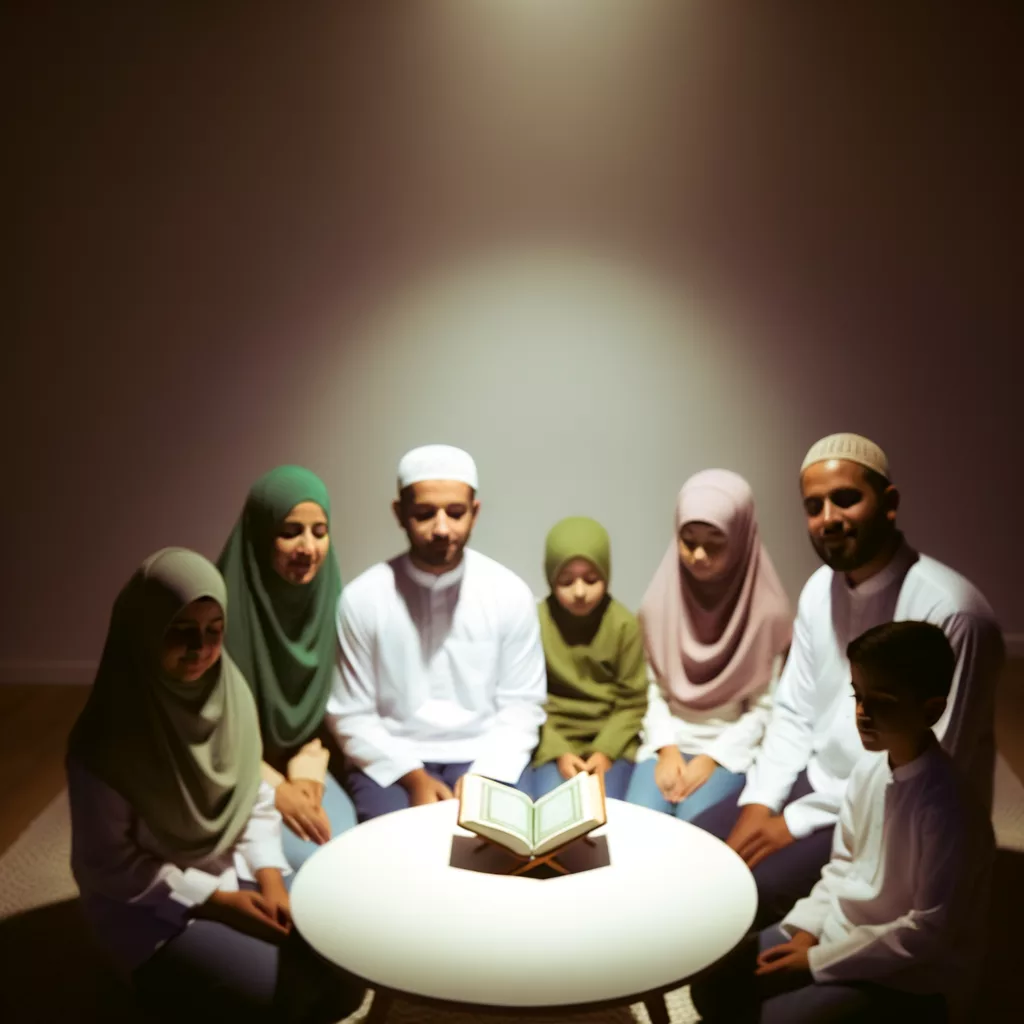
TL;DR: Preparing for Ramadan and the great moments of the Islamic calendar (Laylat al-Qadr, Eid al-Fitr, Eid al-Adha, hajj, Dhul Hijjah, Umrah) strengthens Muslim spiritual life, family solidarity and Muslim identity, especially in contexts such as Islam in France, shaped by laïcité. The mosque, the adhan, prayer led by the imam and Islamic education (fiqh, aqida, madhahib, Sufism) pass on Islamic culture to Muslim children, young people and couples, drawing on the history of Islam, Islamic civilisation (e.g. the Andalusian caliphate) and the heritage of the scholars (Al-Azhar, Zaytuna, Qayrawan). Immersive learning of literary Arabic, without translation, anchors these spiritual and educational values deeply in the daily life of Muslim families and communities, fostering a living, harmonious Islam adapted to the contemporary challenges in France.
As the month of Ramadan approaches, every Muslim heart feels a particular call: to refocus, to strengthen one’s faith and to live fully the spiritual intensity of this blessed time. But how can you prepare for Ramadan authentically, weaving deep bonds with your family, your community and the whole of Islamic culture? How can we pass on to our Muslim children the true meaning of this sublime period? In French society, where the Muslim community lives in a context shaped by laïcité, the questions of Muslim identity and daily spirituality take on a very particular flavour. Preparing spiritually for Ramadan is not only about abstaining from food and drink: it is also about connecting with the Qur’an, deepening your knowledge of Islamic culture, grasping the significance of Laylat al-Qadr, celebrating Eid al-Fitr, and placing these practices within the living history of Islamic civilisation.
This sacred month offers the opportunity to find the way back to the mosque, to be moved by the call of the adhan, and to listen to the teachings of imams and scholars, whether rooted in the wisdom of Al-Azhar, Zaytuna or Qayrawan, or in the advice of contemporary scholars. Islamic education, lived within the family or passed on to Muslim youth, regains its full meaning when Ramadan becomes the point of union between aqida, fiqh, traditions and daily life. Continuing through the trials and celebrations, from the hajj in Dhul Hijjah to Eid al-Adha, each stage of the Islamic calendar structures and nourishes our spirituality.
In a world where Islam in France is being written between heritage, history, encounters and challenges, preparing for Ramadan also means connecting with the deep breath of Sufism, the plurality of the madhahib, and the living wisdom of Muslim families and Muslim couples. It is a time of renewal for every believer, a season in which transmission, unity and example become the keys to a fulfilled Muslim identity. Let us explore together how to approach this exceptional month, as a family, as a community and in full awareness, so as to make it a source of inspiration and momentum for the whole Muslim community.
Preparing for Ramadan: strengthening Muslim spiritual life in the family and the community
Preparing for Ramadan is not only about organising the material aspects of the fast, but above all about strengthening Muslim spiritual life within the family and the community. This blessed time becomes an ideal opportunity to bring the generations together around a living Islamic education. Muslim children, often curious and eager to understand the meaning of fasting, are introduced from an early age to the deep values of Ramadan, through discussions within the Muslim family, moments of prayer together, and the gradual discovery of Islamic civilisation and the history of Islam. For Muslim couples, Ramadan can also be a time of renewal in the relationship, strengthening closeness and shared spirituality, and recalling the importance of mutual help and support in marriage in Islam.
Within the Muslim community, the mosque plays a central role: the muezzin’s call to the adhan, group prayers led by the imam, and lessons in fiqh relating to fasting and to the great nights such as Laylat al-Qadr become the vibrant heart of Muslim spiritual life. For young people and Muslim youth, living Ramadan in France, sometimes in a context shaped by laïcité, offers a precious opportunity to affirm their Muslim identity, to draw closer to the scholars of Islam or contemporary scholars, to discover Sufism or to revisit the fascinating history of the Andalusian caliphate. Families can organise Islamic study circles at home, talk about major rites such as the hajj and the Umrah during the month of Dhul Hijjah, or explain the importance of festivals such as Eid al-Fitr and Eid al-Adha for community cohesion. Learning aqida, the sharia and fiqh, understanding the question of the madhahib, the relationship to bid’a, or the importance of the fatwa in daily life all contribute to a rich spiritual preparation, illuminated by the experience of Islamic studies and the wisdom passed on by Islamic universities such as Al-Azhar, Zaytuna or Qayrawan. In this way, every Muslim household — whether settled in a Muslim land or in a context such as France — can live a deeply educational Ramadan, nourishing the soul, the mind and the body, and fostering the transmission of a living Islamic identity and culture.
Understanding the place of Laylat al-Qadr and Eid al-Fitr in Islamic culture
Laylat al-Qadr, the Night of Decree, holds a central place in Islamic culture. It was during this blessed night, within the last ten nights of the month of Ramadan, that the Qur’an was revealed to the Prophet Muhammad ﷺ, marking a decisive turning point in the history of Islam and of Islamic civilisation. Muslims all over the world, from the great historic mosques of Al-Azhar, Zaytuna or Qayrawan to Muslim families living in France, gather to seek closeness to Allah through prayer, invocation, the night-time adhan and reading the Qur’an in literary Arabic. This night is known to be better than a thousand months, transforming Muslim spiritual life through its depth and intensity. The imam, in recalling its importance, guides the Muslim community – families, couples, Muslim youth and Muslim children – to seek peace of heart, knowledge (fiqh, aqida) and renewal of intention.
Eid al-Fitr, the festival that marks the end of Ramadan, symbolises the joy shared within the ummah and celebrates fraternity within the Muslim family, from the young to the elders. The morning of Eid often begins with a collective prayer at the mosque, set to the rhythm of the adhan and the spiritual reminders of the imam, followed by exchanges between neighbours and family visits. Eid al-Fitr, like Eid al-Adha during Dhul Hijjah, or the moments of the hajj and the Umrah, plays a fundamental role in passing on Islamic education: it is an opportunity for parents to teach their Muslim children, through practice and example, the values of solidarity, piety and gratitude. These highlights weave the richness of Muslim identity, connect the individual to the great history of Islam and to the scientific and spiritual contributions of the scholars of Islam, and encourage everyone to continue on their path in a society where laïcité and Islam coexist, while keeping the essential landmarks of faith and Islamic culture.
The mosque, the adhan and the imam: pillars of Ramadan spirituality for Muslims in France
At the heart of Muslim spiritual life, especially during Ramadan, the mosque holds an irreplaceable place for Muslims in France. The vibrant call of the adhan resonates in the hearts of the faithful, recalling the oneness of God and the beauty of the Muslim community gathered in prayer. For the Muslim family and Muslim youth, the mosque becomes a beacon, guiding young and old in the search for a peaceful and fulfilled Muslim identity, even in the context of laïcité and Islam in France. On Ramadan evenings, the voice of the imam, enlightened by the knowledge of the scholars of Islam from the great Islamic universities such as Al-Azhar, Zaytuna or Qayrawan, goes beyond mere recitation. The imam sheds light on aqida, fiqh and the subtleties of the madhahib, always connected to the daily life of Muslim couples, to the education of children in Islam, and to the aspirations of Muslim youth. When Ramadan welcomes Laylat al-Qadr, the mosque becomes the beating heart of collective spirituality, preparing the faithful for Eid al-Fitr and, later in the year, for Eid al-Adha, for the season of Dhul Hijjah, but also for the memories of the hajj and the Umrah, which connect every Muslim to the great history of Islam and of Islamic civilisation. Every visit to the mosque, every adhan chanted by the muezzin, every sermon by the imam is a reminder of our belonging to the ummah, to this brotherhood that has spanned the centuries from the time of the Andalusian caliphate to the present day, and that tirelessly nourishes Islamic education, social bonds, spirituality and Islamic culture for all Muslims in France.
Transmission and Islamic education: guiding children and Muslim youth towards Ramadan
Transmission and Islamic education as Ramadan approaches are essential for awakening in Muslim children and Muslim youth a deep awareness of their identity and their spiritual heritage. In the context of a Muslim family living in France, where laïcité and Islam coexist in the daily landscape, it is through example and ritual that parents, but also educators and the imam of the mosque, give the new generations living access to Islamic culture and Islamic civilisation. Preparing spiritually for Ramadan begins with sharing the stories of the prophets and discovering the history of Islam – from the Andalusian caliphate to the great Islamic universities such as Al-Azhar or Zaytuna – but also with familiarising children with the great notions of aqida, fiqh and the madhahib, and with the meaning of the hajj, the Umrah and the precious days of the month of Dhul Hijjah.
This Islamic education is not limited to simple knowledge of the sharia and fiqh; it guides the child or young person towards practising and internalising the values of Islam in daily life. By reciting the adhan together, praying at the mosque or meditating on the meaning of Laylat al-Qadr, the Muslim family cultivates an active spirituality, in which each member discovers a personal bond with the Qur’an. The immersive approach to learning, in particular encouraging children to understand the surahs and invocations in literary Arabic without systematically going through translation, develops an intimate connection with the language of the Qur’an and enriches Muslim spiritual life.
Ramadan is also an opportunity to teach solidarity and community life: preparing the iftar meal as a family, looking forward to Eid al-Fitr or Eid al-Adha, or taking part in charitable collections at the mosque are all formative experiences. Through these moments, young Muslims learn the fundamental values of Islam in France and affirm their Muslim identity while engaging in dialogue with the surrounding society. Finally, by placing these rites and this knowledge in the context of the history of Islam, and by recalling the great scholars of Islam and the figures of Sufism, parents and educators shape young people capable of taking part in contemporary debates and of grasping what is at stake in marriage in Islam, the education of children in Islam, or the quest for knowledge through Islamic studies, here as elsewhere.
Conclusion: towards a living Ramadan rooted in Muslim spirituality
Preparing spiritually for the month of Ramadan invites every Muslim family, every Muslim couple and every member of the Muslim community – whether adult, young person or child – to reconnect deeply with the richness of Muslim spiritual life. Through rediscovering the central role of the mosque, the intimate bond with the adhan and the kindly guidance of the imam, as well as supporting Muslim children in their Islamic education and passing on the values of the Qur’an, Ramadan is transformed into a collective and personal experience, inscribed at the heart of Muslim identity.
By meditating on the unique place of Laylat al-Qadr, by understanding the spiritual and cultural dimensions of Eid al-Fitr, but also by connecting these highlights to the history of Islam, to Islamic civilisation, to the memory of the Andalusian caliphate or to the teachings of the scholars of Islam – from Al-Azhar to Zaytuna or Qayrawan –, every Muslim, in France and all over the world, finds the opportunity to revive their soul. This recalls how much Islamic culture and the living practice of fiqh, Sufism or aqida shape spirituality in daily life.
Walking towards Ramadan also means perceiving the connections between this blessed month and other sacred moments of the Islamic calendar, such as Eid al-Adha, the ten days of Dhul Hijjah, the hajj and the Umrah, which set the rhythm of the life of the Ummah and anchor it in the prophetic tradition. Preparing for Ramadan means forging a rooted education of children in Islam and an enlightened Muslim youth, and offering solid landmarks to those who seek to reconcile laïcité and Islam in the specific context of Islam in France.
May this Ramadan thus be a renewed opportunity to cultivate inner peace, solidarity with the Muslim community and closeness to God, while celebrating the plural beauty of Islamic teaching – from fiqh to the madhahib, by way of reflection on the sharia, bid’a or contemporary fatwas. The blessed month calls us to revive the timeless heritage of past and present scholars, to cultivate knowledge, and to make the light of Islamic education shine in every Muslim household.
Ultimately, preparing for Ramadan means placing every prayer, every act of sharing and every moment of study within the living continuity of the history of Islam, so as to make this month an inexhaustible source of hope, mercy and elevation for all generations.
Further reading: discover our Arabic programmes for children, or also read “Learning Arabic and passing on the five pillars of Islam to children” and “Learning Arabic and raising Muslim children in a secular environment“.



