
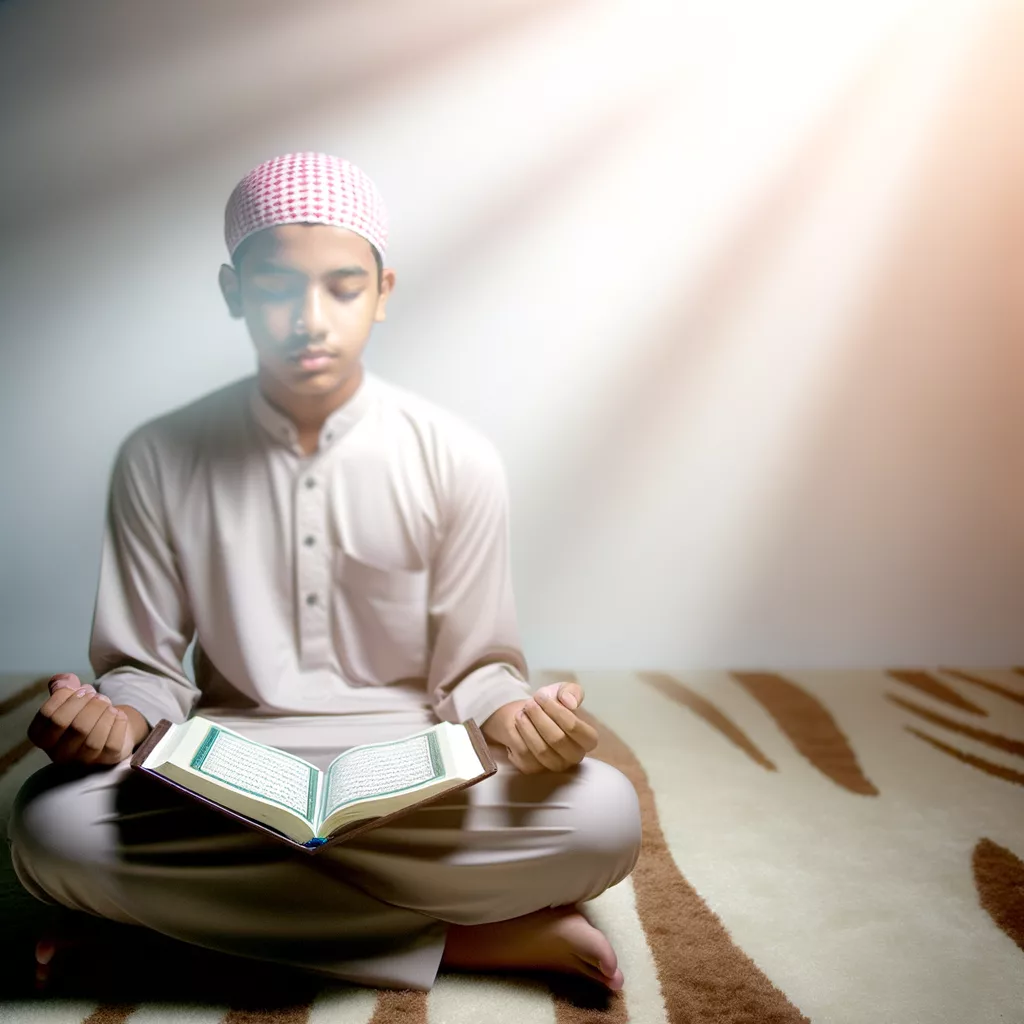
In a world where outside voices often try to impose their norms, how can you preserve your authenticity while remaining faithful to your faith? For many Muslims, facing social pressure is not simply a matter of compromise: it is an intimate path, sometimes lonely, always demanding, on which every choice tests the integrity of Islamic spirituality. Being a Muslim today, in France or elsewhere, means living a delicate balance between a fully embraced Muslim identity and the legitimate desire to fit harmoniously into one’s time. This tension, felt by Muslim youth and Muslim families, but also by every committed believer, is not a weakness: it is the proof of a living, vigilant heart, hungry for meaning and light.
How do you stay standing when laïcité, cultural injunctions or lifestyles far removed from the values of the Qur’an constantly call for our adherence? Where do you find the strength to say no, to choose without embarrassment prayer in Islam, wearing the hijab, the practice of fasting in Islam or reciting the Qur’an in Arabic? These challenges are neither new nor insurmountable: the history of Islam, the life of the Prophet, the exemplary patience of the Companions of the Prophet and the commitment of the ahl al-bayt offer so many inspiring models, proof that faithfulness to Islam is not nostalgia, but a living dynamic.
At the heart of this gentle but determined resistance lies a secret: learning Arabic and immersion in Arabic. Understanding the Qur’an in Arabic, tasting the subtlety of tajwid, savouring the deep meaning of dhikr or du’a: this direct closeness to the language of revelation nourishes the soul with inexhaustible energy. Far from being a mere technical tool, literary Arabic then becomes the key to a living spirituality: one that connects you to Allah without intermediaries, consolidates aqida, refines khushu in salat, and opens the heart to love of the Prophet and gratitude towards Allah.
Learning Arabic does, yes, mean entering the heritage of Islamic civilisation and Islamic culture, but above all it means giving your commitment an unshakeable foundation: that of understanding, sincerity and Islamic inner peace. On this journey, classical methods based on translation quickly show their limits: because they fragment and distort, they prevent access to the overall meaning and to the miracle of the Qur’an. Immersion in Arabic, by contrast, lets you live your faith in its original colour, without filter and without compromise.
In this article, we will explore how to cultivate a solid Muslim identity through learning Arabic and authentic spirituality, how reading the Qur’an in Arabic and language immersion become inexhaustible sources of strength, how prophetic examples shed light on the patience and sincerity essential to the practice of Islam in the face of influences, and finally, how to bring together a fraternal community in which prayer, dhikr and solidarity become bulwarks against the trials of daily life.
Whatever the pressure of the outside world, there is an inner, luminous path for letting your faith shine and for living, tirelessly, the beauty of Islam in all its truth.
Cultivating a solid Muslim identity: learning Arabic and Islamic spirituality in the face of social pressure
In a context where social pressure often encourages the dilution or reinterpretation of faith, cultivating a solid Muslim identity becomes a true inner bulwark. One of the powerful foundations of this identity lies in learning Arabic and in a living connection with Islamic spirituality. Learning Arabic, and literary Arabic in particular, means reconnecting with the language in which the Qur’an was revealed, the language of the hadiths, the sunna and the sira of the Prophet. This immersion in Arabic, without going through translation, offers a direct and authentic experience that nourishes the heart, strengthens convictions and illuminates the understanding of the divine message. It lets you taste the deep meaning of the words when reading the Qur’an, savour the beauty of tajwid, and access the richness of the tafsir of the Qur’an, the science of hadith, and the heritage of the Companions of the Prophet and of the ahl al-bayt. More than a language skill, learning Arabic then becomes an intimate declaration of belonging and of love for Islam, a tangible link with the practice of salat, devotion during Ramadan, dhikr and invocations, and patience and sincerity in the face of adversity. In the face of laïcité and society’s questions, mastery of the sacred language of Islam anchors the Muslim faith, brings confidence and calm during the Friday prayers and festivals such as Eid al-Fitr or Eid al-Adha, and strengthens closeness to the Muslim community. Thus, study of and immersion in Islamic language and culture make it possible to weather outside turmoil without fear of being uprooted, drawing strength and serenity from knowledge, practice and the love of Allah and His Prophet.
Immersion in Arabic and reading the Qur’an: drawing strength and serenity from the authentic practice of Islam
Immersing yourself in the Arabic language is like opening an inner door to the depth of the Qur’an and the light of the practice of Islam. When you move away from approximate translations to experience genuine immersion in Arabic, you reach a purer, more direct meaning that nourishes the Muslim faith and soothes the heart amid the turmoil of the world. Reading the Qur’an in literary Arabic then becomes an inexhaustible source of spiritual strength, serenity and patience in Islam. Through learning Arabic, every word and every verse read in its original language resonates in a unique way: the rhythm of tajwid heightens the beauty of the text, understanding the tafsir of the Qur’an clarifies the message, and memorising the Qur’an becomes a refuge in adversity. Immersion also nourishes khushu in prayer, turning mere recitation into an intimate dialogue with Allah, in which every du’a and every dhikr springs from the heart, with sincerity and gratitude towards Allah. Through the language of the Prophet and his Companions, the whole history of Islam, the sunna, the hadiths and the wisdom of the scholars of Islam come to life, offering models of patience, faithfulness and ethics to follow in times of social pressure. This living connection with the divine word and the heritage of Islamic civilisation restores confidence, inner peace and love of Allah, allowing everyone to find their place, firmly anchored in their Muslim identity, within today’s Muslim community. Learning Arabic through immersion thus transforms reading the Qur’an and practising the rites (from the salat to the adhan, from Ramadan to the hajj) into authentic experiences in which, with every word, you draw the strength to remain yourself, faithful to your faith, despite the pressures of society.
Patience and sincerity in Islam: inspiration from the Prophet, the Companions and the sira to resist influences
Faced with society’s constant challenges, patience in Islam and the believer’s sincerity are fundamental resources for preserving one’s Muslim faith without being swayed by outside norms that run counter to Islamic ethics. The story of the Prophet Muhammad and the sira of the Prophet, like the exemplary lives of the Companions of the Prophet and the members of the ahl al-bayt, offer inspiring models; patience during persecution, kindness even in the face of hostility, constant faithfulness to tawhid and faithfulness to the sunna, despite the pressures of the surrounding world. Learning Arabic plays an essential role here, because understanding the Qur’an in Arabic, meditating on the verses through tajwid, memorising the Qur’an and the tafsir of the Qur’an, or studying the science of hadith, make it possible to draw on an inner strength, a renewed love of the Prophet and a clear awareness of the meaning of patience in Islam (sabr) and sincerity in Islam (ikhlas).
Learning literary Arabic and living an immersion in Arabic without translation means absorbing directly the divine words and the depth of Islamic spirituality as conveyed by prayer in Islam and authentic dhikr. The Prophet, during Ramadan or the Friday prayer, exemplified self-control, moderation (wasatiyya) and khushu in prayer in the face of trials. The Companions followed this path, carrying on the spiritual routine of Islamic invocations, du’a and gratitude towards Allah, even in hardship. This wisdom runs through the history of Islam, from the Andalusian caliphate to the lives of Muslims in France today. The Islamic education of Muslim children, wearing the hijab, respect for Islamic conduct (akhlaq), the practice of sharia and fiqh or maintaining Islamic solidarity are not mere rites, but an act of patient and sincere resistance that nourishes the inner peace of every believer and the strength of the Muslim community.
All those who dive into the science of fiqh, Islamic reading or Islamic studies through institutions such as Al-Azhar, Zaytouna or Qayrawan rediscover, in the sacred text in Arabic and in every fatwa of contemporary scholars, the beauty of spiritual well-being and the ability to overcome stress thanks to spiritual health and the example of the Prophet. Thus, faithfulness to the faith, learning Arabic and Islamic sincerity together trace the path of a serene, independent Muslim identity that is resilient in the face of the plurality of the modern world.
Building a close-knit community: group prayer, dhikr and solidarity to affirm your faith every day
At the heart of daily life, the strength of the Muslim faith flourishes when the individual becomes part of the dynamic of a close-knit community. Group prayer, in the mosque or even in the family circle, offers much more than a simple ritual: it weaves bonds of mutual support, fosters humility and makes the deep meaning of salat resonate in every believer. The warmth of collective dhikr, when the Name of Allah is raised together, brings a shared calm, a kind of common healing in the face of trials and social pressure. In these spaces, Islamic spirituality takes on its full dimension, because every invocation, every du’a and every reminder of the Qur’an in Arabic binds the heart again around the love of Allah and of the Prophet. Immersion in Arabic, memorising the Qur’an and learning tajwid or the science of hadith then become far more accessible, enriched by living transmission between imams, scholars or contemporary companions in our neighbourhoods. This sharing not only fosters understanding of the Qur’an and the practice of the sunna, but also addresses the identity challenges of Muslims in France, who face laïcité or Islamophobia, by giving them a strong, serene identity rooted in a living Islamic culture. The experience of Ramadan, the Friday prayer, the vigils of Laylat al-Qadr or the eid festivals are thus lived collectively: it is through Islamic solidarity, Muslim volunteering, sadaqa, a smile, patience in Islam and gratitude towards Allah that the spiritual routine comes to life and daily life is lit up with true inner peace. Together, the Muslim community embodies the beauty of Islamic conduct, and spreads kindness, quiet resistance and the strength of affirming one’s faith in today’s plural society.
In a world in perpetual motion, where social pressure sometimes clouds the clarity of our identity and convictions, being rooted in the Muslim faith proves more than ever to be a source of strength, stability and inner peace. Learning Arabic, immersing yourself in the richness of literary Arabic and becoming familiar with reading the Qur’an in Arabic are not just a matter of language learning, but a deep, intimate and transformative journey. Every word memorised, every ayah recited with sincerity and every moment of khushu in prayer gives new meaning to our efforts and awakens a new gratitude towards Allah.
Patience in Islam, sincerity and resistance to contrary influences are anchored in the luminous example of the Prophet Muhammad and in the inspiring story of the Companions, the ahl al-bayt and the great figures of the Islamic past. Through the Qur’an, hadith, the science of hadith, the sunna, the sira, the tafsir of the Qur’an and the treasures of Sufism, learning Arabic gives access to sources of encouragement, wisdom and consolation that translations alone could never match. Immersion in Arabic, without going through French versions, brings forth an authentic understanding and a unique flavour of Islamic spirituality. It then becomes easier to face challenges, to respond with balance to outside demands and to choose the moderation (wasatiyya) recommended by Islam.
The solidarity of the Muslim community, group prayer, shared dhikr and the warmth of the mosque then appear as so many refuges and collective levers. Every Friday prayer (jumu’a) and every du’a recited together strengthens brotherhood and each person’s anchoring in a practice of Islam lived fully, every day. Whether during the fast of Ramadan, on the blessed nights of laylat al-qadr, through trial and patience, or in the joy of eid al-fitr and eid al-adha, the bond with the Qur’an, the sunna and the community becomes a source of spiritual well-being.
Remaining faithful to your faith, cultivating your Muslim identity and passing it on to your children or your Muslim family all contribute to writing a unique story, that of an individual but also that of a community. Every step on the path of Islamic education, every effort in learning Arabic, and every advance in understanding fiqh, in observing Islamic ethics or in practising halal trade helps to build a solid foundation: a space of inner peace despite the storms of the outside world.
In this subtle balance between prophetic tradition, the love of Allah, daily practice and the pursuit of knowledge, a luminous path takes shape. A path on which Muslim identity, Islamic spirituality and openness to the world come together, to resist social pressure side by side and to drink from the living source of a sincere, profound and soothing Islam.
Further reading: discover our online Arabic courses for adults, or read “Learning Arabic in the light of the great Sufi masters” and “Learning Arabic to understand the notion of bid’a in Islam“.



