
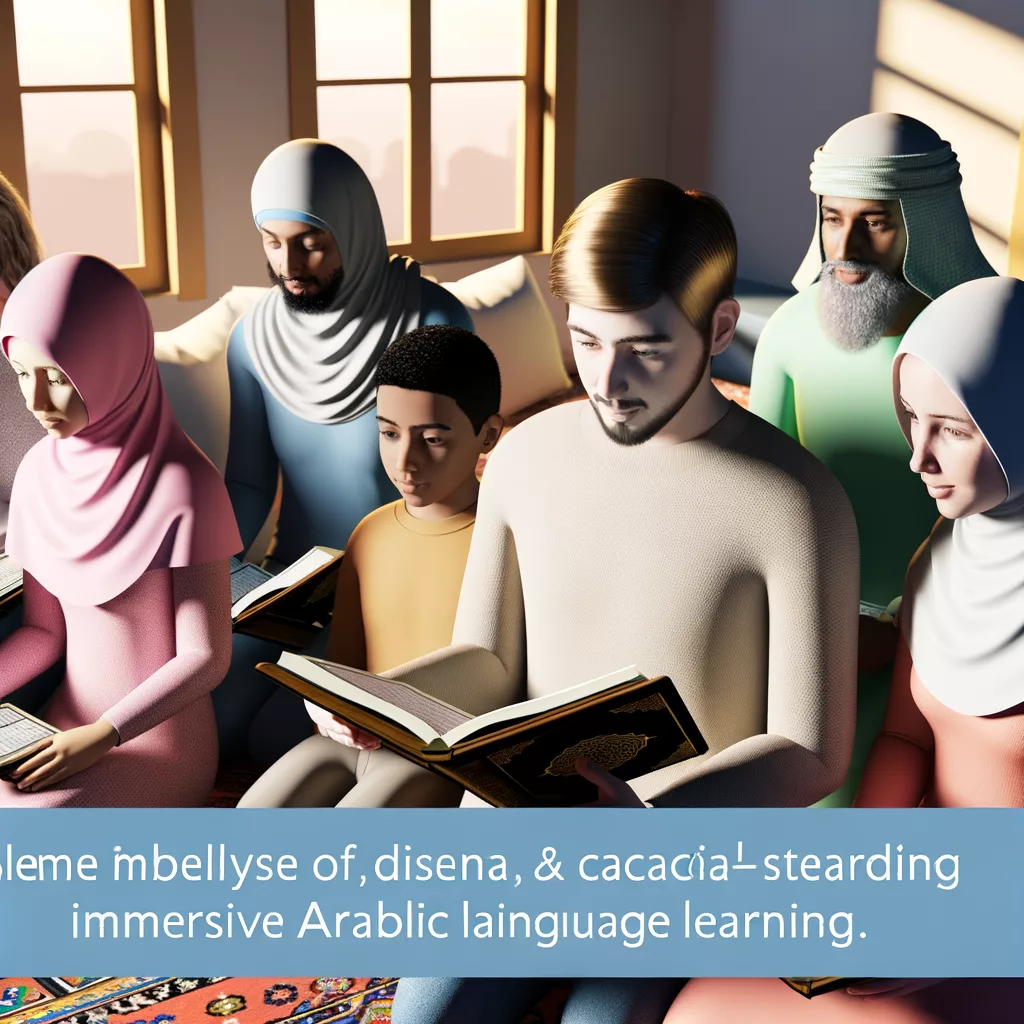
As Ramadan approaches, every Muslim heart feels this intimate aspiration: to live a truly transformative month, to reconnect one’s faith with its essence, to savour every prayer and every verse of the Qur’an in depth. But what does it mean to “live” Ramadan to the full, if not to be able to taste the richness of Islamic spirituality in its original language? All too often, a veil remains over the true meaning of the verses recited, over the hidden beauty of the invocations or over the intensity of authentic fasting. This veil lifts when you dare to learn Arabic, not as a foreign language but as the living key to our spiritual tradition.
Imagine being able to understand the Qur’an in Arabic, to resonate with its inner music during prayer, to feel carried by tajwid, enlightened by tafsir, soothed by every du’a you utter. Imagine rediscovering the sunna, the sira of the Prophet and the science of hadith without the distance of translation, diving straight into the breath of original Islam. This immersive experience, far from being reserved for scholars, can transform the Ramadan of any believer – in France, as anywhere else – into a time of awakening, of love for Allah and of deep gratitude.
Immersive learning of Arabic, without prior translation but through natural exposure, allows the soul to open up, the mind to sharpen and the spiritual routine to take root even before the crescent of the sacred month appears. It shapes a living understanding of salat, dhikr, patience in Islam, tawba and humility before Allah. This preparation is not a mere academic exercise, but an inner, family and community journey, in which each member – adult, child, Muslim couple or young person searching for identity – rediscovers the meaning of the Muslim faith, the breadth of the history of Islam, the warmth of the community and the light of Islamic civilisation.
In the lines that follow, you will discover how immersion in literary Arabic can become the basis of a complete spiritual preparation for Ramadan. You will be guided to relive the Qur’an in Arabic, explore the life of the Prophet and his companions, and build a routine of well-being and inner peace, in deep harmony with the prophetic tradition and Islamic ethics. Preparing for Ramadan starts here: by reconnecting with your heritage, by learning Arabic so as at last to hear, understand and feel, as close as possible to your heart, the voice of the Message.
Rediscovering the spiritual depth of Ramadan through immersive Arabic learning
As the month of Ramadan approaches, many people feel the desire to go beyond habit and to restore meaning and depth to their religious practice. Learning Arabic immersively then becomes a precious key to living this blessed month in its full spiritual dimension. Diving into literary Arabic without going through translation means opening up to the beauty felt when reading the Qur’an in Arabic, fully tasting the meaning of the dhikr spoken at sunrise, perceiving the emotion contained in every du’a recited at dawn. Immersion in Arabic radically transforms your relationship with the sacred text: instead of reciting automatically, you feel the soul vibrate to the rhythm of the verses, the voice settle with concentration on the rules of tajwid, the heart grow calm through a living understanding of the tafsir of the Qur’an directly in the original language. This approach reinvigorates the practice of prayer in Islam; khushu in prayer becomes more natural, because every word of the salat takes on immediate and deep relief in the intimacy of the dialogue with Allah.
Rediscovering Ramadan through immersive Arabic learning means reconnecting with the prophetic tradition and with Islamic spirituality as lived by the companions of the Prophet, the ahl al-bayt and the great figures of the history of Islam. It also opens the doors to the science of hadith, the sunna and the sira of the Prophet, whose teachings resonate with new clarity when grasped in their original language. This linguistic closeness nourishes patience in Islam, sincerity, gratitude to Allah and love of the Prophet and, by extension, refines the whole of the Muslim faith. Through this rediscovery, every verse memorised, every invocation understood in its depth, every moment of repentance or tawba takes on another flavour during fasting in Islam, supererogatory fasting, the night of laylat al-qadr or the Friday prayers.
What is more, learning Arabic through immersion fosters a living connection with Islamic culture, the tradition of the adhan, the life of the mosque and the richness of the Muslim community—all elements that enrich Muslim spiritual life and offer valuable reference points for the Islamic education of Muslim children, the Muslim couple or Muslim youth in search of identity. Through this approach, you cultivate the inner peace, spiritual well-being and spiritual routine that make Ramadan, eid al-fitr, eid al-adha, hajj, umrah and every event of the Muslim calendar bearers of a light renewed day by day. Learning Arabic in the spirit of natural immersion means, quite simply, finding again the living path to the essence of faith and of the practice of Islam, drawing closer to the heart of the Qur’anic message.
Understanding and living the Qur’an in Arabic: towards authentic prayer and mindful fasting
When you aspire to prepare your heart for the month of Ramadan, one essential dimension stands out: understanding and living the Qur’an in Arabic. Learning Arabic is not simply an academic wish, but a deep quest to give meaning and authenticity to every act of worship. Praying in Islam in the language of the Qur’an, reciting in Arabic without translation, tasting the beauty of literary Arabic during salat or a night-time reading of the Qur’an, means opening up to an experience in which every word acts as a light and every verse as a balm for the soul. Immersion in Arabic, far from mere mechanical repetition, allows the heart to vibrate with a new presence: that of khushu in prayer, of full and complete concentration, of an intimate bond with Allah.
Understanding the Qur’an in Arabic gives the Friday prayer, dhikr and invocations (du’a) during the long nights of Ramadan an incomparable spiritual depth. The very words of the revelation, their musicality, their rhythm and their overall meaning envelop the believer in a unique serenity that exists in no translation. It is through attentive listening and memorising the Qur’an, through the practice of tajwid, that you reach the flavour of the Word of Allah – a flavour that transcends words and penetrates the consciousness. The scholars of Islam, from the companions of the Prophet to contemporary scholars, have passed on this wisdom: nothing replaces a direct understanding of the Qur’an during fasting in Islam or on the night of laylat al-qadr, when the soul longs for divine closeness.
Immersive learning of Arabic brings you closer to the sciences of hadith, the tafsir of the Qur’an and the sira of the Prophet, and frees the believer from dependence on outside explanations: they become the agent of their own spiritual education. They discover the wisdom of the ahl al-bayt, the greatness of the companions, the subtlety of the prophetic du’as, the beauty of dhikr – and every term repeated during prayer or a spiritual retreat in the mosque takes on its full meaning. Ramadan thus becomes a complete school: mindful fasting, prayer lived from within, renewed gratitude to Allah, heartfelt love of the Prophet, sincerity and patience revived through direct meditation on the sacred texts. More than a pillar, learning Arabic then becomes the key to an authentic spirituality, deeply rooted in the living tradition of Islam and the Muslim community.
Diving into the sunna, the hadiths and the sira of the Prophet: cultivating Islamic spirituality through immersion
Immersing yourself in the sunna, the hadiths and the sira of the Prophet means giving yourself the unique opportunity to feel the Muslim faith at the very rhythm of its most authentic sources. Learning Arabic, gaining access to literary Arabic, is then far more than language learning: it is an invitation to a living encounter with the words, gestures and silences of the one who was the mercy sent to the worlds. As Ramadan approaches, this immersion in Arabic, without going through translation, offers us the original flavour of Islamic spirituality, a subtle understanding of the Qur’an in Arabic, of the hadiths recounted during the Friday prayer, or of the flashes of patience in Islam that the Prophet showed in every trial. Venturing into reading the Qur’an with tajwid, exploring the sciences of hadith, reliving moments of the sira of the Prophet alongside his companions and the ahl al-bayt, means rediscovering day after day humility, gratitude to Allah, love of Allah and love of the Prophet.
Thanks to learning Arabic through immersion, every du’a, every dhikr, every tawba takes on a new depth, awakening the heart to sincerity in Islam and opening the mind to the beauty of the practice of Islam. The stories of illustrious women and men, from the Andalusian caliphs to the mystics of Sufism, then reveal the light of a dynamic Islamic civilisation, rooted in its text and its ethics. By sharing these stories within the Muslim community, with our Muslim children, in the Muslim family or in the Islamic education of the youngest, we keep alive a vibrant and inspiring Islamic culture that broadens awareness, refines akhlaq and purifies intention.
Diving regularly into the sunna, meditating on the Prophet’s advice during prayer in Islam, reflecting on his behaviour in the face of anger in Islam, on his inner peace even while fasting in Islam or on hajj, means accompanying your spiritual routine with a constant light. This gradual access, without an outside filter, builds a strong Muslim identity, serene in the face of contemporary challenges and deeply rooted in prophetic wisdom, Islamic knowledge and community kindness.
Rooting your Muslim faith and your gratitude to Allah: building a spiritual routine before Ramadan
The roots of the Muslim faith and gratitude to Allah are nourished above all by simple gestures, repeated every day, and by a sincerely anchored spiritual routine, well before Ramadan arrives. Preparing to welcome this blessed month does not only mean anticipating fasting in Islam or adjusting your eating habits, but weaving, in the intimacy of the heart, a living connection with Islamic spirituality. It is in patiently building this routine that you lay solid foundations for your relationship with Allah, that you cultivate patience in Islam and sincerity in every effort, and that you learn to taste the sweetness of gratitude to Allah with every breath.
In the intention to understand the Qur’an in Arabic there is a return to the sources. When you commit to learning Arabic, even in small steps, or sometimes try immersion in Arabic without translation, a subtle light illuminates the words of the revelation. Reading the Qur’an, memorising the Qur’an according to the rules of tajwid, or meditating on the tafsir of the Qur’an then become moments when the Muslim faith takes deep root, when every verse resonates in the heart and sinks into the consciousness. The aim is not perfect mastery of literary Arabic all at once, but a humble and steady progression, living a small victory over yourself every day.
The structure of the spiritual routine shows itself in the diligent practice of prayer in Islam, attentive presence during salat, the effort of khushu in the Friday prayer or Islamic invocations murmured through the hours. Luminous dhikr between two obligations, a discreet du’a in the secrecy of the night, or tawba, repentance in Islam to erase one’s faults, are so many keys that open the heart to the love of Allah and the love of the Prophet. Drawing inspiration from the lives of the companions of the Prophet and the ahl al-bayt, or meditating on the sira of the Prophet, nourishes the soul with living models of piety and endurance, strengthening Muslim identity in a world full of uncertainty.
In this dynamic, every member of the Muslim family, from Muslim youth to the elders, can find their place and their own way of rooting their faith. Whether by discovering Islamic reading in an Islamic library, discovering masterpieces of Islamic calligraphy, or gathering at the mosque to listen to the adhan and share jumu’a, all these moments are reminders that Muslim spiritual life is never solitary. The Islamic education of children, conversations within the Muslim couple, and exchanges of knowledge on questions of fiqh or Islamic ethics within the Muslim community all weave the living bonds of Islamic solidarity.
As Ramadan approaches, this spiritual routine intensifies. You add more supererogatory fasts, with a sharpened awareness that every effort prepares for the coming of laylat al-qadr. You step up acts of Muslim volunteering, sadaqa or zakat, seeking inner peace and spiritual well-being through community mutual aid. You take care to practise moderation in Islam (wasatiyya), to manage anger in Islam and to seek authentic spiritual health. Even family organisation, from halal food to managing waste in Islam, becomes a way of putting Islamic values into practice and of expressing gratitude to Allah for every blessing, however discreet.
Rootedness, gratitude, routine: these three words intertwine to prepare the soul to receive Ramadan as a gift, and not merely as a trial. By walking humbly on the path of learning Arabic, deepening the practice of Islam and surrounding yourself with inspiring examples from the history of Islam, the sunna, contemporary scholars and Islamic civilisation, you build the inner strength that makes every prayer, every du’a and every act of kindness deeper and brighter. It is precisely there that you discover the meaning of spiritual well-being and the intimate reality of Muslim identity, in France or elsewhere, and glimpse true preparation for the month of Ramadan, like a quiet rebirth in the depths of your own heart.
At the end of this inner journey, it becomes clear that spiritually preparing for the month of Ramadan is not limited to a simple accumulation of rituals, but begins with a deep awakening of the heart and the intellect. Learning Arabic through immersion means rediscovering Ramadan as a living encounter with the Qur’an – the divine word sent down to transform the human being from within. By penetrating the meaning of the Qur’an in Arabic, without the filter of translation, our prayer (salat) rises in authenticity and khushu, our fasting becomes an act of awareness, and our dhikr takes on a new nuance, vibrant with meaning.
By exploring the sunna, the sira of the Prophet, the hadiths and the teaching of his companions, this immersion in Arabic nourishes Islamic spirituality in all its dimensions. It revives love of the Prophet and gratitude to Allah, it lights the way of tawba, patience, sincerity and moderation, while inviting everyone to build a solid spiritual routine before the blessed month arrives.
Steeping yourself in literary Arabic also means offering your Muslim family – children, young people, parents – a legacy of intelligence and light, conducive to collective flourishing and to passing on a serene identity. It means entering into the depth of invocations (du’a), discovering the beauty of tajwid and tafsir, revitalising the practice of the Friday prayer, deepening the science of hadith, and moving towards a more nuanced understanding of sharia, fiqh and even Islamic culture.
Ramadan is approaching, bringing unique promises and opportunities for those who prepare for it mindfully. Opening up to learning Arabic means choosing to enter this month with a renewed outlook, ready to taste fully the wisdom of the Qur’an, the sweetness of supererogatory fasting, the light of the nights of laylat al-qadr, and the deep joy of eid al-fitr and eid al-adha. It means taking root, day after day, in inner peace, patience and gratitude, in contact with the living revelation.
By patiently reconnecting with the sacred language, everyone is invited to go beyond the surface: routine regains its flavour, the practice of Islam is enriched with empathy and excellence, and the Muslim faith takes root and rises. Such spiritual preparation nourishes Ramadan and far beyond, contributing to the vitality of the Muslim community, the beauty of Islamic education and the continuity of the unbreakable bond between the word of Allah and sincere hearts. In this way, immersion in Arabic becomes, for every believer, a bridge to a conscious and profound spiritual life, always nourished by the light of the Qur’an.
To go further: discover our programme for learning to read Arabic (adults), or also read “Learning Arabic to find inner peace through the surahs” and “Learning Arabic to understand and live the istikhara prayer“.



