
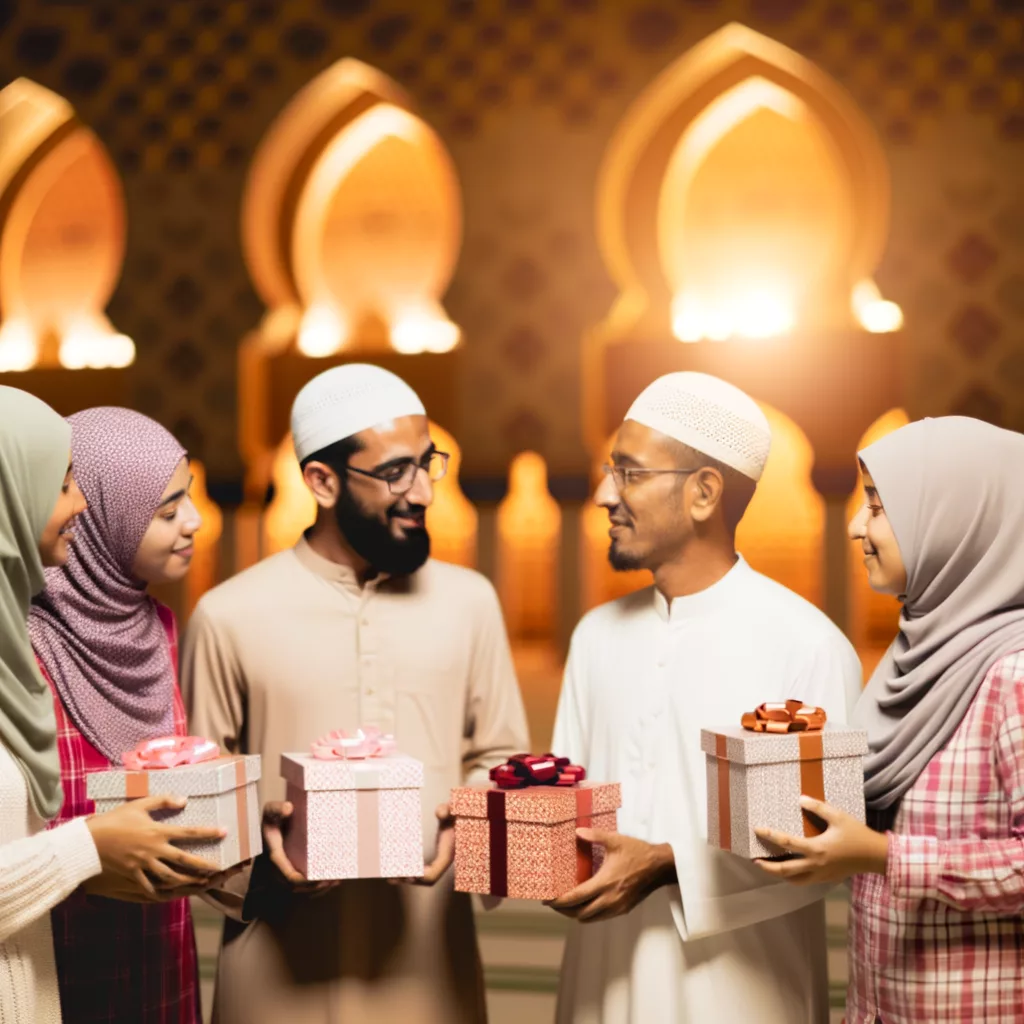
Solidarity, in the Islamic tradition, is much more than a simple gesture of generosity: it lies at the heart of the Muslim faith, enlivening the bonds between believers, weaving cohesion within the community and embodying, day after day, the teachings of the Qur’an and of the sunna of the Prophet Muhammad. Whether it is discreet sadaqa, zakat, a pillar of Islam, or spontaneous mutual help between neighbours and families, every act of sharing bears the luminous imprint of Islamic spirituality. Today, organising a charity collection in the Muslim community takes on particular importance: it means reconnecting with a centuries-old tradition, drawing on the rich heritage of the Companions of the Prophet and reminding each of us of the depth and beauty of community mutual aid.
In a world marked by dispersion, isolation and at times forgetfulness of the essential message of the Qur’an (the message of brotherhood and mercy), every act of solidarity becomes a source of light able to transform hearts, ease difficulties and revive spiritual life. But how do you organise a collection that brings people together, sparks enthusiasm and truly bears fruit? How do you breathe into these actions their authentic spiritual dimension, the one that drives the true practice of Islam? And, even more, how can learning Arabic and immersion in Arabic enrich the understanding of this solidarity, by offering direct access to the treasures of the Qur’an, the accounts of the hadiths and the wisdom of the scholars of Islam?
Through this article, you are invited to rediscover, step by step, the deep meaning of Islamic solidarity and to explore practical advice for uniting the community around a common cause. We will draw on the heritage of the Companions of the Prophet, revisiting living accounts of generosity and brotherhood, without ever forgetting the spiritual, soothing and transforming impact of acts of solidarity on individual and collective faith. Finally, we will open a window onto the Arabic language, that precious bridge to understanding the foundational texts; for learning Arabic means tasting the authentic source of the calls to mutual help, understanding the Qur’an in Arabic with its original intensity, drawing inspiration from reading the Qur’an and, why not, moving calmly forward on the path of memorising the Qur’an, its tafsir and the science of hadith.
Organising a charity collection in the community is therefore more than a material project: it is an invitation to reconnect with the spirit of Islam, to revive the heritage of the Ummah and to open, for each of us, a space of kindness where love of Allah, love of the Prophet, patience, sincerity and gratitude come alive in action. May this exploration accompany, inspire and soothe you, in the light of a solidarity rooted in spirituality and in the concrete experience of today’s Muslims.
Rediscovering Islamic solidarity: sadaqa, zakat and community mutual aid at the heart of Muslim practice
Islamic solidarity holds a central place in the spirituality and practice of Islam, answering a deep need for mutual support within the Muslim community. From the earliest days of the history of Islam, the concepts of sadaqa and zakat gave structure and meaning to community mutual aid: they remind us that no one progresses spiritually without reaching out to their neighbour. Zakat, an essential pillar, purifies wealth and anchors the Muslim faith in social responsibility; sadaqa irrigates daily life with sincere and selfless generosity. This model of mutual help values every gesture, from a material gift to a listening ear, linking tradition, Islamic ethics and collective well-being.
To understand the depth and beauty of these precepts, learning Arabic proves essential. Immersion in Arabic allows you to approach the power of the verses of the Qur’an in Arabic, to savour reading the Qur’an in the original language and to meditate on the wisdom of the hadiths without an intermediary. It is in the language of the Prophet and of the Companions of the Prophet, at the heart of the sira and of the teachings of the ahl al-bayt, that you grasp the full extent of the solidarity being advocated, from shared dhikr to patience in Islam in times of trial, from sincerity of intention to gratitude to Allah for every favour received.
Rediscovering community mutual aid also means recovering the heritage of generations marked by faith and a keen sense of the collective: from Muslim volunteer networks to da’wa initiatives, from educational structures (from the Muslim family to Muslim youth) to projects run by mosques, imams and associations inspired by the sunna and by the great Islamic universities such as Al-Azhar or Zaytouna. The great moments of the lunar year, such as Ramadan, eid al-fitr or eid al-adha, offer precious reminders to make solidarity part of our daily lives: through fasting in Islam, the sharing of food, and the images of the hajj or of al-adha, the Muslim community gives fresh meaning to the brotherhood of the first believers in the Mecca of the revelation.
Committing to Islamic solidarity therefore invites an inner transformation: cultivating love of the Prophet, inner peace in Islam, a spiritual routine and moderation (wasatiyya) breathes new life into our Muslim identity. Everyone, whatever their circumstances, age or level of knowledge, can strengthen community mutual aid and the living dimension of the practice of Islam, while growing in spiritual well-being and wisdom. Taking up the study of Arabic, deepening the understanding of the Qur’an and drawing inspiration from the science of hadith then become keys to nourishing solidarity, justice and human dignity within Islamic civilisation over the long term.
Uniting the community around a cause: practical advice and the legacy of the Companions of the Prophet for organising a charity collection
Coming together for a cause of solidarity means recreating the living spirit that drove the Companions of the Prophet, those men and women transformed by the light of the Qur’an in Arabic and the living example of the Messenger of Allah. Their ability to unite the Muslim community around a project, whether supporting a family or building a mosque, was rooted in sincerity in Islam, patience in hardship and gratitude to Allah for every opportunity to work for good. Building on this heritage means first remembering that every charity collection, small or large, begins with purity of intention: no ostentation, no search for recognition, but love of Allah and service to His creatures.
In practice, follow the example of the sunna by consulting the influential members of those around you, as the Companions did when they gathered with the Prophet to prepare for battles or community projects. Communicate clearly: an announcement after the Friday salat or in your local mosque, accompanied by a short collective invocation, already plants the seed of mutual help. Ask the imam, a trusted figure, to explain the meaning of sadaqa and zakat, while linking the initiative to Islamic spirituality: every gift, small or large, purifies the heart.
Fill the collection with a spirit of unity, with reminders drawn from the Qur’an in Arabic, from the sira of the Prophet, or from the noble hadiths that speak of community mutual aid. Do not hesitate to invite Muslim families, young people and couples, so that everyone has a role to play according to their means; this is how learning Arabic and understanding the Qur’an are lived, in the living transmission of Qur’anic values. Remember to value the participation of Muslim children, explaining the meaning of this gesture to them in simple words, or even through Islamic calligraphy or suitable readings.
Finally, draw inspiration from the model of moderation (wasatiyya) and efficiency of those who came before us: clear planning, transparent management, respect for Islamic ethics and sincere feedback to donors. Give the Muslim community an experience of Islamic solidarity that reconnects with the practice of authentic Islam, while sowing in hearts this taste for kindness, the foundation of spiritual well-being and inner peace in Islam. A simple collection, conceived and lived in this way, then becomes a bridge between generations, a lifelong lesson and an echo, however discreet, of the spirit of the Companions in Medina.
Cultivating faith through action: Islamic spirituality and the benefits of solidarity for spiritual life and community cohesion
Cultivating faith through action means reconciling the life of the heart with commitment in the service of others, a principle deeply rooted in Islamic spirituality. When the Muslim community unites to organise a charity collection, a whole spiritual dynamic is set in motion: the practice of Islam is no longer limited to the individual sphere but extends naturally to society. By giving of themselves and of their wealth, each believer takes their place in the prophetic tradition: that of sadaqa, zakat, Muslim volunteering and community mutual aid. This rekindles in hearts the very essence of the Muslim faith, through sincerity in Islam, gratitude to Allah and love of the Prophet Muhammad, peace and blessings be upon him, who urged his Companions to take care of the most vulnerable. This Islamic solidarity then becomes a training ground for patience in Islam and moderation in all things, while cultivating inner peace.
Taking part in a collective action nourishes the dimension of akhlaq, that noble Islamic conduct which makes the Muslim community shine in its surroundings. The memory of great moments of mutual help, experienced during Ramadan or during the hajj, reminds us that to give is also to receive: spiritual well-being, a renewed spiritual routine, and the deep feeling of fully living one’s Muslim identity. When you invest yourself in solidarity, every gesture resonates with the reading of the Qur’an in Arabic, where you absorb the message of compassion and justice. Learning Arabic, the effort to understand the Qur’an without translation, or memorising the Qur’an with the rules of tajwid, become lights for acting with greater accuracy and awareness.
Through these commitments, community cohesion grows stronger: the mosque regains its central role, the imam brings energies together, and Muslim families and Muslim youth learn together the value of Islamic solidarity. Every charity collection is thus the living extension of the sunna, of the sira of the Prophet and of the lived experience of the ahl al-bayt. It is teaching by example, passing on to Muslim children not only religious knowledge but also the Islamic ethics of sharing, respect and interfaith dialogue. The community draws models of brotherhood from the history of Islam, from the Andalusian caliphate to contemporary scholars, constantly renewing the link between faith, knowledge and right action. In this way, solidarity, far from being a mere social obligation, becomes the active mirror of faith, strengthening spiritual health, gratitude and unity within Islamic cultural diversity.
The Arabic language in the service of solidarity: learning Arabic to understand the teachings of the Qur’an and the hadiths on mutual help
In the Islamic tradition, solidarity is not a mere recommendation: it is a living pillar of the Muslim faith, a deep expression of rahma, divine Mercy, which irrigates hearts and deeds within the Muslim community. Learning Arabic, and even more so living an immersion in Arabic, opens the door to an authentic understanding of these principles, drawn from the source of the Qur’an in Arabic and the hadiths of the Prophet. It is in the beauty of literary Arabic, without the filter of translation, that you perceive the strength and finesse of the messages on mutual help, Muslim volunteering, sadaqa and zakat, which shape the spirit of Islamic solidarity. Reading the Qur’an, memorising it according to the rules of tajwid, or studying the tafsir of the Qur’an allows you to absorb the deep meaning of brotherhood, patience in Islam, sincerity in Islam or gratitude to Allah, all values that call us to reach out. The authentic hadiths and the science of hadith teach the concrete gestures of the sunna, embodied by the Prophet, his Companions and the ahl al-bayt, models of generosity, fairness and compassion. On every page of the sira of the Prophet and of the history of Islam, the reader who strives to understand these texts in Arabic dives into the heritage of Islamic civilisation, a tradition in which community mutual aid, the fight against waste in Islam, and sharing during Ramadan or the hajj are raised to the rank of worship. Learning Arabic then becomes an act of living connection to the community, of strengthening social bonds and of developing spiritual well-being. Whether in prayer in Islam, dhikr or Islamic invocations, the Arabic language invites an inner posture of humility, peace and service, and nourishes this dynamic of solidarity that unites Muslims in France and elsewhere, beyond time and borders.
Further reading: discover our online Arabic courses for adults, or read “Learning Arabic and organising a successful charity collection” and “Learning Arabic through the names of the prophets“.
Conclusion
At the end of this reflection on organising a charity collection in the Muslim community, one thing is clear: solidarity, far from being a one-off gesture, is a living and essential dimension of the practice of Islam. It has nourished the Muslim faith since the first generations, expressed through sadaqa, zakat and collective mutual help, but also in the sincere attention paid to every member of the community. As we have seen, the example of the Companions of the Prophet and the timeless wisdom of the hadiths and of the sira of the Prophet (peace and blessings be upon him) are precious sources of inspiration for uniting hearts around a common cause.
More than a mere moral imperative, solidarity shapes the cohesion and vitality of the Muslim community, contributing to a deep spiritual life nourished by gratitude to Allah and the search for His pleasure. It is a path to spiritual well-being, inner peace and the authentic meaning of brotherhood, as taught by salat lived with khushu, the fast of Ramadan, or patience in hardship. At every stage, sincerity and intention count for more than quantity, whether it is a discreet gift, time given to Muslim volunteering, or a smile offered at a Friday prayer.
In this dynamic, learning Arabic takes on a new dimension: it is no longer just about acquiring a language, but about immersing yourself in the world of the Qur’an, the sunna and the whole of Islamic culture. Learning Arabic, especially literary Arabic, without stopping at translation, makes it possible to understand the Qur’an in its depth, to taste the beauty of tajwid, and to enter into the meaning of invocations, du’a and the words of the Prophet. It is in this immersion in Arabic that the science of hadith, the tafsir of the Qur’an and the stories of the Companions of the Prophet and of the ahl al-bayt, models of solidarity, altruism and living faith, take on their full meaning.
The Arabic language is thus a living bridge between the call to prayer in the mosque, the collective memory of the history of Islam, and daily practice: it shapes the salat, accompanies Islamic festivals such as eid al-fitr or eid al-adha, and irrigates the great milestones such as the hajj, the umra or repentance in Islam. It structures the Islamic education of children, the life of the Muslim couple, and the passing on of the values of humility, modesty, Islamic ethics and kindness, in the family or in society. Whether it is a simple word of compassion, a meditation on a verse during the night of laylat al-qadr, or a collective action against waste in Islam, the gradual mastery of the language of the Qur’an then becomes the guiding thread of a peaceful and responsible Muslim identity.
Organising a charity collection is therefore much more than gathering material resources: it means reconnecting, every day, with the prophetic tradition, with the wisdom of the scholars of Islam of yesterday and today, and with the call to build a community of mutual help, where every member feels truly supported, listened to and valued. It means choosing the path of an authentic, moderate and radiant practice of Islam, in which the spiritual dimension, akhlaq and concrete commitment are one. By putting learning Arabic and the quest to understand the Qur’an back at the centre of our shared projects, we make the light of the Islamic message shine, for ourselves, for our families, for Muslim youth, and also at the heart of a plural society that so greatly needs brotherhood, dialogue and peace.
Thus every act of solidarity, nourished by the richness of the Islamic heritage and the original language of the revelation, strengthens wasatiyya, balance, patience and gratitude to Allah. It reminds us that, in the Muslim community, every gift, every smile, every kind word and every prayer are seeds sown in the service of a better world, in this life and in the hereafter.



