
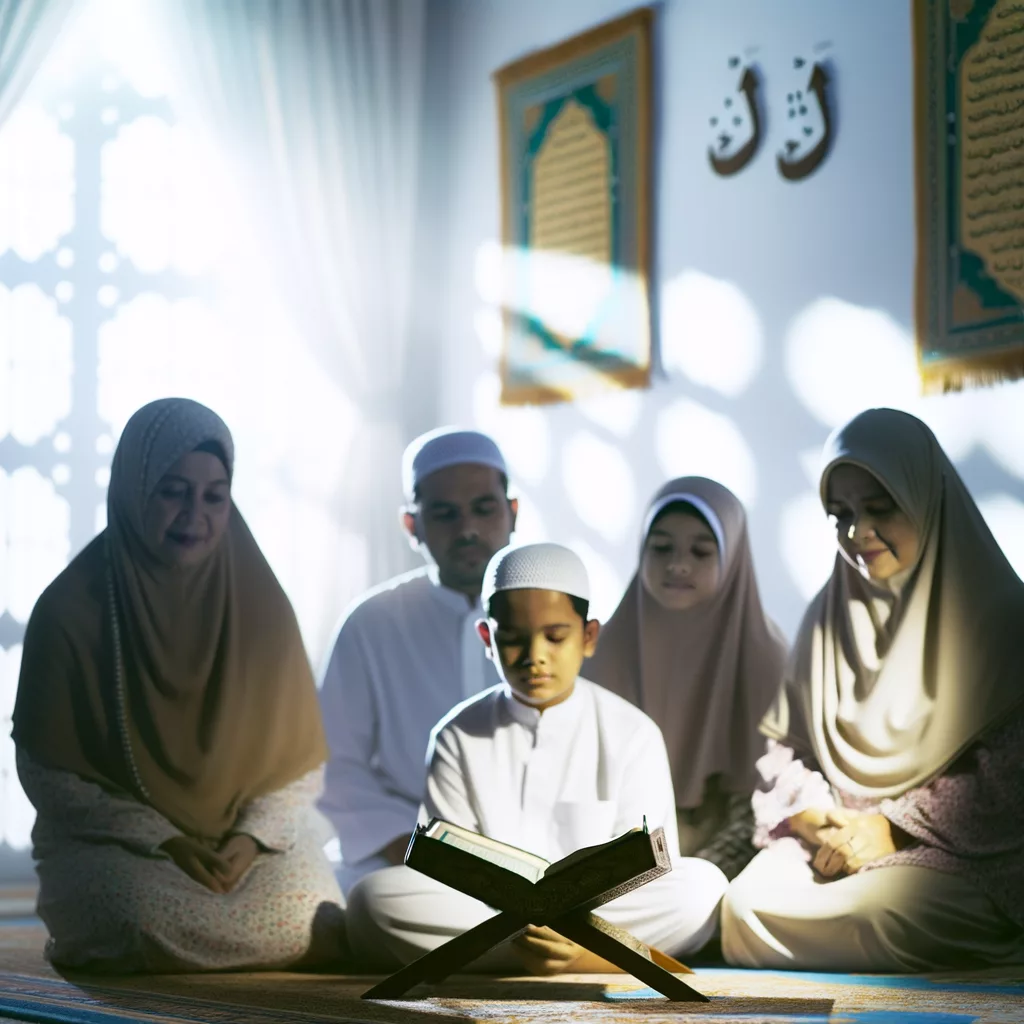
When you open the Qur’an to discover the subtle rules of inheritance, you enter the very heart of the justice, wisdom and mercy on which Islamic spirituality is founded. Every verse devoted to this question, every word used by Allah in the Arabic language, reveals an extreme attention to fairness between members of the Muslim family: woman, man, child, orphan or forgotten relative. But how can you feel this deep delicacy, how can you grasp the authentic meaning, other than by immersing yourself in literary Arabic, studying the science of fiqh, and savouring the beauty of the Qur’an in its original language, without the barrier or filter of translation?
Learning Arabic is far more than broadening your language skills: it gives you the ability to understand the Qur’an from its primary source, to reach the true meaning of its prescriptions and to live the practice of Islam to the full. Learning Arabic through immersion lets you not only read and meditate on the verses related to inheritance, so precise and so nuanced, but also absorb their spirit, where the notions of balance, fair transmission and filial love blossom. Diving into Qur’anic vocabulary, without going through translation, gives rise to a new understanding of the sacred text and of the sunna of the Prophet Muhammad, illuminated by tafsir and by the reflection of the Companions of the Prophet and the ahl al-bayt.
In a world where justice and solidarity are often called into question, understanding the rules of succession in Islam through literary Arabic reflects a genuine concern to anchor one’s Muslim faith in the light of revelation. This learning does not only touch the legal domain: it transforms one’s relationship with family, with prayer, with gratitude towards Allah, with the Muslim community and with the universal values carried by Islamic civilisation. Thus, being introduced to the sciences of fiqh and to the richness of inheritance in Islam opens a door to a unique balance between spirituality, justice and deep trust in divine wisdom.
This journey, guided by immersion in Arabic and the rediscovery of the original meaning, sheds light not only on our family responsibilities, but also on the intimate bond that unites each believer with the Book of Allah. Whether you are a curious beginner, a committed practitioner or someone passionate about Islamic history, learning Arabic to understand the Qur’an and its laws of inheritance means reconnecting with the very essence of revelation and of Muslim spiritual life.
Why learning Arabic is essential to understanding the rules of inheritance in the Qur’an
Understanding the rules of inheritance in Islam requires far more than simply consulting a translation of the Qur’an or a legal summary. Inheritance, or al-mirath, holds a central place in the sharia and in fiqh, and its rules are set out in the Qur’an in Arabic through very precise verses of great linguistic subtlety, which only a careful reading of the original text can truly illuminate. Learning Arabic therefore becomes essential to reach the very heart of Qur’anic wisdom on inheritance. The language of the Qur’an, literary Arabic, is full of nuances and technical terms (for example, to designate degrees of kinship, the fractions of the shares or particular cases) which, once translated, often lose their precision and their spiritual scope.
Learning Arabic, especially through immersion in Arabic and without translation, offers direct contact with the word of Allah revealed to the Prophet. This sensitive approach makes it possible to grasp not only the legal prescriptions but also their spirit: justice, fairness, wisdom, and respect for family ties and for the Muslim community. Understanding the Qur’an in Arabic means discovering how each word chosen by Allah structures the organisation of the Muslim family and preserves social cohesion, through the management of inheritance, zakat or Islamic solidarity.
The Islamic sciences, such as Qur’anic tafsir, the science of hadith, studies of the sunna and the sira of the Prophet, all rest on a precise mastery of the Arabic language. The fuqaha and scholars of Islam, past and present, draw their understanding of inheritance jurisprudence directly from the primary sources, without filter and without the risk of ambiguity that comes with translation. In immersion, reading the Qur’an, memorising the Qur’an and reciting with tajwid become deeply spiritual acts, in which every letter, every pause and every word root takes on its full meaning. This nourishes the Muslim faith and develops patience in Islam during study, sincerity of intention, and khushu in prayer, because the believer feels in their heart the rightness of the divine word.
Each time we study inheritance in Arabic, we take our place in the continuity of the prophetic tradition, of Islamic education passed on from generation to generation, from Muslim children to scholars, from the Muslim couple to the extended Muslim family. Living, daily learning of literary Arabic, within the family or the community, brings Islamic values and ethics back to life, strengthens Muslim identity, and weaves that subtle link between the practice of Islam, love of Allah and love of the Prophet.
Ultimately, learning Arabic is not just a skill: it is an act of humility, of gratitude towards Allah for the gift of the Qur’an, and a key to opening up to Islamic spirituality in all its depth, whether in Islamic reading, in reflection on the divine laws, or in the search for balance between family duties, justice and mercy. To grasp the beauty, logic and mercy of the rules of succession, nothing is more precious than rediscovering the Qur’anic word in the language in which it was revealed.
Immersion in Arabic: discovering the vocabulary of inheritance and its deep meaning without translation
Diving into immersion in Arabic gives you the unique chance to feel the vocabulary of inheritance in all its truth, without going through the distorting filter of translation. Inheritance in Islam is not simply a question of material division, but also a deep expression of justice, balance and spiritual intention, as every verse of the Qur’an devoted to the subject shows. When you set out to learn Arabic, and in particular the literary Arabic of the Qur’an, every word and every expression used in the verses on inheritance (al-mawārith) reveals subtlety and wisdom. For example, terms such as al-fara’id, wasiyya or ‘asabah are not limited to legal notions; they reflect the divine order, the protection of the weak and the preservation of family solidarity, fundamental values of Islamic civilisation.
In an immersive approach, hearing the vocabulary directly, savouring its musicality and understanding its use in the context of the Qur’an in Arabic or the sunna means opening yourself to the very essence of Islamic legislation. You then perceive, in recitation (tajwid) or through study (Qur’anic tafsir), the depth of the message, the concern for exactness, and the mercy of Allah towards His community. Learning Arabic without translation also makes it possible to build a personal connection with the prophetic teachings: the hadiths on inheritance, passed on by the Companions of the Prophet or the ahl al-bayt, then become luminous and accessible to the heart as well as to the intellect.
This immersion transforms the reading of the Qur’an and the practice of Islam: understanding the fiqh of inheritance is no longer reduced to mathematical mechanics, but becomes an expression of the divine will, a source of Muslim faith and of family balance. Becoming familiar with this vocabulary in context, observing family conversations about the division of an estate, listening to Friday sermons (jumu’a) or to the imam’s explanations of the wisdom of zakat and sadaqa: all of this refines Islamic sensitivity. Through this natural method, the French-speaking Muslim moves step by step towards a vibrant understanding of the practice of Islam, of patience in Islam when bereavement comes, and of sincerity and gratitude towards Allah in the face of trial or of wealth.
Gradually, immersion in Arabic restores to Islamic spirituality its original light: the light that frees the mind from mere duty and raises it to awareness, to mercy, to inner peace in Islam. Immersive learning is no longer limited to the intellect: it infuses the heart, the Muslim family and the education of children in Islam. Thus each term learned in the original language carries within it a share of eternity, a secret to meditate on and an invitation to the beauty of faith.
Literary Arabic and the science of fiqh: decoding the Islamic sources on inheritance in the light of the sunna and Qur’anic tafsir
Immersing yourself in literary Arabic opens the door to an authentic understanding of the science of fiqh and, in particular, of the subtle rules of inheritance in Islam. This linguistic journey is not only about learning Arabic as a tool of communication; it represents a true act of faith, an approach that goes beyond the mere acquisition of knowledge. Decoding the laws of inheritance, or fara’id, requires direct access to the sources: the Qur’an in Arabic, the sunna of the Prophet, the accounts of his Companions and the immense heritage of Qur’anic tafsir. Every term, every grammatical construction, even every silence has a legal, spiritual and ethical significance. In immersion in Arabic, far from the mediation of approximate translations, you perceive the finesse of the distinctions between heirs, and you measure the justice of the division, the delicacy of the allocations and the wisdom of the prescriptions.
Understanding the Qur’an in Arabic thus means grasping at once the sacrificial dimension, but also the unsuspected tenderness, of the verses relating to the Muslim family, to fairness between children, and to respect for the rights of women and of the most vulnerable. The science of fiqh then unfolds in the authentic hadiths, reported with such precision that only mastery of the science of hadith and of the original language allows their full scope to be appreciated. The scholars of Islam, throughout the centuries of Islamic civilisation, developed the rules of succession from a faithful reading of the sacred text, shedding light on one another in the light of the sunna, from the Andalusian caliphate to the teaching of Islamic universities such as Al-Azhar or Zaytouna.
Learning Arabic, especially by favouring the approach through immersion in Arabic and refraining from systematic translation, offers the chance to savour the beauty of the Qur’an when reading the Qur’an or memorising the Qur’an according to the rules of tajwid, and then to contemplate the wisdom of the sira of the Prophet and his Companions in the very context of their revelation. This immersion nourishes the understanding of the subtleties of fiqh and makes it possible to connect the practice of Islam (whether funeral rites, dhikr, Islamic invocations or family law) to its primary sources, in the language that carries the light of revelation.
Learning literary Arabic thus means taking full part in Islamic spirituality, in the debates of the madhahib, in the search for a just fatwa, and in expressing gratitude towards Allah for the richness of His message. It is a path that invites patience in Islam, sincerity in the pursuit of knowledge, and love of the Prophet, with every page consulted and every rule studied. More than a noble academic or legal goal, learning Arabic through an immersive approach brings new life to the conscience and to the spiritual routine of the Muslim family; it connects intellect and heart, guiding each person through the stages of inheritance, not only as a transmission of property, but as a transmission of faith and social harmony, in the eternal light of the Qur’an and the sunna.
Inheritance, the Muslim family and the transmission of values: spirituality and justice in the practice of Islam
In the Muslim family, inheritance is never a purely material matter: it embodies the transmission of a sacred tradition, in which justice and spirituality meet intimately. Each division, according to the sharia and fiqh, answers to a divine wisdom revealed in the Qur’an in Arabic, which we seek to understand, recite and meditate on with sincerity during prayer in Islam, during Ramadan or when reading the Qur’an. Through learning Arabic and immersion in Arabic, the believer explores the root and the spirit of these laws, finding in them far more than simple calculations: they perceive the intention of balance and compassion, and the concern to avoid injustice or family discord.
Inheritance thus becomes the reflection of a living Islamic spirituality, in which every rule of division expresses the justice willed by Allah, honouring descendants as well as spouses, parents and relatives. This invites Muslim youth, children and adults alike, to develop an Islamic ethic based on gratitude towards Allah, patience in Islam, and respect for the values passed on by the Prophet and the Companions of the Prophet. Diving, through memorising the Qur’an and studying the hadiths and the sunna, into Qur’anic tafsir or the science of hadith means grasping the ultimate scope of these prescriptions: preserving the cohesion of the Muslim family, ensuring solidarity and mutual support within the community, and embodying justice even when material goods are at stake.
Through literary Arabic, and without going through translation, the voice of the Qur’an makes itself heard with power and delicacy: “Allah commands you concerning your children…” This verse, and so many others, urges every Muslim to seek the deep meaning, moderation (wasatiyya), inner peace and reconciliation, even after the death of a loved one. In daily life, discussions about inheritance then become moments of dialogue, of learning Arabic, of reminders of dhikr and Islamic invocations, of educating children in Islam and of passing on the values that forge Muslim identity and Islamic culture, in France as elsewhere.
Inheritance, in its noblest dimension, is not simply the transmission of an estate, but the anchoring of an authentic Muslim faith, made of love of Allah and of the Prophet, spiritual well-being, sincerity, and justice towards all the members of the household and of the community. This justice, learned and lived through the Qur’an in Arabic, the sunna and the rich Islamic civilisation, makes the division of an estate not only a duty, but a renewed chance to cultivate light and peace within the Muslim family.
Further reading: discover our online Arabic courses for adults, or read “Music in Islam: learning Arabic to understand the different opinions” and “Learning Arabic to understand fiqh and the practice of Islam“.
Conclusion
Learning Arabic is far more than a simple language skill when it comes to understanding the rules of inheritance in Islam. It is a door opened onto the wisdom of the Qur’an, the depth of the sunna and the subtlety of fiqh, which reveal their richness only through the original language. Immersion in Arabic, far from the barrier of translation, lets you feel the spiritual breath of the verses, grasp the rightness of Islamic justice and savour the mercy infused in every word of the Qur’anic law of inheritance.
By taking up the study of literary Arabic, the believer gains an authentic understanding of the sacred text and of the prophetic tradition. Without the intermediary of a third language, they discover the finesse of the rules, the wisdom of the Companions of the Prophet in applying them, and the strength of the values passed on within the Muslim family. This approach goes beyond the purely technical: it nourishes the Muslim faith, enriches the practice of Islam and breathes deep spirituality into the handling of both material and symbolic inheritance.
Acquiring the specific vocabulary through immersion, reading the Qur’an in Arabic, memorising the Qur’an with tajwid, and consulting Qur’anic tafsir and the authentic hadiths give the Islamic sciences their full dimension: they anchor the link between the law of succession, Islamic spirituality and the justice embodied from the very first generations of the Muslim community. This direct access fosters sincerity, patience in application, gratitude towards Allah and a keen sense of responsibility towards what is passed on.
In the light of immersive learning, every rule of inheritance then becomes an opportunity to reconnect with the spirit of the Qur’anic message and the guidance of the sunna. Through knowledge, heirs do not merely share material goods; they also perpetuate love of Allah, love of the Prophet and the cohesion of the Muslim family. At the heart of contemporary society, they uphold the justice, moderation (wasatiyya) and balance advocated by Islamic civilisation throughout the history of Islam.
The understanding of inheritance in Islam, enriched by learning Arabic without translation, thus flourishes in a deep harmony between law, spirituality, culture and ethics. It illuminates the believer’s life, contributes to the preservation of faith, inner peace and spiritual well-being, and takes its place in a living continuity, from the revelation to today, in the heart of every Muslim who cares about passing on the light and justice of the Qur’an in Arabic through the generations.



