
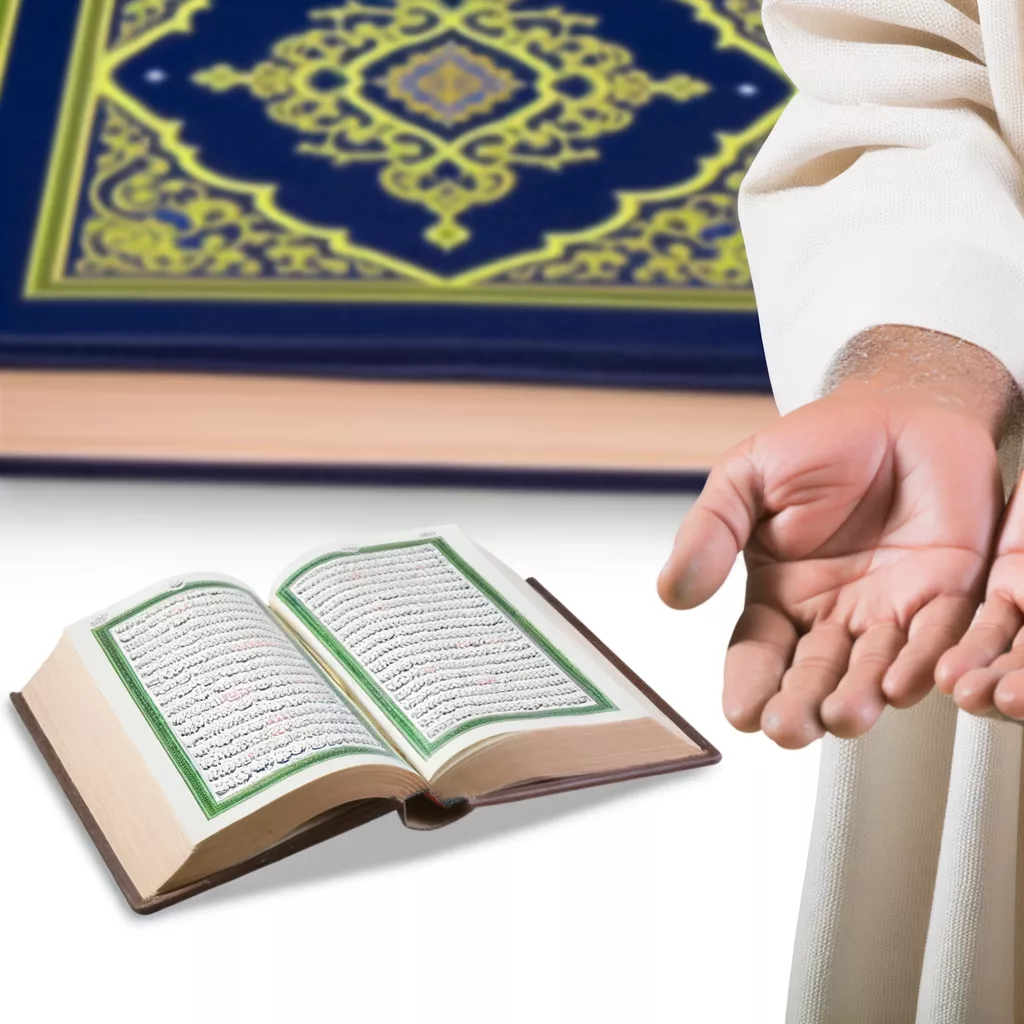
When we speak of the purification of the soul in Islamic spirituality, one essential term emerges: sadaqa, or voluntary charity. Generosity, simple in appearance, is one of the subtlest doors to inner peace and spiritual elevation. But how does sadaqa transform our relationship with Allah, with ourselves and with those around us? And above all, what happens when this notion is understood in the light of the Qur’an in Arabic, without filter or translation, in the beauty of an immersion in the language of the Sacred Book?
For many believers, the act of giving has an intimate, almost secret dimension, rooted in the love of Allah and the sincere desire to purify the heart. The Qur’anic verses, read in literary Arabic and pondered through learning Arabic, then reveal an unsuspected richness: every word, every root, every construction bears the trace of a divine message, subtly shaped to guide the soul. Understanding the Qur’an in Arabic means perceiving the depth of the concept of sadaqa—far beyond a simple material gift, it becomes a key to spiritual success, a way to acquire sincerity, humility and gratitude towards Allah.
Immersion in Arabic gives access to the science of hadith, to the sunna and to the sira of the Prophet Muhammad, where sadaqa takes its full place in daily life, as a living example of mutual aid and Islamic solidarity. Nothing is left to chance: every act of charity, every smile, every gesture of kindness counts and contributes to the purification of the soul, a central goal of the Muslim faith.
Today, learning Arabic and exploring concepts such as sadaqa not only deepens your understanding of the sacred texts but also illuminates your routine, your relationships and your involvement in the Muslim community. In a society where the meaning of giving is sometimes lost, the Qur’anic and prophetic heritage resonates with particular force, inviting everyone to revisit sadaqa as a pillar of Muslim spiritual life and Islamic identity.
This article takes you on a journey to the heart of Islamic generosity, where the real practice of sadaqa meets the deep meaning of the Qur’anic text in Arabic, the prophetic tradition and everyday spiritual education. Through a dive into learning Arabic, immersion in the Qur’an, the science of hadith and the example of the companions of the Prophet, you will discover why giving, in Islam, is first of all giving yourself the chance to purify your soul.
Sadaqa and Purification of the Soul: When Generosity Becomes a Path of Islamic Spirituality
When we ask what true purification of the soul means in Islamic spirituality, sadaqa turns out to be much more than a simple act of material generosity. It becomes a path of inner elevation, transforming the believer’s relationship with Allah, with the world and with themselves. Offering, giving of yourself for others, means freeing yourself from the attachment to material things that weighs the soul down and slows its progress towards the light. In the practice of Islam, sadaqa acts as a mirror revealing the deep intention, sincerity in Islam — it gives rise to tawba, repentance, and polishes the heart so that it can welcome pure gratitude towards Allah. Every gift, even a discreet one, extinguishes a little greed, wears away pride and invites patience in Islam, reshaping the very structure of the Muslim faith and of spiritual well-being.
To grasp the full dimension of sadaqa, it is essential to return to the source: understanding the Qur’an in literary Arabic, meditating on the sira of the Prophet and on the companions of the Prophet, whose generosity remains legendary. Learning Arabic brings a unique flavour to this journey, because immersion in Arabic, far from translation, lets you feel the subtlety of terms such as sadaqa, zakat or ihsan and awaken to Qur’anic wisdom. So every reading of the Qur’an, every time you listen to tajwid, every moment of memorising the Qur’an becomes an opportunity to examine the authenticity of our giving and the purity of our intention.
In a world where stress and anxiety wear away well-being, sadaqa embodies a powerful spiritual routine, a concrete dhikr, anchoring the soul in inner peace and hope. Giving soothes anger in Islam, frees us from resentment, cultivates modesty in Islam and brings us closer to the exemplary Islamic conduct (akhlaq) so strongly encouraged in the ahadith and the sunna. For today’s Muslim, whether during Ramadan, as eid al-fitr approaches, during the hajj or in everyday moments, sadaqa is both shield and light: a way of being present to Allah and to His creation, of expressing love of the Prophet and of strengthening Islamic solidarity. It quietly weaves discreet but powerful bonds of brotherhood within the Muslim community, reminding us that every act of charity, small or large, is a key to a pure heart and a radiant Muslim identity.
Learning Arabic and Understanding Sadaqa: Deepening the Meaning of Charity through the Qur’an in Arabic
Learning Arabic stands out as an essential key for anyone who wishes to fully grasp the deep meaning of sadaqa in Islamic spirituality. Much more than simple material charity, sadaqa is, in the light of the Qur’an in Arabic, a purification of the heart and a source of elevation for the soul. When you choose immersion in Arabic, you enter the authentic world of the Holy Book without the reductive filter of translation. Every verse dealing with generosity, compassion or sincerity then resonates with a new and intimate intensity. The words of the Qur’an – such as infâq (spending in the way of Allah), ikhlâs (sincerity) or tazkiya (purification) – carry a wealth of meaning that no other language can ever fully capture. By meditating, by reciting with tajwid, or while memorising the Qur’an, the mind naturally absorbs the founding values of sadaqa. This nourishes khushu in prayer, refines gratitude towards Allah and develops a deep love of Allah and of the Prophet.
Studying the tafsir of the Qur’an directly in literary Arabic reveals subtle nuances that are often missing from French translations, making it possible to understand how the companions of the Prophet and the ahl al-bayt practised generosity day to day. The authentic hadiths, the sira of the Prophet and the teachings of the scholars of Islam then take on their full meaning: sadaqa is not just an isolated action, but an invisible pillar of Muslim spiritual life, a golden thread in the practice of Islam. This direct understanding gives the Muslim faith new strength, a soothing spiritual well-being and a spiritual routine revitalised by daily acts of community mutual aid.
Learning Arabic without translation also means broadening your horizon: every word discovered while reading the Qur’an or studying the sunna inspires an action, a pure intention, a deep repentance (tawba) or a surge of Islamic solidarity. It teaches Muslim children to give wisely, encourages Muslim volunteering and shapes a whole community in the image of the ummah described by the Prophet in his Friday sermons (joumoua). Through mastering literary Arabic, through diving into the science of hadith or studying fiqh and aqida, the believer understands that sadaqa belongs to the same lineage as zakat, fasting in Islam and patience in Islam: it is an invisible school, forged by the sacred language, which turns an ordinary intention into light for oneself, for others and for the whole Muslim community.
Sadaqa, Immersion in Arabic and the Science of Hadith: Discovering the Role of Charity in the Sunna and the Sira of the Prophet
To grasp the full depth of sadaqa and its role in the purification of the soul, it is essential to enter into immersion in Arabic and to explore the science of hadith as well as the sira of the Prophet. Learning literary Arabic becomes an irreplaceable gateway here: it lets you feel the beauty and subtlety of the prophetic discourse without the filters and reductions of translation. When you hear the words of the Prophet (ﷺ) in their original language, every term linked to generosity, sincerity (ikhlâs) and mercy resonates with particular force, steeped in the context of the revelation, of Islamic history and of Islamic culture itself.
Learning Arabic without translation, by listening to the hadiths, reading the Qur’an in Arabic and memorising the Qur’an with tajwid, offers an intimate understanding of the central place of sadaqa in Islamic spirituality. It is in the sunna and through the living example of the Prophet and his companions that we discover sadaqa embodied: from giving away the most precious possessions to the simple offering of a smile or a soothing word, every gesture takes on meaning in the light of the Muslim faith and of the authentic practice of Islam.
The sira of the Prophet Muhammad (ﷺ), told in the original words of Arabic, reveals a pedagogy of giving: nights spent in prayer (salat) interceding for his community, moments of humility during Ramadan or the distribution of zakat, right through to the teachings passed on to the ahl al-bayt and to the whole Muslim community. Learning to read and understand the primary sources in Arabic opens the doors both to the tafsir of the Qur’an and to the sciences of hadith, bringing to light the invisible thread that links dhikr, gratitude towards Allah and the act of giving out of love for Allah and the Prophet.
By diving into the practice of those who came before us, by drawing inspiration from their patience, their sincerity in Islam and their commitment to Islamic solidarity and community mutual aid, immersion in literary Arabic nourishes a deep spiritual routine, revitalised by hearing the adhan resound in the mosque and by reading the great scholars of Islam. The whole art of Muslim spiritual life, from the Friday prayer to the joy shared at eid al-fitr or eid al-adha, is rooted in living knowledge, passed on from heart to heart, from a language to a soul. Sadaqa, understood and lived this way in the light of the original texts, becomes a path to inner peace, balance and harmony with the community as well as with oneself.
Practising Sadaqa Every Day: Islamic Solidarity, Spiritual Well-being and the Education of Muslim Children
When sadaqa becomes part of daily practice, it opens the doors to an authentic and deep Islamic solidarity, which shapes the life of the community as much as that of the individual. Offering charity, a smile, a kind gesture or practical help means bringing the sunna of the Prophet to life and strengthening the invisible fabric of brotherhood within the Muslim community. Every small act of generosity becomes a remedy for the trials of the world, but also a key to the purification of the soul and to inner peace according to Islamic spirituality. For Muslim families, sadaqa becomes a ground for education, a concrete space where Muslim children observe and take in the very essence of Islam: the love of Allah, sincerity of intention, gratitude and patience in Islam.
Practising sadaqa every day also means teaching Muslim youth, by example, the real meaning of charity; they discover that spiritual well-being is not found in material accumulation but in sharing and compassion towards others, as the companions of the Prophet and the ahl al-bayt showed throughout the sira. This living educational dynamic reminds us that learning Arabic or living an immersion in Arabic is not just an academic goal, but a path to understanding the Qur’an, memorising the Qur’an with tajwid, studying the tafsir of the Qur’an and the hadiths, and therefore to an authentic understanding of the values of Islamic solidarity. In this way, the practice of sadaqa nourishes the Muslim faith, clarifies the meaning of prayer in Islam, renews the connection with Allah in salat and opens horizons of meaning in the practice of dhikr, du’a and tawba and in the spiritual routine of the whole Muslim family.
By combining from childhood the richness of reading the Qur’an in literary Arabic, learning the science of hadith, discovering the festivals of Ramadan, eid al-fitr or eid al-adha, with the living practice of charity, we offer children a balanced, rooted and luminous model. This model encourages the next generation of Muslims in France and elsewhere to live their Muslim identity with serenity, moderation (wasatiyya) and full humanity: by drawing on Islamic culture, the history of Islam, the wisdom of the scholars of Islam and the strength of community mutual aid, every gift, every smile, every word spoken in Arabic from heart to heart becomes an act of purification of the soul and of passing on a legacy of compassion.
Further reading: discover our online Arabic courses for adults, or also read “Learning Arabic and living your faith within French secularism” and “Volunteering with a Muslim association: faith, solidarity and Arabic“.
Conclusion
When we pause for a moment to contemplate the role of charity, or sadaqa, in the purification of the soul, we discover the depth of Islamic spirituality — a living spirituality, anchored in daily practice and constantly nourished by generosity towards others. Understanding sadaqa through learning Arabic and immersion in Arabic means giving yourself the means to grasp the very essence of the Muslim faith, as it is expressed in the Qur’an in Arabic, the sunna of the Prophet and the wisdom of the companions and the ahl al-bayt. It means allowing your heart to vibrate to the rhythm of the verses, the hadiths and Islamic supplications, without filter or translation, to touch the most intimate dimension of the bond with Allah.
Learning Arabic is not just an intellectual exercise, but a path towards inwardness: it opens the door to reading the Qur’an in Arabic, understanding tafsir, memorising the Qur’an with correct tajwid, and rediscovering the founding stories of our Muslim identity through the sira of the Prophet and the sciences of hadith. Immersion in Arabic connects us directly to the living tradition of the Muslim community; it sheds light on the deep meaning of practices such as prayer in Islam, zakat, the fast of Ramadan, the hajj, or the Islamic solidarity expressed through sadaqa and Muslim volunteering.
Sadaqa, by becoming one of the pillars of our daily life, helps to purify not only our wealth but, even more, our intentions, our hearts and our relationships with others. It teaches us patience in Islam, gratitude towards Allah, love of the Prophet and his family, and encourages sincerity in Islam. Through sadaqa, the Muslim family is built, the education of children in Islam is strengthened, the community grows closer, and the history of Islam continues to be written through our simplest acts.
This journey, both linguistic and spiritual, invites us to reconnect with Islamic culture as a whole, from fiqh to ethics, by way of Islamic calligraphy, art and interfaith dialogue. It reminds us that true knowledge is lived above all in the heart, through mercy, inner peace and constancy in the spiritual routine. Whoever sincerely commits to learning Arabic illuminates their life with the light of the original meaning and gives themselves the chance to taste the unique beauty of faith.
So sadaqa is not just an isolated act or one religious injunction among others. It embodies a philosophy of life, a bridge between knowledge and the heart, between the Muslim community and the world, between ethics and transcendence. By striving to understand it in literary Arabic, through the voice of the Book and the prophetic tradition, each person draws closer, step by step, to the true purification of the soul and to a spiritual well-being that lights up every aspect of life.



