
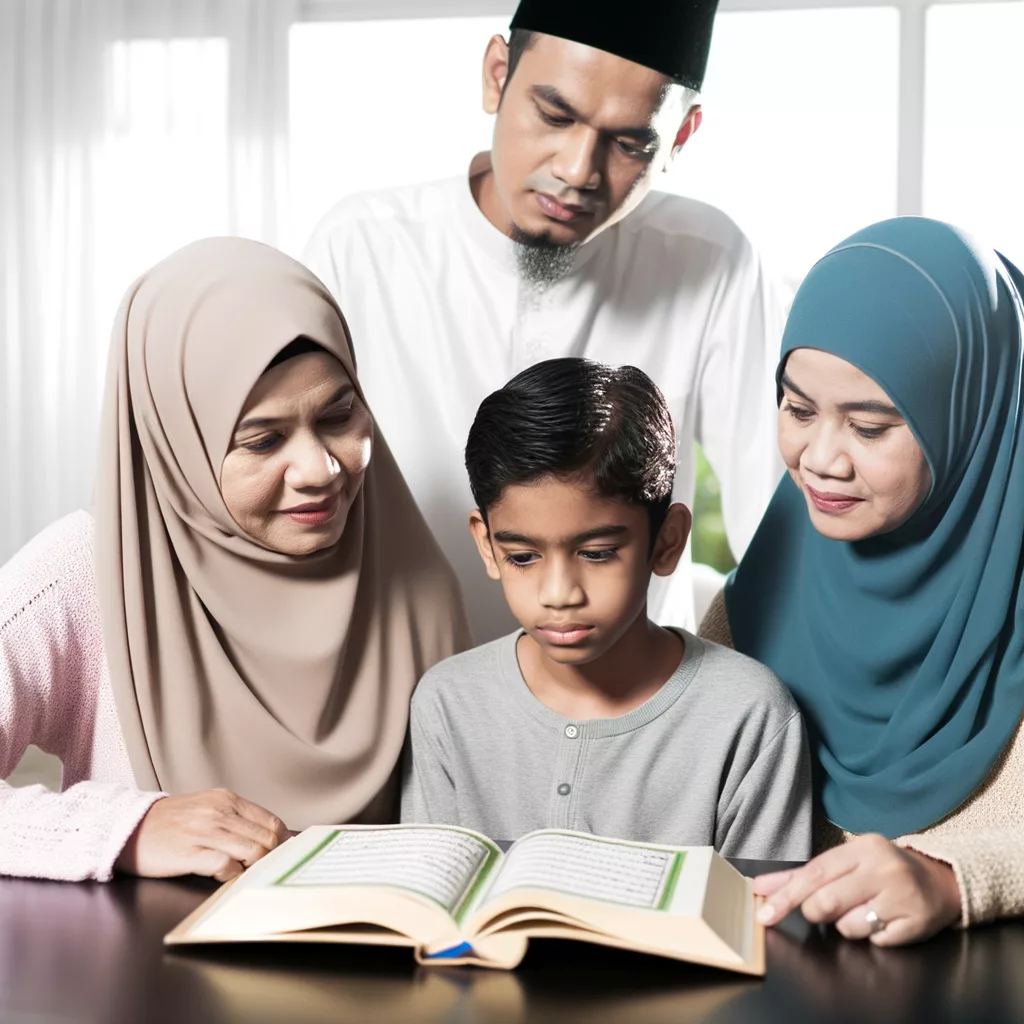
The question of polygamy in Islam challenges, fascinates or unsettles sincere believers and newcomers to the ethical richness of the Muslim tradition alike. Yet behind the clichés and contemporary debates, the reality of polygamy in the light of the Qur’an in Arabic and the sunna reveals a spiritual depth and a moral sense far removed from simplifications. Learning Arabic, opening yourself to immersion in Arabic, accessing the Qur’an in Classical Arabic without translation: these steps are not only keys to understanding the sacred Book or the science of hadith. They also open the way to a fairer and calmer reflection on sensitive questions, such as justice, sincerity and ethics within marriage in Islam.
Faced with the complexity of human relationships and the challenges of the Muslim family and family life, the founding texts of Islam sketch an ideal of fairness, rahma and responsibility that can only be fully grasped by diving into the original language and Islamic spirituality. Learning Arabic – whether for reading the Qur’an, the tafsir of the Qur’an, memorising the Qur’an or studying the authentic hadiths – gradually transforms the way we see the practice of Islam, especially when we commit to immersion, without going through the sometimes reductive filter of translation. The deep meaning of the sharia and fiqh concerning polygamy can never be reduced to mechanical rules or a mere social arrangement: it calls for love of Allah, sincerity in Islam, patience, justice and awareness of the heart, at the very heart of the Muslim couple and the Muslim family.
At a time when the Muslim faith is often lived between a quest for identity, interfaith dialogue and modern challenges, understanding polygamy from the Qur’anic and prophetic perspective, in Classical Arabic, sheds light not only on daily life but on Islamic spirituality in its most ethical and most human dimension. Studying the sira of the Prophet, keeping company with the ahl al-bayt, spending time with the scholars of Islam, or reflecting on the verses of Surah An-Nisa all nourish the subtle discernment that gives Muslim spiritual life its strength. It is therefore in this spirit of openness, kindness and search for true meaning that we will explore, through an immersive approach to Arabic and a return to the sources of fiqh and the sunna, the ethical rules of polygamy in Islam – in order to move beyond prejudice and rediscover the deep breath of Islamic ethics, in the service of individual and family well-being, inner peace and justice before Allah.
Understanding polygamy in the light of the Qur’an in Arabic and the sunna: meaning, context and ethical limits
Understanding polygamy in the light of the Qur’an in Arabic and the sunna means embracing the richness of the Islamic message in its original language and its deep context. Learning Arabic or starting Classical Arabic is not only a key to reading or reciting the Qur’an; it is above all a path that leads to the true meaning of the verses, reduces misunderstandings and clarifies the ethical intentions of the sacred text. In Surah an-Nisa, the verse on polygamy, often quoted and sometimes controversial, invites reflection on justice, compassion and the protection of the rights of women, orphans and the Muslim family. Approaching this passage in Arabic without mechanical translation, through immersion in Arabic, reveals the semantic nuances of terms such as “ta’dilu” (fairness), which only an attentive reading of the Qur’an in Arabic can fully convey. The sunna and the science of hadith reinforce this framework by showing, through the sira of the Prophet and the example of the companions of the Prophet, that polygamy is not an arbitrary right but an ethical responsibility, framed by the Muslim faith, sincerity in Islam and the ideal of justice. Delving into the tafsir of the Qur’an and the commentaries of the scholars of Islam, whether from Al-Azhar, Zaytuna or other Islamic universities, shows that in the practice of authentic Islam, polygamy aims at spiritual well-being, social protection and modesty in Islam, far from stereotypes and abusive practices. It is in this immersive reading, nourished by dhikr, prayer in Islam and a concern for gratitude towards Allah, that the true ethical limits become clear: strict justice between wives, sincerity of heart and the primacy of family balance, conditions without which polygamy has neither benefit nor legitimacy. Through learning Arabic and regular contact with the Qur’an in Arabic, the science of hadith and Islamic studies, discernment sharpens, and we discover that the rules of polygamy in Islam belong to a vast design of inner peace, Islamic ethics and authentic moderation.
Fiqh, ethics and immersion in Arabic: what the sharia really says about justice and sincerity in polygamy
When we explore the question of polygamy in Islam in the light of fiqh and the sharia, it becomes clear that justice and sincerity are central commandments – far beyond a mere permission. The Qur’an in Classical Arabic specifies, in Surah an-Nisa, that the condition for polygamy lies in the ability to be fair to each wife. Learning Arabic and immersing yourself in reading the Qur’an, without going through translation, lets you perceive the richness of terms such as “al-qist” (true justice) and “al-‘adl” (deep fairness) in their spiritual and legal context. The scholars of Islam point out that justice in polygamy goes far beyond the material aspect: it encompasses emotional attention, kindness, patience in Islam and sincerity of intention. The true practice of Islam requires constant vigilance over sincerity in Islam, awareness of the divine presence, and care to avoid any form of injustice, even a subtle one.
The tafsir of the Qur’an and the study of the authentic hadiths, based on the science of hadith and the sira of the Prophet, show that the Prophet Muhammad, peace and blessings be upon him, made fairness the pillar of the Muslim couple and the Muslim family. His own practice embodied gratitude towards Allah and love of the Prophet, shown through gentleness, moderation (wasatiyya), inner peace and control of anger in Islam, all elements that nourish Muslim spiritual life. Immersion in Arabic, together with reflection on the verses, helps you feel the Islamic spirituality conveyed in the notions of khushu in prayer, tawba and supplication (du’a), which are also necessary to cultivate the fairness and sincerity required in a polygamous household.
Contemporary scholars and the madhahib agree: polygamy, far from being an automatic right, commits a man to demanding Islamic ethics, reinforced by fiqh and sincere Islamic education. Understanding the sacred text in Classical Arabic, memorising the Qur’an with tajwid and reflecting deeply on the practice of the Prophet and the companions of the Prophet are essential sources for anyone wishing to integrate these values into their life. A Muslim couple called to live polygamy must continually renew their intention, cultivate dhikr, and seek justice, patience and sincerity, while keeping in mind the higher objectives of the sharia and the spiritual well-being of each member of the family. Through learning Arabic and immersion without translation, we reach the depth of the values that make polygamy not only lawful but profoundly ethical when it is lived in the spirit of justice intended by the sharia.
Islamic spirituality, family life and Muslim faith: the impact of the rules of polygamy on the Muslim family
In the Islamic tradition, polygamy is not a mere social or contractual arrangement; it is deeply rooted in Islamic spirituality and embodies a dimension of the Muslim faith guided above all by justice, mercy and responsibility. The strict rules of polygamy in Islam, drawn from the Qur’an in Classical Arabic and the sunna of the Prophet, aim to preserve fairness, dignity and tranquillity within the Muslim family. Learning Arabic lets you grasp all the subtlety expressed in the revelation: it is through reading the Qur’an and studying the tafsir of the Qur’an, without settling for an approximate translation, that we discover the deep meaning of these norms and their spiritual scope.
Polygamy, far from being a favour granted to one at the expense of another, must be seen as an ethical responsibility subject to the demand for justice – especially towards wives and Muslim children, as the Qur’an explicitly indicates. This implies a high level of sincerity in Islam, daily patience and gratitude towards Allah for the harmonious running of the family. The strength of the family bond, supported by prayer in Islam (salat), dhikr and Islamic supplications (du’a), is only reinforced if justice and kindness are present. At the heart of Muslim spiritual life, the family thus becomes the first place to learn moderation (wasatiyya), inner peace and kindness, fundamental pillars of Islamic conduct (akhlaq).
The practice of polygamy also calls for deep introspection, a commitment to repentance in Islam (tawba), and the regular renewal of purity of intention. The ethical dimension extends to the Islamic education of children and the transmission of faith: each member learns respect, Islamic solidarity and the importance of rising through knowledge, whether through memorising the Qur’an, learning tajwid, studying the life of the Prophet (sira), the companions of the Prophet or the ahl al-bayt.
By immersing itself in understanding the Qur’an in Arabic, the Muslim family draws on resources to face contemporary challenges, whether in France or elsewhere, while remaining faithful to its Muslim identity and to the Islamic culture handed down by generations of scholars. Learning Arabic as a family, through immersion in Classical Arabic or shared Islamic reading, becomes a common thread for building a spiritual routine that unites everyone around a shared project: learning, passing on and growing together in faith. In this way, the rules of polygamy, seen from a spiritual and ethical perspective, shape the daily life of the Muslim family into a journey towards justice, balance and closeness to Allah.
Learning Arabic, tafsir of the Qur’an and the science of hadith: better grasping the ethical and spiritual nuances of polygamy
Diving into learning Arabic opens a new space for grasping the depth and subtlety of the moral principles of polygamy in Islam as they appear in the Qur’an in Arabic, the tafsir of the Qur’an and the science of hadith. Immersion in Arabic, far from an approach based on literal translation, invites you to listen to, feel and contemplate the exact scope of the terms, structures and nuances that often escape the French language. Understanding the Qur’an in its original language gives direct access to Classical Arabic, where every word used in the verses on marriage, fairness or justice was chosen with precision by Allah. In this way, reading the Qur’an, together with memorising the Qur’an and practised with tajwid that respects the rules, lets you not only pronounce the words correctly but also reflect on the rhythm and deep intention of each passage.
Studying the tafsir of the Qur’an sheds light on the context of the revelation and reveals the ethical wisdom behind the prescriptions related to polygamy, avoiding simplifications and hasty contemporary readings. Through the science of hadith, the sunna and the sira of the Prophet Muhammad, we discover the real application of these teachings, the delicate management of the Muslim family, the conduct of the Muslim couple and the attitude of the companions of the Prophet or the ahl al-bayt towards this question. Learning Arabic without translation then lets you perceive Islamic spirituality and Islamic ethics as they inform the debates on justice, patience in Islam, sincerity in Islam and gratitude towards Allah in the practice of Islam.
This linguistic and spiritual journey nourishes the Muslim faith and the spiritual routine, strengthening the ability to adopt an attitude of kindness, understanding and moderation (wasatiyya) towards the rules of the sharia and fiqh concerning polygamy. The finesse of the vocabulary, the tone of the message, and the call to inner peace in Islam or to Islamic solidarity that shine through the original text only fully reveal themselves to those who live Arabic as a language of the heart and of reflection, and not as a mere intellectual tool. As they progress, the Muslim learner rereads the notion of justice, the central weight in Qur’anic polygamy, no longer solely through the eyes of contemporary society but through those of the revelation, the scholars of Islam and the whole intellectual tradition of Islamic civilisation.
Contemplating the ethical rules of polygamy in Islam, it becomes clear that the depth and wisdom of the Qur’anic revelation only truly unfold in the light of authentic learning of Arabic and immersion in Classical Arabic. Polygamy, often seen through the reductive prism of stereotypes, is neither a mere permission nor a fixed social practice: it belongs to a framework strictly marked out by justice, sincerity in Islam and a spiritual sensitivity that calls for responsibility before Allah.
Rediscovering these nuances requires going beyond the surface of translations and diving into reading the Qur’an in Arabic, listening attentively to the verses, memorising the Qur’an with tajwid, and the living study of the tafsir of the Qur’an and the science of hadith. Understanding the Qur’an directly in the language of the Revelation, absorbing the meaning of the Prophet’s words through the sunna, the sira of the Prophet and the accounts of the companions of the Prophet, lets you embrace the full richness of Islamic ethics, and the sincerity, patience and justice set out by the sharia in every aspect of the couple and the Muslim family.
The profound impact of these teachings flows through family life, the marital relationship and the education of children in Islam, but also through the whole of Muslim spiritual life. It shapes faith day to day, renews intention in prayer in Islam, the salat, cultivates humility and khushū in prayer, enlivens supplication and dhikr, and nourishes gratitude towards Allah. In the light of the Qur’an in Arabic, the practice of Islam emerges as a path of balance – wasatiyya –, moderation, family mercy and ethical rigour in marriage in Islam, whether monogamous or polygamous.
Learning Arabic, a true key to grasping these issues, opens the doors to a living understanding – far beyond words, towards the deep meaning of an Islamic civilisation marked by nobility of conduct (akhlaq), the demand for justice, solidarity and mutual help within the community. That is where the beauty of the Muslim couple, inner peace and full awareness of responsibility lie: towards Allah, towards the ahl al-bayt, the Muslim family and the entire Muslim community.
More than knowledge, understanding polygamy in the light of Islam, coloured by immersion in Arabic, becomes an art of living the Muslim faith with accuracy, sincerity and Islamic spirituality. In every verse and every prophetic saying resounds the call to fairness, to mercy and to love of the Prophet and of Allah – and it is this subtle harmony that sheds deep light not only on the rules of polygamy but on the believer’s entire spiritual, family and community journey.
Further reading: discover our online Arabic courses for adults, or read “Learning Arabic to distinguish culture from religion in Islam” and “Learning Arabic to understand fiqh, aqida and tafsir“.



