

TL;DR:
The Arabic Immersion method favours a living, intuitive experience for learning Arabic: real immersion, active listening, and connection with culture and spirituality. Unlike school-style approaches centred on translation and memorisation, it makes a natural understanding of the Qur’an, prayers and tradition easier, encouraging oral fluency and spiritual fulfilment. Progress requires regularity, openness and daily practice, so as to bring the richness of Arabic into your life little by little.
Learning Arabic with Arabic Immersion: the natural path to spiritual understanding
Opening yourself to the Arabic language is much more than acquiring new language skills. For many Muslims and lovers of Arab-Muslim culture, learning Arabic represents a deep desire to understand the Qur’an in its original language, to live prayer to the full, to savour the beauty of the hadiths, or to appreciate the history and tradition passed down through the centuries. Yet for many, the path to literary Arabic remains strewn with obstacles: memorising abstract rules, dependence on translation, lack of confidence in speaking.
Faced with these challenges, the Arabic Immersion method offers a return to the essentials: living the Arabic language the way you live your own mother tongue, starting from listening, gradual understanding and natural interaction. This immersive approach, centred on speaking and free from translation, places the learner at the heart of an authentic and dynamic experience.
In this article, discover why choosing immersion in Arabic resonates far beyond simple language learning. We will explore its unique spiritual and cultural benefits, how it differs from conventional methods, and then, through practical tips, how anyone can embark on this adventure in order, at last, to understand the Qur’an in Arabic and reconnect intimately with the richness of the Islamic tradition.
Discovering the Arabic Immersion method: a new approach to learning Arabic

For many people, learning Arabic is a dream often put off, sometimes associated with memories of tedious school lessons, endless vocabulary lists or complex grammar. The Arabic Immersion method completely overturns these traditional patterns to offer an exciting and organic vision of learning: a living journey to the heart of the language, without going through the reassuring but sometimes limiting step of translation. Here, Arabic is not treated as a school subject, but as a space of experience, sounds, images and concrete contexts. You discover Arabic the way you learn to walk or to speak in your mother tongue: immersed, carried along by listening, repetition, observation and interaction. This method revitalises learning by connecting it to emotions, spirituality and real culture, whether it is understanding the verses of the Qur’an during prayer, grasping the substance of a hadith heard in a mosque, or tasting the flavour of an “as-salamu alaykum” exchanged at a meeting. Immersion in Arabic, in this innovative approach, is not reserved for children or seasoned linguists: everyone, whatever their age or background, is invited to dive into the language, progress naturally, and discover themselves through an authentic and deeply invigorating learning experience.
The spiritual and cultural benefits of immersion in Arabic
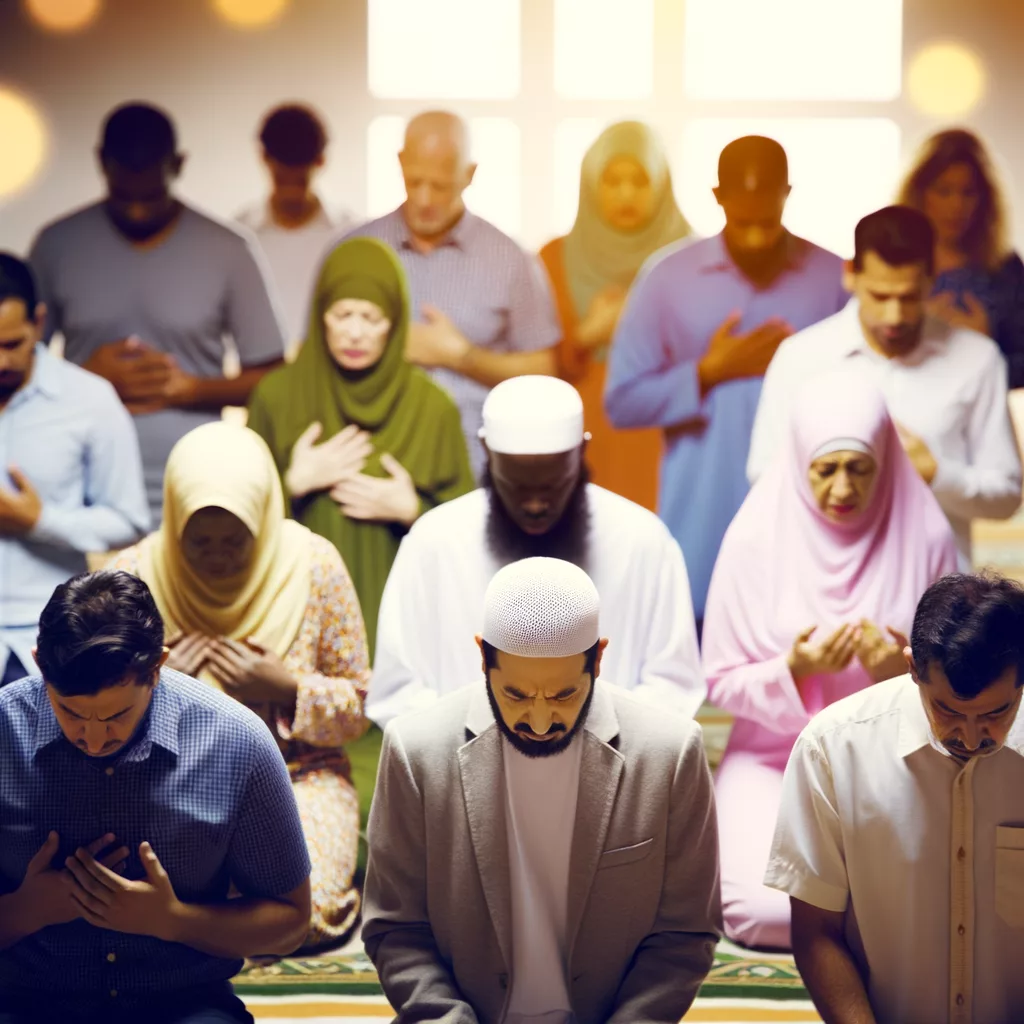
Learning Arabic through authentic immersion opens a unique door to the spirituality of Islam and of Arab-Muslim culture. By hearing and practising the language of the Qur’an every day, you gradually feel a new closeness to the words of the prayers, the verses recited and the prophetic sayings. Meaning no longer comes from an outside translation but expresses itself from within, with the simple obviousness of a word grasped directly by the heart. This experience nourishes the soul, because every letter and every intonation carries a sacred dimension rooted over centuries. Discovering Arabic in its living context also means touching the diversity and depth of a thousand-year-old civilisation, rich in poetry, art and wisdom. Immersion then lets you feel the beauty of the call to prayer, the subtleties of a hadith, or the grandeur of a Friday sermon, as if you were sharing the moment with the first believers. More than simple language learning, immersion in Arabic offers the chance to make your own a language that is not limited to vocabulary, but carries an incomparable spiritual and cultural heritage.
Comparison: learning Arabic through immersion or with conventional methods?
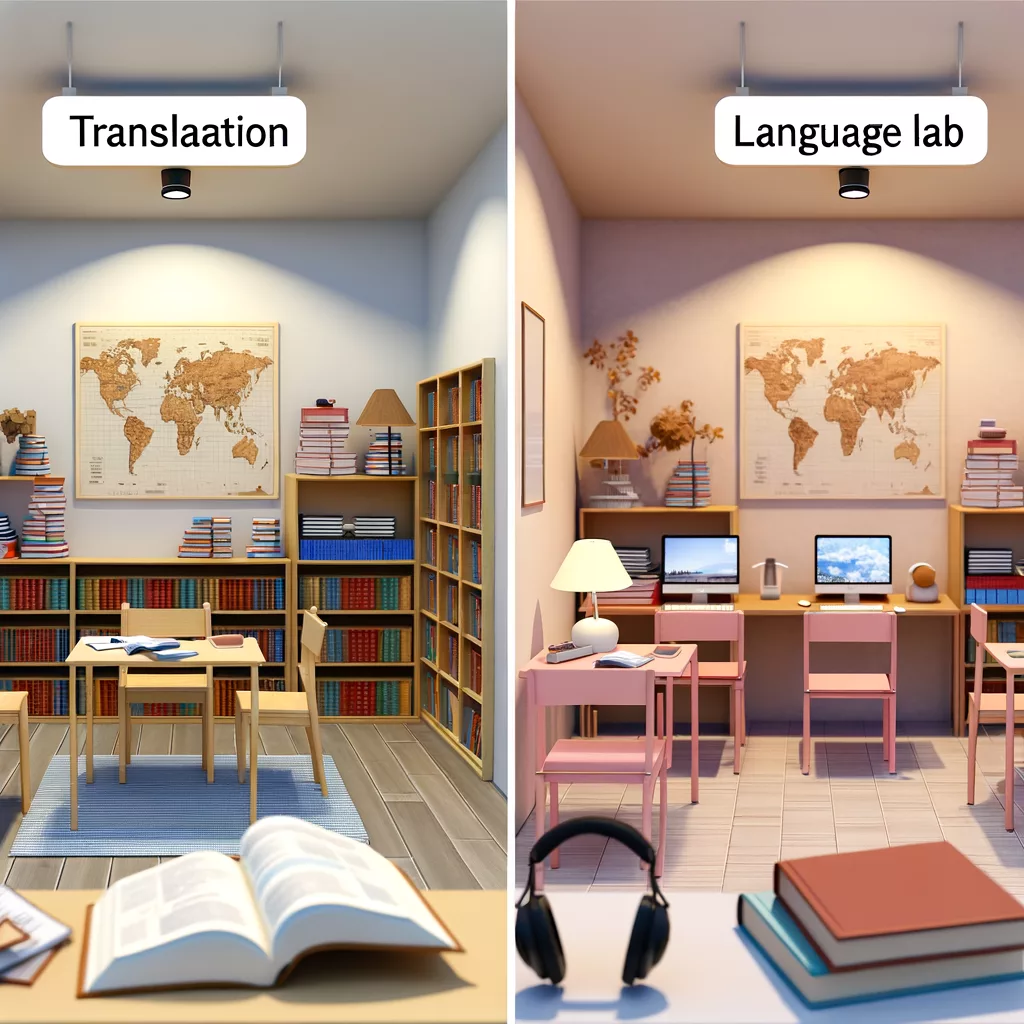
When you ask yourself about the best way to learn Arabic, it quickly becomes clear that the approaches differ radically between the immersive method and conventional methods. Traditional methods, long favoured in teaching, are built around translated vocabulary lists, long grammatical explanations and written exercises centred on memorisation. This is reassuring, because every word has its equivalent in French, every rule is explained in the mother tongue, and progress seems measurable by marks and written tests. Yet many students struggle to speak, find it hard to understand the authentic Arabic of the Qur’an, of prayer or of the hadiths, and struggle to feel the naturalness of the language.
By contrast, immersion in Arabic revolutionises learning by reproducing the natural process by which every child acquires their first language. You dive into a bath of sounds and meaning, you get used to listening, repeating and understanding little by little without systematic translation. Memorisation happens through use and context, as when listening to the adhan or a recited surah. Literary Arabic is no longer a series of signs to decode, but becomes alive and charged with emotion, spirituality and history. The learner experiences the words directly, their beauty and their resonance: understanding the Qur’an in Arabic is no longer a distant dream but grows gradually out of this regular exposure.
Finally, whereas conventional methods sometimes foster a fear of making mistakes, immersion values communication and experimentation, opening the door to greater confidence and more natural progress. This does not mean a lack of structure: well-guided immersion relies on suitable teaching stages, repetition and oral rephrasing, but always staying as close as possible to the beating heart of the language. Deep understanding, a spiritual connection and speaking then become accessible, even for non-Arabic speakers or beginners.
Practical tips for getting the most out of immersive learning
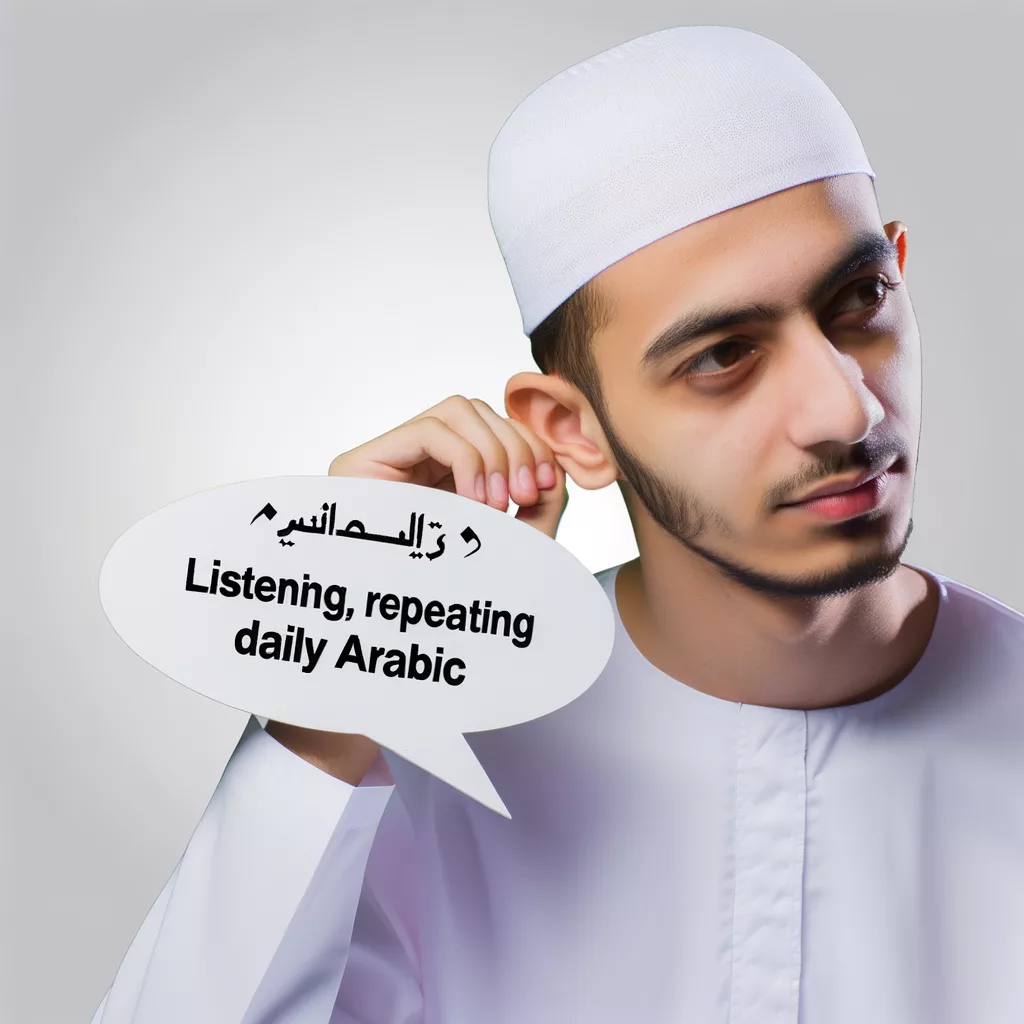
To get the most out of immersive learning, it helps to adopt a few simple habits that maximise both listening comprehension and the natural integration of the language. First, give yourself a dedicated moment each day for listening to authentic Arabic. This could be short videos of prayer, extracts of the Qur’an recited slowly, or everyday dialogues. Favour a variety of sources: male and female voices, different accents, formal or informal tones. The aim is to get your ears used to the rich sounds of literary Arabic.
Next, let yourself be carried by the context rather than trying to translate every word. Your brain then records the structures and the overall meaning naturally, like a child learning their mother tongue. Don’t hesitate to repeat aloud the expressions you hear, even if the precise meaning escapes you. This strengthens the link between listening comprehension and speaking.
Regularly build simple phrases into your daily life: say “bismillah” before eating, “alhamdulillah” after finishing a task, or “assalamu alaykum” to greet others. Immersion is not limited to an academic activity: it is a lived experience, an atmosphere that gradually permeates your thinking.
Finally, be patient with yourself. Progress rests on consistency and kindness: every word understood, every verse recited with greater ease, is already a victory. Trust the process and enjoy the beauty of feeling Arabic gradually take root in your heart and mind.
Conclusion: learning Arabic, a transformative adventure through immersion
Learning Arabic is much more than a linguistic quest: it is a deep opening to the heart of the Qur’an, the life of the Prophet, a living understanding of the hadiths and the subtle beauty of Arab-Muslim culture. By choosing immersion with the “Arabic Immersion” method, every learner gives themselves the means to live the language, integrate it naturally and feel the spirituality that permeates it.
The immersive method differs radically from conventional approaches: where vocabulary lists and translations freeze the mind, immersion awakens curiosity and authenticity. It allows you to understand the Qur’an in Arabic, to taste the flavour of the prayers and to move, step by step, towards a personal and living relationship with the revelation. The benefits unfold in spiritual practice, the memorisation of verses, listening to the adhan and taking part in Ramadan, while weaving an intimate bond with the Islamic tradition.
Whatever your starting point, remember that immersive learning of Arabic is an adventure in which every step forward nourishes your heart and your understanding. By practising every day, surrounding yourself with materials in Arabic and daring to communicate even in short sentences, you will naturally pass stages you never suspected. In this way, learning Arabic without translation becomes a path of light, a space of inner connection and continual enrichment, in which the sacred language reveals itself in all its precision and gentleness.
Further reading: discover Professor Abdellah Dannan’s immersion method, or also read “Learning Arabic like a child to read and speak with confidence” and “5 pitfalls to avoid when learning to read and speak Arabic“.



