
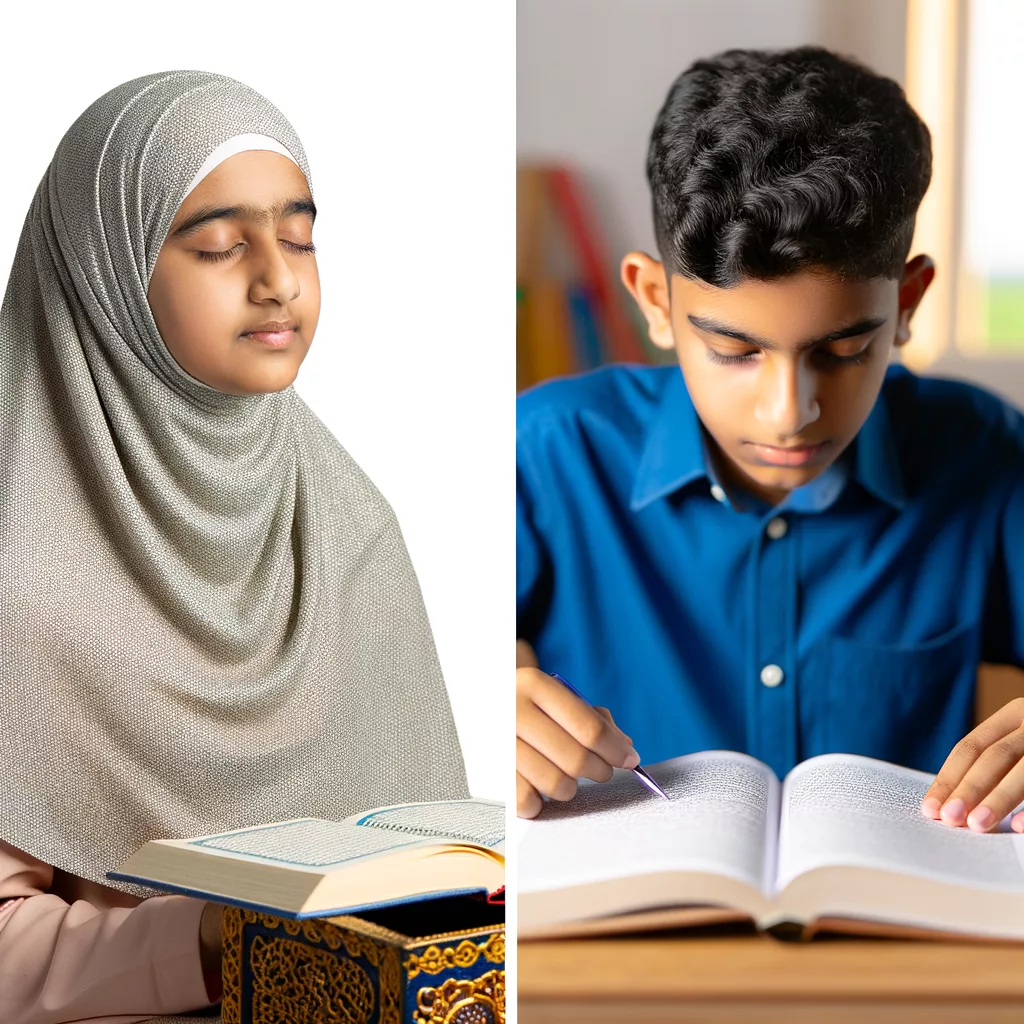
Managing anger according to Islamic teachings: a path to peace of heart and spiritual depth
In daily life, anger sometimes arises like an unpredictable storm, shaking our certainties, troubling our relationships and clouding the clarity of our minds. Yet, in the soothing light of the Islamic tradition, managing anger is not limited to the effort of holding it back; it goes hand in hand with a journey of inner transformation, guided by the wisdom of the Qur’an and the sunna, enlivened by the attentive practice of prayer and dhikr, and driven by a deep immersion in the Arabic language.
Learning to control anger in Islam means entering into an intimate dialogue with the divine Message, through reading the Qur’an in literary Arabic, discovering tajwid, or meditating on the deep meaning of each verse. It means understanding the Qur’an not only as a sacred text to recite, but as a mirror reflecting our emotions, our weaknesses and our potential. Allah the Most High highlights His inexhaustible wisdom in the Book: “Those who restrain their anger and pardon people” (Qur’an 3:134), an invitation to calm that grows ever deeper for those who seek to understand the Qur’an at the source, without the barrier of translation.
Learning Arabic then becomes far more than acquiring a language: it is an immersion in Arabic that brings the science of hadith to life, that lets you taste the subtlety of the prophetic teachings on anger, patience in Islam, or sincerity in worship. It is a journey in which every word, every Islamic invocation, every du’a, takes on a new flavour, accessible only to those who listen with the ear of the heart.
Over the centuries, the companions of the Prophet, the ahl al-bayt and the whole Muslim community have strived to bring these values to life through the practice of Islam: prayer in Islam, salat with khushu, patience in the face of trials, gratitude to Allah for every blessing, and love of the Prophet as a light guiding the feelings. Learning Arabic, and Arabic without translation, opens the door to this living tradition; it means joining the silent souk of Islamic spirituality, where every smile, every act of restraint in the face of anger, every calm breath becomes an act of faith.
On this path, anger is no longer an enemy to be defeated, but an energy to be transformed – a sign to be decoded in the light of Revelation. Through the practice of patience in Islam, dhikr routines, regular attendance at the mosque and being rooted in a caring Muslim community, everyone can progress towards inner peace, moderation, spiritual balance and the flourishing of akhlaq. Understanding the Qur’an and the hadiths in their original language then becomes an invaluable resource for guiding one’s emotions, softening one’s heart and fully living one’s Muslim faith, in a society shaken by turmoil and stress.
This article invites you to explore, step by step, the paths of Islamic wisdom for managing anger. It highlights the importance of immersion in Arabic, the richness of immersive learning, and the spiritual treasures that await those who aspire to understand the Qur’an in Arabic and to live Islamic inner peace, at the very heart of its language and tradition.
Learning to control anger in Islam: the wisdom of the Qur’an and immersion in Arabic
Learning to control anger in the light of Islamic teachings means immersing yourself in an age-old wisdom in which the Qur’an and the sunna of the Prophet bring guidance, calm and balance to the believer’s heart. While anger is a natural emotion, Islam insists on self-control and patience in Islam as pillars of a sincere and mature faith. When you choose to learn Arabic, you not only open yourself to the beauty of literary Arabic, you also approach the words of the Qur’an in Arabic with heart and soul, without the filter of translation. Immersion in Arabic, through reading the Qur’an, listening to recitation with the rules of tajwid, or memorising the Qur’an, acts as a spiritual healing and a genuine training in inner calm. Understanding the deep meaning of the revealed words and exploring the tafsir of the Qur’an, without always having to go through a third language, brings forth inner peace and strengthens control over one’s reactions.
The hadiths and the science of hadith show through many accounts how the Prophet Muhammad, with his noble Islamic conduct and his remarkable mastery of anger, was a model for the companions of the Prophet, the ahl al-bayt and the whole Muslim community down to this day. Immersing yourself in learning Arabic means rediscovering the subtlety of the Qur’an’s vocabulary relating to anger, patience and mercy, and also appreciating the richness of prophetic wisdom, passed down through the sira of the Prophet and Islamic education. This path towards understanding the Qur’an in Arabic brings about a silent yet profound transformation: whoever meditates on the verses about patience, gratitude to Allah, sincerity in Islam, or dhikr and du’a, finds in this spiritual routine a new strength to contain anger and rise towards the best of akhlaq, Islamic behavioural ethics. It is also a precious legacy to pass on to Muslim children within the Muslim family, to build harmony, spiritual well-being and inner peace — all treasures that Muslim spiritual life seeks to protect from excessive emotions and the torments of the soul.
The prophetic teachings on anger: the science of hadith, sunna and akhlaq
When anger is approached in the light of the prophetic teachings, the science of hadith and the sunna reveal a wisdom that is highly relevant today. The Prophet Muhammad ﷺ, through the detailed sira of his life, left us a model of self-control and akhlaq – those noble traits of character that are the foundations of Islamic spirituality. When we understand the hadiths, it becomes clear that anger holds a major place among the blameworthy behaviours to watch out for. “The strong man is not the one who overcomes others by his physical strength, but the one who controls himself when angry,” he says in an authentic hadith widely commented on in the science of hadith and the tafsir of the Qur’an. Through this teaching, Islam invites us to turn impulsive outbursts into opportunities for repentance in Islam, patience and sincerity in the Muslim faith.
To reach the depth of this advice, learning Arabic becomes an invaluable asset. Indeed, the rich nuances of the Qur’an in Arabic, the beauty of tajwid when reading the Qur’an, and the subtle science of words in the hadiths only fully reveal their virtues through immersion in Arabic. Learning Arabic without translation opens you to the authentic dimension of ethics, to the feelings experienced by the companions of the Prophet and the ahl al-bayt in the face of emotional challenges. Thus every verse or passage recounting the patience of the Prophets, khushu in prayer in Islam or one’s attitude during jumu’a becomes a source of inner peace in Islam, fostering control of anger and the believer’s spiritual well-being.
Managing anger, in the practice of Islam, also revolves around Islamic invocations, du’a, dhikr and the art of inner listening that run through the sunna. Taking a moment for gratitude to Allah, renewing one’s tawba, practising modesty in Islam: all of this relies on a deep understanding of the original texts and regular immersion in Islamic culture. Whether you are a parent concerned with raising children in Islam or a young person looking for direction, mastering the language and the prophetic teachings cultivates that much-sought moderation (wasatiyya), strengthens Muslim identity, and subtly invites you to make anger a ground for progress, for love of Allah and the Prophet, and for the elevation of akhlaq.
Practising patience in Islam: spirituality, prayer and dhikr for inner peace
Patience in Islam is not a mere moral virtue: it is a quality deeply rooted in Islamic spirituality and a path to inner peace. In the face of anger or agitation, the prophetic tradition recommends arming oneself with sabr, that active and conscious patience which the Prophet Muhammad, peace and blessings be upon him, embodied at every stage of his life, as the sira of the Prophet and the accounts of the companions of the Prophet attest. Practising patience means first recognising that every trial, every surge of anger, is an opportunity to bring one’s heart closer to Allah, to strengthen one’s Muslim faith and to progress in the practice of Islam, whether in prayer or in daily life. Salat, the quintessence of the bond with the Creator, invites us to develop khushu in prayer: that sincere contemplation which soothes inner torments. Islamic invocations, dhikr and du’a are powerful remedies for losing one’s temper. Repeating the Names of Allah and asking for His guidance and His mercy immerse the soul in deep peace, driving away stress and strengthening spiritual health. Those who strive to understand the Qur’an in Arabic gain access, through learning Arabic, to the beauty of the literary Qur’an; reading the Qur’an, understanding it without translation, memorising the Qur’an and meditating on its tafsir open up a spiritual horizon in which patience becomes a light guiding the believer through adversity. Learning Arabic is not just a linguistic effort: it is an immersion in Arabic at the heart of the sacred text, a door onto the wisdom of the hadiths, the science of hadith and the sunna, which abound in advice on managing emotions. On this path, patience, nourished by love of Allah, gratitude to Allah, listening to the adhan or going to the mosque, transforms anger into a quiet strength serving Islamic conduct, akhlaq and spiritual well-being, for oneself, one’s family and the Muslim community.
Cultivating moderation and gratitude: the role of learning literary Arabic and understanding the Qur’an
In the face of anger, Islam invites us to cultivate moderation — the famous “wasatiyya” — and to nurture gratitude to Allah in all circumstances. But how can we reach this inner balance and this deep gratitude when facing everyday trials? Learning literary Arabic offers an invaluable key here. By immersing themselves in the language of the Qur’an, without systematically resorting to translation, Muslims gain access to the light of the revealed teachings in their original purity. Learning Arabic is not reduced to a linguistic exercise; it is a spiritual journey, a door open to understanding the Qur’an in Arabic, to true meditation on the tafsir of the Qur’an, and to the depth of the prophetic words recorded in the hadiths.
As you progress in reading the Qur’an and perfect your recitation (tajwid), the beauty of the sacred words gently works on the heart. Memorising the Qur’an, imbued with its original meaning, and reflecting daily on the verses that teach patience in Islam, sincerity in Islam or gratitude, transform the way trials are perceived and calm the temperament. Every account from the sira of the Prophet and his companions, every invocation (dhikr) or du’a uttered in Arabic, recalls the value of calm and of the Muslim faith in the face of adversity. Immersion in Arabic brings to life the Prophet’s message on controlling anger: “The strong man is not the one who overpowers (his opponent), but the one who controls himself when he is angry”.
Understanding moderation in Islam means learning to stop before excess, to seek justice in one’s reaction and to prefer inner peace to revenge. Immersion in Arabic without translation allows these notions to be absorbed subtly, through repeated listening and contemplative reading of the sacred texts. During the daily prayers (salat), the flavour of the Arabic words, their rhythm and the presence of khushu in prayer strengthen the ability to refocus and to express gratitude to Allah. The discipline of fasting in Islam, particularly during the month of Ramadan, as well as the celebration of eid al-fitr and eid al-adha, are all living reminders that self-control and gratitude lie at the heart of the practice of Islam.
Thus, immersive learning of Arabic is an act of transformation: it is not simply a matter of reading or reciting, but of feeling, inhabiting and living Islamic spirituality every day. Through it, moderation and gratitude become travelling companions, able to calm anger and to make inner peace shine within the Muslim family, the community and every aspect of life.
Further reading: discover our online Arabic courses for adults, or also read “Learning Arabic to live authentic modesty and good character” and “Learning Arabic to help the needy during and after Ramadan“.
Conclusion
Managing anger according to Islamic teachings means committing to a path of deep inner transformation, at the crossroads of spirituality, ethics and knowledge. Over the centuries, the wisdom of the Qur’an and the guidance of the hadiths have offered the Muslim community precious landmarks for understanding, going through and calming anger, not by repression but by purifying the heart. By rediscovering these treasures and immersing ourselves in the original Arabic language, a new dimension opens up: that of an intimate understanding of the divine commands and of the beauty of prophetic conduct.
Learning Arabic does not only provide academic access to the science of hadith, the sunna or the tafsir of the Qur’an. It is also, and perhaps above all, a path of spiritual enrichment, because it allows each prayer (salat) to resonate more deeply and each invocation (du’a, dhikr) to reach the heart more gently. Patience in Islam and control of anger are not limited to mere endurance; they stem from a lucid, grateful stance, forged by the regular practice of listening, Qur’anic meditation and gratitude to Allah.
Through immersion in Arabic and attentive reading of the Qur’an in literary Arabic, the richness of the values of humility, moderation (wasatiyya), sincerity and love of the Prophet is revealed in its original brilliance. This living bond with Revelation instils a lasting inner peace, illuminates the practice of Islam, and guides towards a healthy management of one’s emotions, far from excess and regret. Whether during the spiritual moments of Ramadan, the nights of laylat al-qadr, the Friday prayer (jumu’a) at the mosque, or the challenges of daily life within the Muslim community, the light of the Qur’an and the hadiths shapes a philosophy of serenity and forgiveness.
Thus, learning Arabic without going through translation is never a mere intellectual exercise: it means reconnecting with one’s Muslim faith, reclaiming the heritage of the scholars of Islam, cultivating khushu in prayer, refining one’s conduct (akhlaq) and offering one’s family and community a calm presence, full of kindness and attentiveness. In Islamic civilisation, self-control and moderation have always been celebrated as signs of spiritual maturity and nobility of character. Today they remain the key to renewed well-being, to a balance in harmony with the prophetic tradition and the hope of divine forgiveness.
As I invite you to continue this inner journey, remember that every word of the Qur’an, every gesture of the Prophet and every moment of patience are so many milestones on the path to inner peace. May the light of Islam, enriched by learning Arabic and the sincere practice of the prophetic teachings, continue to turn your heart towards gentleness, temperance and gratitude to Allah.



