
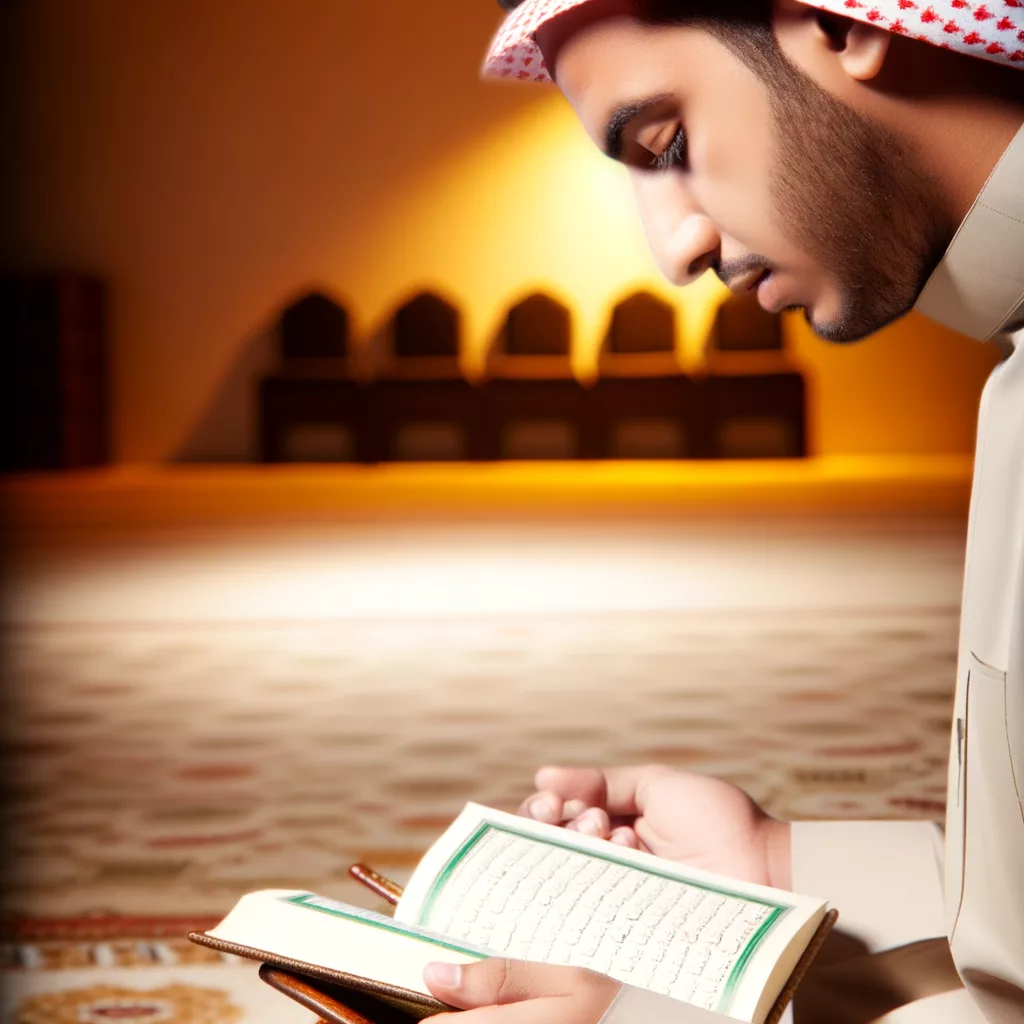
Managing stress through Islamic invocations: reconnecting with inner peace through learning Arabic and the power of dhikr
In the turmoil of modern life, stress slips silently into the homes, hearts and minds of believers. Who has never felt that invisible weight during a family worry, a professional concern, or in the face of an uncertain future? Paradoxically, it is often in the storm that the Muslim soul seeks, or rediscovers, the deepest refuge of its faith: dhikr, du’a, the remembrance and invocation of Allah. In Islamic spirituality, managing stress is not limited to breathing techniques or time management; it is rooted in a centuries-old tradition in which the word of the Creator, recited and understood in its original language, becomes a source of calm, patience and hope.
Learning Arabic is then no longer a mere academic goal or a cultural ornament: it is a vital step, an immersion in Arabic that opens the doors to an intimate understanding of the Qur’an, the prophetic invocations, tajwid and memorising the Qur’an. Can you imagine the power of dhikr whispered in the language Allah chose to convey His Word, or the impact of a du’a recited without the filter of translation? Through literary Arabic, we draw from the source: we live, feel and understand the Qur’an in Arabic, the hadiths, the science of hadith, the sunna and the sira of the Prophet not as a distant echo, but as words that touch, enlighten and console.
This article is an invitation to explore, in the light of Islamic spirituality, how the practice of authentic invocations can transform our relationship with stress, strengthen our Muslim faith and nourish a lasting inner peace. Whether it is about bringing Islamic invocations into your spiritual routine, better grasping patience in Islam, or feeling khushu and gratitude to Allah in your prayer, every step towards learning Arabic is also a step towards yourself, towards tranquillity, and towards the love of Allah and His Prophet.
In an age when stress seems inevitable, Islam offers powerful, simple and profound remedies. Their secret? It lies in a direct, sincere connection, without intermediary, to the word of Allah and the example of the Prophet. For many, this experience begins with the choice to embark on immersive Arabic learning: a nourishing path on which understanding the Qur’an, practising invocations and accessing Islamic wisdom become sources of peace, strength and renewal.
Understanding stress in the light of Islamic spirituality: the importance of dhikr, du’a and patience in Islam
In Islamic spirituality, stress is not only seen as a natural human reaction, but also as an opportunity to reconnect with your faith and deepen your relationship with Allah. When the heart feels overwhelmed, Islam offers simple and powerful remedies: dhikr, du’a and patience. Dhikr, the meditative repetition of the divine names and attributes, soothes the heart. Allah says in the Qur’an: « Truly, it is in the remembrance of Allah that hearts find tranquillity » (ar-Ra’d, 28). This daily practice, free of intermediary translations, takes on its full meaning when you steep yourself in the Qur’an in Arabic, because every sound and every intonation resonates deeply in the believer’s soul, inviting an authentic and living immersion in Arabic.
Learning literary Arabic gives direct access to the beauty of Islamic invocations and of the Prophet’s supplications. Understanding the Qur’an or savouring a hadith in the original language reveals subtleties that translation cannot convey. Du’a then becomes a sincere, personal dialogue, an intimate space for expression, thankfulness or tawba, repentance in Islam. Cultivating patience in Islam, a virtue so honoured in the Sunna and the sira of the Prophet, also means accepting trials without despair, filled with the certainty that behind every difficulty lies a wisdom. The companions of the Prophet, the ahl al-bayt and the great scholars of Islam, throughout the history of Islam, have shown us by their example the importance of gratitude to Allah and of constant recourse to invocation. In the practice of Islam, whether in prayer in Islam, in moments of khushu in prayer or in the rituals of Ramadan and Hajj, every spiritual act becomes a refuge from stress thanks to sincerity in Islam and the love of Allah.
Stress is thus transformed into an opportunity to refocus, to rediscover inner peace and spiritual well-being, fostered by immersion in the sacred texts, by memorising the Qur’an, the practice of tajwid and attentive listening to the Qur’an in Arabic. This is the secret of a deep spiritual health that every Muslim, whatever their context – from Muslim youth to Muslim families, from Muslim children to elders, whether they live in France or elsewhere –, can cultivate through the treasures of the prophetic tradition, the invocations and the practices drawn from the vast heritage of Islamic civilisation.
Learning Arabic to immerse yourself in Islamic invocations: the power of authentic dhikr without translation
When you truly wish to experience the power of dhikr and Islamic invocations in the face of stress, learning Arabic stands out as a unique doorway to a deep and meaningful immersion. The formulas of du’a, as handed down by the sunna and taught by the Qur’an in literary Arabic, carry a resonance, a musicality and an intensity that a simple translation cannot render. Learning Arabic then lets you taste this authenticity, feel the vibration of the words spoken by the Prophet himself and his companions, absorb the wisdom of the ahl al-bayt, and enter a more intimate and conscious practice of Islam. This is where immersion in Arabic takes on its full meaning: by reciting the invocations without translation, the heart opens to a direct connection with the spirit of the revelation, stress is soothed by the living beauty of the divine words, patience in Islam takes root, and gratitude to Allah intensifies. Saying « astaghfirullah » or « la hawla wa la quwwata illa billah » while understanding it, without going through the mediation of another language, means feeling the transforming power of repentance, of tawba, and of letting go of our anxieties. Memorising the Qur’an, practising tajwid during prayer in Islam or khushu before Allah then take on a new dimension: sincerity in Islam crosses the threshold of the intellect to touch the soul, and Islamic spirituality blossoms in the direct flavour of the divine message. Through immersive Arabic learning, reading the Qur’an, studying tafsir, reflecting on the sira of the Prophet or studying hadith become resources of spiritual well-being and inner peace, precious tools for facing the turmoil of modern life while rooting yourself in the living tradition of the Muslim community.
Qur’anic and prophetic invocations in literary Arabic: living the Qur’an and the sunna at the heart of stress management
When you seek to manage stress through the practice of Islam, invocations drawn directly from the Qur’an in literary Arabic and from the prophetic sayings become an invaluable source of serenity. Beyond mere words, these Qur’anic and prophetic invocations – known as du’a, dhikr, or supplications taken from the sunna – carry within them a spiritual strength and a calm that only fully reveal themselves in the original language of the revelation. Learning Arabic is then no longer a simple linguistic tool, but a path of immersion in Arabic leading to a true understanding of the Qur’an and closeness to the message of the Prophet. Saying « Hasbuna Allah wa niʿma al-wakil », « Rabbi inni maghloubun fa’ntasir », or reciting Surah Al-Fatiha mindfully, means tasting the beauty of the sacred text in its authentic form, without the barrier of translation or interpretation.
Discovering these invocations and bringing them into your routine – in prayer in Islam (salat), in moments of solitude or in the midst of trials – lets you reconnect with the balance of Islamic spirituality and cultivate patience in Islam, sincerity and connection to Allah. Learning literary Arabic gives access to the depth of dhikr, of repentance (tawba), and of intimate dialogue with the Creator. Immersing yourself in reading the Qur’an and memorising the Qur’an according to the rules of tajwid nourishes the well-being of the soul, because every word recited in Arabic carries a specific meaning, vibration and spiritual light. Understanding in this way the science of hadith, the history of the companions of the Prophet and the richness of the sira of the Prophet in Arabic without an intermediary offers a model for managing emotions and stress that is close to the prophetic example, in which the heart draws strength, confidence and hope from the divine teachings.
It is through this path of immersion in Arabic, of reclaiming the Qur’an in Arabic and the authentic teachings, that we learn to lay down our worries, to raise our invocations, and to find peace in the turmoil of existence. Language then becomes a medicine for the soul, a living presence that turns every difficulty into an opportunity to grow in Muslim faith, gratitude to Allah, self-mastery and the quest for an inner peace anchored in the Qur’anic and prophetic tradition.
Towards a lasting inner peace: bringing Islamic invocations into daily practice and your spiritual routine
Reaching a lasting inner peace is not a matter of a simple moment of calm, but of a deep and continuous transformation, nourished by bringing Islamic invocations into our lives every day. Each day, through the prayers in Islam and the times of dhikr and du’a, the sacred word irrigates the spiritual routine, like a spring that soothes inner turmoil. Learning literary Arabic, immersing yourself in the Qur’an in Arabic, savouring the beauty of tajwid or the depth of the tafsir of the Qur’an: all of this allows an authentic connection to Islamic spirituality, without the filter of translation, and offers an unequalled experience of inner peace in Islam. While Islamic education teaches the value of patience in Islam, gratitude to Allah and sincerity in Islam, it is through repeating the invocations and deepening the understanding of the Qur’an and the hadiths that the soul becomes anchored, day after day, in spiritual well-being. By following the example of the sunna, the companions of the Prophet and the ahl al-bayt, who naturally integrated these practices into their lives, every Muslim – whether living in France or elsewhere – can turn their routine into a sanctuary of calm. Memorising the Qur’an, even gradually, and the practice of dhikr during Ramadan, after Friday prayer or within the Muslim family, are pillars for building this lasting inner peace. Thus, learning Arabic, immersion in Arabic while reading the Qur’an or studying fiqh, far from being mere knowledge, are the key to a deep calm that infuses every moment of daily life and shapes Muslim spiritual life like a peaceful, confident breath in the face of the trials of modern life.
At the end of this exploration of managing stress through Islamic invocations, a peaceful truth emerges: Islamic spirituality, when lived authentically, offers an unequalled refuge from the agitation of the world. The ways of dhikr, du’a and patience in Islam are not mere formulas recited in times of crisis, but living treasures drawn from the Qur’an, the sunna and the experience of the pious predecessors. They reconcile the heart with trust and gratitude to Allah, supporting the Muslim faith in daily life and in times of trial.
Learning Arabic then stands as an essential key for immersing yourself in the deep beauty of Islamic invocations. Immersion in literary Arabic, far from approximate translations, lets you fully taste the flavour and power of the Qur’an, the sunna and the prophetic invocations. It is through a direct understanding of the chosen words, the rhythm of dhikr and the light of the hadiths that practice becomes more sincere, closer to the example of the Prophet Muhammad and the companions of the Prophet, and more rooted in the tradition of the ahl al-bayt. In this way, the spiritual routine is transformed, prayer in Islam gains in khushu, and every salat, every Friday prayer, every remembrance of Allah gives birth to a lasting inner peace.
Through learning Arabic, reading the Qur’an in Arabic, memorising the Qur’an, tajwid, and discovering the tafsir of the Qur’an, the believer’s heart awakens. The science of hadith, the sira of the Prophet and the richness of Islamic education irrigate personal, family and community life, giving everyone solid reference points for facing life’s difficulties. For managing stress is not an isolated undertaking: it is rooted in a plural Islamic culture, a history of civilisation, and values of solidarity, modesty, endurance and love — love of Allah, love of the Prophet, respect for parents, kindness towards those around you.
On this journey, every invocation learned in Arabic without translation becomes a mirror of faith, a bridge between yourself and the Creator. Whether in the heart of Ramadan, during a voluntary fast, on the blessed days of dhul hijjah, at the dawn or dusk prayer, at the mosque or in the privacy of your room, the Muslim gradually discovers the deep tranquillity that comes from being anchored in the Word of Allah. The spiritual routine becomes lighter, life brightens, serenity settles in, and stress gives way to trust, patience and gratitude. This is how the great Islamic wisdom reveals itself: in the language of the Qur’an, in the sincerity of prayers, in natural immersion in Arabic, the way opens to an authentic spiritual well-being, an inner peace offered to all who seek to understand, to love and to find calm.
To go further: discover our programme for learning to read Arabic (adults), or also read “Learning Arabic to rediscover the meaning of the Eid prayer” and “Learning Arabic to perform a valid and sincere prayer“.



