
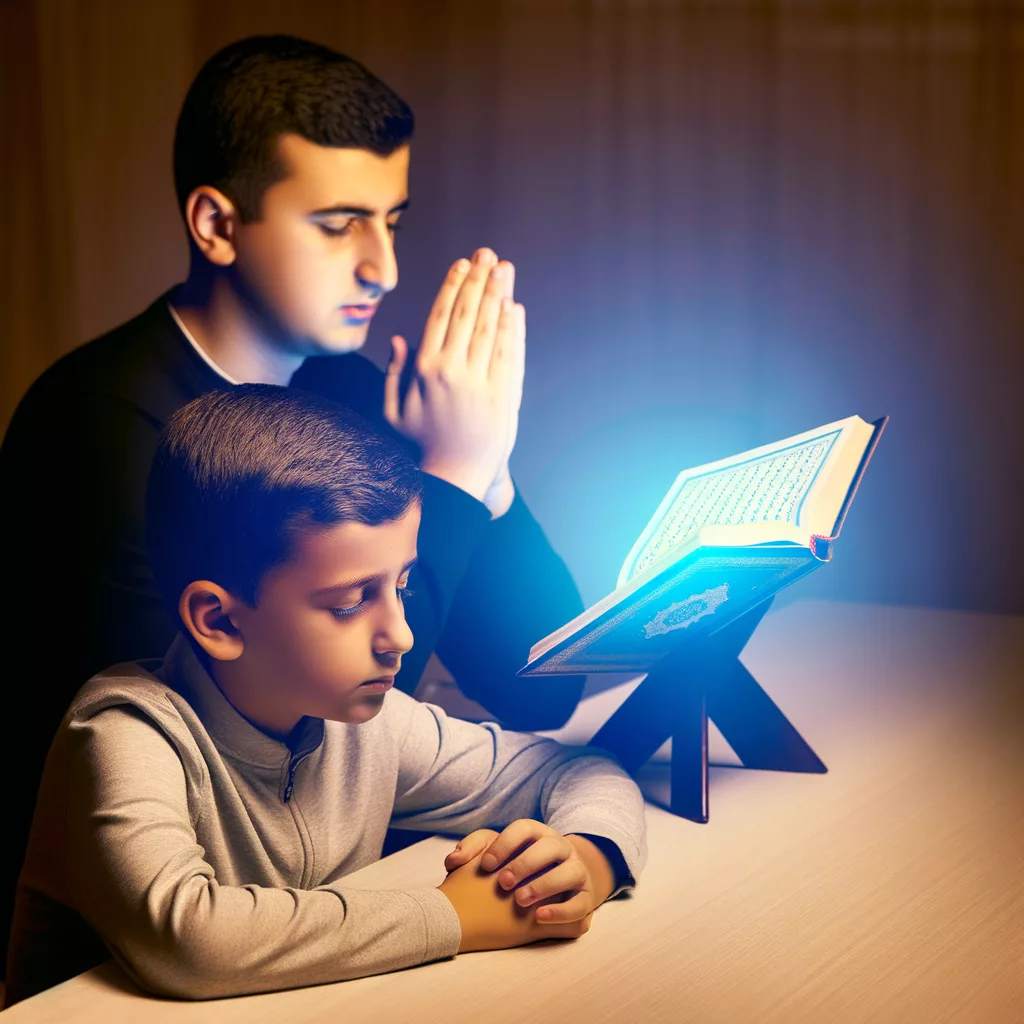
In the heart of every believer there is a silent, deep thirst, a desire to go beyond gesture and habit, to taste the light of faith in its original purity. Who has never felt, during an evening prayer or while listening to a few verses of the Qur’an, this desire to rise, to reach total presence, a state in which religious practice ceases to be a mechanical ritual and becomes inner breath, serenity and spiritual excellence? Learning Arabic, immersing yourself in this language with such rich spiritual harmonics, then appears not only as a tool, but as the key to authentic spiritual development.
In this quest, the Arabic language is not just a means of communication: it is the direct vehicle of the Qur’an, the sunna, dhikr, every Islamic invocation and the whole tradition that has been passed down. Learning Arabic, especially when it is part of an immersive and natural approach, without going through translation, offers an intimate connection with the sources of Islamic spirituality. It allows you to understand the Qur’an in Arabic, to live prayer with depth, to savour the beauty of tajwid, to drink from the living meaning of tafsir, and to absorb the divine breath that animates the revelation. This approach becomes a journey, leading the believer from the simple practice of Islam towards a renewed and conscious presence before their Creator.
But how do we move from repeating gestures to spiritual excellence, from recitation to presence of heart in salat? How can we draw inspiration from the sira of the Prophet, the Companions and the ahl al-bayt, and embody their sincerity, their patience and their humility in our modern daily lives? The path to ihsan, this excellence praised by the Prophet – “to worship Allah as though you see Him” –, rests on clear and meaningful stages, from simply learning Arabic all the way to cultivating a deep love for Allah, His Messenger, and every sign traced in the Book.
Beyond the boundaries of language, learning Classical Arabic, immersing yourself in reading the Qur’an, memorising its verses, and studying hadith and fiqh shapes a living religious experience, capable of turning every prayer in Islam into a vibrant meeting with the transcendent. It is also through gratitude, patience, the invocations of dhikr and du’a, the remorse of tawba, the search for inner peace and everyday Muslim ethics that, day after day, this spiritual excellence is built, which the masters of Islamic civilisation called ihsan.
This article sets out to accompany you, step by step, on this path of spiritual development, from the first steps of practice to the heights of presence and excellence, placing immersion in Arabic, a taste for the Qur’an in the original Arabic and the wisdom of the Islamic heritage at the heart of this transformation. For the Muslim faith, brought to life by understanding, carries within it the promise of an inner peace for which every believer longs.
Learning Arabic and immersion in Arabic: the key to authentic spiritual development
Learning Arabic through immersion in Arabic represents a real turning point in the spiritual development of a Muslim. As soon as we expose ourselves to the language of the Qur’an, without barriers or translation, a new dimension opens up: that of meaning that is alive and felt, far beyond the words. By immersing yourself in Classical Arabic, learning Arabic is no longer limited to accumulating rules, but becomes a luminous path towards understanding the Qur’an in Arabic, tajwid, recitation, memorising the Qur’an, and the tafsir of the Qur’an as the first generation understood it. The sunna, the science of hadith, the sira of the Prophet, and the lived experience of the Companions of the Prophet and the ahl al-bayt thus take on flesh, vibrant with authenticity and with nuances often lost in translation. Entering the practice of Islam through the door of Arabic means accessing the Muslim faith more directly, along with sincerity in Islam, patience, love of Allah and of the Prophet, and cultivating khushu in prayer. Muslim spiritual life is enriched day after day: every prayer in Islam, every joumoua, every du’a, every dhikr resonates with a new depth. Immersion in Arabic reveals the Qur’an as an inexhaustible source of guidance in the spiritual routine, during Ramadan, fasting in Islam, hajj, umrah, the great Islamic festivals or within the Muslim family. The Muslim then discovers that the Islamic education of children, the transmission of Islamic culture, the history of Islam, Islamic reading and even Islamic art draw directly on the original language. This plunge into Arabic without translation awakens inner peace, gratitude towards Allah, spiritual well-being and authenticity in every dimension of existence, from the heart to the community, from the mosque to French society. For it is there that, discreetly but surely, lies the key to deep and harmonious spiritual development, towards ihsan.
A direct connection with the sources of Islamic spirituality
Learning Arabic, particularly through immersion in Arabic and without systematic translation, opens a unique path towards the living source of Islamic spirituality. This approach, centred on listening, overall understanding and the natural use of Classical Arabic, weaves a direct connection with the text of the Qur’an in Arabic, the sunna of the Prophet and the whole spiritual heritage of Muslims. When we begin reading the Qur’an or memorising the Qur’an according to the rules of tajwid, every word and every verse becomes a light that illuminates the Muslim faith, beyond the simple translated meaning. Immersion makes it possible to grasp the deep nuances of the divine message, encourages contemplation during prayer in Islam, strengthens khushu in salat, and brings to life the practice of dhikr, du’a and Islamic invocations, where the gentleness and power of the original words penetrate the heart.
By diving into the science of hadith, meditating on the sira of the Prophet and the history of the Companions of the Prophet and the ahl al-bayt, learning Arabic gives access to the authentic details that carry the wisdom of the prophetic example. The great occasions of the Muslim calendar, such as Ramadan, laylat al-qadr, hajj and eid al-fitr, then take on a new dimension, because their rites are lived and understood in the sacred language that has cradled generations of believers. Better understanding Islamic culture, Sufism, aqida or fiqh ultimately means entering a universe in which every term, every invocation, every formula of tawba or of gratitude towards Allah, every mention of patience in Islam or sincerity in Islam, finds a flavour, a depth and a breath that only linguistic authenticity can convey.
Immersion in Arabic, far from being a mere intellectual exercise, then becomes one of the most powerful levers of spiritual well-being and Islamic inner peace. It shapes the spiritual routine, strengthens Muslim identity and nourishes the direct relationship with the sources, whether during the Friday prayer, listening to the adhan at the mosque, family conversations in a Muslim home about the life of the Prophet, or interfaith dialogue that lets the nobility of the Islamic message shine. This intimate closeness to the language of the Qur’an awakens gratitude towards Allah, nourishes love of Allah and love of the Prophet, and invites a living Islamic spirituality, embodied in daily life, far from formalism or abstraction. Learning Arabic in this way means opening to faith and to the heart a garden in which every flower is a meaning and every fragrance a wisdom – which only the original language allows to bloom fully.
From practice to presence: understanding the Qur’an in Arabic and living prayer with khushu
As we walk the path of Islamic spirituality, a decisive step is taken between simple ritual practice and the awakening of inner presence before Allah. This passage lies essentially in the ability to understand the Qur’an in Arabic, to live the deep meaning of the divine words, and to taste prayer with khushu, that concentration imbued with humility and love of Allah. Learning Arabic opens the door to authentic immersion in Arabic, to the possibility of absorbing the very words chosen by Allah to guide our lives and elevate our souls. Learning Classical Arabic, without being limited to translation, turns reading the Qur’an into a living encounter, each word carrying light, each verse revealing a wisdom often dimmed by the filter of human languages.
Through the daily practice of salat, reciting the Qur’an in Arabic and memorising the Qur’an with tajwid, the divine word gradually becomes familiar and vibrant. Spontaneously understanding the praise of Allah in al-Fatiha, feeling the depth of Islamic invocations, dhikr and du’a in their original expression: all of this nourishes the Muslim faith, fortifies patience, inspires sincerity and rekindles a deep gratitude towards Allah. The Friday prayer, the nights of Ramadan, the emotion of laylat al-qadr, every moment of fasting in Islam or of hajj then takes on a new dimension, because the meaning is no longer only heard but fully lived.
Immersive learning of Arabic, far from traditional school methods, makes it possible to anchor the presence of the heart during salat. It is no longer a series of memorised gestures and words, but a real encounter, in which we measure the sacred weight of the words « Allahou Akbar », and in which every surah becomes an intimate dialogue with the Divine. This presence also transforms the study of the tafsir of the Qur’an, the exploration of hadiths, and the understanding of the sunna and the sira of the Prophet Muhammad. It sheds light on the deep meaning of the actions of the Companions of the Prophet and the ahl al-bayt, offering direct inspiration for the practice of Islam in daily life, for conduct (akhlaq), controlling anger, patience and the search for inner peace.
In this approach, the Qur’an in Arabic becomes the common thread of our spiritual routine, enhancing Islamic reading, community life at the mosque, listening to the adhan, and passing on Islamic education to our Muslim children. More than a skill, learning Arabic without translation gives everyone the key to lasting spiritual well-being, deep spiritual health and a fully embraced Muslim identity, whatever our background, our Muslim family or our context, even in France. In this way, presence with Allah is cultivated until it becomes a permanent state, in which every prayer and every word spoken or meditated upon becomes a source of light and excellence: ihsan.
Reading, memorisation, tajwid and tafsir: towards excellence in prayer
Reading the Qur’an in Classical Arabic is not a simple practice of recitation; it is a deep immersion in the original language of the Revelation, an intimate journey towards the very source of Islamic spirituality. When we commit to learning Arabic and explore the Qur’an in Arabic without translation, every word and every linguistic subtlety resonates with new force. Memorising the Qur’an, far from being a mere intellectual challenge, shapes the heart of the believer. It inscribes the verses in living memory and gradually releases an inner presence during prayer in Islam, awakening khushu — that silent concentration, that subtle humility that turns salat into a living dialogue with Allah.
Mastering tajwid, that refinement of pronunciation and chanting, elevates reading the Qur’an until the soul vibrates to the rhythm of the verses. By paying attention to the elongations, pauses and intonations prescribed by the prophetic tradition, the practitioner enters into a conscious and respectful listening to the divine message. Understanding the deep meaning through the tafsir of the Qur’an opens the doors of reflection and wonder. Tafsir sheds light on the context and the circumstances of the revelation, and brings the believer closer to the sunna, the science of hadith, the sira of the Prophet and the lives of his Companions and the ahl al-bayt, thus creating a bridge between personal understanding and the immemorial wisdom of the Muslim faith.
This quest raises simple ritual practice to full spiritual awareness. The believer experiences excellence (ihsan) in prayer: every rak’a, every prostration, every Islamic invocation, du’a and dhikr becomes charged with meaning and becomes an act of love for Allah and of gratitude towards Him, a sincere expression of tawba, patience, modesty and humility. The Friday prayer, recitation during Ramadan, meditation while fasting in Islam, or presence on laylat al-qadr: everything takes on a new flavour when we understand the Qur’an directly in Arabic. Immersive learning of Arabic, beyond the limits of translation, thus gives access to a living spirituality rooted in the tradition of the Prophet, and accompanies the believer on the path of excellence in practice, awareness and inner peace.
At the end of this journey through the stages of spiritual development, a deep lesson emerges: learning Arabic and immersing yourself in the language of the Qur’an is not only an intellectual undertaking, but a living key that opens the door to the most authentic dimension of Islamic spirituality. Immersion in Arabic, without passing through the filter of translation, allows you to feel the power of the words that spring from the Qur’an in Arabic when reading, from the hadiths passed down according to the science of hadith, or from dhikr and invocations in their original language. In this way, understanding the sunna, the sira of the Prophet and the teachings of the Companions of the Prophet and the ahl al-bayt take on a particular flavour, immediate and invigorating.
This immersive approach transforms outward practice into inner presence: prayer in Islam, from simple recitation to the depth of khushu, then becomes an act of love for Allah and the Prophet, a manifestation of sincerity and of gratitude towards Allah. It makes memorising the Qur’an easier, refines the mastery of tajwid and enriches the discovery of the tafsir of the Qur’an, bringing forth a new light with every reading. Understanding the Qur’an, listening to it and meditating on it in Classical Arabic means tasting patience in Islam, feeling the power of du’a, absorbing tawba and sincere repentance, and cultivating inner peace through the stages of Ramadan, fasting in Islam, jumoua, blessed nights such as laylat al-qadr, or during hajj and umrah.
This path of learning Arabic irrigates every season of Muslim spiritual life: it shapes Islamic conduct, inspires kindness within the community, illuminates morality (akhlaq) and strengthens Muslim families in the Islamic education of their children. It immerses the believer in the history of Islam, Islamic culture, the wisdom of Sufism, the debates of fiqh and sharia, and everyday ethics – from halal trade to ecology in Islam, from respect for halal to funeral rites in Islam.
More than an intellectual asset or a mark of identity, the gradual mastery of Classical Arabic through immersion opens the heart to moderation (wasatiyya), Islamic solidarity, inner peace and a more peaceful spiritual routine, away from the stress and turmoil of the modern world. At the mosque, listening to the adhan, with the imam or in silence in the Islamic library, Arabic without translation becomes a living link with the Muslim community across time and space.
Through learning Arabic and natural immersion in its beauty, every Muslim, every family and every young person rediscovers the path of a spiritual excellence that reconciles visible practice and inner light, bearing witness to a life fully inhabited by the presence of the divine. For direct access to the Qur’an in Arabic, to the sunna and to the wisdom of the scholars of Islam, past and present, nourishes a deep spiritual development, in which knowledge, piety and love of the Creator can unite in serenity and excellence.
Further reading: discover our online Arabic courses for adults, or read “Volunteering with a Muslim association: faith, solidarity and Arabic” and “Learning Arabic or choosing a translation to understand the Qur’an?“.



