
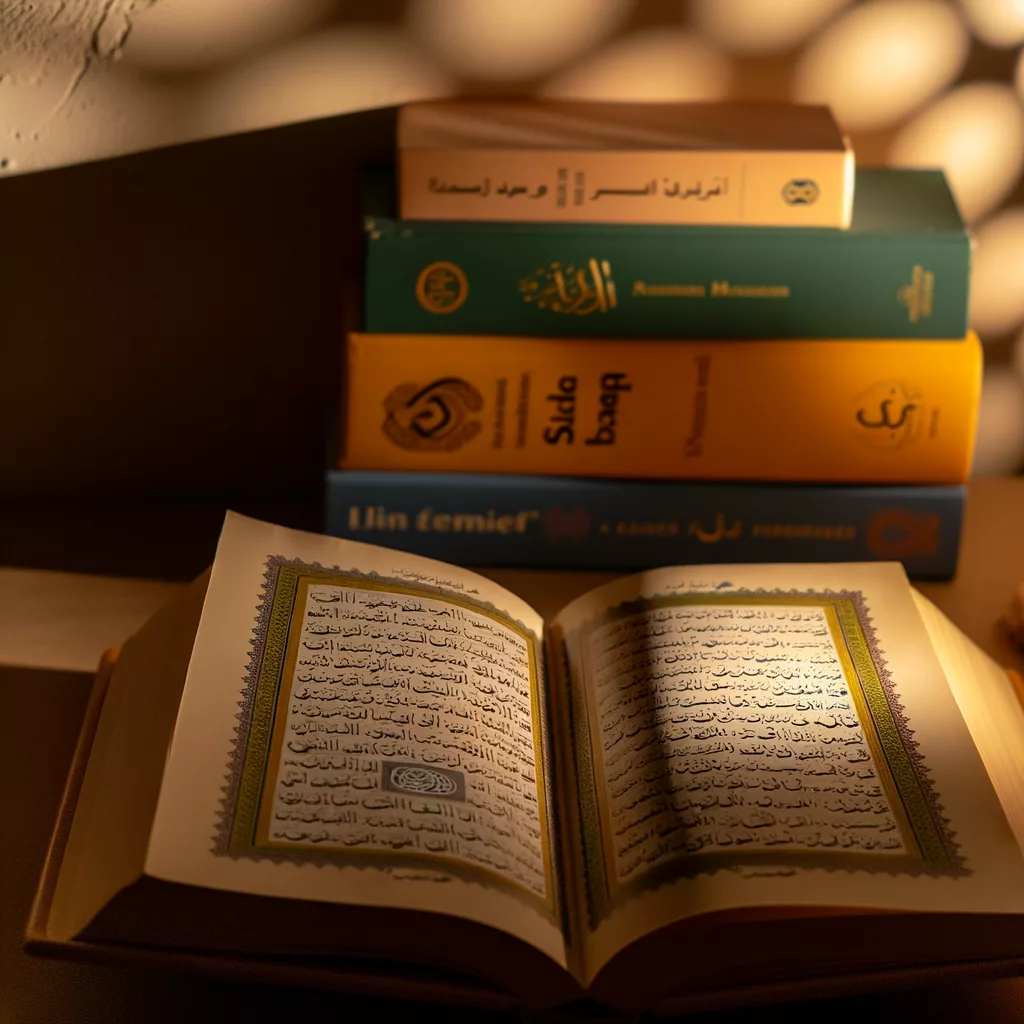
When we sit down before the Qur’an, the heart filled with hope and humility, a question naturally arises: how can we access the Word of Allah directly, its power, its beauty and its guidance? For many, the first step takes the form of the many French translations of the Qur’an. This choice seems trivial, and yet it shapes much more than a simple reading: it shapes our relationship with the Muslim faith, with Islamic spirituality, with prayer (salat) and, deep down, with our identity as believers, as Muslims in France or elsewhere in the world. Faced with the diversity of translations, approaches and styles, the question becomes legitimate: which one should we choose to understand the Qur’an with the greatest accuracy, light and authenticity?
Without realising it, many seekers of meaning find themselves navigating between nuances, semantic differences and sometimes even contradictions from one version to another. Yet the language of the Qur’an – Classical Arabic – carries within it a unique dimension, at once mysterious and powerful. Every word, every rhythm, every silence evokes a universe of meaning that even the best translation struggles to convey. Learning Arabic, opening yourself to immersion in Arabic, is not only an act of linguistic scholarship: it is an approach of spiritual sincerity, a desire to go to the source, to hear the message of Allah as it resonated in the heart of the Prophet Muhammad, his Companions, the ahl al-bayt, and the Muslim community of the past and the present.
Why do so many Muslims feel the need, sometimes urgently, to go beyond translation, to aspire to memorising the Qur’an (hifdh), to mastering tajwid, to deepening the tafsir of the Qur’an or to studying the sciences of hadith and the sunna? The answer is intimate, rooted in a thirst for authenticity and real closeness to the divine Word. Reading the Qur’an in Arabic – even haltingly at first – brings about a silent transformation in spirituality, prayer, dhikr, the routine of Ramadan or of joumoua, and even in the smallest invocations of daily life.
Yet it is not always possible to learn Arabic from the very first steps. In this context, translations of the Qur’an become precious companions, guides for moving forward despite the language barrier, for teaching Muslim children or nourishing the spiritual life of the whole Muslim family. However, not all translations are equal. Some favour literal fidelity, others accessibility, others still exegesis (tafsir) or the historical dimension, linked to the sira of the Prophet, the scholars of Islam, or the heritage of Sufism, fiqh and the madhahib.
How to choose a translation of the Qur’an then becomes crucial and deserves reflection: which criteria should we adopt? How can we discern between clarity and accuracy? What should we take from the views of contemporary scholars and of Islamic universities such as Al-Azhar, Zaytouna or Qayrawan? How can learning Arabic eventually bridge this gap and allow a deeper, more vibrant and more faithful reading of the Qur’an, until the unsuspected beauty of the revealed Word resonates within us during salat, while listening to the adhan, or while performing hajj?
Through this journey into the heart of French translations of the Qur’an, we will explore these essential questions together. We will look at the limits of translations, the secrets and benefits of immersion in Arabic, the essential criteria for choosing the best translation for your path, and above all how this journey can open the door to an intimate and life-giving understanding of the Qur’an, for yourself, your family and the whole Muslim community. Whether your intention is memorisation, tajwid, prayer, the Islamic education of your children or simply the search for an authentic love of Allah and His Prophet, understanding the Qur’an in all its depth begins here.
The limits of French translations for understanding the Qur’an: why learning Arabic changes everything
Reading the Qur’an in French provides a first access to its messages, but it is a door left ajar onto an infinitely vaster and deeper universe. For no translation, however refined or scholarly, can convey the beauty, density and subtlety of the revelation in Classical Arabic. The Qur’an in Arabic is at once a divine message, a linguistic miracle and a source of light for the Muslim faith. Every word, every sound, every rhythm composes a harmony that passes through the heart and touches the soul. It is in the original language that the meaning truly unfolds and that the spiritual experience takes on its full scope. Learning Arabic, or opening yourself to immersion in Arabic, means discovering a depth that translation cannot reach. It means feeling the vibration of dhikr and du’a, savouring the sweetness of tajwid when pronouncing « Ar-Rahman Ar-Rahim », perceiving the infinite patience in Islam evoked by « as-sabirin », and tasting the sincerity in Islam conveyed by « al-mukhlisin ».
French translations often skim the meaning, but the sacred score remains partial: the rhythmic sway, the unique musicality, the refined polysemy and the richness of each root remain elusive. Understanding the Qur’an, memorising the Qur’an, the tafsir of the Qur’an, or studying the sira of the Prophet and the lives of the Companions of the Prophet or of the ahl al-bayt in depth take on a new dimension when approached in the language of the revelation, the language of salat, of the adhan, of the great occasions such as Ramadan, laylat al-qadr, eid al-fitr or hajj. Through learning Arabic, even without translation, we gain an intimacy with the text, a clarity that elevates the practice of Islam and nourishes khushu in prayer. Directly understanding Islamic invocations, hadith, the science of hadith, or the fatwas issued by the scholars of Islam fosters an authentic connection to the tradition and to Islamic education — a bond that transcends mere intellectual deciphering to join Muslim spiritual life in its fullness.
Choosing to learn Arabic means striving towards a more deeply rooted faith, a more vibrant gratitude towards Allah, and a daily practice nourished by meaning and love for the Prophet. It transforms Islamic reading in France, shapes Muslim identity, and offers future generations an education of children in Islam that is closer to the source. Finally, learning Arabic means diving into the universal dimension of the Qur’an: its history, its art, its Islamic calligraphy, its ecology, its timeless wisdom. Where translation stops, immersion begins — and it is the heart, every day, that learns to be Muslim.
Immersion in Arabic or reading in French? Navigating between translation, Classical Arabic and Islamic spirituality
Faced with the Qur’an, every French-speaking reader sooner or later confronts this dilemma: should we favour reading the sacred text in French for immediate understanding, or turn towards immersion in Arabic in order to approach the Qur’an in its original language? This question touches at once on learning Arabic, Islamic spirituality and the way each person connects with the divine Word. Many discover that reading the Qur’an in French brings occasional relief and allows a first approach to the meanings, the message, the values and the prescriptions of Islam. But the further we advance on the path of the Muslim faith and Islamic education, the more the need to learn Arabic, and more specifically Classical Arabic, makes itself felt.
The Qur’an in Arabic is a unique experience, an immersion in the word of Allah, a journey of sound, rhythm and spirit. The linguistic miracle of the Book is almost always lost in translation, because every word, every root, every turn of phrase has a weight, a resonance and a palette of untranslatable meanings. The recitation, or tajwid, the beauty of the verses and the cadence of the words invite the heart and soul to enter a state of dhikr and inner presence, fostering khushu in prayer. All of Islamic spirituality is amplified by memorising the Qur’an and reading its verses in Arabic without translation, allowing a deeper connection with the message, whether during prayer in Islam (salat), during Ramadan, on the Night of Decree (laylat al-qadr), or during the Friday prayer (joumoua).
Yet learning Arabic, especially without a solid foundation, can seem insurmountable. That is why immersion in Arabic is often recommended in order to gradually take in the sounds, forms and structures of Classical Arabic. This transforms the relationship with the sciences of the Qur’an, the tafsir of the Qur’an, the science of hadith, the sunna, and even the sira of the Prophet and the lives of the Companions of the Prophet and of the ahl al-bayt, allowing the reader to resonate with the text and to access the richness of Islamic studies as they are passed on in the tradition.
By navigating in this way between reading in French and immersion in Arabic, the believer takes part in the living and universal practice of Islam, bound to the Muslim community, sharing the treasures of Islamic culture and history and of Islamic civilisation, but also of the present, from mosques to Islamic universities, from Al-Azhar to Zaytouna. This learning path is not only an intellectual challenge: it is a form of love of Allah, of gratitude towards Allah, of tawba, of patience in Islam, of the search for sincerity in Islam. Committing to this path means opening wide the doors of understanding the Qur’an, but also those of inner peace, forgiveness and a fulfilling spiritual routine in which prayer, du’a, the adhan, Islamic ethics, the education of Muslim children or the life of a Muslim couple find their essence and their unity. The Arabic language is not just a tool: it is the living vehicle of an authentic spirituality, a bridge between hearts, between generations, and towards intimacy with the divine Word.
Essential criteria for choosing a translation of the Qur’an: fidelity, tafsir, language and the practice of Islam
Choosing a French translation of the Qur’an is not just a matter of style or convenience; it is a decisive choice for the practice of Islam, for spirituality and for learning. Among the first criteria, fidelity to the original text is paramount. A faithful translation does not seek to embellish or to oversimplify, but to preserve the deep meaning, subtlety and beauty of the Qur’an in Classical Arabic. This is all the more crucial because every word of the Qur’an carries immense theological and spiritual weight. A good translation will often point out the difficulties and the terms that have several meanings, or will offer an appendix to clarify certain passages, thus allowing a better understanding of the Qur’an for those who have not yet mastered Arabic.
The place of tafsir (commentary) is also essential. The Qur’an, in its immensity, is often linked to the context of the revelation, to the sira of the Prophet and to the example of the Companions of the Prophet and of the ahl al-bayt. A translation enriched with notes of tafsir of the Qur’an or of the science of hadith offers a bridge towards deep understanding, and clarifies the links with the sunna, the history of Islam and the views of the scholars of Islam on certain complex verses. These additions are indispensable, especially when memorising the Qur’an or practising tajwid, because they make it possible to associate each word with its context, its meaning and its use in Muslim spiritual life or prayer in Islam.
The language of the translation also plays a major role. It must remain accessible, fluid and respectful of the sacred nature of the text. Some translations favour modern language, while others choose a more classical or poetic register. Depending on your level of Arabic and your literary preferences, it will be better to opt for a version whose language resonates with your sensibility. The ideal, however, even for French-speaking readers, is to consider learning Arabic in the long term. Immersion in Arabic, even gradual, gives direct access to the revealed text, allows you to experience reading the Qur’an without translation, and to feel the authentic emotion that the divine words produce during prayer or dhikr.
Finally, a good translation should accompany the practice of Islam in daily life. It makes prayer in Islam easier, contributes to concentration (khushu) in salat, enriches Islamic invocations, and inspires love of Allah, patience in Islam, sincerity, gratitude… Choosing a translation suited to your personal Islamic reading, to the Islamic education of the Muslim family or to passing on the faith to Muslim children means working towards a Muslim faith that is rooted, authentic and alive. But no translation, even the best, will ever replace the light and depth of the Qur’an in Arabic. Investing in learning Arabic, going to the mosque, learning the art of tajwid, studying fiqh with an imam or a scholar, diving into the history of Islam or Islamic calligraphy: all these steps extend and magnify the Qur’anic heritage. Selecting a translation then becomes a first step towards immersion in Arabic and the intimate discovery of the word of Allah.
From translation to learning Arabic: towards a deeper and more authentic reading of the Qur’an
Behind every translation of the Qur’an lies a praiseworthy intention: to make the Word of Allah accessible in French to as many people as possible. Yet as readers progress, an intimate conviction is often born: no translation, however refined, can convey the subtle depth, the musicality or the force of the nuances present in the Qur’an in Arabic. An Arabic word, a root or an intonation changes the flavour of a verse, modulates its meaning, and sometimes opens up a whole field of spiritual reflection. When we settle for translation, it is as if we were contemplating a veiled painting, admiring the shapes without ever grasping the light that animates them. Learning Arabic thus becomes a natural aspiration for anyone who truly wishes to understand the Qur’an, to taste the richness of the tafsir of the Qur’an, and to dive into the science of hadith, the sunna, the sira of the Prophet and the wisdom of the Companions and the ahl al-bayt.
Learning Arabic is not reserved for an elite; it is an adventure open to all those who wish to enrich their Islamic spirituality, strengthen their Muslim faith and commit to a more living practice of Islam. The first stammerings in Classical Arabic become keys to entering the deep meanings of salat, to experiencing khushu in prayer or feeling the hidden beauty of Islamic invocations, dhikr and du’a. Thanks to immersion in Arabic, attentive listening and reading in Arabic without translation, the relationship with the Sacred Book changes profoundly: every letter recited while memorising the Qur’an, every rule of tajwid mastered, every verse meditated upon strengthens this intimate bond with the divine Word.
Gaining access to an understanding of the Qur’an in Arabic also means entering the light of the living tradition: listening to the adhan at the mosque and answering it wholeheartedly, following an imam during the Friday prayer, savouring the stories of Ramadan, of fasting in Islam, of the great festivals such as eid al-fitr and eid al-adha, or of unique experiences such as hajj, umrah and the invocations of the pilgrims. It means bringing the sacred language into the daily life of the Muslim family and of Muslim youth, of children and adults gathered on the nights of laylat al-qadr or sharing their gratitude towards Allah through sadaqa and zakat. Along this path, the Qur’an is no longer just a text to be understood: it becomes a source of inner peace, a point of reference for Muslim identity in the context of Islam in France, and a foundation for Islamic education and for passing on akhlaq, good conduct, sincerity, patience and love for the Prophet and his community.
Ultimately, going beyond translation and embarking on learning Arabic through sincere immersion gives one’s Muslim spiritual life a new dimension: that of a direct, vibrant and lived relationship with the very words that Allah chose to guide humanity. Reading the Qur’an is then transformed into a living experience, in which understanding, emotion, breath and light intertwine, enriching every aspect of faith and of Islamic culture.
Further reading: discover our online Arabic courses for adults, or read “Learning Arabic in the light of the great scholars of Islam” and “Learning Arabic and progressing towards spiritual excellence (ihsan)“.
Conclusion
Choosing a French translation of the Qur’an means embarking on a deeply spiritual and intellectual journey, but also entering an arena of nuances, contexts and subtleties that are often elusive when we limit ourselves to a simple reading in French. The various translations available to Muslims in France and the French-speaking world are of great value for Islamic education, the practice of Islam and the exploration of Islamic spirituality. Yet faced with the richness of Classical Arabic, none of them can claim to convey the full meaning, beauty and impact of the Qur’an in Arabic.
This observation, which every sincere reader makes sooner or later, calls us to move beyond dependence on translation and turn towards learning Arabic. Immersion in Arabic, even gradual, makes it possible to develop a much deeper and more authentic understanding of the Qur’an. Various criteria – fidelity, clarity, the addition of tafsir of the Qur’an, insights from the hadiths and the sira of the Prophet, respect for the spirit of the sunna and of the science of hadith – are needed to select a reliable translation. But it is by drawing closer to the original language that reading the Qur’an is transformed and truly touches the heart, the mind and the Muslim faith.
Approaching Arabic without translation, even with some stammering at first, means reconnecting with the living voice of the message of Allah, experiencing tajwid, memorising the Qur’an, khushu in prayer, and tasting the light of the revelation as Muslims in France, through the history of Islam, the wisdom of the Companions of the Prophet, of the ahl al-bayt and of the scholars of Islam, and the beauty of the heritage of Islamic culture. It means opening the door to an Islamic spirituality made of dhikr, du’a, gratitude towards Allah, a fine understanding of Ramadan, of fasting in Islam, of hajj, of the call to prayer, of life within the Muslim community, and of the countless jewels of a plural Islamic civilisation.
Those who commit to learning Arabic, whatever their age or background, discover a new breath: praying in Islam becomes more intense, listening to the Qur’an in Arabic resonates differently, and invocations take on an unsuspected depth. The education of children in Islam, the life of a Muslim couple and the search for spiritual well-being take root in a living understanding of the word of Allah. Young generations, Muslim families and converts, just like those born into Muslim culture, find in it an inexhaustible source of inner peace in Islam, sincerity, patience, repentance and hope.
Beyond the choice of translation, the quest for authenticity reminds us that learning Arabic, going to the mosque, the knowledge of contemporary or classical scholars, and the study of Islamic calligraphy or the history of Islam all belong to the same impulse: drawing closer to Allah and to the real meaning of the Qur’anic message. It is also a personal and collective commitment, a heritage to pass on to our children, and a contribution to the flourishing of the Muslim community, to interfaith dialogue, to dignity, to justice and to Islamic solidarity in today’s world.
Whatever the stages of your journey, remember that learning Arabic is not an end but an opening towards a more luminous understanding of the Qur’an, an enriched Muslim spiritual life and a deep and radiant Muslim identity. The Qur’an, in Arabic, remains the primary source; the light that illuminates faith day after day and accompanies every heart seeking elevation.



