
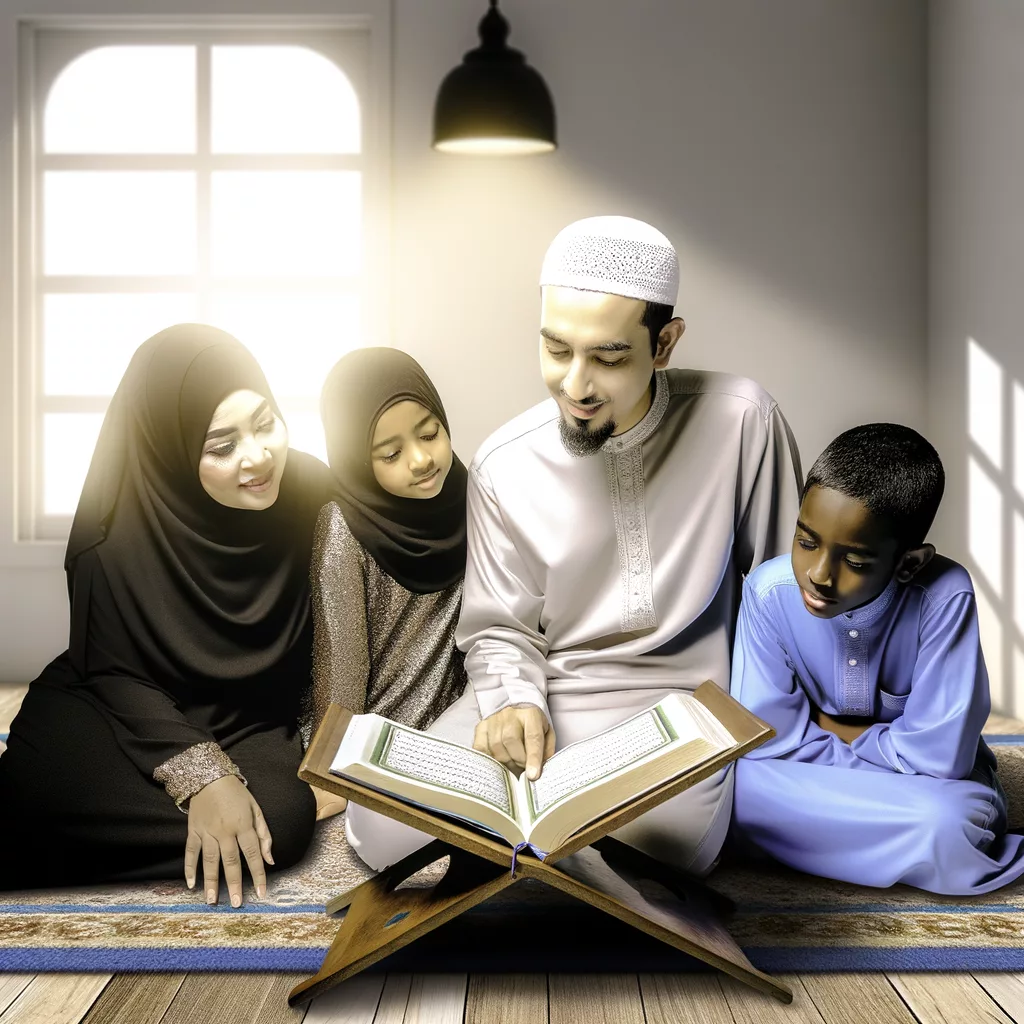
In the soft light of a mosque in the heart of France or in the peaceful shade of a library, you can feel that subtle impulse: the deep aspiration to preserve your Muslim faith while going about daily life in a secular society. Every day, millions of Muslims in France ask themselves: how can they fully live their Islamic spirituality, remain faithful to their identity and pass on an authentic heritage to their children, while respecting the principles of French secularism (laïcité) ?
Understanding laïcité is not a mere intellectual exercise; it is often an existential necessity, a subtle art of balance between faithfulness to the Muslim faith and harmonious participation in collective life. For many believers, it is also a path towards sincerity in Islam, everyday patience, and sometimes gratitude towards Allah for being able to practise, learn and pass on.
But where do we find this inner strength, this treasure of stability and confidence ? Many discover that the keys to an unshakeable spiritual rootedness lie at the heart of learning Arabic, of immersion in literary Arabic and of reading the Qur’an in Arabic. Learning Arabic without translation, getting started with tajwid, exploring the tafsir of the Qur’an or drinking from the authentic source of the hadiths is not just acquiring a language skill: it means opening yourself to the original beauty of the revelation, tasting the unique flavour of dhikr, rediscovering khushû’ in prayer, and drawing on the luminous example of the companions of the Prophet or the ahl al-bayt. It means, humbly, preserving the richness of the Muslim faith despite the challenges of secularism and weaving a living bond with the sunna, the Muslim community and the history of Islam.
Throughout this article, we will walk the path of a rooted and luminous Islam: we will explore how understanding French secularism helps you better preserve your Muslim identity ; how immersive Arabic learning and access to the Qur’an in Arabic strengthen the daily practice of Islam ; and how, within the Muslim family or the Muslim couple, through Islamic education or dialogue with society, everyone can hold high the torch of religion, Islamic ethics and Islamic culture. We will discover that it is possible to live spirituality with balance, inner peace and confidence, even in a secular context, by relying on the timeless wisdom of the texts and on the living heritage of the scholars of Islam.
This journey begins with knowledge: knowledge of secularism, of course, but above all knowledge of oneself, of one’s faith and of the divine Word. Along this path, every Muslim in France will be able, inshaAllah, to find the impulse of a peaceful heart and a preserved identity.
French secularism: understanding its principles to better preserve your Muslim identity
Understanding French secularism means grasping the essence of a framework that separates religion from politics, while guaranteeing everyone the freedom to practise, to believe or not to believe. For a Muslim living in France, this neutrality of the State is not an obstacle, but can become fertile ground in which to cultivate your faith with awareness and intelligence. Secularism protects the right to pray in Islam, to perform salat, to engage in the practice of Islam, to raise a Muslim family or to give your children an Islamic education that respects diversity. Yet it also brings you face to face with sometimes uncomprehending looks, with the need to explain Islamic culture and to dismantle clichés about the hijab, the mosque, Ramadan or Islamic solidarity.
Faced with this challenge, learning Arabic takes on a new dimension: it is not just about learning a language, but about giving access to the very root of Muslim identity. Immersion in Arabic, literary Arabic, the Qur’an in Arabic, memorising the Qur’an and even the science of hadith become inner anchor points. Grasping the nuances of the tafsir of the Qur’an, of fiqh, of the sunna and of the sira of the Prophet, knowing the wisdom of the companions of the Prophet, of the ahl al-bayt or of the scholars of Islam, means deeply strengthening your Islamic spirituality, your patience in Islam and the sincerity of your approach.
In a secular society, the Muslim faith is lived in the discretion of the heart, in respect for Islamic ethics and faithfulness to akhlaq, away from prying eyes, but strengthened by true knowledge. Immersion in Arabic without translation, familiarity with tajwid, dhikr, Islamic supplications and the daily spiritual routine: all of this helps you preserve your Muslim identity, experience spiritual well-being and welcome inner peace, even in public space. Secularism opens the opportunity — and sometimes the necessity — to deepen your understanding of Islam, to draw closer to Allah through love of Allah, love of the Prophet, gratitude towards Allah and repentance in Islam. So every practice, from the Friday prayer to fasting in Islam during Ramadan, every moment of tawba or community mutual aid, becomes a silent but powerful expression of a Muslim identity fully embraced at the heart of French reality.
Learning Arabic and immersion in Arabic: keys to strengthening your faith and your practice of Islam in a secular context
In the context of French secularism, where religious practice often belongs to the private sphere and where the surrounding environment may seem distant from Islam, learning Arabic becomes a precious key. Not only does learning Arabic offer direct access to the richness of the Qur’an in Arabic, the beauty of tajwid and the subtleties of the tafsir of the Qur’an, it also cultivates a deep and serene Muslim identity. Immersion in Arabic — that is, natural learning that does not go through translation, where you feel the overall meaning before analysing it in detail — lets you taste Islamic spirituality in its authenticity. This progressive method offers a finer understanding of the sunna, the hadiths, the sira of the Prophet and the words of the companions of the Prophet and the ahl al-bayt, weaving a living and emotional bond with the tradition. So reciting your prayer in Islam in literary Arabic, experiencing khushu in prayer, meditating on Islamic supplications, dhikr and du’a, or absorbing the stories of Ramadan, of the love of Allah, of patience in Islam and of gratitude towards Allah, takes on a new, vibrant and grounded meaning. Arabic without translation lets you go beyond ritual practice: it shapes sincerity in Islam, strengthens tawba, repentance, and opens the door to modesty, inner peace, spiritual well-being and spiritual health in the face of modern tensions. Whether for memorising the Qur’an, reading the Qur’an regularly, attending the Friday prayer, listening to the adhan at the mosque or passing on Islamic education to Muslim children, every stage of Muslim life takes on a special flavour when the language of the Qur’an enters the daily life of the Muslim family, the Muslim couple, Muslim youth and the Muslim community as a whole. Immersion in Arabic then acts as a solid and discreet bridge between tradition and modernity, making it possible to affirm a confident and serene practice of Islam at the heart of secularism, to preserve the heritage of Islamic civilisation and to anchor your faith in the authenticity of the divine word.
Islamic spirituality put to the test of secularism: reading the Qur’an in Arabic, prayer in Islam and rootedness in the sunna
In the singular context of French secularism, Islamic spirituality is sometimes lived on a tightrope, between inner commitment and adapting to public space. Yet it is precisely in this environment that faithfulness to the Muslim faith reveals all its strength and authenticity. Direct access to the sources, in particular through reading the Qur’an in Arabic, makes it possible to maintain an intimate bond with the divine word, far beyond translations that are sometimes inadequate to convey all its beauty and depth. Learning Arabic and gradually immersing yourself in literary Arabic offers the keys to understanding the Qur’an, perfecting your recitation with tajwid, and tasting the sweetness of dhikr or of Islamic supplications, “du’a”, in their original form.
This journey towards learning Arabic and immersion in Arabic without translation also turns out to be a protection: it nourishes khushu in prayer, that recollection of the heart which transcends words and gestures. The practice of salat, from the Friday prayer to the simplicity of a discreet prayer at home, then draws its sap from the example of the Prophet and rootedness in the sunna, enlightened by the tafsir of the Qur’an, the science of hadith and familiarity with the stories of the companions of the Prophet and the ahl al-bayt. Regular study of the sira of the Prophet or of the words of the scholars of Islam, and the patient discovery of the various madhahib and of fiqh, become a compass for a serene life between faith and citizenship.
In a secular society, Islamic spirituality also takes the form of a personal and family spiritual routine, of spaces for renewal, of small moments of sincerity towards Allah. Whether in memorising the Qur’an, daily gratitude, patience in Islam or love of the Prophet, each believer sketches out their own path of balance. And while secularism invites discretion, immersion in the Islamic sciences, Islamic art or the study of Islamic civilisation forges a serene, deep Muslim identity, able to bear peaceful witness to its values, in the mosque as in society.
So even when put to the test of secularism, Islamic spirituality remains alive, embodied and radiant, as long as it draws from the source: the Qur’an in Arabic, salat, the hadiths and the sunna. Learning Arabic and diligent practice make it possible not only to preserve your faith, but also to pass it on with meaning, intelligence and heart, to your family, to Muslim children and to young people, so that the history of Islam continues to be written, sincere and luminous, in the France of today.
Passing on the faith and Islamic culture in France: Islamic education, the Muslim family and dialogue with society
Passing on the faith and Islamic culture in France is a challenge as stimulating as it is essential for the Muslim family, especially in a context marked by secularism and cultural diversity. Islamic education begins first of all at home, where every shared moment becomes an opportunity to instil Islamic spirituality and the love of Allah and of the Prophet, but also precious knowledge of the prophetic tradition, the sunna, the history of Islam and the lives of the companions of the Prophet and the ahl al-bayt. In this educational effort, the role of learning Arabic proves fundamental: understanding the Qur’an in Arabic, tasting the beauty of literary Arabic, reciting the salat with concentration and khushu, then immersing yourself without translation in the richness of the tafsir of the Qur’an and the sciences of hadith, allows children and adults alike to make the Muslim faith their own in an authentic and deep way.
In France, passing on Islamic culture also means learning to combine Muslim identity, respect for French values and openness to society. Immersion in Arabic, memorising the Qur’an, studying the basics of fiqh and aqida, understanding the meaning of Ramadan and of Islamic festivals such as eid al-fitr or eid al-adha, and the central place of the Friday prayer, the adhan and the mosque, are all anchors that allow the Muslim family to grow in harmony with the principles of Islam, while remaining active and positive within the French Muslim community.
Dialogue with society is an essential dimension of passing on the faith: it means calmly explaining your religious practices, your choice of halal food, wearing the hijab, the concern for modesty in Islam, or taking part in community life through Muslim volunteering and Islamic solidarity. This exchange, when it is carried out with kindness and sincerity, fosters mutual understanding, fights racism and Islamophobia, and shows that you can fully live your Muslim faith while respecting secularism and the laws of the Republic. Building a solid identity in this way, rooted in Islamic spirituality and culture, eases worries, strengthens patience in Islam, gratitude towards Allah in the face of difficulties and the ability to pass on a precious heritage to future generations, between faithfulness and openness.
Further reading: discover our online Arabic courses for adults, or also read “Learning Arabic to discover the deep meaning of sadaqa” and “Volunteering with a Muslim association: faith, solidarity and Arabic“.
Conclusion
In France, understanding secularism is not an obstacle to preserving your Muslim faith; on the contrary, it is an opportunity to root yourself more deeply in your identity and spirituality, while living in harmony with the society around you. The principles of secularism, by offering a space of neutrality, allow each individual to maintain their practice of Islam with sincerity and autonomy, provided they know how to draw from the source and protect what is essential.
Learning Arabic becomes an irreplaceable door here, opening direct access to the Qur’an in Arabic, the sunna of the Prophet, the richness of the science of hadith, dhikr, du’a, reading the Qur’an with tajwid, and an intimate understanding of the tafsir of the Qur’an or the sira of the Prophet. This immersion in Arabic, lived in the language without translation, shapes heart and mind, and gives meaning to prayer (salat), to khushu, to Islamic supplications and to daily acts of spiritual well-being. Learning literary Arabic, rooted in practice and meaning, then becomes much more than academic knowledge: it is a way of life, an intimate tool for repentance (tawba), patience, gratitude towards Allah and love of the Prophet.
In this context, raising your children or living your faith as a couple, as a Muslim family or within the French Muslim community calls for creativity, setting an example and dialogue. Passing on Islamic culture and spirituality to Muslim youth also means offering them the keys to understanding Islamic civilisation, from the Andalusian caliphate to Sufism, from Islamic calligraphy to Islamic art, from aqida to fiqh, from Islamic finance to ecology in Islam, while strengthening Muslim identity in a climate of respect, solidarity, community mutual aid and interfaith dialogue.
At every stage of this path, from the Friday prayer to the adhan, from Ramadan to Eid, from Hajj to Umrah, each practice finds its fullness and its light in the sincerity of intention and the depth of the bond with the original Arabic. Meditating on the Qur’an, memorising verses, tasting the subtleties of the hadiths, grasping the nuances of Islamic jurisprudence (fiqh), showing patience, moderation (wasatiyya), Islamic ethics and modesty in a secular world, means irrigating your existence with divine mercy and inner peace.
Secularism is therefore neither a border nor a limit: it is a framework that recalls the nobility of preserving, for yourself and your loved ones, a living and soothing faith. It invites you to make the language of the Qur’an your own, to practise Islam consciously and to rise spiritually while remaining fully a citizen of the world. Immersion in Arabic, the bond with the sacred text, the warm passing on of values and the rich history of Islam become the constant breath of a serene identity, carried by the light of knowledge and the gentleness of faith.



