
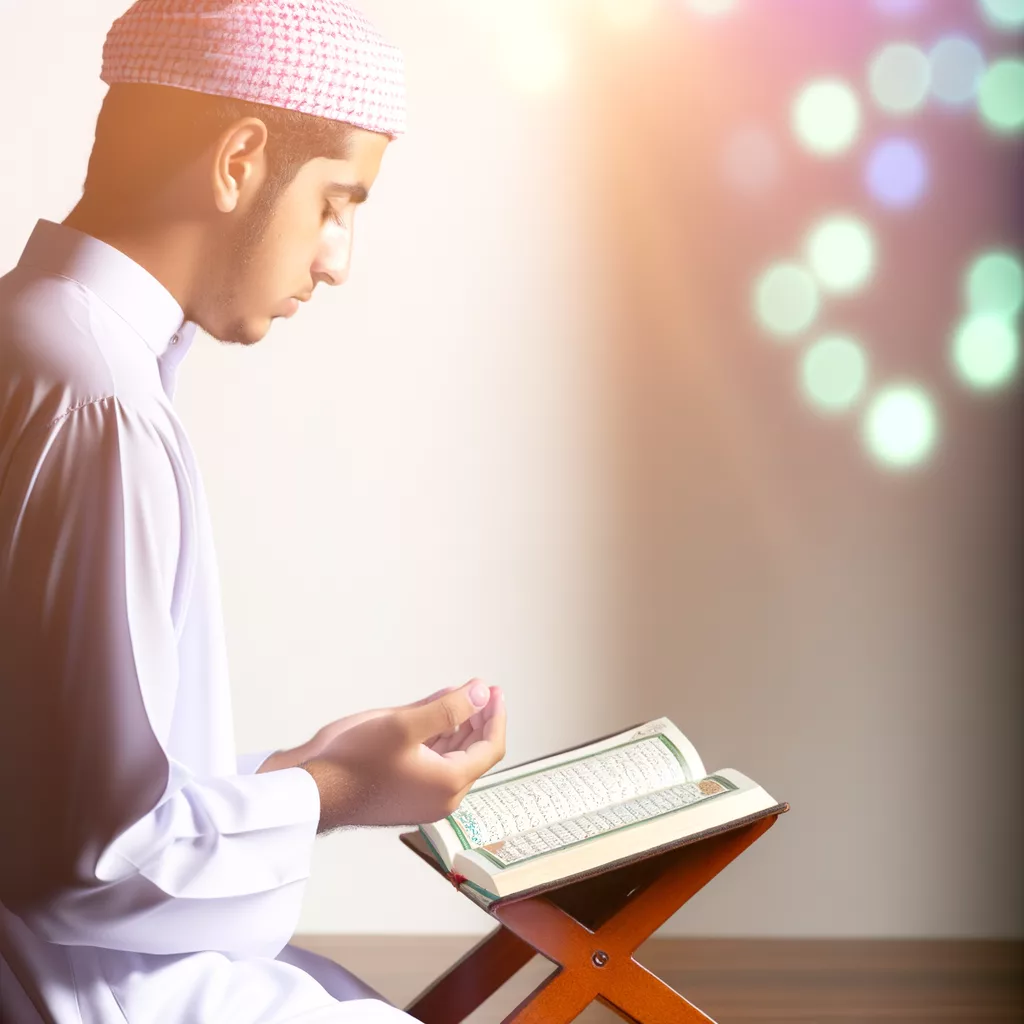
On the path to academic and professional success, every sincere heart seeks light and serenity. But what truly distinguishes a blessed, deep and fulfilling course of study or career? Is it the force of effort alone, or the rigour of planning? For many Muslims, the key lies above all in a deep connection to Allah, the practice of Islamic supplications and the search for a wider meaning that transcends material success. Among the treasures of the prophetic tradition and the Qur’an, du’a and dhikr hold a central place, not only to calm the mind but also to call on divine help in the face of daily challenges, exams, professional projects or life choices.
In a world where competition is intensifying, it becomes essential not to limit yourself to classic methods of preparation and stress management. For transparent, lasting success, the kind that unites success in this world and reward in the hereafter, is born of a holistic approach: cultivating the Muslim faith, anchoring Islamic spirituality in every stage of the journey, and placing the practice of Islam at the very heart of student or professional life. This often begins with the simple but profound aim of understanding the Qur’an, savouring the beauty of du’a in its original language, and giving literary Arabic back its rightful place: that of a living bridge between the believer and the divine message.
This is where learning Arabic, especially through immersion in Arabic and without translation, proves to be an invaluable source of wisdom. Learning Arabic means opening yourself directly to the Word of Allah, tasting the subtlety of the hadiths, absorbing the sunna and drawing from the sira of the Prophet that extra soul which lights up every choice and every ambition. Repeating authentic supplications with understanding, giving meaning to memorising the Qur’an or reading the Qur’an in Arabic, experiencing khushu in prayer: these are all ways of bringing baraka into your studies and your career.
This article invites you to discover the unsuspected power of supplications, the nobility and beauty of learning Arabic, and also the spiritual richness that radiates from the prophetic tradition. You will explore how sincerity, patience in Islam and gratitude towards Allah become the pillars of fulfilling success, in this world as in the hereafter – and how, through every du’a, every verse, every breath of dhikr, a serene, strong and renewed Muslim identity is forged.
Welcome to a journey where personal progress, academic excellence and professional development come together under the sign of spirituality, effort and Qur’anic light, for a success that bears the intimate and kindly trace of the love of Allah.
The power of Islamic supplications for success: du’a, dhikr and spirituality in student and professional life
At the heart of Muslim student and professional life, Islamic supplications act as an intimate and powerful source of confidence, motivation and serenity. The regular practice of du’a and dhikr not only brings spiritual light, it also shapes a state of mind conducive to academic and professional success. In moments of doubt or fatigue, reconnecting with Islamic spirituality through these supplications offers a regenerating pause, reminding us that every stage of learning or of a career is part of a greater design. Immersing yourself in prayer in Islam, cultivating khushu during salat and surrendering to gratitude towards Allah means choosing to place His help at the centre of your efforts. The Prophet Muhammad, in the sunna, described how tawakkul – that sincere trust in God – opens doors we thought were closed. Reciting the Qur’an in Arabic, memorising verses, meditating on the tafsir of the Qur’an or studying the science of hadith also offer, through learning Arabic and immersion in Arabic without translation, a deep and nuanced understanding of the notion of success according to religion and tradition. Making du’a a faithful companion during revision, calling on Allah before an exam or a professional decision, repeating dhikr on public transport: all this places every action within the search for spiritual well-being and inner balance. This routine not only helps you withstand stress and pressure, but also lets you experience a sense of inner peace that transcends immediate results. So, through sincerity in Islam, patience in the face of trials, the love of Allah, and inspiration from the scholars of Islam and the companions of the Prophet, every believer weaves, day after day, a harmonious life rich in meaning, where effort and spirituality are one.
Learning Arabic to elevate your supplications: immersion in Arabic, understanding the Qur’an and memorising du’a
Learning Arabic is much more than mastering a foreign language: it opens a door to a deeper dimension of Islamic spirituality. When you want to raise the quality of your supplications (du’a) for success in your studies and career, immersion in Arabic is a luminous obvious choice. By learning literary Arabic, the believer draws closer to the source: every word of the du’a takes on a new flavour, every expression of gratitude or tawba, every request for patience or success, vibrates with the original intention conveyed in the language of the Qur’an. Understanding the Qur’an in Arabic means tasting the subtle meaning of the revealed verses, feeling the depth of dhikr and the light of tajwid, and sensing the sacred rhythm that has irrigated the practice of Islam for centuries.
By fully living an immersion in Arabic, without the intermediary of translation, memorising the Qur’an and learning supplications become living and personal. The believer no longer merely recites: they converse with their Lord in the language of the Revelation, rediscover the spiritual breath of the sunna, of the tafsir of the Qur’an, of the hadiths and of the precious teachings drawn from the companions of the Prophet, the ahl al-bayt and the scholars of Islam. This intimate bond transforms prayer in Islam, the daily salat or the Friday prayer, into a moment of deep and sincere khushu, where every request resonates with love of Allah and love of the Prophet.
So learning Arabic without translation, from reading the Qur’an to memorising the formulas of supplication, is part of a genuine Islamic education. This approach fosters patience in Islam, nourishes sincerity and anchors gratitude towards Allah at every stage of your studies and career. It offers the Muslim family, Muslim youth and Muslims in France a precious key to living Islam in depth, overcoming stress and building solid spiritual well-being. Immersion in Arabic, the language of Islamic civilisation, invites you to reconnect with the history of Islam, to draw inspiration from the sira of the Prophet and to walk in the footsteps of the Muslim community through the centuries. Ultimately, every du’a raised in the language of the Qur’an carries within it the beauty of Islamic culture, the strength of Muslim identity and an inner peace renewed with each supplication.
The treasures of the Qur’an and the sunna: authentic supplications and prophetic guidance to overcome the challenges of studies and career
The Qur’an and the sunna are inexhaustible sources of guidance, especially when it comes to facing the challenges of studies and career. Many feel the need to draw on authentic supplications, handed down by the prophetic tradition, to strengthen their faith and determination. Learning Arabic and diving into immersion in Arabic without translation opens the doors to a deeper understanding of these treasures: every revealed du’a, every expression of trust and patience, finds a special echo when you listen to the Word of Allah or the prophetic advice in the original language, literary Arabic. Reading the Qur’an in Arabic, together with memorising the Qur’an, not only helps you perfect your tajwid but also lets you feel the spiritual impact of each verse linked to knowledge, perseverance and success. Supplications such as those of surah Ta-Ha, “My Lord, expand my chest for me, make my task easy for me, and untie the knot from my tongue so that they may understand my speech” — resonate all the more strongly when you discover their beauty in the original Qur’anic text.
The sunna, too, abounds in models to follow. The Prophet Muhammad (peace and blessings be upon him) taught his companions patience in Islam, perseverance, sincerity of intention and turning to supplication whenever doubt or difficulty arises. The science of hadith and the tafsir of the Qur’an reveal these spiritual gems, especially when you aim to understand the Qur’an without an intermediary, thanks to learning Arabic. The Prophet (peace be upon him) insisted on the importance of dhikr and of gratitude towards Allah, but also on placing your complete trust in Him, while showing effort and discipline in the practice of Islam. Salat, especially the dawn prayer or the Friday prayer (joumoua), is presented as a precious ally for gaining inner peace and the strength to overcome life’s exams – whether academic or professional.
Qur’anic and prophetic guidance is not only about material success but embraces Muslim spiritual life in all its splendour. Immersive Arabic learning lets you draw from the source, make the sira of the Prophet your own, along with the wisdom of the companions of the Prophet and the ahl al-bayt and the refined teachings of the great scholars of Islam. By practising Islamic supplications handed down without translation, the student or professional develops sincerity in Islam, a direct connection with Allah and renewed confidence to face their ambitions and trials, inspired by the history of Islam and the living tradition of the Muslim community. This approach, both intellectual and spiritual, shapes Muslim identity lastingly and nourishes success, in this world and the hereafter.
Sincerity, patience and gratitude towards Allah: cultivating a solid Muslim faith for lasting success in this world and the hereafter
In the pursuit of academic and professional success, authentic Muslim faith remains the invisible foundation that gives meaning and strength to every effort. Sincerity, patience and gratitude towards Allah form the heart of a living Islamic spirituality, without which neither Islamic supplications nor concrete steps can bear lasting fruit. When you commit to studies or a career, every stage invites you to examine your intention: why study, why work, for whom do you seek excellence? Cultivating sincerity in Islam means aligning your heart with the search for divine approval, beyond human or material expectations. The Qur’an in Arabic, in its literary and spiritual richness, reminds us time and again that intention precedes every act, and that true success is the one that leads to the love of Allah and to inner peace.
Patience in Islam is learned and strengthened, not only in the face of difficulties but also in the constancy and discipline required by learning Arabic, memorising the Qur’an or any academic path. As with prayer in Islam, every bit of progress, however small, is gained through perseverance, even when results seem far away. The Prophet, the companions of the Prophet and the ahl al-bayt left us shining examples of perseverance and resilience, even in adversity. Immersion in Arabic, the study of tajwid or the science of hadith, like any deep undertaking, requires accepting the rhythm of time and welcoming trials as opportunities to grow in faith.
When wishes come true, gratitude towards Allah sanctifies success and anchors it in an eternal dimension. Thanking the Creator, whether after passing an exam or after progress in reading the Qur’an, means recognising the true source of every blessing. This gratitude is lived in dhikr, salat and the Friday prayer, but also in the way we use the knowledge we have gained in the service of the Muslim community, the Muslim family, Muslim youth or Islamic studies. The more we develop this dimension of shukr, the more our ambitions take on a luminous and soothing colour, and the more our hearts stay protected from pride, stress and despair. For success, in the Islamic vision, is never limited to social or material advancement; it blossoms in closeness to Allah, inner peace, kindness towards others and the awareness of being a living link in Islamic civilisation. By living such an immersion, deep in meaning and faith, every kind of learning – whether learning Arabic without translation or deepening your knowledge of the sira of the Prophet – turns into a spiritual journey, a source of peace and contentment, in this world and the hereafter.
Over the course of this journey through Islamic supplications for success in studies and career, one thing becomes clear: the Muslim faith, nourished by Islamic spirituality, offers everyone infinite resources to face daily challenges. When du’a becomes second nature, when dhikr calms the heart before any exam or interview, and when gratitude towards Allah sets the rhythm of every stage, life is adorned with an inner light.
But for these treasures to unfold their full power, learning Arabic naturally emerges as an authentic and deep key. Literary Arabic, the language of the Qur’an and the sunna, not only allows you to understand the Qur’an in Arabic, but also to savour every subtlety of tajwid, of reading the Qur’an, of memorising the Qur’an and of the tafsir of the Qur’an. Immersing yourself in learning Arabic, without systematic translations, means tasting the original sweetness of Islamic supplications and putting down roots in the prophetic tradition, the science of hadith, the sira of the Prophet, the wisdom of the companions of the Prophet and the nobility of the ahl al-bayt.
Opening yourself to this immersion in Arabic also gives you the chance to relive the founding moments of the history of Islam, to connect with the words of the Prophet Muhammad, his exemplary life and the values he passed on to the generations that followed. It means walking in the footsteps of the scholars of Islam, understanding the sharia and fiqh as close as possible to their sources, and giving meaning to your practice of Islam within the Muslim family, in the Muslim couple, with Muslim children or at the heart of the contemporary Muslim community, whether you live in France or elsewhere.
In hardship or in ease, sincerity in Islam, patience in Islam, tawba and gratitude towards Allah form the believer’s compass. They colour prayer in Islam, breathe khushu into it, elevate the Friday prayer and illuminate the nights of Ramadan, the fervour of laylat al-qadr, the joy of festivals such as eid al-fitr or eid al-adha, the spirituality of hajj and umrah, the call of the adhan and the unity in the mosque. Through these rites and supplications, learning Arabic is no longer a mere academic goal: it becomes a way of returning to yourself, to inner peace, spiritual health, balance and spiritual well-being.
In a world crossed by so many concerns – stress, the pressure to succeed, questions of identity, the search for meaning – there is no firmer support than connection to Allah through pure speech. Supplications for success, meditated in the light of the Qur’an in Arabic, the authentic sunna and the history of Islamic civilisation, accompany the believer towards successes in keeping with Islamic ethics, intelligence of the heart and nobility of conduct (akhlaq).
Whether you are just beginning to learn Arabic or continuing your immersion in Arabic, know that every word learned, every verse memorised, every supplication whispered in the intimacy of your heart is a step towards a deep understanding of your tradition, an anchoring in the heritage of Islamic universities such as Al-Azhar, Zaytouna or Qayrawan, and a pledge of true success, in this world as in the hereafter.
So, between the sciences of hadith, the wisdom of the madhahib, ethics in halal trade, respect for halal food, commitment to Islamic solidarity or ecological preservation in Islam, everything begins with sincerity, patience and a growing love for Allah and for His Prophet. Learning Arabic, lived in the light of immersion, is not only a bridge to success in your studies or career, but a path towards fulfilment, peace and wisdom handed down from generation to generation, at the heart of the great house of Islam.
Further reading: discover our programme to learn to read Arabic (adults), or also read “Learning Arabic to live dhikr and find emotional stability” and “Learning Arabic and supporting our elders in the Muslim community“.



