
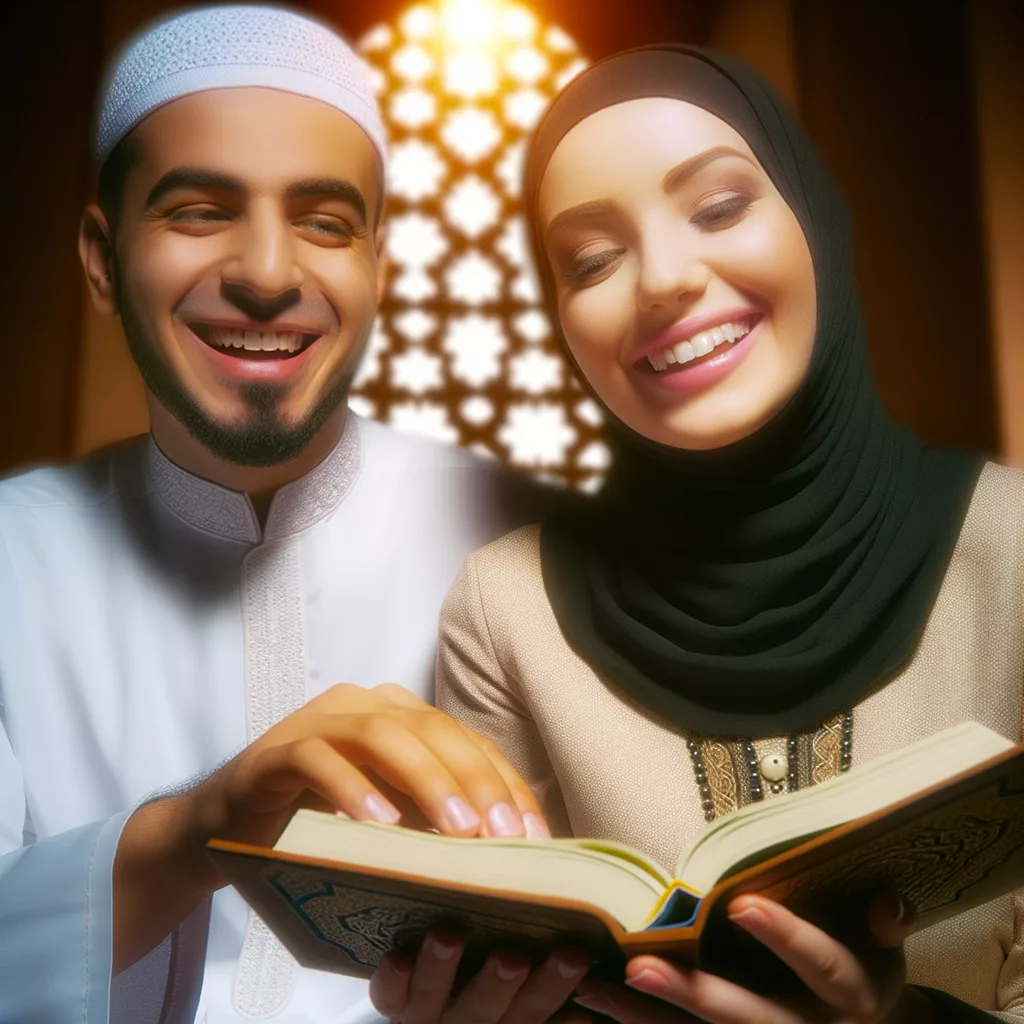
What is it, in a home, that brings peace, cultivates gratitude to Allah and gives the Muslim faith its full flavour? The answer often comes down to one discreet but essential word: kindness between spouses. This gentleness, so strongly recommended in the sunna, is a subtle fragrance that raises married life to the rank of worship and makes it emblematic of Islamic spirituality. Marital kindness, a mirror of prophetic conduct and a treasure of Islamic education, is the key to a harmonious married life, founded on patience, sincerity, calm dialogue and love, for Allah and through Allah.
Many Muslims who aspire to understand the Qur’an and the hadiths better wish to find in their marriage the balance and tenderness embodied by the Prophet Muhammad, peace and blessings be upon him, and passed down through the sira of the Prophet, the companions of the Prophet and the ahl al-bayt. But how can you grasp the full subtlety of these teachings and bring the wisdom of the sunna into today’s Muslim couple? The answer very often lies in learning literary Arabic, because understanding the Qur’an in Arabic and delving into the tafsir of the Qur’an or the science of hadith without translation means drawing from the living source of the divine message and discovering, without a filter, the deep delicacy of the Islamic model of marriage.
Through immersion in Arabic, reading the Qur’an, memorising the Qur’an, tajwid and careful exploration of the foundations of the practice of Islam—whether prayer with khushu, Islamic invocations, dhikr, fasting or major milestones such as hajj—each spouse finds the landmarks needed to transform their daily life. It is in this sacred language that the finest examples of patience in Islam, gratitude, love of the Prophet and marital ethics come to life, and that the portrait of the flourishing Muslim family, rooted in the prophetic tradition, takes shape.
This article invites you on a journey: from the heart of the sunna to the depths of Arabic, to rediscover the transformative power of kindness between spouses. Whether you are a beginner in learning Arabic, already on the path of tajwid or curious about the science of hadith, each stage will shed light on the way to a harmonious marriage—illuminated by patience, gentleness and the light of the Qur’an.
Marital kindness in the Sunna: the key to a harmonious spiritual life and a mirror of prophetic conduct
Marital kindness, as taught by the Sunna, is not only a social virtue but the invisible foundation of a harmonious spiritual life for the couple. When we dwell on the sira of the Prophet Muhammad, peace and blessings of Allah be upon him, we discover a shining model of tenderness, attentiveness and patience, embodied in each of his gestures towards his wives. This prophetic conduct, rooted in akhlaq and the daily practice of Islam, lights the way for all Muslim couples seeking sincere love and deep faith. According to the authentic hadiths and the science of hadith, the Prophet never failed to express his affection, to ease tensions, and to use gentle words and a tender heart, even in situations of disagreement or hardship, thus cultivating inner peace in the home.
Learning Arabic and immersing yourself in reading the Qur’an in literary Arabic let you savour the beauty of the verses that speak of the harmonious relationship between spouses, understanding the subtle meaning of terms that are hard to translate. Immersion in Arabic, far from conventional methods based on translation, lets you approach the depth of the Qur’anic message and the Sunna on marriage in Islam, patience in Islam, gratitude to Allah and sincerity in Islam, all essential to the structure of a marriage. Studying the tafsir of the Qur’an and the words of the companions of the Prophet and the scholars of Islam reveals that every act of kindness between spouses becomes an opportunity to deepen one’s Muslim faith, elevate one’s Islamic spirituality and strengthen family happiness.
This is a living, embodied dimension: the Prophet’s kindness towards his wives is a mirror for every Muslim couple, inviting moderation, mutual understanding and a shared spiritual routine, whether in prayer, dhikr and du’a or through Ramadan and the Islamic festivals. Being kind also means meeting difficulties with tawba, encouraging repentance in Islam, offering support and a listening ear in adversity, reminding each other of Islamic invocations, and aspiring to inner peace. Thus every gesture of marital kindness becomes a milestone on the path to spiritual well-being, a continuous apprenticeship in prophetic conduct, and a source of baraka for the couple and the Muslim family in their quest for worship and closeness to Allah.
Understanding the sunna and the hadiths on the relationship between husband and wife through learning literary Arabic
Diving into learning literary Arabic means opening yourself to an authentic understanding of the sunna and the hadiths on the relationship between husband and wife. Far beyond simple translation, immersion in Arabic offers the unique opportunity to feel the delicacy of the words used by the Prophet Muhammad, peace and blessings be upon him, to describe tenderness, cooperation and kindness within the Muslim couple. Learning Arabic without translation gives access to the subtlety of terms such as mawadda (affection) or rahma (mercy), which come to life in the original text and reveal all the beauty of the marital relationship as taught in Islamic spirituality.
By understanding the Qur’an in Arabic and reading the hadiths in their original language, the Muslim couple drinks from the very source of the message. Immersive study of the science of hadith and the sunna, without the filter of foreign words, makes it possible to grasp the intention behind each piece of advice the Prophet gave to the companions of the Prophet and the members of the ahl al-bayt. This strengthens not only the daily practice of Islam but above all harmony in spiritual and family life. The prophetic recommendations on patience in Islam, sincerity in Islam or gratitude to Allah in family life then take on a deep and intimate meaning.
Through continued learning of literary Arabic, the notions of tajwid and tafsir of the Qur’an become more accessible. During times of prayer, during salat or the Friday prayer (jumu’a), reading the Qur’an resonates differently. Memorising the Qur’an, understanding Islamic invocations (du’a, dhikr) or repenting (tawba) in the language of the Book brings spouses closer to an ideal of kindness and of love for Allah and His Messenger. This grounding in classical Arabic, lived within the Muslim family and encouraged in Muslim children, is part of a holistic Islamic education in which Muslim identity and Islamic culture are naturally passed on from generation to generation.
Learning Arabic, experienced in the intimacy of the couple as well as in passing it on to Muslim youth, shapes a more accurate understanding of marriage in Islam and family responsibilities. Every word of the Prophet, every dialogue in the sira of the Prophet, every example drawn from the history of Islam or the scholars of Islam guides towards better management of anger in Islam and towards inner peace, and fosters the spiritual well-being of the home. Along this path, couples discover the depth of marital kindness as it shone within the first Muslim community and gain strength and gentleness to face the challenges of modern life together.
Immersion in Arabic: drawing marital wisdom directly from the Qur’an and the sira of the Prophet
Immersing yourself in literary Arabic means opening a secret door to the purest marital wisdom, drawn directly from the Qur’an in Arabic and the living accounts of the sira of the Prophet. As soon as you begin to learn Arabic without translation, an invisible world lights up: the words chosen in the suras, their music and their emotional force carry a meaning and a tenderness that no other language could convey with such depth. By practising immersion in Arabic, even gradual and imperfect, every verse revealed about kindness, patience in Islam or sincerity in Islam within the couple resonates at the deepest level — like an invitation to embody divine mercy in your own married life.
Reading the Qur’an, enriched by the study of tajwid and the tafsir of the Qur’an, weaves a direct link between the Muslim faith and the ethics of the marital relationship. The accounts of the sunna and the sira of the Prophet — his gestures of tenderness towards his wives, his delicacy in conflicts, the shining example of the ahl al-bayt and the companions of the Prophet — come to life in a different way: they become lived models, accessible through the bare beauty of Arabic. Learning Arabic, experienced in love of Allah and the Prophet, makes it possible to touch the spiritual and human dimension of marriage in Islam, and to raise the practice of Islam from mere ritual to the depth of the heart and of actions.
It is also by tasting the Arabic of revelation that memorising the Qur’an or the hadiths — even just a few sayings — nourishes patience, shukr (gratitude to Allah) and the search for khushu in prayer. Arabic becomes the language of dhikr, a source of Islamic invocations that calm anger, recall tawba, or renew the gentleness of dialogue within the Muslim couple. While immersion in Arabic may seem demanding, every step brings you closer to this original wisdom, conveyed by the science of hadith, Islamic spirituality and the whole tradition of Islamic education passed down from generation to generation.
In the silence of a Ramadan night, at the time of jumu’a or during prayer, this immersion illuminates Muslim family life, inspires young and old, shapes Muslim identity and connects everyone to the living world of the Muslim community. Learning Arabic means giving your marriage a key to inner peace, moderation, mercy and joy — hidden treasures waiting to be discovered in the founding words of Islamic civilisation.
Cultivating gentleness and patience in Islam: towards a flourishing Muslim family and a couple inspired by Islamic spirituality
In Islamic spirituality, gentleness and patience are essential qualities for building a flourishing Muslim family and a serene couple, in keeping with the teaching passed down by the Sunna of the Prophet Muhammad. The practice of Islam is rooted in small daily gestures full of tenderness, endurance and forgiveness. The Prophet, a perfect example of emotional balance and kindness towards his wives and his companions, tirelessly taught how to manage anger, preserve inner peace, and turn every family interaction into an act of mercy and gratitude to Allah.
Cultivating gentleness in married life means drawing on the light of the Qur’an in Arabic and the authentic hadiths to give the other the best of oneself. When you take the time to learn Arabic, every word heard while reading the Qur’an or listening to the adhan resonates as an invitation to greater patience in Islam and a deep understanding of what it means to be a couple. Immersion in Arabic, free from the barriers of translation, gives hearts the ability to grasp the nobility of marriage in Islam, the subtlety of the prophetic advice and the gentleness of dhikr shared as a family. Understanding the Qur’an in Arabic means tasting divine tenderness in prayer, finding khushu in prayer, and drawing inspiration from gratitude to Allah in times of difficulty, fasting in Ramadan or adversity.
Patience, sabr, is the invisible foundation of a close-knit home and an authentic Islamic education. The trials a Muslim couple encounters then become an opportunity for tawba, repentance in Islam, and growth in the Muslim faith. Moments of tension, far from driving spouses apart, invite modesty in Islam, the search for spiritual well-being, and putting into practice the teachings of the hadith and the sira of the Prophet, whereby every argument becomes an opportunity for reconciliation, learning and maturing.
In a Muslim family, gentleness gives everyone the space to express themselves without fear of judgement, while patience fertilises the soil in which mutual trust grows. When Muslim parents and children anchor their daily lives in reading the Qur’an, memorising the Qur’an and the beauty of tajwid, a meaningful Muslim identity takes shape, a spiritual routine from which the couple draws peace and resilience. This is how the home becomes the haven of peace described by the scholars of Islam, a place where raising children in Islam, Islamic solidarity and gratitude intertwine to give birth to a new generation that is both rooted and open to the challenges of the modern world.
Learning Arabic, inseparable from this quest, is not limited to the study of literary Arabic or advanced Islamic sciences; it is embodied in everyday kindness: a gentle word, a shared invocation, genuine listening in moments of stress or fatigue. Immersion in Arabic, combined with the prophetic example, shapes Islamic conduct, akhlaq, and invites inner peace, respect and love of Allah and His Prophet. It is in this spirit, guided by the sunna and illuminated by the light of the Qur’an, that gentleness and patience nourish the Muslim family, revealing the discreet and timeless strength of mercy in married and family life.
Kindness between spouses, as taught by the Sunna, is not simply an added value in Muslim married life: it is its living heart, the discreet light that illuminates every glance exchanged, every word chosen, every thoughtful gesture. Through the examples of the Prophet and his companions, illustrated in the sira and the authentic hadiths, we discover that gentleness, patience and mercy are the soul of the marital relationship and open the doors to true spiritual harmony.
Delving into the study of the Sunna and the sciences of hadith through learning literary Arabic gives your marriage the chance to drink directly from the source of an unaltered wisdom. Immersion in Arabic, without translation, lets you savour the deep meaning of the verses and the prophetic sayings, access the beauty of the Qur’an in Arabic and taste the very essence of khushu in prayer and sincerity in dhikr. Understanding the tafsir of the Qur’an, decoding the subtleties of the sira of the Prophet, drawing on the lives of the ahl al-bayt and the companions of the Prophet: all of this becomes possible through even a gradual mastery of Arabic, turning every moment of reading or memorising the Qur’an into an intimate encounter with the message of Allah and the prophetic tradition.
In the daily life of the Muslim couple, kindness is reflected in raising children in Islam, in managing patience during Ramadan or fasting, in calling on Allah in times of doubt or fatigue, and in gratitude expressed through prayer, the Friday salat or du’a in the solitude of the holy nights of Laylat al-Qadr, during hajj or umra. It shows itself in the solidarity and generosity of the Muslim home towards the community, the search for moderation (wasatiyya), and the constant quest for inner peace and spiritual well-being.
Ultimately, striving to live marital kindness according to the Sunna means taking full part in perpetuating an Islamic civilisation founded on love of Allah, Islamic ethics, mercy towards the Muslim family and the beauty of Islamic conduct (akhlaq). It means placing your life, humbly but resolutely, in the living chain of the Qur’an, the ahl al-bayt, the great scholars of Islam and the inspired generations who spread the Muslim faith from the Andalusian caliphates to contemporary mosques and Islamic universities.
On this path, every couple draws strength from authentic learning of Arabic, from constant engagement with the Qur’an, the Sunna and the Islamic heritage, and from the sincere desire to reflect, together, the light of the Prophet. Marital kindness, understood in this way, remains far more than a quality: it is an act of faith, a road to serenity, and the patient building of peace and baraka at the heart of the Muslim family.
Further reading: discover our online Arabic courses for adults, or also read “Learning Arabic and living Islamic spirituality through the hadiths” and “Learning Arabic to face racism and Islamophobia“.



