
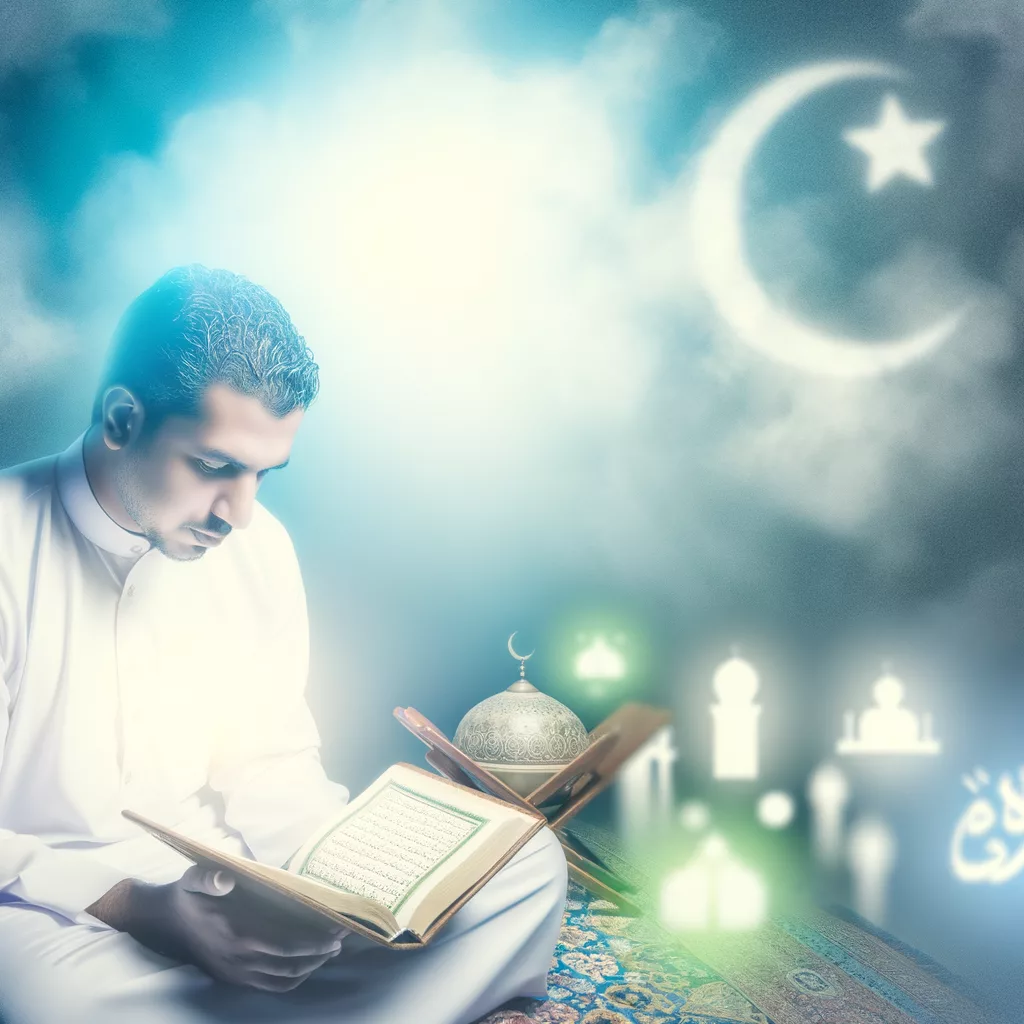
The Muslim calendar is marked by unique moments, but there is one whose light surpasses all the others: the first ten days of Dhul Hijjah. For millions of Muslims around the world, this period is not simply the passing of time, but a true invitation to elevate one’s Muslim faith and renew one’s practice of Islam. Each of these moments resonates with a discreet grace, with a depth that links daily life to the purest Islamic spirituality, and whose full beauty is revealed only through intimate understanding.
Yet it is by turning to the Arabic language, that linguistic treasure which carries the Qur’an, the hadiths and the whole history of Islamic civilisation, that the essence of Dhul Hijjah is truly unveiled. Learning Arabic – and in particular literary Arabic, the language in which the Word of Allah was revealed – opens the door to an unparalleled immersion in Arabic: understanding the Qur’an in Arabic, savouring every tajwid rule while reading the Qur’an, marvelling at the subtlety of Qur’anic tafsir. Beyond the words, it is about feeling the living breath of the Revelation, perceiving the soul of the sunna, and reconnecting with the sira of the Prophet and the wisdom of the Companions of the Prophet in their authentic expressions.
How many Muslims dream of tasting the sweetness of a prayer in Islam where khushu settles naturally, where every word of the salat resonates with meaning? How many wish to hear the adhan, to absorb dhikr and du’a in the language of the Qur’an, to fill their Muslim spiritual life with a new light? The first ten days of Dhul Hijjah are a luminous call to this journey: a journey of rediscovery, of concrete immersion in the world of Arabic without translation, to encounter the Qur’an in Arabic and the living practice of Islam.
For behind every prophetic recommendation linked to Dhul Hijjah – whether voluntary fasting, Islamic supplications, tawba and gratitude to Allah, or patience in Islam – there is a secret door that opens only through an intimate understanding of literary Arabic. Without mediation, without dependence on translations, it is through listening, repetition, memorisation of the Qur’an and direct feeling that one recovers the clarity of the original message.
In the following sections, discover how these ten blessed days can transform your Islamic spirituality and your life of faith through an immersive approach to learning Arabic. Whether you are seeking inner peace, the love of Allah or the desire to reconnect with the tradition of the Muslim community, immersion in Arabic during Dhul Hijjah offers a path towards spiritual well-being, where every moment, every word, every act of devotion is revealed in its true light.
The first ten days of Dhul Hijjah: a spiritual treasure for Muslim faith and the practice of Islam
The first ten days of Dhul Hijjah hold a unique place in Islamic spirituality and the practice of Islam. In the prophetic tradition these days are described as the most honourable of the year, even surpassing the last ten nights of Ramadan in certain respects. They represent a true treasure for anyone seeking a living and nourishing Muslim faith, for every virtuous deed performed during this period, however small, takes on a multiplied value with Allah. Historically, they recall the great moments in the story of the Prophet Ibrahim and his son Isma’il, major figures of patience in Islam, sincerity in Islam and gratitude to Allah. These sacred days offer fertile ground for dhikr, du’a, tawba and prayer in Islam – all acts that nourish khushu in prayer, strengthen the love of Allah and awareness of His mercy, and encourage repentance in Islam.
For those who wish to live the spirituality of Dhul Hijjah to the full, immersion in Arabic becomes a true way of life. Learning Arabic means opening the door to understanding the Qur’an in Arabic, to listening to tajwid and to intimate access to Qur’anic tafsir, the hadiths and the sunna. Reading the Qur’an in literary Arabic without constantly resorting to translation allows one to taste the power of the revealed words and to appreciate the beauty of Qur’an reading as it was transmitted by the Companions of the Prophet. Memorising the Qur’an and meditating on Islamic supplications during these ten days are practices that transform the heart and re-root Muslim faith in daily life. This dive into the sacred language also makes it easier to connect with the teachings of the great scholars of Islam, the science of hadith, the understanding of the rites of the Hajj and of Eid al-Adha, the wisdom of Muslim spiritual life, and Muslim identity in all its depth.
Thus the first ten days of Dhul Hijjah resound as an invitation to revive one’s practice of Islam and deepen one’s bond with the spiritual and cultural heritage of Islamic civilisation. Through Friday prayer, the salat, fasting in Islam, zakat, Muslim volunteering or moments of inner peace in Islam, they recall the richness of a way of life that unites the Muslim family, the Islamic education of children, community engagement and the quest for spiritual well-being. These days offer a privileged time and space to immerse oneself in the wisdom of the Qur’an and the sunna, and to reconnect with patience, gratitude, sincerity and modesty in Islam, all qualities that forge a path towards the light and mercy of Allah.
Diving into literary Arabic to discover the secrets of the Qur’an in Arabic during Dhul Hijjah
During the first ten days of Dhul Hijjah, the Muslim soul feels carried by a particular light: that of the memory of Ibrahim, of pure faith, of sincere submission, and of a blessed time when every second can be magnified on the scale of eternity. It is precisely in this context that diving into literary Arabic takes on its full dimension. For everything that nourishes these days, from the story of the sacrifice to the grandeur of the Hajj, is rooted in the Qur’an in Arabic, the authentic hadiths, the transmitted supplications and the sunna of the Prophet Muhammad. Learning Arabic then becomes far more than a personal achievement: it is a key, a revealed secret, a means of immersing one’s heart and mind in the living source of Islamic spirituality.
When one embraces Arabic without translation, through a progressive and caring immersion in Arabic, every Qur’anic word recited in the salat, every whispered du’a, every verse meditated upon while reading the Qur’an takes on an inimitable flavour, density and resonance. One then discovers that the word patience in Islam, the notion of tawba, repentance and gratitude to Allah take shape quite differently when one hears, reads and understands the original message. The first days of Dhul Hijjah, when prayer in Islam intensifies and dhikr and supplication punctuate the days, become a unique opportunity to let literary Arabic awaken faith, touch the soul and transform one’s understanding of meaning.
At this privileged time of year, the desire to understand the Qur’an in Arabic naturally extends to memorising the Qur’an, learning the rules of tajwid and studying Qur’anic tafsir, but also to discovering the science of hadith, the sira of the Prophet, and the exemplary lives of the Companions of the Prophet and the ahl al-bayt. Suddenly, the deep meaning of Friday prayer, the subtleties of the salat, sincerity in Islam and patience become tangible realities, no longer through the constant mediation of translation, but through a direct connection with the word of Allah. These consecrated days, celebrated with love of the Prophet and gratitude to Allah, encourage us to place Arabic back at the heart of our spiritual routine, of the Islamic education of children, and of married and family life.
Learning Arabic, especially through a rich and intuitive immersion in Arabic, is like lifting the veil on an ocean of knowledge, love and light. Islamic culture, Islamic civilisation and the great names of the history of Islam, such as the Islamic universities of Al-Azhar, Zaytouna and Qayrawan, then resonate differently. In prayer performed with khushu, in listening to the adhan at the mosque, in voluntary fasting or in the story of the Hajj, every word and every supplication weaves an intimate link between tradition and life today. In these first days of Dhul Hijjah, literary Arabic is no longer a mere tool; it becomes a bridge to inner peace, a spiritual companionship serving the sincerity, modesty and Islamic ethics that make the individual as well as the Muslim community shine.
Dhikr, du’a and immersion in Arabic: revitalising your Islamic spirituality during the sacred days
When the first ten days of Dhul Hijjah arrive, like a sacred breath upon the believer’s life, they become a blessed opportunity to renew one’s Islamic spirituality through dhikr, du’a and above all immersion in Arabic. In this atmosphere where every moment holds a sacred dimension, reviving one’s connection with the Qur’an in Arabic and the prophetic supplications takes on a profound meaning. Learning Arabic is no longer simply an intellectual goal, but an open door to an authentic understanding of the Qur’an, an act of faith that nourishes khushu in prayer and sincerity in the heart. Reciting dhikr without an intermediary, grasping the meaning of du’a written in literary Arabic, listening to the adhan or to the words of the imam at jumu’a in the mosque: all of this makes it possible to reach a rooted, vibrant and luminous Muslim spiritual life.
Diving into learning Arabic means offering one’s Muslim faith the original flavour of the revealed words, rediscovering the depth of tajwid and savouring the beauty of Qur’an reading, without the barrier of translation. By exposing oneself naturally to the language, one discovers the subtleties of Qur’anic tafsir, enters into the dialogue of the hadiths, feels the wisdom of the sunna and draws inspiration from the sira of the Prophet as well as from the accounts of the Companions and the ahl al-bayt. This immersion in Arabic transforms the formulas of dhikr into living inspiration, the morning and evening supplications into direct dialogue with Allah, and praise and repentance (tawba) into intimate confidences that nourish gratitude and inner peace. It illuminates the daily practice of Islam, guides towards patience in Islam in the face of life’s trials, shapes behaviour (akhlaq) and infuses every prayer in Islam with a renewed love of Allah.
The community dimension is strengthened too: by understanding Arabic without translation, one takes a more active part in the life of the Muslim community at jumu’a, during the Hajj, and at festivals such as Eid al-Adha or Eid al-Fitr. Within the Muslim family, one passes on to one’s Muslim children an authentic approach to Islamic education and a confident Muslim identity. Learning Arabic then becomes a common thread linking the history of Islam, Islamic civilisation, the wisdom of the scholars of Islam past and present, and the quest for spiritual well-being in the face of contemporary challenges, from stress to racism, from secularism to interfaith dialogue.
Being immersed in the language of the Qur’an during the sacred days of Dhul Hijjah means anchoring oneself in the living tradition, feeling the breath of the ancestors, and tasting moderation (wasatiyya) and inner peace in Islam. This humble and profound experience instils in every heart the certainty that Islamic spirituality is never more vibrant than when one prays, meditates and implores in the very language that carried the Revelation.
Understanding the sira of the Prophet and the sunna of the Companions: drawing inspiration from their examples during Dhul Hijjah
When one aspires to live the spirituality of the first ten days of Dhul Hijjah to the full, understanding the sira of the Prophet and the sunna of the Companions of the Prophet becomes a luminous source of inspiration. In these exceptional moments, the life of the Prophet Muhammad and the example of the sahaba reveal acts of faith, patience in Islam, sincerity and endurance that enlighten every Muslim. Yet absorbing this age-old wisdom goes beyond simple reading or approximate translation: it is by immersing oneself in learning literary Arabic, through listening and attentive observation of prophetic conduct, that the depth of the message truly comes alive.
When one delves into the sira of the Prophet in Arabic without translation, the resonance of his words, the subtlety of his actions and the power of his du’a take on a whole new dimension. The Companions of the Prophet, like the members of the ahl al-bayt, lived Dhul Hijjah carried by a living Muslim faith, gratitude to Allah and the practice of Islam in its original beauty. Their attachment to the Qur’an in Arabic, to the science of hadith, to memorising the Qur’an with its tajwid and to a deep understanding of Qur’anic tafsir are so many illustrations of an authentic Islamic education.
Through immersion in Arabic, every account becomes charged with intensity: the vibrant call to prayer in Islam (adhan) on the plains of Mina, patience in Islam during the rites of the Hajj, ardent sincerity in Friday prayer (jumu’a) or the grandeur of dhikr under the tent of the Muslim community come to resonate, find their place in one’s spiritual routine and enrich the dimension of Muslim spiritual life. This direct link makes it possible to taste the love of the Prophet, to emulate the humility of a Companion in discreet supplication, or to live sincere tawba before the majesty of Mount Arafat.
Learning Arabic and absorbing the history of Islam and Islamic civilisation in the original language gives access to the very essence of the practices and to an unfiltered understanding of the Qur’an. It fosters presence of heart (khushu in prayer), moderation (wasatiyya), a sense of sadaqa and zakat, and that harmony of spiritual well-being which makes the first ten days of Dhul Hijjah a true inner rebirth. Did the great scholars of Islam, trained at Al-Azhar, Zaytouna or Qayrawan, not draw their strength from total immersion in the revealed texts?
Drawing inspiration from the sira of the Prophet and the sunna of the Companions during Dhul Hijjah therefore means reconnecting with the tradition of immersion, learning Arabic in order to feel, vibrate, meditate and act in the light of the sources. It means living one’s faith in the manner of the first Muslims, with renewed sincerity, gratitude and spirituality that embrace all the richness of the sacred month and the spirit of sacrifice of Eid al-Adha.
In the tranquil light of the first ten days of Dhul Hijjah, every believer feels the call to rekindle their Muslim faith and deepen their Islamic spirituality. This blessed cycle of the Muslim calendar reminds us that the practice of Islam is far more than a series of rites: it is a living encounter between the heart, the tongue and the intellect. Learning Arabic, immersion in literary Arabic, reading the Qur’an without translation, reciting dhikr, sincerity in du’a and attention to the deep meaning of every prayer in Islam are so many doors to a more intimate understanding of the prophetic tradition, the divine message and the history of Islam.
Diving into Arabic means choosing to draw closer to the source: savouring the beauty of tajwid, tasting the wisdom of Qur’anic tafsir, feeling the living echo of the hadiths and the unalterable strength of the sunna. It also means drawing inspiration from the sira of the Prophet, from the example of his Companions and the ahl al-bayt, to anchor patience, gratitude to Allah, love of the Prophet and sincerity in Islam at the heart of our spiritual routine.
The first days of Dhul Hijjah are more than a time of voluntary fasting or preparation for the Hajj. They are an annual meeting with our soul, our history and our Muslim identity, an opportunity to live worship to the full, to deepen our understanding of the Qur’an in Arabic, to strengthen khushu in the salat, and to rediscover inner peace and the strength of repentance in Islam. They give us the opportunity to teach our Muslim children the beauty of the Arabic language, the importance of the science of hadith, the humility of zakat, the elevation of Islamic supplications and the depth of sacred memory through memorising the Qur’an.
In our mosques, within our Muslim families and our Muslim community, the authentic history of Islam continues to be passed on through this living, passionate, never static learning. Studying literary Arabic and immersing oneself in reading the Qur’an without translation means reconnecting with Islamic civilisation in all its nuances, from Islamic calligraphy to the jurisprudence of fiqh, from the wisdom of the scholars of Islam to the beauty of Ramadan, from the morning adhan to the peace of Friday, from interfaith dialogue to Islamic solidarity.
Dhul Hijjah is an invitation to inner transformation, to gratitude, to the renewal of our intentions and to peace of heart. May this precious time guide every Muslim and every seeker towards the light of the Qur’an in Arabic, the depth of immersive learning and the soothing splendour of the prophetic tradition, to walk with confidence and humility on the path of spiritual, intellectual and community fulfilment, today and for generations to come.
Further reading: discover our programme for learning to read Arabic (adults), or also read “Learning Arabic with the morning and evening invocations” and “Learning Arabic to develop khushu in prayer“.



