
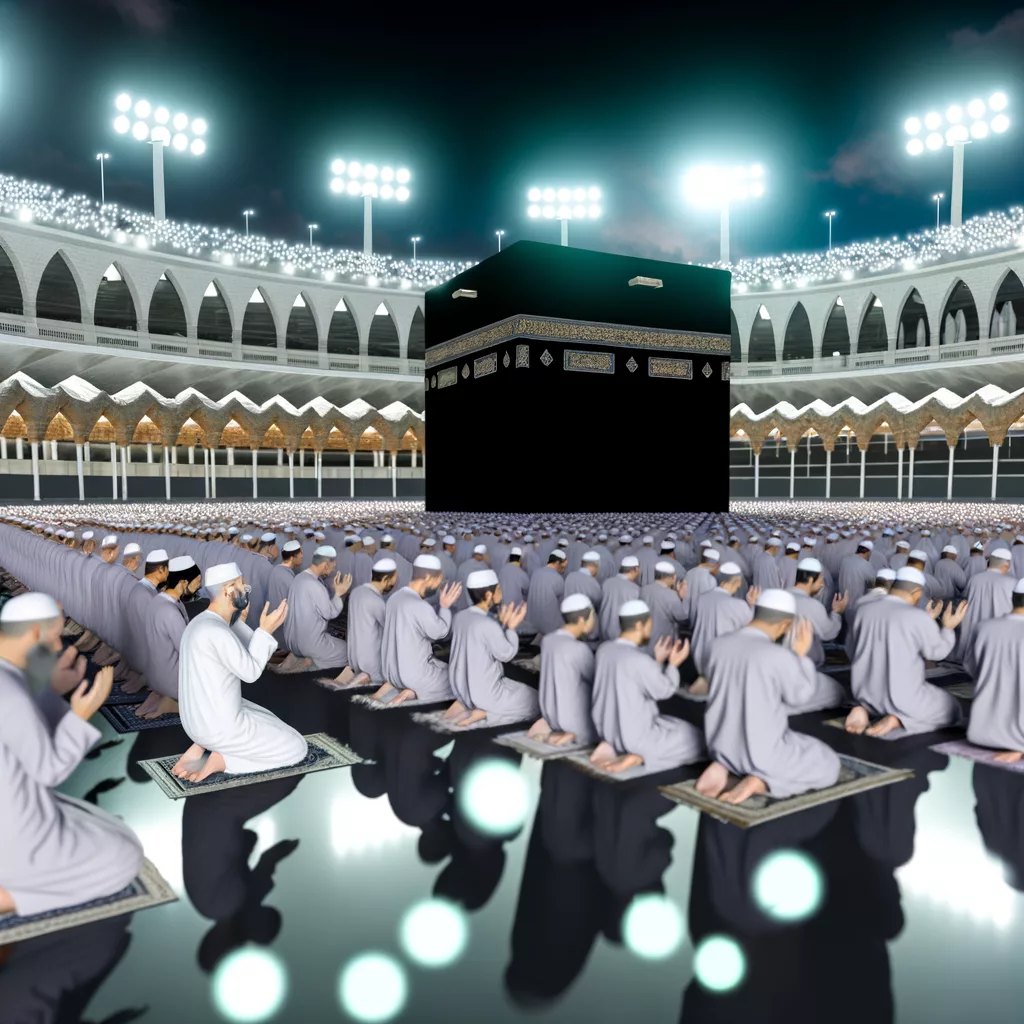
Planning a pilgrimage (Hajj): the key to a profound journey begins in the heart, in the language and in the soul
The mere mention of the Hajj stirs every fibre of the believing soul. For the Muslim, organising this sacred journey is not only a question of logistics, hotels, transport or visas; it is above all the slow and sincere preparation of the heart to meet the prophetic past and divine grace in all its purity. Every year, millions of pilgrims set out for Mecca, carried by the same desire: to perform a unique act of worship, to obtain Allah’s forgiveness, to feel the unity of the umma and to taste the universal brotherhood of Islam. But how many of them fully live the deeper dimension of the pilgrimage? How many truly understand, word for word, the whispered supplications, the verses recited, the rites drawn from the heritage of the Prophet and the sunna? The beauty of the Hajj lies in this total encounter: that of the body, certainly, but also and above all that of the heart with the divine Word, of the gaze with tradition, of the voice with the Arabic language, the language of the revelation, of the Qur’an and of the science of hadith.
Learning Arabic is therefore not just a practical asset for travelling. It restores the full spiritual depth of the Hajj ritual: understanding the Qur’an in Arabic, living the prayer (salat) with concentration (khushu), tasting every du’a, feeling every word of dhikr, grasping the nuances of tafsir, drawing inspiration from the sira of the Prophet and strengthening your connection with the Prophet’s companions and the ahl al-bayt, through an immersion in Arabic without translation that touches the essence of the Muslim faith. Planning your pilgrimage therefore means preparing your whole being, going through the organisational stages methodically, anchoring Islamic supplications, the love of Allah and His Messenger in your memory and daily life, and cultivating a wonder-filled gratitude to Allah.
Throughout this article, discover how each stage of the Hajj, from spiritual preparation to the practice of Islam, from memorising the supplications to community brotherhood, is enriched, elevated and given unequalled meaning once the Arabic language becomes your ally and your guide. Whether you are a beginner or already advanced in learning Arabic, this immersion will help you plan an authentic pilgrimage: an experience where organisation goes hand in hand with inner elevation, where each rite becomes once more a living source of inspiration, and where you learn to taste, at every step, the miracle of the Hajj in the spirit of the Qur’an, the sunna and the Islamic heritage.
Preparing your heart and mind: the importance of learning Arabic and spiritual immersion before the Hajj
Preparing your heart and mind for the Hajj is not limited to packing your suitcase or drawing up a list of logistical steps. On the contrary, this sacred journey first calls for a deep inner preparation, in which learning Arabic becomes a key to authentic spiritual immersion. Imagine yourself in the heart of Mecca, reciting the talbiya, listening to the adhan, immersed in the magnificence of the Qur’an in Arabic, with no filter or translation. Grasping the meaning of the surahs recited during the salat, tasting khushu in prayer, following the meaning of Islamic supplications, dhikr and du’a: this is what intensifies the pilgrim’s connection and intimate experience.
Immersion in Arabic thus offers pilgrims a renewed flavour of the Hajj, very different from the one felt when the rites remain words deciphered from a distance. Understanding the Qur’an in literary Arabic means entering the ocean of tajwid, feeling the depth of the tafsir of the Qur’an, and being moved by the science of hadith and the living sunna of the Prophet. At each stage of the pilgrimage, with each gesture or supplication, direct access to the sublime meaning strengthens sincerity in Islam, intensifies patience in effort and nourishes gratitude to Allah. The love of Allah and the Prophet grows naturally through listening to the sira and discovering the Prophet’s companions and the ahl al-bayt, in a language that was their own.
Beyond the ritual dimension of the hajj, this process of learning Arabic then becomes a priceless source of spiritual well-being, opening the door to Islamic inner peace, repentance, spiritual routine and the health of the heart. For every Muslim, adult or child, man or woman, parent or young person, immersion in Arabic without going through translation supports true Islamic education, the living practice of the Muslim faith and direct access to the beauty of fiqh, the madhahib, community life and the history of Islam.
Preparing for the Hajj means nourishing your soul beforehand, opening yourself to the depth and light of Arabic, so that every moment spent in the sacred sanctuary, in the mosque or within the Muslim community resonates with a new authenticity. It means transforming simple recitation into a true encounter, prayer into union, listening into understanding, and physical presence into a deep spiritual experience. This is how the pilgrimage marks a life, not only through the journey itself but through the growth of the mind and heart, enlightened by the language of the revelation.
From intention to action: organising each stage of the pilgrimage in connection with the practice of Islam and understanding the Qur’an in Arabic
Planning each stage of your pilgrimage, from the sincere welling up of the intention (niyya) to the final completion of the Hajj rites, amounts to transforming the physical journey into a path of faith, anchored at every moment in the authentic practice of Islam and a living understanding of the Qur’an in Arabic. Even before setting foot in Mecca or Medina, immersion in Arabic and a connection with literary Arabic become a discreet but precious tool: they give deep access to the meaning of the Islamic supplications, dhikr, du’a and Qur’anic readings that will mark each stop of the Hajj. Learning Arabic, not only through vocabulary lists or hasty translations, but by training yourself from today to hear and feel the words of the Qur’an without translation, means preparing your heart to taste the sweetness of prayer (salat) with renewed khushu, to feel the weight of the words “Labbayka Allahumma Labbayk” and to meditate on the verses recited during the tawaf or the sa’i.
Each action, the declaration of intention, wearing the ihram, the acts of tawaf and sa’i, the standing at Arafat, the sacrifice of eid al-adha, takes root and gains particular relief when you train yourself to understand the Qur’an in Arabic, and to listen to the sira of the Prophet and the hadiths on patience, gratitude to Allah, sincerity in Islam, or tawba and repentance directly in their original language, as they were lived by the Prophet’s companions and the ahl al-bayt. Learning Arabic then opens onto tajwid and the nuances of the tafsir of the Qur’an; it brings memorising the Qur’an to life, the verses resonating naturally on the tongue during the long night vigils of the last ten days of dhul hijjah. This approach gives the sunna its full dimension and connects daily practice to the science of hadith, fiqh and the wisdom of the madhahib; it allows Islamic spirituality to infuse the routine of the pilgrimage, creating a continuous thread between worship on site and the Islamic education you will then pass on to your children, your Muslim family, Muslim youth or the community in France.
Preparing each stage by cultivating regular exposure to literary Arabic, whether through prayer in Islam, reading the Qur’an or listening to imams’ sermons at jumu’a, means nourishing the practice of Islam from within and developing a rooted Muslim identity, aware of its history of Islam, of the legacy of the scholars of Islam from Al-Azhar to Qayrawan, and of the unique relationship each believer can have with Allah at the heart of the Hajj. Organising your pilgrimage therefore also means organising the subtle meeting between action, knowledge, language and heart, so as to find, amid the turmoil of the world, the inner peace and spiritual well-being that Islamic spirituality encourages at every moment of the sacred journey.
Living the Hajj in depth: tips for memorising Islamic supplications and practising dhikr in literary Arabic
Living the Hajj means entering a realm where heart, mind and tongue vibrate in unison around an authentic experience of the Muslim faith. The strength of the Hajj lies in this plunge into the heart of Islamic spirituality, where each stage, each prayer in Islam and each dhikr becomes an opportunity to draw closer to Allah and to revisit the sira of the Prophet and the traces left by the Prophet’s companions and the ahl al-bayt. But to fully taste this inner dimension, memorising Islamic supplications and practising dhikr in literary Arabic take on particular importance.
Faced with the richness and beauty of the Hajj supplications, many feel helpless or intimidated by the Arabic language. Yet learning Arabic here offers a door to a direct understanding of the Qur’an in Arabic, of the deep meaning of the du’as, of the ritual prayers (salat) and of the formulas of tawba and gratitude to Allah. Learning Arabic without translation, through immersion in Arabic, allows the mind to absorb the sound, rhythm and original melody of the sacred words. Immersion in Arabic, even at beginner level, frees you from dependence on translation and nourishes a living relationship with the word of Allah, very different from mechanical repetition. Stimulated by reading the Qur’an, memorising passages (tajwid) and access to the tafsir of the Qur’an, the pilgrim gradually discovers the unique flavour of each supplication, its emotional resonance and the sweetness of its meaning.
To memorise the Islamic supplications of the Hajj effectively, favouring a sensory and contextual approach turns learning Arabic into an enriching adventure. Supplications are engraved in memory when they are recited in the movement of the tawaf, during the sa’i, or in moments of silence at Mina and Arafat. Repeating the du’as while understanding their general meaning, even without grasping every word, brings you closer to khushu in prayer and roots sincerity in Islam. The scholars of Islam and the Sufi tradition also teach that regularity, gentle listening and meditation on the meaning take precedence over quantity.
Reciting adhkar and supplications in literary Arabic, repeated calmly and humbly, fosters inner peace and patience in Islam. Each word spoken in the language of the Qur’an awakens gratitude to Allah and inscribes spirituality very concretely in the pilgrim’s daily life. By practising hearing, connecting and feeling the overall meaning, the pilgrim learns to make dhikr a common thread, whether in the mosque, on the roads of the hajj or within the Muslim community gathered in Mecca. This intimate connection with Arabic offers much more than a mere linguistic achievement: it makes tangible the love of Allah and His Prophet and the bond with the history of Islam, from the Andalusian caliphate to Islamic civilisation, from the first imams to the emblematic Islamic universities.
Through immersion in Arabic, even if begun modestly before departure, each pilgrim prepares not only to understand the rites of the Hajj but also to take with them a solid spiritual foundation for their whole life. Letting yourself be imbued with literary Arabic means choosing to anchor learning Arabic lastingly in your spiritual routine, offering your Muslim family a living heritage, and deepening your relationship with the revealed text. Over the days of the Hajj, the formulas of dhikr, the words of tawba, the hadith narrations and the sunna then become travelling companions and constant sources of spiritual well-being, strength in the face of stress and resilience within the Muslim community. Living the Hajj in Arabic ultimately means opening the way to an inner transformation, in which the practice of Islam is illuminated by a direct and loving understanding of the Word of Allah.
Cultivating Islamic spirituality after the return: anchoring gratitude to Allah and brotherhood within the Muslim community
After returning from the Hajj, a new breath flows through the believer’s life. The intense experience of this great pilgrimage, felt at the very heart of the Sacred Mosque, forges a depth of faith that is hard to equal. But this spiritual elevation, if it is not maintained, may fade. This is precisely where it matters to cultivate, every day, gratitude to Allah and sincere brotherhood within the Muslim community. Gratitude is expressed through actions: renewing your intention in every prayer in Islam, practising dhikr with full awareness, learning to savour the deep meaning of the salat and to taste khushu, that inner humility before your Lord.
Learning Arabic, particularly through immersion in Arabic and without translation, then becomes a springboard to a more direct understanding of the Qur’an in Arabic, the sunna and the hadith. Meditating on the divine word in its original literary Arabic means opening your heart to tajwid, to memorising the Qur’an and to the unique flavour of the tafsir of the Qur’an. Each verse, each du’a, each supplication gradually weaves unbreakable bonds between the soul and its Creator. Through reading the Qur’an, the believer renews their commitment to Islamic spirituality, finds peace in repentance in Islam, tawba, patience and sincerity, draws relevance and guidance from the Prophet’s companions and the ahl al-bayt, and takes inspiration from the history of Islam, the sira of the Prophet and the scholars of Islam of yesterday and today.
Anchoring gratitude and brotherhood is also lived through action: attending the Friday prayer, serving the Muslim community through volunteering, mutual aid within the community, the fight against waste and Islamic solidarity. In this dynamic we find the teachings of Islamic ethics, fiqh and Islamic conduct (akhlaq), and the importance of inner peace in Islam and spiritual well-being. Gratitude is also reflected in family life, by educating Muslim children in Islamic culture, generosity and modesty, and by fully living the cycles of the Muslim calendar, from Ramadan to eid al-fitr and eid al-adha.
The pilgrimage thus becomes a living source of deep transformation: not a mere memory, but the starting point of a spiritual routine nourished by the love of Allah, the love of the Prophet, and the regular study of the Qur’an in Arabic and the Islamic sciences. Through this quest, the Muslim strengthens their identity, enriches their Muslim spiritual life and inspires their community, letting the light of the Hajj shine in every aspect of their practice of Islam and their human relationships.
Further reading: discover our online Arabic courses for adults, or also read “Learning Arabic to live the Islamic festivals in depth” and “Learning Arabic for ethical trade according to the principles of Islam“.
Conclusion
Planning a pilgrimage such as the Hajj is not a mere physical journey; it is an inner transformation that is prepared long before departure and continues long after the return. Through each stage of this odyssey, the importance of learning Arabic and immersing yourself in the language of the Qur’an becomes clear once again. Opening yourself to learning literary Arabic means giving yourself the chance to taste the authentic meaning of Islamic supplications, to live the salat with more khushu, and to understand every word spoken during the Tawaf or the standing at Arafat. Immersion in Arabic, without the barrier of translation, offers a sincere closeness to the Word of Allah, the sunna of the Prophet and the wisdom of the companions.
As you organise the Hajj, preparing your heart therefore involves reading the Qur’an in Arabic, memorising surahs, mastering tajwid and even exploring the tafsir of the Qur’an to connect each rite to its deep meaning. Beneath the radiance of the sacred language, the pilgrim discovers a direct link with the hadith, the sira of the Prophet and the whole science of hadith that irrigates Islamic civilisation. Becoming familiar with the vocabulary of dhikr and du’a in Arabic means feeling the power of dhul hijjah, the fervour of the adhan at the mosque, the emotion of eid al-adha and wonder before the gathered Muslim community.
But the Hajj does not end with the last circumambulation. It shapes Islamic spirituality and gratitude to Allah, infusing daily life with patience, sincerity and love of the Prophet. It inspires a spiritual routine made of prayer in Islam, voluntary fasting, tawba and kindness within the community. Islamic education within Muslim families and passing Arabic on to children awaken a living heritage, rooted in the history of Islam, Islamic civilisation and the light of the community.
Thus every pilgrim returns from the Hajj with, deep within, a renewed desire to understand the Qur’an in its original language, to live the practice of Islam in all its depth, and to embody inner peace in Islam within society. Learning Arabic then becomes a perpetual quest, a key to opening the heart to divine light, strengthening one’s Muslim identity and celebrating the heritage of a faith shared across the centuries, with courtesy, modesty and brotherhood.
The pilgrimage ultimately teaches us that the true journey never ends: it begins with discovering Arabic, is nourished by immersion in the sources, and widens into the living practice of Islamic spirituality, so that the peace of returning to Allah may shine within us.



