
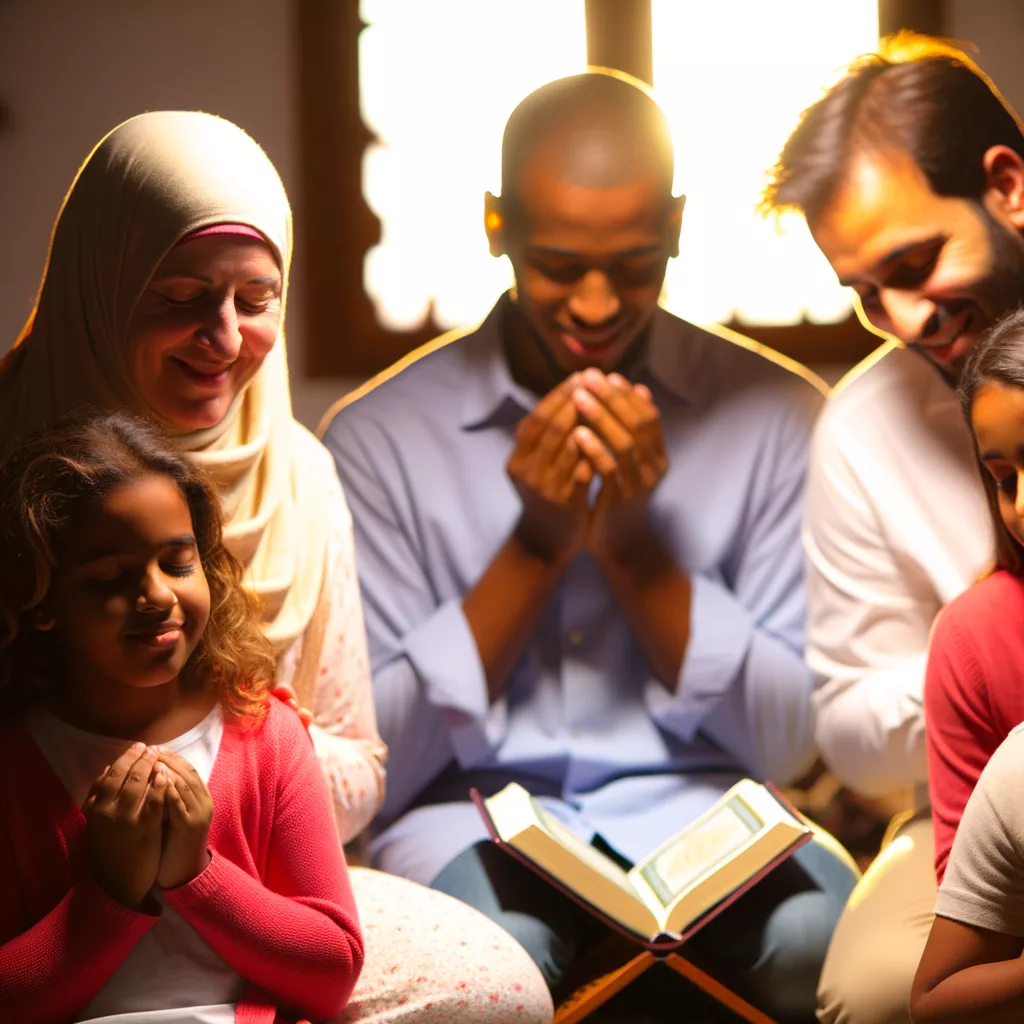
At the heart of every Muslim community, the Islamic festivals resonate like bursts of light, weaving deep bonds between faith, culture and history. To an outside observer, these celebrations – Ramadan, Eid al-Fitr, Eid al-Adha – come with images of sharing, prayer and family joy. Yet behind the festive dimension lies a dense fabric of spiritual values, refined rituals and meaningful gestures, rooted in the life of the Prophet and the wisdom of the Companions, passed down from generation to generation through the Arabic language and the living practice of Islam.
Learning Arabic opens the door to an intimate understanding of the words spoken in supplications, in the Eid chants, in the dhikr after prayer, or in that particular silence that envelops the night of Laylat al-Qadr. Immersing oneself in literary Arabic means hearing the breath of the verses of the Qur’an in Arabic, feeling the rhythm of tajwid, and tasting the finesse of the hadiths and the beauty of the sunna in their original language. This immersion is not limited to the Muslim’s spiritual world; it offers everyone, believers and the curious alike, privileged access to the richness of Islamic civilisation, the diversity of cultures, and the spirit of gratitude and peace that illuminates each festival.
What is Ramadan, if not a universal call to patience, sincerity and gratitude to Allah? What do Eid al-Fitr and Eid al-Adha represent, if not expressions of Islamic solidarity, communal kindness and the love of Allah celebrated with family and with the whole umma? Through immersion in Arabic and learning the Qur’an, the Islamic festivals take on a new dimension, far removed from clichés and simplifications, inviting interfaith dialogue, discovery and mutual respect.
In this article, we will set out together to discover the Islamic festivals, going beyond appearances to reconnect with their deep meaning: Islamic spirituality, the practice of prayer in Islam, the power of supplications, the transmission of authentic values, but also the modernity of Muslim youth, the educational dimension, and the beauty of openness to others. Whether one is a Muslim seeking a new breath or a non-Muslim driven by a sincere desire to understand, the Arabic language and Islamic culture then become the common thread of an experience that is at once human, spiritual and universally enriching.
Discovering the Islamic festivals: understanding Ramadan, Eid al-Fitr and Eid al-Adha through Muslim spirituality and the history of Islam
At the heart of the Muslim calendar, Islamic festivals such as Ramadan, Eid al-Fitr and Eid al-Adha reveal the depth of Islamic spirituality and the richness of the history of Islam. Ramadan, the sacred month of purification and self-discipline, is first of all an intimate call to Muslim faith, lived in the recollected silence of prayer in Islam, fasting in Islam and reading the Qur’an in Arabic. It is not only about abstaining from food: it is an invitation to reconnect with Allah, to sincerely experience patience in Islam and gratitude to Allah, and to seek khushu in prayer, that inner concentration which makes every salat vibrate to the rhythm of Islamic spirituality. Laylat al-Qadr, one of the nights of Ramadan, is honoured as the night on which the Qur’an was revealed; for many, learning Arabic or committing to immersion in Arabic then takes on its full meaning, because understanding the Qur’an in literary Arabic gives access to the original beauty of the sacred text, its semantic richness, the gentleness of tajwid and the finesse of Qur’anic tafsir.
Eid al-Fitr, the joyful festival that follows the end of Ramadan, symbolises the triumph of spiritual discipline. People gather as a Muslim family, with friends or within the Muslim community at the mosque, to share Islamic supplications, dhikr and zakat al-fitr, an act of Islamic solidarity and support for the most deprived. This festival deepens social bonds, brotherhood and inner peace, reaffirming the value of mutual aid within the community and of noble conduct (akhlaq).
Eid al-Adha, for its part, anchors the practice of Islam in prophetic memory and the story of the Prophet Ibrahim, highlighting the value of sincere submission to Allah. The festival that marks the end of the Hajj resonates with the memory of the Companions of the Prophet, exemplary patience and tawba, repentance in Islam. Every practice, from the ritual sacrifice to the distribution of the meat according to sharia and fiqh, invites compassion, solidarity and justice, the foundations of Islamic ethics. These festivals remind us that collective joy and spiritual elevation can only be fully understood through immersion in Islamic culture, listening to the adhan, attending the mosque and a deep understanding of the sacred texts, whether through memorising the Qur’an, studying hadith or the science of hadith.
For a non-Muslim, discovering these festivals offers far more than a window onto a religion: it is a unique opportunity to resonate with a thousand-year-old civilisation, with the living values of the Muslim community, its history, its arts, its families and its aspirations. Each tradition, each prayer, each collective celebration tells in its own way of the love of Allah, the quest for spiritual well-being, moderation in Islam – wasatiyya – and the commitment of a whole community to live a faith embodied in daily life.
Learning Arabic to grasp the deep meaning of the Islamic festivals: immersion in Arabic and understanding the Qur’an in Arabic
Learning Arabic opens a door that no other tool can lead you through: that of an intimate, lived understanding of all the Islamic festivals and their depth. For the non-Muslim, or the Muslim wishing to reconnect with their roots, immersion in Arabic represents far more than a linguistic undertaking. It is a spiritual gesture, an initiation, a new access to the sacred dimension of the practice of Islam. Through learning literary Arabic, every word of the Qur’an, every supplication recited during prayer or the salat, every invocation during the nights of Ramadan, Eid al-Fitr or Eid al-Adha, takes on an incomparable flavour, light and vitality.
With immersion in Arabic, the student is no longer a prisoner of translation. They begin to grasp the resonance of the Qur’anic words, the nuances of the sunna, the spiritual depth of the hadiths, and the breath that runs through Islamic supplications such as dhikr or du’a. Preparing for Eid or living its rituals is no longer limited to gestures: it means living fasting in Islam, patience in Islam, gratitude to Allah, and the love of Allah and of the Prophet at the root of the word and its meaning. Memorising the Qur’an, studying tajwid or the sciences of Qur’anic tafsir, the living account of the sira of the Prophet or of the Companions of the Prophet… all of this takes place at the very heart of the message, without a filter. Too often, the habit of reading the Qur’an in translation cuts us off from the breath and power of Arabic: yet every verse, every word chosen by Allah is a vehicle of faith, emotion and true Islamic spirituality.
Immersion also makes it possible to reconnect with the heritage of the scholars of Islam, to enter into the subtleties of fiqh, of aqida and of the words of the ahl al-bayt, to understand the rules of zakat or of the Hajj, the beauty of the supplications of jumu’a, or the call to prayer, the adhan that sets the rhythm of life at the mosque and in the Muslim community. Learning Arabic without translation gives the practice of Islam, prayer, charity and forgiveness an unsuspected depth – as if, suddenly, spirituality took on colour and relief, in its purest source. Thus, through the experience of the Islamic festivals, learning Arabic becomes a journey into Islamic culture, Islamic civilisation, the richness of the madhahib, the life of the umma, the wisdom of the Andalusian caliphate or the intimacy of Muslim families in search of meaning.
Understanding the Qur’an in Arabic, following the tafsir, listening to the Friday sermons in the language of the Prophet, discovering the art of Islamic calligraphy… All of this makes the Muslim festivals something other than a series of customs: they become times when the presence of Allah, the remembrance of the Prophet, the bond with the community and inner peace in Islam flow into the heart, the tongue and the mind. Ramadan regains all its splendour, the night prayer takes on a new intensity, and the joy of Eid al-Fitr or of the Hajj becomes that of a pilgrim in love with meaning, guided by a rediscovered light. Through immersion, the language is no longer a wall: it becomes the living path of faith, of interfaith dialogue, of solidarity, of self-giving and of the universal beauty of Islam.
Rituals, prayers and supplications during the celebrations: the place of dhikr, du’a and tajwid during the festivals
During the Islamic festivals, spirituality is expressed through a symphony of rituals, prayers and supplications that give everyone a deep sense of unity and connection with the divine. From the first light of Eid al-Fitr or Eid al-Adha, the Muslim community celebrates with joy, but above all with recollection. The collective morning prayer, called salat al-jumu’a or the festival prayer, resounds in the mosques, carried by the voice of the imam who devotedly leads the faithful, recalling the importance of khushu, that attentive and soothing presence of the heart before Allah.
At the heart of the celebrations, dhikr – the constant remembrance of Allah with the heart and the tongue – takes a central place; it means recalling the greatness, mercy and love of Allah at every moment, thereby strengthening gratitude and inner peace in each person. Islamic supplications, or du’a, are recited as a family, by Muslim children and adults, asking for peace, patience in Islam in the face of trials, guidance, or sincerity in Islam in every deed. These du’a, often passed down from generation to generation, reflect a unique spiritual and linguistic richness that can only be fully savoured by committing to learning literary Arabic. Indeed, understanding the deep meaning of each word spoken, feeling the essence of tawba (repentance) and expressing one’s gratitude to Allah in the very language of the Qur’an gives the practice of Islam an unequalled flavour.
One of the high points of these festivals is the reading of the Qur’an during family evening gatherings or assemblies at the mosque. The Qur’an in Arabic is then recited with tajwid, the science of recitation that magnifies the beauty of the revealed text. Learning Arabic through immersion fosters an intimate perception of rhythm, melody and meaning, allowing one to live each verse as a source of light. For many Muslims – in France as around the world – this reading, whether it serves memorising the Qur’an, deepening Qur’anic tafsir or meditating on the life of the Prophet and his Companions, offers an authentic connection with Islamic spirituality and the heritage of Islamic civilisation.
One also perceives the community and educational dimension of these rituals: parents, children and elders take part together, and the Arabic language becomes a living bond, a bearer of faith and Muslim identity. Beyond simple celebration, the festivals are thus an opportunity to strengthen Islamic education within the Muslim family and among Muslim youth, to tighten the bonds of Islamic solidarity through zakat or sadaqa, and to rekindle the love of Allah and of the Prophet.
In short, during the Islamic festivals, the practices of dhikr, du’a and Qur’anic recitation with tajwid reveal the full depth of Muslim faith and the wonders of the Arabic language, and remind everyone of the inestimable importance of learning Arabic to taste the spiritual, cultural and human dimension of Islam in all its splendour.
Islamic festivals and interfaith dialogue: Islamic culture, the Muslim community and passing on the values of peace and gratitude
Through the prism of the Islamic festivals, interfaith dialogue finds a precious opportunity to weave bonds of understanding and mutual respect between communities. Eid al-Fitr, which marks the end of Ramadan, and Eid al-Adha, linked to the Hajj and to the memory of the story of Ibrahim, are far more than moments of celebration. They embody the values of sharing, gratitude to Allah and solidarity that have driven the practice of Islam since its origins. For the Muslim community, collective participation in prayer in Islam, in the Eid salat or in zakat is not simply a rite, but an opportunity to strengthen social bonds, practise mutual aid within the community and renew sincerity in Islam.
Beyond the festive aspect, these celebrations remind us that gratitude – shukr – and inner peace lie at the heart of Islamic spirituality. They invite every Muslim to practise patience in Islam, to perpetuate the smile and kindness advocated by the sunna and the sira of the Prophet Muhammad, and to work for peace, both within the Muslim family and with neighbours and colleagues of all faiths. In many families, reading the Qur’an in Arabic, reciting dhikr and du’a, or recounting the stories of the Companions of the Prophet or of the ahl al-bayt make it possible to pass on an Islamic education naturally imbued with the values of peace and respect.
Learning Arabic in this context takes on a profound dimension: understanding the Qur’an in literary Arabic and absorbing tajwid and the sciences of hadith means accessing the very source of the Muslim spiritual tradition, without the barrier of translation. Immersion in Arabic, without going through writing or French equivalents, allows Muslims and curious non-Muslims alike to feel the emotion of a verse, the delicacy of a supplication or the wisdom of a hadith in its original language. This journey also helps to defuse misunderstandings and to present the Muslim faith in its luminous reality, far from stereotypes. The Islamic festivals then become a bridge between hearts, revealing a vibrant Islamic culture imbued with the love of Allah and openness to others. By sharing a meal, a sura or a gesture of generosity, the whole history of Islam, Islamic civilisation and its treasures of art and calligraphy are revealed in a new light – that of universal peace and gratitude.
Further reading: discover our online Arabic courses for adults, or also read “Learning Arabic and succeeding in your Hajj: preparation and spirituality” and “Avoiding food waste in Islam and passing on moderation“.
Conclusion
Throughout this article, the Islamic festivals have revealed themselves in all their depth, far beyond cultural appearances or mere dates in the Muslim calendar. Far from being simple celebrations, they are the living mirror of Muslim faith, of gratitude to Allah, and of the bonds that unite the Muslim community around the world. Ramadan, Eid al-Fitr and Eid al-Adha take on their true meaning only in the light of Islamic spirituality, the memory of prophethood, of the Companions of the Prophet and the ahl al-bayt, and the history of Islam as transmitted through the Qur’an in Arabic, the hadiths and the tradition of the sunna.
This is where the crucial importance of learning Arabic lies, not as a mere linguistic tool, but as a key to living, feeling and understanding the Qur’an in its original language. Immersion in Arabic unlocks access to the subtleties of the sacred text, the beauty of tajwid and the secrets of Qur’anic tafsir, and allows one to taste the sincerity of the Islamic supplications (du’a, dhikr) recited during the festivals. Learning Arabic without translation and experiencing the reading of the Qur’an in literary Arabic means reconnecting with the pure and direct source of Islamic spirituality, and better grasping the universal scope of the message, from patience in Islam to gratitude, by way of repentance (tawba) and the search for khushu in prayer.
The rituals and gestures that mark these celebrations – prayer in Islam, the Eid salat, supplications, almsgiving (zakat and sadaqa) or sharing meals – take on a new dimension when they are anchored in a deep understanding of Arabic, fiqh, the sciences of hadith and Islamic history. Every word recited, every tradition lived, becomes a bridge to spiritual well-being, inner peace and the heritage of Islamic civilisation.
Through interfaith dialogue, openness to diversity and the will to pass on these values, it becomes possible to dismantle prejudice and misunderstanding. The Islamic festivals, lived consciously, contribute to this effort for peace and to building a serene and open Muslim identity, for Muslim children as well as within couples and Muslim families, in mosques as in the plurality of modern societies.
Ultimately, immersing oneself in the Islamic festivals means opening up to an authentic experience of Muslim spiritual life, community sharing and the simple joy of gratitude to the Creator. Whether one is a believer, a seeker, simply curious or a fellow traveller, learning Arabic and discovering these celebrations hold out the promise of a renewed bond with tradition, with the quest for meaning, and with a life together illuminated by the light of the revealed text.



