
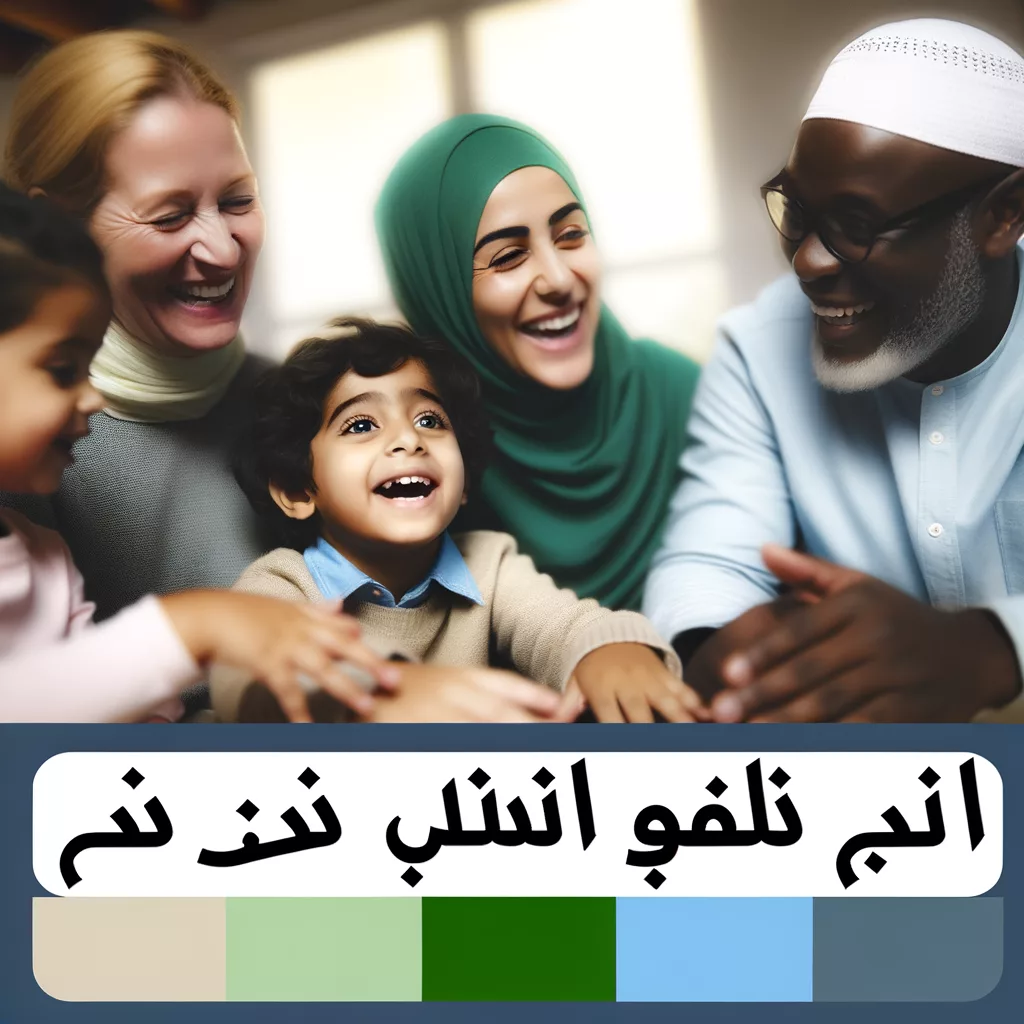
Passing on the light of the prophets to our children: awakening a living heritage through learning Arabic and playful immersion as a family
What makes the heart of a Muslim family beat? Very often, it is the moment when we sit down together, when children’s laughter intertwines with the stories of an ancestral history, that of the prophets of Islam. But how can we make our children love the story of the prophets in a world where distractions compete in intensity and innovation? How can we make the beauty of the Qur’an in Arabic resonate in their hearts, revitalise the Muslim faith from a very young age, while awakening their curiosity for Islamic spirituality and the richness of our civilisation?
Learning Arabic is much more than memorising vocabulary lists or dissecting grammar rules. It means opening up to immersion in Arabic, building natural bridges between generations, and inviting your children to grow up to the rhythm of the stories of the Prophet’s sira, of the companions, of the ahl al-bayt, bathed in the language of the Qur’an. It is not only about teaching a language, but about sowing in hearts a deep love for reading the Qur’an, understanding the hadiths, and an intimate bond with the history of Islam. Learning Arabic without raw translation, thanks to playful and immersive methods, offers young Muslims the possibility of making their faith their own in a natural, authentic and joyful way.
Islamic education within the family then takes on a new dimension: literary Arabic becomes the common thread of creative games, reinvented tales, scenes to act out and drawings to imagine, transforming each learning session into a spiritual and sensory adventure. Far from the classic academic approach, the immersive method opens a horizon where memorising the Qur’an, discovering the science of hadith or the tafsir of the Qur’an, fiqh, and even the practice of prayer in Islam become alive, rooted in emotion and overall understanding.
Because our children deserve to love what they learn, to feel the sweetness of dhikr, the savour of the love of Allah and of the Prophet, gratitude towards Allah in every prayer or repentance, we can shape for them a learning space where faith and language walk together. In this way, every prophetic story becomes a source of inspiration, every game a lesson in tawba and patience, every family moment a building block of Muslim identity and spiritual well-being.
This article invites you to rediscover the story of the prophets with your children through learning Arabic, to rely on playful and immersive methods, and to cultivate, at the heart of your family, the love of Islamic spirituality, of Arab-Muslim culture and of the prophetic life – all of this, naturally, through the original language of the Qur’an. For the story of the prophets is not only told; it is lived, memorised and passed on – in Arabic, from heart to heart.
Helping children love the story of the prophets through immersion in Arabic: first playful approaches as a family
Sharing the story of the prophets with your children can become a moment of joy, wonder and unity, especially when you choose immersion in Arabic as the first approach. Imagine a family gathered together, surrounded by colourful books illustrating the stories of the Prophet Nuh, of Musa or of Yusuf, and discovering together the sacred musicality of literary Arabic. Far from a simple accumulation of knowledge, this method aims to make children love the language of the Qur’an from a very young age, by developing their natural curiosity for the sounds, the images and the particular rhythm of the divine word. Approaching the learning of Arabic without translation, with chosen expressions, sung refrains or dialogues repeated during games, allows children to gradually absorb the founding words of their Muslim faith. By having fun with Islamic invocations, greeting formulas, or short passages of the Qur’an in Arabic, they effortlessly assimilate the keys that will open up for them the understanding of the Qur’an, of tafsir, and even, later on, the first notions of the science of hadith, of the Prophet’s sira, or of akhlaq. Every evening, a short reading of the Qur’an, followed by its simplified version in literary Arabic, becomes a family ritual, encouraging memorisation, perfecting tajwid, and sowing the first seeds of love for Allah and His Messenger. In this way, learning Arabic in context connects naturally to Islamic spirituality: the story of the prophets is linked to prayer in Islam, to dhikr, to gratitude towards Allah, to patience in Islam and to identifying with the companions of the Prophet or the ahl al-bayt. The child understands that the words of the Qur’an in Arabic carry within them an incomparable light, inviting reflection, sincerity, and the happiness of moving forward together, as a Muslim family, on the path of faith.
Creative methods for teaching children the Prophet’s sira and the Qur’an in Arabic without translation
Learning Arabic and passing on the Prophet’s sira to your children, while giving them access to the Qur’an in Arabic, is a priceless treasure for their identity and their spirituality. But how can you teach the noble prophetic biography and the Qur’anic verses in a lively and natural way, especially without systematically resorting to translation? Immersion in Arabic opens up fascinating perspectives here, even for the youngest. Children learn above all through play, listening and imitation: it is therefore possible to bring in literary Arabic from a very young age thanks to creative methods that favour sensory and emotional experience.
Telling the Prophet’s sira as a living story, punctuating the narrative with Arabic words and expressions, encourages a gentle familiarisation with the language. Using puppets, role-play or little sketches re-enacting episodes from the life of the Prophet, the companions and the ahl al-bayt makes it possible to establish the sounds and rhythms of Arabic without apparent effort. When reading the Qur’an, favouring first an attentive and regular listening – for example through the supple and melodious recitation of tajwid – invites the child to feel the sonic beauty and the spiritual dimension of the text even before grasping every meaning. Little by little, the verses heard often are naturally integrated into memory and daily practice, particularly during prayer in Islam (salat), dhikr or Islamic invocations (du’a).
To reinforce this learning of Arabic without translation, multisensory activities are invaluable: writing key words of the Qur’an in calligraphy, miming scenes of solidarity or patience shown by the Prophet, or creating illustrated cards associating a gesture, an Arabic word and a lived situation. Songs and anashid in literary Arabic, which tell of the love of Allah, the love of the Prophet or the blessings of Ramadan, hajj or eid al-fitr, stimulate auditory memory while keeping alive the joy of learning. As a family, regularly sharing short hadiths or edifying stories drawn from Islamic civilisation or the science of hadith allows the child to associate learning Arabic with the sweetness of family life and the awakening of the Muslim faith.
Immersive methods thus cultivate a deep sensitivity to the language of the Qur’an, opening the door to a progressive understanding of the tafsir of the Qur’an, to memorising the Qur’an and even, later, to the study of fiqh, aqida or the madhahib. Far from reducing the learning of Arabic to a school or technical exercise, it becomes a living path towards Islamic spirituality, the discovery of the sunna, Friday prayer at the mosque, intercultural dialogue or the building of a serene Muslim identity within the community, in France as elsewhere. By accompanying your children on this adventure, you are sowing not only linguistic roots, but also the seeds of faith, of gratitude towards Allah and of a deep love for the message of the Prophet passed on in its original language.
Learning literary Arabic and awakening to Islamic spirituality: telling and playing with the stories of the prophets
Telling your children the stories of the prophets means opening a luminous door onto the literary Arabic language while awakening Islamic spirituality within them. Learning Arabic, when it is done through immersion and with the heart, already within the gentle cocoon of the family, is no longer perceived as a dry subject, but as a living bridge to the Qur’an in Arabic, the sunna, the science of hadith or the Prophet’s sira. By sharing even short sentences in literary Arabic taken from the stories of the prophets, you naturally expose the child’s ear and heart to the sonic beauty of the language of the Qur’an. Imagine a family moment when, as evening falls, a parent’s voice tells in Arabic the story of Nuh and the flood, or that of Ibrahim breaking the idols, with just the translation of the general meaning, then invites the child to act out the scene, to mime it or to repeat a few essential words in Arabic. In this way, the child dives into immersion in Arabic, without systematic translations, absorbing the expressions, the rhythms and the spirit of the language. This playful method, which favours listening, play and repetition, not only develops the understanding of literary Arabic but also roots a direct emotional bond with authentic Islamic spirituality, respect for the ahl al-bayt, admiration for the companions of the Prophet, and the natural memorisation of key words of the Qur’an, of prayer in Islam or of everyday Islamic invocations. Playing with the sacred stories means awakening the Muslim faith through meaning, gentleness, gratitude towards Allah and love of the Prophet, through the stories and the language that carry each value. Little by little, the child assimilates a rich vocabulary — from tawba to patience in Islam, from salat to zakat, from dhikr to Ramadan — and is effortlessly introduced to reading the Qur’an, memorising the Qur’an, practising tajwid or listening to the Friday prayer in the original language. Learning Arabic then becomes a sacred game, full of meaning and light, which nourishes the Muslim spiritual life of the home and prepares young people to understand Islamic culture and the history of Islam and to affirm their Muslim identity with pride and gentleness.
Strengthening the Muslim faith from a very young age: educational games, tajwid and memorising the Qur’an around the prophetic stories
Passing on the Muslim faith to children is not only a matter of passing on principles or reciting formulas. It means awakening in their hearts, from a very young age, the beauty of Islamic spirituality through living experience: listening to the stories of the prophets, reading the Qur’an, reciting invocations (du’a) and intuitively understanding rites such as prayer in Islam. Educational games inspired by the sira of the Prophet and of the companions offer a natural gateway into this sacred world: role-plays in which one embodies Musa crossing the sea, Ibrahim facing the fire or Maryam placing her trust in Allah. These playful activities, adapted to Muslim families, bring the history of Islam to life while strengthening patience, gratitude and sincerity in the child.
Early learning of literary Arabic through immersion in Arabic, without translation, makes every Qur’anic word a sensory and relational experience: the sound of the verses, the musicality of tajwid, repetition in chorus during dhikr – all of this weaves an indelible bond between the child’s heart and the sacred words of the Qur’an in Arabic. Memorising the Qur’an then becomes a game of recognition, a shared challenge, between rituals, songs, collective recitations and the staging of prophetic teachings. Children naturally take in the science of hadith, a sense of respect for the ahl al-bayt, and the moral values of the sunna, often without being aware of the depth of what they are experiencing.
By introducing children from a very young age to reading the Qur’an, tajwid and memorisation around the prophetic stories, families lay the foundations of a deep and peaceful Muslim identity. By playing and reciting, singing the surahs and living the stories together, the child learns to understand the Qur’an, to taste the savour of prayer, to feel khushu in prayer, and to love Islam without constraint. They then grow up immersed in a climate of faith, spiritual well-being and community bonds, able to recognise the wisdom of the sira, the strength of dhikr, the beauty of Ramadan, the nobility of hajj, and the richness of the Islamic culture that surrounds them.
By cultivating the habit of sharing, telling and exploring the story of the prophets with our children, we open the doors to an infinite world in which the pleasure of learning Arabic, immersion in Arabic at the heart of the home, and the development of a solid and radiant Muslim faith come together. Passing on the Prophet’s sira and the Qur’anic stories without translation means offering our children the unique opportunity to taste the language of the Qur’an in all its beauty, to feel Islamic spirituality not from the outside, but intimately, with the heart and the senses.
Each of these playful methods, deployed over the course of learning literary Arabic, makes it possible at once to better understand the Qur’an, the hadiths, the sunna, the deep meaning of prayer in Islam and the priceless richness of the prophetic heritage. Introduced from a very young age to memorising the Qur’an, to tajwid and to the tafsir of the Qur’an through the fascinating lives of the messengers, they grow up with the love of Allah, the love of the Prophet, patience in Islam, gratitude, sincerity, the practice of dhikr and du’a, and the soothing awareness of the divine presence.
Immersion in Arabic, far from being a simple linguistic exercise, thus becomes a living bridge towards understanding the history of Islam, journeying through Islamic civilisation, and discovering the wisdom of the companions of the Prophet, of the ahl al-bayt, as well as of the scholars of Islam and the great schools such as Al-Azhar, Zaytouna or Qayrawan. Through play, storytelling, emotion and practice, each member of the family experiences concretely the sacred bond that unites the Arabic language with Muslim spiritual life, within the community, at the mosque, during Ramadan, hajj, the jumu’ah prayer or the festivals of the Muslim calendar.
By continuing on this path of living and immersive Islamic education, parents and children together contribute to the preservation of Islamic culture, to the renewal of Islamic reading and to the beauty of Islamic art, while sowing in the hearts of Muslim youth a deep sense of identity, inner peace and spiritual well-being. Whether through bedtime stories, educational games around fiqh, aqida or sharia, or moments of happiness shared while memorising the Qur’an, every moment devoted to learning Arabic and to the story of the prophets is a gift, a light that accompanies our children towards maturity, responsibility and serenity.
Accompanying our children on this path means bringing to life an education of children in Islam that combines tradition and creativity, heritage and modernity, knowledge and love. This is how an authentic spirituality, a living Islamic culture and a peaceful relationship with Allah, ta’ala, take root in Muslim hearts and homes, from the very first steps of youth.
Further reading: discover the “Safiya, tell me a story” programme.



