
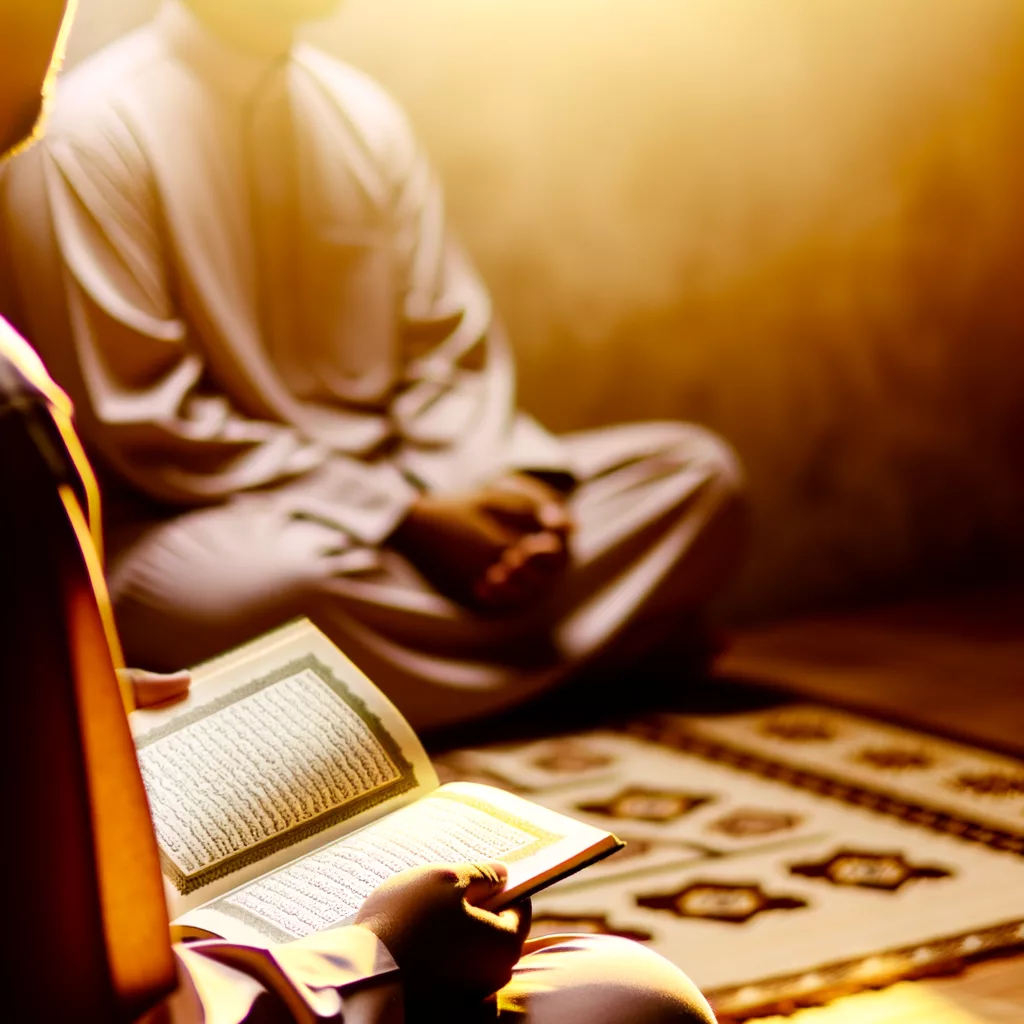
Learning Arabic means entering the vibrant heart of Islamic civilisation, where every word, every verse, every invocation resonates with deep meaning and light. When we speak of the impact of the Prophet Muhammad (peace and blessings be upon him) on human history, we often think of his guidance, his exemplary character, the spiritual and social revolution he sowed. But we sometimes forget the living miracle of his language, literary Arabic, that treasure which for fourteen centuries has irrigated the Muslim faith, Islamic culture, prayer and the daily lives of millions of believers. Understanding the Qur’an in Arabic means tasting the original source of the divine discourse; it means vibrating to the same cadences as the companions of the Prophet, feeling their wonder, nourishing your own spirituality through the divine words.
Why is reading the Qur’an in its original language so transformative? What secret does immersion in Arabic hold for those who aspire to live their faith to the full, to pass on Islamic values, to explore the beauty of tajwid, tafsir, the hadiths and the sunna? The intimate bond between the Arabic language, prophetic teaching and the life of the Muslim community runs through the whole history of Islamic civilisation, from the thousand-year-old universities of Al-Azhar, Zaytouna and Qayrawan to the living mosques of France, by way of the silent prayer of the solitary Muslim.
Learning Arabic without translation, immersive listening to the Qur’an in Arabic, faithful memorisation of the surahs, recitation full of khushu in daily or Friday prayer: all of this builds a deep identity, inner peace, a reconnection with Allah, with the Muslim family, with the community and with a universal heritage of values, knowledge and beauty. It is precisely this transmission, this living dynamic set in motion by the Prophet (PBUH), that we will explore in this article: how the prophetic language shapes Islamic spirituality and civilisation; how immersive learning of literary Arabic opens the doors of hadith, the sunna and the sira; and in what way the imprint of the Prophet runs through culture, the mosque, prayer, collective life and the heart of every Muslim.
Along this path, we will revisit the founding role of Arabic in spiritual and social elevation, community unity, Islamic education, and the perpetuation of a priceless heritage. For learning Arabic is not only learning a language: it means embracing a vision of the world, weaving an intimate bond with the Prophet and his companions, and inheriting, in turn, the promise of meaning that continues to shine over Islamic civilisation and beyond.
Understanding the Qur’an in Arabic: how the language of the Prophet shapes Islamic spirituality and civilisation
When you commit to learning Arabic, you gain access to the original language that shaped Islamic spirituality and gave birth to Islamic civilisation. The Qur’an in Arabic is much more than a text: it is the living breath of the Revelation, passed on by the Prophet Muhammad (PBUH) in its original melody, carrying meaning, beauty, guidance and emotion. Understanding the Qur’an in its original language, without the barrier of translation, allows you to feel the depth of the divine message, to savour every nuance of tajwid, every subtlety of the Qur’anic vocabulary and every echo of Arabic literary style. It is in the richness of literary Arabic that the mercy, justice and wisdom which structure the Muslim faith and the practice of Islam find their unique expression. Immersion in Arabic then reveals the spirit of the tafsir of the Qur’an and the science of hadith, which only take on their full dimension when one perceives the precision of the terms, the rhythm of the sentences and the cultural heritage of the language of the Prophet.
Reading the Qur’an in Arabic plunges the believer into the same world of sound as that of the companions of the Prophet, the scholars of Islam, and the generations who built mosques, universities, works of art and institutions. Through learning Arabic without translation, one cultivates a new intimacy with prayer in Islam, khushu in salat, invocations (du’a, dhikr), and the rituals of Ramadan, hajj or the adhan. Festivals such as eid al-fitr or eid al-adha, patience in Islam during the fast, or gratitude towards Allah then resonate with greater depth, because every word spoken or heard reawakens the deep memory of Islamic civilisation. The language of the Prophet connects Muslim spiritual life, the Islamic education of children, community solidarity and the inner peace sought in moments of stress or tawba, and nourishes Islamic culture, from the Andalusian caliphate to the great traditions of Sufism and fiqh.
Opening up to literary Arabic through gradual immersion means entering the living fabric of the sunna, of the sira of the Prophet, of the words of the ahl al-bayt and of the wisdom passed down from generation to generation. It also means, subtly, refining one’s aqida, understanding the subtleties of the madhhab, strengthening Muslim identity in France or elsewhere, and finding resources to face secularism, racism or contemporary challenges. More than a language course, understanding the Qur’an in Arabic is an act of personal and community transformation: a bridge between the believer’s heart, the life of a Muslim couple or family, engagement in society and the eternal fragrance of the Qur’anic revelation.
Learning literary Arabic, the key to the science of hadith, the sunna and the sira of the Prophet
When we speak of the impact of the Prophet (PBUH) on Islamic civilisation, it is impossible to overlook the central place of learning literary Arabic in passing on and understanding his legacy. For anyone who aspires to deepen their Muslim faith, to live Islamic spirituality fully and to absorb prophetic wisdom, learning Arabic becomes much more than a simple language skill: it is a true key giving access to the treasures of the sunna, the science of hadith and the sira of the Prophet.
The hadiths, the body of the Prophet’s words, deeds and ways of life, have shaped the practice of Islam down to the smallest detail — from prayer in Islam (salat) and Islamic invocations (du’a, dhikr) to great moments such as Ramadan, the Friday prayer (jumu’ah), hajj or zakat. But the full depth of this tradition is only revealed through the original language in which it came to life. Immersion in Arabic makes it possible to come into direct contact with these texts, without the filter and imprecision of translation. The science of hadith, demanding and subtle, relies on the nuance of words, on contexts and on the choice of terms, which only mastery of literary Arabic and natural immersion make fully intelligible.
This learning of Arabic, particularly in its immersive dimension, nourishes reading the Qur’an in Arabic, memorising the Qur’an (hifdh), the beauty of tajwid and the spiritual exploration of the tafsir of the Qur’an, all of them necessary steps to taste the original savour of the revelation. Understanding the Qur’an, the prophetic words and the sira of the Prophet without an intermediary means rediscovering the breath that animated the companions of the Prophet, the ahl al-bayt, the scholars of Islam and all the generations who built Islamic civilisation. It nourishes sincerity in Islam, gratitude towards Allah, patience and humility in faith.
In the history of Islam, mastery of literary Arabic was the living link between Islamic universities such as Al-Azhar, Zaytouna or Qayrawan and the generations of students who came from across the Muslim community in search of an authentic Islamic education. Whether in listening to the adhan at the mosque, in passing on Islamic culture within the Muslim family, or in preserving arts such as Islamic calligraphy, learning Arabic without translation means choosing to immerse yourself in the very essence of the prophetic tradition. This is how a living heritage is perpetuated, imbued with inner peace, spiritual well-being and light for the generations to come.
From immersion in Arabic to transmission: the impact of the Prophet (PBUH) on Islamic culture, the mosque and the Muslim community
From the very first moments of the Revelation, the Prophet (PBUH) deeply embedded literary Arabic in Islamic culture, not as a barrier, but as a living bridge between the divine word and the Muslim community. The immersion in Arabic initiated by the Prophet, who recited the Qur’an in Arabic during gatherings at the mosque, made the language not only an instrument for learning meaning but also a means of active participation in Muslim spiritual life. Learning Arabic was — and still is — entering into the intimacy of the message, tasting the beauty of reading the Qur’an with tajwid, making the science of hadith your own, understanding the sunna and feeling the universal reach of dhikr, Islamic invocations and du’a in their original language. Thanks to learning Arabic without translation, the deep meaning and nuances of the Qur’an in Arabic, the subtleties of the tafsir of the Qur’an, the sira of the Prophet, and the exchanges between the companions of the Prophet and the ahl al-bayt take root in the heart and the intellect, helping to structure a community united around the essential values of the Muslim faith: sincerity, patience, gratitude towards Allah, love of the Prophet and Islamic solidarity.
The mosque — the epicentre of collective and spiritual life — itself becomes the crucible of this linguistic immersion. It is there that the imam leads prayer in Islam (salat), that khushu in prayer is passed on from generation to generation, and that the Friday prayer (jumu’ah) strengthens the sense of belonging to the umma. Every prayer resounds in Arabic, every adhan recalls the Prophet’s call to God-consciousness, and every act of memorising the Qur’an becomes an inner source of peace and discipline. The transmission of this linguistic tradition extends well beyond ritual: it shapes Islamic conduct (akhlaq), permeates the Muslim family, accompanies the education of children in Islam, inspires Muslim youth and strengthens the Muslim couple around values of propriety and mercy. Immersive learning of Arabic thus fosters a continuous renewal of the practice of Islam, from the foundations of fiqh to the subtleties of aqida.
The impact of the Prophet (PBUH) can also be seen in the strength of the Muslim community throughout the history of Islam: from the first Muslims in Medina to the Andalusian caliphates, the deliberate choice to teach, judge and preach in Arabic united peoples around a shared spiritual and educational identity. Islamic universities such as Al-Azhar, Zaytouna or Qayrawan perpetuate this heritage, offering a model of Islamic education in which learning Arabic is intertwined with the drive for knowledge and spiritual reflection. This dynamic irrigates the religious sciences (tafsir, sharia, madhahib), literature, Islamic calligraphy and Islamic art, giving birth to an Islamic civilisation radiant with diversity and harmony, faithful to this prophetic linguistic heritage.
In short, it is through deep immersion in the language and culture of the Qur’an that the Muslim community has forged, century after century, a strong identity, open to inner peace and kindness, in constant dialogue with the world, firmly anchored in Islamic spirituality, ethics, solidarity and the timeless light of the prophetic message.
Prayer, dhikr and the practice of Islam: the influence of the Prophet on the spiritual life and daily practice of Muslims
From the very first moments of the revelation, the Prophet Muhammad (PBUH) rooted prayer, dhikr and the practice of Islam at the heart of the individual and collective life of Muslims. By passing on the salat, that fundamental pillar, he offered a structuring guide not only for worship but for the coherence of existence, punctuating each day with sacred pauses. Islamic spirituality, as embodied by the Prophet and his companions, has its source in a constant connection with Allah, brought to life by invocations, du’a, patience and gratitude. Learning Arabic means opening yourself to the authentic savour of every word spoken in prayer and to the depth of dhikr, in which every letter recited carries a vibrant meaning. Immersion in Arabic, far from being a mere language exercise, invites you to feel the living dimension of the Qur’an in Arabic when reading or memorising it, while refining the awareness of the heart during recitation with tajwid and khushu in prayer.
The daily practice inherited from the sunna of the Prophet, from the Friday prayer (jumu’ah) to the morning and evening invocations, from advice on patience (sabr) to sincerity in Islam (ikhlas), shapes a spiritual routine that cultivates inner peace. Learning literary Arabic, without going through translation, makes possible a subtler understanding of the hadiths, the tafsir of the Qur’an and the sira of the Prophet, rooting the Muslim faith in a lived and shared experience. The rituals of Ramadan, the nights of Laylat al-Qadr, hajj or the adhan at the mosque: every element of Muslim spiritual life lights the community’s path, forming a daily weave between the soul, the family – Muslim children, couples, parents – and the umma, the great community. Through this prophetic legacy, prayer, dhikr and the practice of Islam remain a beacon animated by the love of Allah, the quest for spiritual well-being, the sincerity of hearts and the light of the Revelation, of which the Arabic language remains the original breath, alive within Islamic civilisation for centuries.
Further reading: discover our online Arabic courses for adults, or also read “Organising an Umrah with friends: a practical and spiritual guide” and “Learning Arabic and overcoming procrastination in your practice“.
Conclusion
The imprint of the Prophet Muhammad (peace and blessings be upon him) on Islamic civilisation goes beyond history, culture or the mere transmission of knowledge. It is embodied in hearts, irrigates practices and has shaped the worldview of Muslims for more than fourteen centuries. Understanding this impact requires going back to the source: literary Arabic, the language of the Qur’an and the foundation of the sunna, the sira and the science of hadith. Learning Arabic is not just a matter of acquiring words or syntax: it means undertaking a return to the living origins of the Muslim faith, an immersion in Arabic that opens the doors of Islamic spirituality and of a universal heritage.
Entering the depth of the Qur’an in Arabic means hearing the first vibration of the divine Word, seeing its meanings unfold in reading, tajwid and memorising the Qur’an, tasting the subtle flavour of tafsir and du’a, grasping the subtle nuances of invocation, of dhikr and of dhul hijjah, and feeling compassion and restraint in patience and sincerity in Islam. Through learning Arabic, Muslims reconnect with the example of the Prophet, his companions and the ahl al-bayt – they discover, behind the veil of translations, the living breath of the Revelation, the beauty of a vocabulary shaped to express gratitude towards Allah, love of the Prophet, repentance (tawba) or inner peace.
The science of hadith, the richness of the tradition (sharia, fiqh, madhahib), the debates of scholars – ancient or contemporary –, the transmission of faith and values through the Muslim family, the Islamic education of children, the cohesion of the Muslim community: everything finds its coherence and its light in learning Arabic without translation. The Qur’an in Arabic, the captivating narrative of the history of Islam, from the Andalusian caliphates to the expansion of Islamic universities such as Al-Azhar, Zaytouna or Qayrawan, nourishes Islamic culture and inspires calligraphy, art, the Muslim calendar, and the rituals of the Friday prayer (jumu’ah), Ramadan, from Eid al-Fitr to Hajj and Umrah. Even the economy, through Islamic finance and halal trade, draws on the teachings of the Prophet to unite ethics and practice.
The daily life of the Muslim, from the ritual of salat to the smallest act of kindness or sadaqa, is part of a living continuity. The adhan, the mosque, the imam, the spiritual routine, every moment of spiritual well-being or of managing stress takes root in the prophetic model and the heritage of immersion in Arabic. Even contemporary challenges – interfaith dialogue, Muslim identity, Islamic solidarity, the fight against racism or Islamophobia – can be approached with greater depth and serenity in the light of this heritage.
Rediscovering the transformative power of the message of the Prophet (PBUH) means choosing to learn Arabic, to make literary Arabic your own while opening up to the infinite world of tafsir, fiqh, conduct (akhlaq), inner peace and Islamic culture. It means, ultimately, placing the person back within the arc opened by the Revelation: between tradition and modernity, transmission and innovation, religious practice and the search for meaning. Through learning Arabic, today’s Muslim stands in the luminous continuity of the history of Islam, strengthened by the prophetic heritage, at peace in their faith, rich in meaning and elevation, humbly connected to a living Islamic civilisation.



