
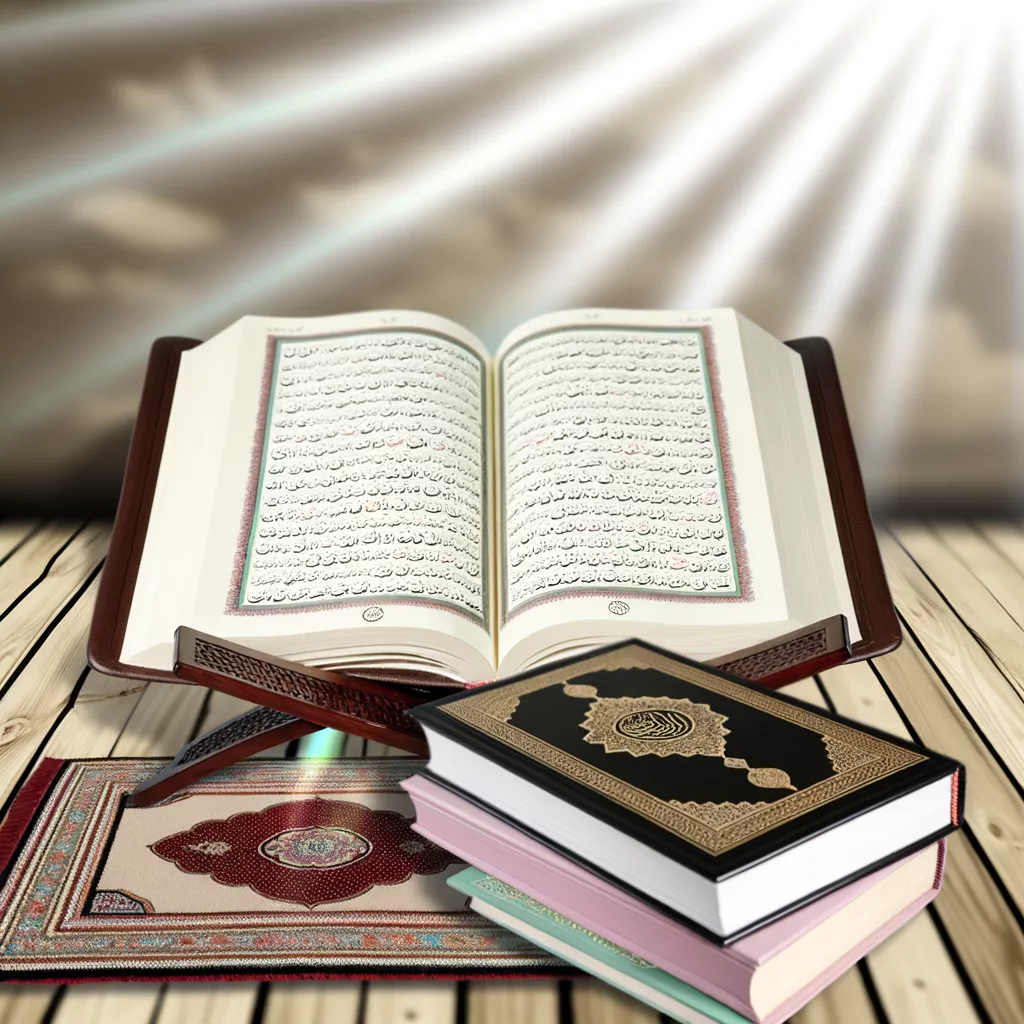
Creating an Islamic library at home: far more than a simple piece of furnishing, it means opening the door to a living world in which every book becomes a light guiding the heart, the intellect and the soul throughout life. Placing on your shelves the Qur’an in Arabic, authentic collections of hadith, or books on spirituality and Islamic history means weaving into your home an intimate, continuous bond with knowledge and faith. Can we imagine a Muslim home without this silent presence that watches over, inspires and shapes the identity of each person? Yet, faced with the vast number of publications and the profusion of translations, one question resounds: how do you select the essential works? What should you choose when your wish is to understand the Qur’an in Arabic, to deepen your knowledge of the Sunna, or to pass on the keys of Islamic wisdom to your children?
In this quest, learning Arabic and favouring immersion in Arabic are not merely intellectual ambitions: they are the true bridges to a deep, direct and living understanding of the sources. Grasping the meaning of the Qur’an without an intermediary, savouring the beauty of literary Arabic, feeling the eloquence of the invocations or the depth of the hadith commentaries: this is offering yourself an irreplaceable spiritual experience. Conceived in this way, the Islamic library is not reduced to a collection of books; it becomes the special space for dialogue with the prophetic heritage, prayer in Islam, and meditation on patience, sincerity and gratitude towards Allah.
Building your own Islamic library therefore means choosing to dwell in knowledge as one dwells in spirituality. Between books on tajwid, the sciences of hadith, accounts of the companions and advice for Muslim family life, each reading offers its share of comfort, reflection and momentum. It is also an invitation to pass on, to shape the Islamic education of your children, to enrich community life, and to cultivate inner peace and a living faith, to the rhythm of the prayers, Ramadan, the hajj, or festivals such as Eid.
Whether you are beginning the journey or wish to go deeper, building an Islamic library becomes the reflection of our commitment, our dreams and that intimate aspiration: never to stop learning, understanding and above all living the beauty of Islam to the full.
The Pillars of an Islamic Library: Understanding the Qur’an, the Sunna and the History of Islam
Building an Islamic library at home means, above all, laying solid foundations for your faith and your understanding of the divine message. At the heart of this collection are three essential axes that nourish Islamic spirituality and enrich the practice of Islam: the Qur’an, the Sunna and the history of Islam. Learning Arabic, or working towards immersion in Arabic, then becomes a gateway to reading and listening to the Qur’an in its original beauty, without translation. When you open a mushaf, the resonance of the Qur’an in literary Arabic invites you to deepen your understanding of the revealed message: memorising the Qur’an, studying tajwid for correct recitation, and the tafsir of the Qur’an to grasp the deep meaning and the teachings that guide our daily lives.
Beyond the sacred Book, knowledge of the Sunna lights the path of every believer. Studying the authentic hadiths and discovering the science of hadith allows you to approach the personality of the Prophet Muhammad, and to admire his patience, his sincerity, his love of Allah and his compassion towards his community. Getting to know the sira of the Prophet or exploring the inspiring lives of the companions of the Prophet and of the ahl al-bayt means drawing from an inexhaustible source of examples of Muslim faith, of gratitude towards Allah and of practices such as prayer in Islam, salat or fasting in Islam – so many pillars that set the rhythm of Muslim spiritual life, from Ramadan to Islamic festivals such as eid al-fitr and eid al-adha.
The history of Islam, for its part, reveals the living fabric of an Islamic civilisation that nourished the arts, science, Islamic calligraphy and spirituality, from the Andalusian caliphate to the modern era. A balanced Islamic library welcomes works on Sufism, Islamic culture, sharia and fiqh, as well as reflections on wasatiyya, moderation in Islam, and contemporary issues such as ecology in Islam, Islamic finance or interfaith dialogue. In return, this immersion in the sources and the living heritage of Islam enlightens the believer, guides them in their Islamic conduct, their akhlaq, and allows them to make their way towards inner peace, a spiritual routine and spiritual well-being. Through these pillars, the Islamic library becomes a faithful companion that accompanies the learning of Arabic, nourishes the love of Allah and of the Prophet, and strengthens Muslim identity within the family, the community and the world.
Learning Arabic and immersion in Arabic: Keys to reading the Qur’an and exploring the Islamic sciences
Learning Arabic is often seen as a distant dream, reserved for an intellectual elite, or as an insurmountable mountain for anyone who did not grow up in an Arabic-speaking environment. Yet immersing yourself in the language of the Qur’an, following an approach of immersion in Arabic, turns reading the Qur’an and studying the Islamic sciences into a living, accessible and deeply spiritual experience. Learning Arabic, and literary Arabic even more so, is not simply an academic act ; it opens a direct door to an authentic understanding of the Qur’an, to memorising the Qur’an by heart, to meditating on every verse and to an intimate discovery of the hadiths of the Prophet Muhammad.
When you start learning Arabic without going through translation, the meaning unfolds in all its richness, the patterns of tajwid sing naturally, and the tafsir of the Qur’an comes alive with a new depth. Immersive learning invites you to feel the spirit of the text and to enter the sacred dimension of salat, to experience khushu in prayer, and to taste the intensity of invocation – dhikr, du’a, tawba – with words chosen by Allah Himself. This closeness to the original language strengthens the Muslim faith, illuminates the practice of Islam, and connects the believer to a heritage of Islamic spirituality matured by generations of scholars, companions of the Prophet and ahl al-bayt, in a lineage of knowledge and piety.
In an Islamic library at home, placing books on literary Arabic – grammar, vocabulary, comprehension exercises without translation – cultivates a solid foundation for exploring the classic works of tafsir, the science of hadith, the sunna, the sira of the Prophet, the history of Islam and the lives of the great figures of Islam. There you discover how patience in Islam, sincerity, gratitude towards Allah, repentance or love for the Prophet are expressed through the beauty of the language. Great occasions such as Ramadan, laylat al-qadr, Eid al-Fitr or Eid al-Adha then take on a new flavour, imbued with the deep meaning of the rites and the du’as.
This linguistic immersion is not limited to reading alone : it continues in the Friday prayer (jumu’a), listening to the adhan, attending the mosque, and discussions on questions of faith, the Muslim community and Islamic education, for Muslim children as well as for young adults or families. Understanding the Qur’an in Arabic and exploring the Islamic sciences from the source encourages a flourishing Muslim spiritual life: you learn to question fiqh and sharia without an intermediary, to grasp the wisdom of the scholars, and to engage with the history of Islamic civilisation from the Andalusian caliphate to the universities of Qayrawan, Zaytuna or Al-Azhar.
Creating an Islamic library also means offering your loved ones a space of beauty and inner peace, where Islamic calligraphy, art books, the Muslim calendar and Arabic textbooks sit harmoniously side by side. Immersion in Arabic then weaves a living thread between Islamic culture, the spiritual routine and the well-being of the home, between the memory of traditions and openness to modernity, in the service of a confident Muslim identity nourished by the love of Allah, the companionship of the Prophet and the timeless light of the Qur’an in Arabic.
From Tajwid to Spirituality: Essential books on prayer, dhikr and Muslim spiritual well-being
To build a flourishing spiritual life, the ideal Islamic library gives a central place to books that connect daily practice with the depth of the heart. Learning tajwid – the art of reciting the Qur’an accurately, respecting every letter and every rule of pronunciation – thus becomes a gateway to a living, meditative reading of the Qur’an. Tajwid manuals, accessible even to beginners, are indispensable for anyone who aspires to understand the Qur’an in Arabic, to savour the beauty of literary Arabic and to progress towards immersion in Arabic without translation. Each rule mastered brings the practitioner closer to the prophetic recitation, turning the memorisation of the Qur’an and the practice of salat into moments filled with presence and khushu, that deep contemplation so sought after in prayer in Islam.
But Islamic spirituality does not stop at recitation: books on dhikr – the remembrance of Allah, invocations (du’a), gratitude and patience in Islam – are essential for cultivating inner peace and facing the stress of modern daily life. These readings, often enriched with sayings of the Prophet, the science of hadith, wisdom drawn from the sunna and the teachings of the companions of the Prophet and the ahl al-bayt, offer a true spiritual routine, suited to Muslim families as well as to today’s Muslim youth. They recall how the regular practice of dhikr, sincerity in Islam, actively seeking forgiveness (tawba) and developing gratitude towards Allah contribute to spiritual well-being, to the health of the soul, and to constancy in fasting in Islam or in performing the Friday prayer (jumu’a).
Including in your library treatises on prayer and khushu, and collections of invocations for special moments such as Ramadan, the hajj, the umrah or times of solitude, means offering every member of the Muslim family, and those on their way to the Muslim faith, the possibility of anchoring their daily lives in the love of Allah and the love of the Prophet. It also means adopting a holistic vision of spirituality, in which the Qur’an in Arabic, the sunna, the words of contemporary scholars and the richness of the Islamic heritage irrigate the Islamic education and Islamic culture of the home. Far from being an accumulation of titles, an Islamic library built around spiritual well-being thus becomes a breath of life for the practice of Islam, a landmark in family life, and a source of calm in the face of the questions of Muslim youth or the challenges Muslims in France encounter in contemporary culture.
The Muslim family, education and transmission: An introduction to Islamic culture and community life
At the heart of building a family Islamic library lies a precious dimension: that of education and transmission. An introduction to Islamic culture and community life is not limited to reading alone; it is embodied above all in the daily involvement of a Muslim family committed to the spiritual, intellectual and emotional awakening of each of its members. Selecting books that deal with the Muslim faith, Islamic spirituality, the practice of Islam or salat makes it possible to weave deep bonds between generations, while encouraging the rooting of an authentic Muslim identity, especially in contexts such as Islam in France, where cultural preservation takes on a particular dimension.
Learning Arabic, or practising immersion in Arabic from a very young age, is of capital importance in this approach. Having books dedicated to learning Arabic without translation, together with children’s stories in literary Arabic, makes it easier to pass on the spiritual meaning when reading the Qur’an or memorising the Qur’an as a family. Work on tajwid – the correct recitation of the verses – combined with fine books on the tafsir of the Qur’an, the science of hadith, the sunna and the sira of the Prophet, allows each member to feel the reach of the divine words and of the prophetic example in their original language.
Including stories about the companions of the Prophet, the ahl al-bayt, patience in Islam, gratitude towards Allah or love of the Prophet enlightens the minds of the youngest and cultivates a strong emotional bond with the tradition. Books on the rites, the Friday prayer (jumu’a), Ramadan, the hajj or the adhan help to anchor the high points of the year in the home by recalling their community dimension. Approaching through reading the wisdom of the scholars of Islam, the notion of sharia and fiqh, as well as contemporary questions such as secularism and Islam, Islamic solidarity, ecology in Islam or interfaith dialogue, gives families landmarks on how to combine Muslim identity, rootedness in Islamic culture and a beneficial openness to society.
Ultimately, a carefully chosen Islamic library makes it possible to create an atmosphere in which dhikr, du’a, tawba, sincerity in Islam and Islamic ethics become the daily milestones of children’s education in Islam, of support for the Muslim couple, and of the consolidation of a rooted and confident Muslim youth. It opens a space of spiritual well-being, community engagement and the search for inner peace that accompanies each family, generation after generation, along the luminous paths of Islam.
Further reading: discover our online Arabic courses for adults, or also read “Avoiding food waste in Islam and passing on moderation” and “Learning Arabic to better understand Qadr and destiny in Islam“.
Conclusion
Creating an Islamic library at home is far more than accumulating books on shelves: it means sowing, at the heart of the home, the seeds of a life nourished by faith, knowledge and Islamic spirituality. Page after page, each book opens doors to understanding the Qur’an in Arabic, to a deep exploration of the sunna, and to the living memory of the history of Islam and its illustrious companions. Thanks to learning Arabic and immersion in Arabic without translation, direct access to the sacred text becomes possible, and reading and memorising the Qur’an then gain in richness, sincerity and devotion.
In this special place of knowledge, the sciences of the tafsir of the Qur’an, the science of hadith and the sirah of the Prophet are revealed as treasures that illuminate the practice of Islam in daily life. From tajwid to prayer (salat), by way of dhikr and Islamic invocations, each essential book guides towards inner peace, khushu in prayer and recognition of Allah’s countless blessings. Readings on themes such as patience in Islam, sincerity, repentance (tawba) or gratitude towards Allah foster a renewed love for the Prophet and a spiritual life rooted in inner well-being.
Passing on the faith, sharing Islamic education with Muslim children, discovering the balanced Muslim couple, the rites of Ramadan, the hajj or fasting in Islam: the family Islamic library bears witness to a living heritage, always under construction and in search of excellence. It forms a bulwark against forgetting and isolation, and strengthens Muslim identity, even in Western lands such as France, in the face of the challenges of secularism, diversity and Islamophobia.
So each book chosen, each moment devoted to Islamic reading, gradually seals an intimate relationship with spirituality, Islamic ethics and Islamic culture in all its depth: from calligraphy to Islamic art, from sharia and fiqh to contemporary questions about halal finance, ecology or community solidarity. The Islamic library then becomes an oasis where the light of knowledge irrigates every dimension of life, inspires the spiritual routine, shapes behaviour (akhlaq), and lights the path of a flourishing family and a united community.
By returning to the source, to literary Arabic, to authentic immersion in the texts, you offer your heart and mind the precious opportunity to taste, with every reading, the beauty, depth and wisdom of the Muslim heritage. An Islamic library at home is a silent lighthouse, watching over faith, peace and the quest for knowledge, generation after generation.



