
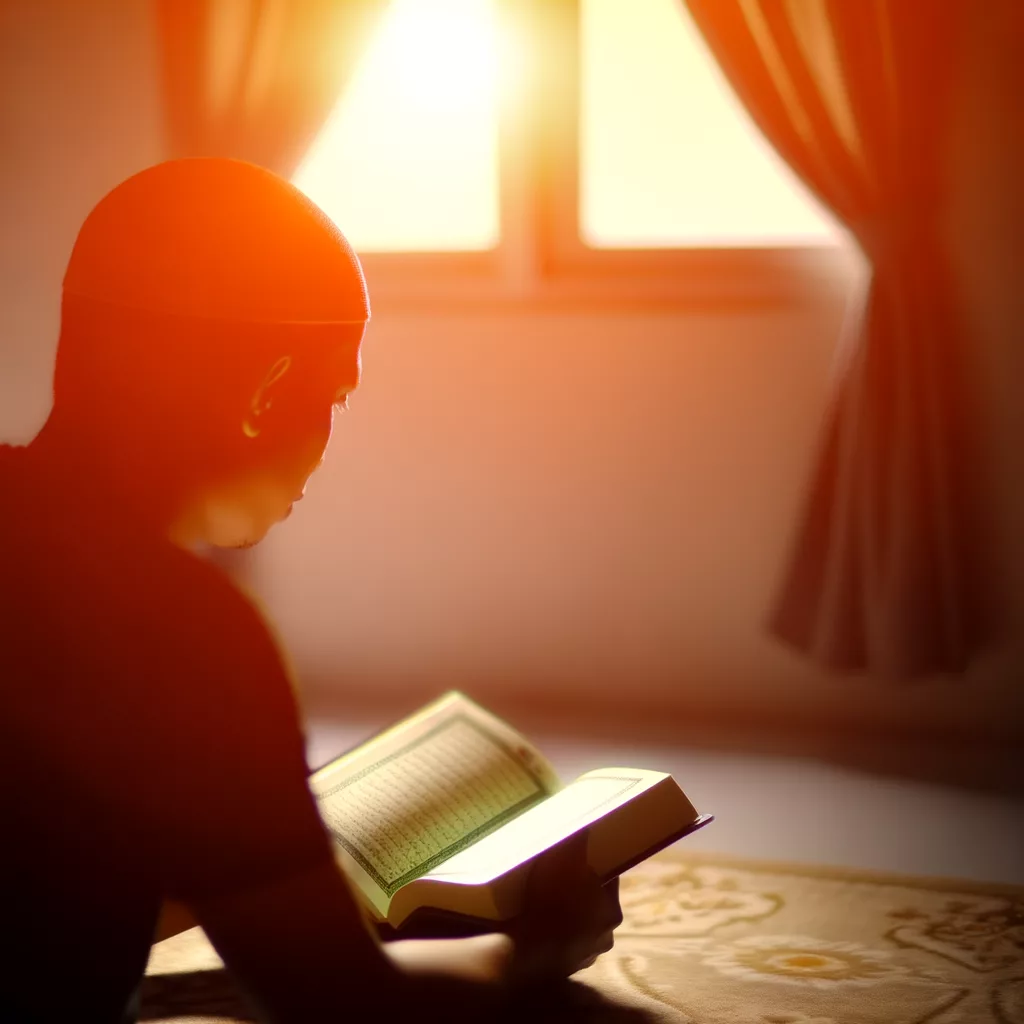
Understanding Qadr, the notion of destiny in Islam, means diving into the heart of the Muslim faith and of Islamic spirituality. How many of us, faced with trials, have sought to give meaning to patience, to gratitude towards Allah, or to unshakeable trust in His wisdom? Qadr, the fourth pillar of the aqida alongside belief in Allah, His angels, His Books and His Messengers, quietly irrigates the whole edifice of the practice of Islam. It shapes our relationship with life, colours our prayers, calms the believer’s heart in the face of the unexpected and lifts the soul in moments of joy as in times of torment.
But how can we truly grasp the depth of this pillar of faith, if not by humbly returning to its source – the Qur’an in Arabic and the authentic sunna of the Prophet, drawn with love and sincerity from the sacred language of revelation? Far beyond approximate translations, it is in learning Arabic, immersion in literary Arabic, memorising the Qur’an and a living understanding of tafsir that the nuances of Qadr, the delicacy of its meanings and the power of its teachings are revealed.
These words of the Qur’an that speak of the divine will, the mysteries of destiny and hidden wisdom resonate differently when we read them, meditate on them or recite them in Arabic, a language brought to life by dhikr and salat. Each of us, from the novice believer to the advanced student of the science of hadith, then feels that immersion in Arabic is not just an intellectual achievement, but a path to inner peace, serenity in the face of the unforeseen, and the strength to go through life with sincerity, patience and gratitude towards Allah.
Through the luminous examples of the Prophet, the companions and the ahl al-bayt, drawn from the sira, the hadiths and the history of Islamic civilisation, an art of living Qadr takes shape that illuminates our daily lives and nourishes our spiritual well-being. This approach, living and renewed in every generation, is not reserved for an elite. It is the heritage of all, passed on with humility within the Muslim community: from the study circle to the mosque, from the home to working life, from young Muslims searching for their identity to families engaged in Islamic education.
Better understanding Qadr therefore means giving yourself the means to live Islam to the full: cultivating the love of Allah and of the Prophet through knowledge, calming your heart through trust in destiny, and drawing from the Arabic language a light that illuminates every stage of our journey. Whether we seek to understand the Qur’an, to make the most of Ramadan, to pray with khushu or to meditate on the stories of the prophets, immersive learning of Arabic and the living rediscovery of Qadr answer one another, inviting us to a subtle balance between surrender, effort and hope.
The notion of Qadr: a fundamental pillar of the Muslim faith and of Islamic spirituality
At the heart of the Muslim faith, the notion of Qadr, often translated as “destiny” or “predestination”, stands out as one of the most mysterious and profound pillars of Islamic spirituality. Believing in Qadr means accepting with humility that everything that exists and happens, whether happiness, trial, success or adversity, comes about through the infinite will and wisdom of Allah. This belief, rooted in the verses of the Qur’an in Arabic and the living teachings of the sunna, is not a simple resigned fatalism, but an invitation to trust, to patience in Islam and to gratitude towards Allah, whatever the circumstances of life.
To feel the full subtlety of Qadr, learning Arabic takes on a singular importance. Reading the Qur’an, especially in literary Arabic, reveals deep nuances that translation cannot capture. Immersion in Arabic allows you to embrace the overall meaning of the verses that speak of the divine decree, human responsibility, sincerity in Islam and hope in the mercy of Allah. Understanding the Qur’an in Arabic, even without translation, offers an immersive spiritual experience in which the words come alive, bringing comfort and light to those who seek to strengthen their khushu in prayer or their spiritual well-being in daily life.
The notion of Qadr thus shapes the practice of Islam right down to salat, Islamic invocations (dhikr, du’a), tawba, and the way of living Ramadan, voluntary fasting or laylat al-qadr, which is dedicated precisely to the descent of the divine decree. It also irrigates Islamic conduct (akhlaq), modesty, inner peace, the spiritual routine, and our relationship with spiritual health and with the Muslim couple, strengthening Islamic solidarity, mutual help within the community and commitment to sadaqa and zakat. Studying ta’wil, the tafsir of the Qur’an or the science of hadith with the scholars of Islam means diving into the living dimension of Qadr through the example of the Prophet, the companions and the ahl al-bayt, but also through the history of Islam, Islamic civilisation, and the teachings of prestigious Islamic universities such as Al-Azhar or Zaytuna.
Welcoming Qadr in an enlightened and serene way means reconnecting every day with trust, patience and the love of Allah, making every situation, happy or difficult, an opportunity to grow in faith, understanding and gratitude. This is the whole message of an authentic Muslim spiritual life, combining knowledge, practice and peace of heart.
Qadr in the light of the aqida: patience and gratitude in the face of trials
In the serene light of the Islamic aqida, Qadr – the notion of destiny in Islam – holds a deep and soothing place, inviting every believer to contemplate the divine wisdom behind every event in life. Believing in Qadr is an integral part of the Muslim faith; it is an essential component of the creed, which we discover by deepening our learning of Arabic and by exposing ourselves without a filter to the texts of the Qur’an in Arabic. This belief, carried by the study of literary Arabic and by immersion in Arabic, allows us to savour the meaning of the verses on patience in Islam, gratitude towards Allah and the perfect balance between individual responsibility and trusting submission to the divine Will. Understanding Qadr is not just reading or reciting the formulas during prayer in Islam, dhikr or the ancient Islamic invocations, but living with the conviction that every moment, every joy, every trial holds a hidden wisdom of Allah, the infinitely Wise and Merciful. This understanding invites us to cultivate patience in Islam – sabr – in times of difficulty, as so many verses and hadiths passed on by the companions of the Prophet and the ahl al-bayt recall, magnified when reading the Qur’an with tajwid and the tafsir of the Qur’an. Qadr illuminates the practice of Islam: it inspires an inner tide of gratitude towards Allah, fortifies sincerity in Islam and nourishes inner peace even during family, financial or health trials. Discovering, while memorising the Qur’an or attending the mosque, that every destiny is already known to Allah helps to calm stress and to fight impatience, anger or despair. In this way, the science of hadith, the study of the sira of the Prophet and the accounts of the scholars of Islam reveal how acknowledging Qadr has sustained the Muslim community throughout the history of Islam, sculpting an Islamic ethic marked by humility, trust and gratitude. Deepening your Islamic reading, cultivating a spiritual routine, and remembering the greatness of Ramadan and of Laylat al-Qadr strengthen this feeling: in daily practice, accepting destiny nourishes faith, turns trial into elevation and gratitude into the secret of spiritual well-being.
Learning Arabic to understand Qadr in the Qur’an and the authentic sunna
To grasp in depth the notion of Qadr – divine destiny – as it is explained in the Qur’an and the authentic sunna, it is essential to learn Arabic in its literary and sacred dimension. Only through direct contact with the original words of the Qur’an in Arabic can we access the richness of meaning, the subtlety of the nuances and the spiritual beauty of the revelation. Learning Arabic through immersion, without the intermediary of translation, allows you to feel the echo of the verses on the Muslim faith, to absorb the depth of the aqida (the creed) and to grasp the divine wisdom in every mention of Qadr and of qada’ (the divine decree). By studying the science of hadith and the sira of the Prophet directly in the prophetic language, the believer discovers how much each term, each grammatical construction, carries a specific teaching on patience in Islam, sincerity in trial, gratitude towards Allah or the humility of the servant.
This immersion in Arabic also gives access to the plurality of the tafsir of the Qur’an, makes it possible to better understand the meaning of the Islamic morning and evening invocations, and to experience reading the Qur’an, memorising the Qur’an and tajwid with renewed intensity. It encourages concentration (khushu) in prayer in Islam, because the words spoken are no longer mere sounds to repeat, but living supplications, invested with meaning and emotion. Understanding Qadr is also feeling what the companions of the Prophet felt when they heard the words of the Qur’an and meditated on them in context, during Ramadan, while fasting in Islam, on the blessed days of dhul hijjah, or at the Friday prayer (jumu’a). Learning Arabic thus becomes a spiritual journey: it connects the believer to the living tradition of Islam, allows them to approach sharia and fiqh, to deepen the practice of Islam and to taste the sweetness of dhikr and du’a with awareness.
Beyond individual commitment, learning Arabic unites the Muslim community around a sacred language, makes access easier to the sira, the history of Islam and the words of contemporary scholars, and establishes continuity between the lived experience of the first Muslims and today’s Islamic spirituality. Whether for the Muslim family, the Islamic education of children, the passing on of Islamic culture or training in Islamic universities such as Al-Azhar or Zaytuna, knowledge of literary Arabic energises Muslim spiritual life and enriches Muslim identity in the face of contemporary challenges. So diving into immersive learning of Arabic opens a path to understanding Qadr not only as a concept, but as a living reality, an integral part of spiritual well-being and inner peace in Islam.
Arabic, tafsir and the science of hadith to grasp the depth of Qadr
Approaching the notion of Qadr in Islam means moving humbly towards one of the deepest mysteries of the Muslim faith, where the divine will and human destiny meet. In this exploration, one truth stands out: learning Arabic is not a mere asset, but an essential key to understanding the Qur’an and absorbing Islamic spirituality at its source. When we go through the verses relating to predestination, patience in Islam, tawba or submission to Allah, the Arabic language unfolds subtle nuances, powerful images and a richness of meaning that no translation can fully capture. It is at the very heart of reciting and reading the Qur’an in Arabic without translation, with all the beauty of tajwid, that we taste the deep resonance of the revealed words, and that the term Qadr intimately expresses the power, the measure and the wisdom of Allah.
Thanks to immersion in literary Arabic, the learner gains direct access to the science of the tafsir of the Qur’an, in which each term and each linguistic construction sheds light on the great questions of destiny, justice, mercy and the divine will. The scholars of Islam draw on the science of hadith, the sunna, the sira of the Prophet and the accounts of the companions to illustrate how the first Muslims lived their understanding of Qadr: with serenity and trust in trial, gratitude towards Allah in ease, sincerity in du’a and khushu in prayer. A living bond with Arabic allows you to rise, and to connect your own practice of Islam to the prophetic tradition, from the Friday prayer to the adhan in the mosque, from Ramadan to the night of laylat al-qadr, by way of patience during the hajj and the umrah.
Reading, memorising and meditating on the Qur’an in Arabic gives the Muslim faith a new impetus, a renewed presence in every invocation and every moment of life, from daily life in the Muslim family to community life, from Islamic literature to sacred art. Learning Arabic, experienced through immersion and without the barrier of translation, allows you to draw on Islamic spirituality at an authentic level, to deepen your relationship with Allah and to open infinite horizons in the search for meaning, the quest for inner peace and the path towards kindness, modesty and balance. It is on this path, at the heart of the original text, that every Muslim can discover the depth, the consolation and the light of the notion of Qadr, in direct dialogue with the Revelation and the living tradition of Islam.
The notion of Qadr, or divine destiny, remains one of the deepest and most comforting mysteries of the Muslim faith. It reminds us of Allah’s absolute sovereignty over all things, His infinite wisdom, and the subtle balance between His will, His decree and human responsibility. For every Muslim, understanding Qadr not only strengthens patience in Islam, helps to welcome trials with gratitude towards Allah and cultivates a sincere love for the divine; it is also an invitation to walk humbly in the light of Islamic spirituality, living every moment as an act of peaceful submission to the will of Allah.
But this notion, both delicate and decisive, cannot be fully grasped without a real effort to understand the original sources of Islam. Learning Arabic then becomes a path of faith as much as a path of intelligence: this is where immersion in Arabic brings another depth to reading the Qur’an, memorising the Qur’an according to tajwid, contemplating the tafsir of the Qur’an and exploring the prophetic sunna and the science of hadith. Tasting literary Arabic in prayer, salat, dhikr, Islamic invocations or du’a means connecting with the experience of the sira of the Prophet, the companions and the ahl al-bayt, and weaving a heartfelt bond with the whole history of Islam and Islamic civilisation.
Opening up to Qadr by opening up to the language of the Qur’an also means offering your heart a renewed spiritual routine and a more intense khushu at the Friday prayer, during Ramadan, on Laylat al-Qadr or during the hajj, eid al-fitr, eid al-adha, dhul hijjah or the umrah. It means giving living meaning to patience in Islam, practising sincerity, tawba and repentance, guiding the Islamic education of your children, strengthening the bonds of the Muslim couple and the Muslim family, and passing on a flourishing Muslim identity to new generations, whether in France or elsewhere.
So better understanding Qadr means welcoming the will of Allah with calm and trust, but it also means inviting yourself into intimacy with His word, by cultivating the Arabic language without translation. It means meditating on His wisdom in the Qur’an, drawing inspiration from the prophetic model, and engaging in the practice of Islam with love and inner peace. Along the way, ethics and spirituality become inseparable, anchoring the believer in a balanced, moderate life (wasatiyya), imbued with serene gratitude and a luminous acceptance of destiny, which are indeed the mark of a heart calmed by knowledge and the love of Allah.
Further reading: discover our online Arabic courses for adults, or also read “Creating an Islamic library at home: the essential books” and “Avoiding food waste in Islam and passing on moderation“.



