
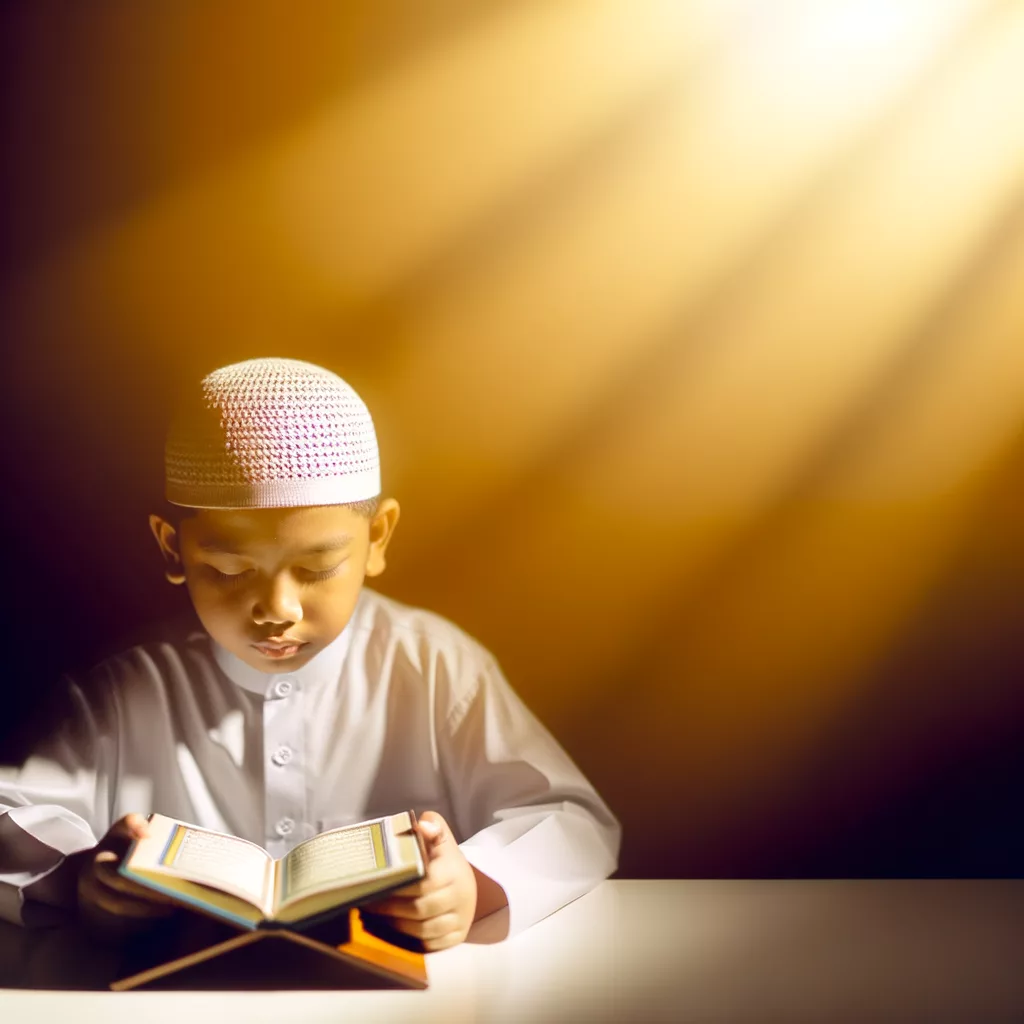
At the heart of every Muslim lies a deep desire: to understand the Qur’an as it was revealed, in the purity of the Arabic language. Learning Arabic and immersing yourself in literary Arabic means opening an intimate door onto the divine word, feeling each verse as a living breath, a revealed light. Yet how many have found themselves helpless before the majesty of the sacred text, captivated by the sonic beauty of Tajwid, fascinated by the rhythm of the revelation, but held back by the complexity of Arabic without translation and the profusion of interpretations? Which path should you take to make the tafsir of the Qur’an a clear source, a companion throughout your reading, your prayer and your daily life?
Every believer, whether a newcomer or already committed to the practice of Islam, one day faces this question: how do I find the tafsir of the Qur’an suited to my level, my understanding, my pace of learning Arabic and my spiritual quest? Between the thirst for authenticity, the wish to grasp the deep meaning of the verses, and the humble recognition of the limits of your own linguistic level, it is not unusual to get lost in the ocean of commentaries, from classical works to contemporary approaches, from the Sira of the Prophet to the detailed explanations of the companions of the Prophet, the scholars of Islam or the Islamic universities.
All too often, classical methods and dependence on translation take us away from the living experience of the Qur’an in Arabic. Natural immersion, progressive learning and the choice of a tafsir accessible at your level then become essential to make reading the Qur’an an authentic, memorable and transformative experience. They make it possible to anchor the Muslim faith in the heart, to raise Islamic spirituality through listening, memorising the Qur’an, prayer in Islam with khushu and confident recitation during salat, and to deepen your understanding of the science of hadith, of fiqh and of the practice of Islamic invocations.
This article guides you in discovering the tafsir suited to your unique path, so that every reading, every word, becomes a step towards inner peace, a source of spiritual well-being, of love of Allah and of the Prophet, a living link with the history of Islam, the Muslim community and the richness of Islamic civilisation. You will find keys drawn from experience, concrete methods for immersive learning of Arabic and the Qur’an, and advice for beginners and advanced learners alike, so that your encounter with tafsir and literary Arabic becomes an adventure that matches your sincerity, your patience and your aspirations.
Let us dive together into the art of understanding the Qur’an in Arabic: a journey in which every word sheds light on the meaning, nourishes faith and illuminates practice.
Understanding the Qur’an in Arabic: why choose a tafsir suited to your learning level
Understanding the Qur’an in Arabic is the dream and deep aspiration of many Muslims. Yet without a progressive approach to learning Arabic, this dream can quickly seem out of reach. The Qur’an in Arabic abounds in linguistic subtleties, stylistic beauties and terms specific to Islamic spirituality that only patient, well-suited immersion in Arabic allows you to savour. Choosing a tafsir of the Qur’an perfectly aligned with your level makes an authentic path towards real understanding of the verses and their context easier. It avoids the frustration and exhaustion often experienced by those who launch into reading the Qur’an or memorising it without sufficient preparation. Approaching the sacred text with a tafsir that takes your linguistic level into account, whether you are new to learning Arabic or already initiated into literary Arabic, allows you to open up gradually to the profound lessons on the Muslim faith, patience in Islam or gratitude towards Allah — all notions at the heart of Islamic spirituality and the practice of Islam.
By focusing on an accessible version of the tafsir of the Qur’an, the reader not only develops their skills in Arabic without translation, but also strengthens their emotional and intellectual bond with the divine Word. This process resembles the natural way a child learns: first listening and the overall meaning, then discovering the details, from the rules of tajwid to the sciences of hadith and the sira of the Prophet and his companions. Taking a suitable tafsir means preserving the impulse of sincerity in Islam hidden in every verse, walking gently in the sunna, and patiently building a solid Islamic education for yourself, your Muslim children or your Muslim family. Over time, this wise choice sheds light on your individual practice of salat, nourishes khushu in prayer, inspires you during Ramadan, the Hajj or when reading the Qur’an on Laylat al-Qadr, and weaves a living link with the history of Islam, Islamic culture and the immense heritage of the Muslim community.
Immersion in literary Arabic: the keys to learning the Qur’an without translation
Immersion in literary Arabic opens a unique door to a deep and authentic understanding of the Qur’an, without the barrier of translation. Learning Arabic in its original form is not only a linguistic matter; it is a spiritual journey to the heart of the divine Message. When you choose to learn Arabic through immersion, you gradually let go of the reflex of transposing every word into your own language; you learn to taste the flavour of the Qur’an in Arabic, to feel the immense richness of its images, its rhythm and its unique musicality. The language of the Qur’an, with its subtleties, metaphors and rhetorical styles, has shaped Islamic spirituality for centuries: every term, every sound, every silence carries a meaning that only attentive listening and inner contemplation can reveal.
On a path of immersion in Arabic, regular exposure to literary Arabic through reading the Qur’an, recitation with tajwid, or listening to the tafsir of the Qur’an or to hadiths in their original context, allows you gradually to overcome the apprehension linked to the unknown. You no longer learn in the urgency of translation, but in the slow and fruitful familiarity of the overall meaning, which seeps naturally into the heart and mind. This is how, even as a beginner, you gain access to the beauty of Islamic invocations, the depth of du’a, the strength of patience in Islam, or sincerity in Islam as described by the Prophet and his companions. You find yourself listening to the adhan or the Friday khutba, living salat with more khushu, and memorising passages of the Qur’an in Arabic without needing a textual intermediary.
Immersion also fosters an intimate bond with the sira of the Prophet, the ahl al-bayt, the companions of the Prophet and the history of Islam in general. Reading or listening to accounts, words of wisdom or fatwas from contemporary scholars in literary Arabic, even partially, nourishes the intellect and awakens the heart. This learning process, inspired by traditional Islamic education, helps you better grasp the subtleties of fiqh, aqida and moderation in Islam (wasatiyya), and perceive the spiritual breath of Ramadan, the hajj and the great Muslim festivals.
By favouring immersion, you finally discover that the spiritual intelligence forged by natural contact with Arabic without translation spills over into the whole of a Muslim’s life: it sheds light on the practice of prayer, the routine of the Muslim family and interfaith dialogue, and nourishes a sense of Muslim community everywhere, whether in the mosque or in French society. Learning Arabic through immersion means not only understanding the Qur’an, but growing in wisdom, inner peace and gratitude towards Allah – for His Word, His guidance and the incomparable beauty of the language that shaped Islamic civilisation.
Learning Arabic and exploring the tafsir of the Qur’an: progressive methods for beginners and advanced learners
Learning Arabic is a precious step for anyone who wishes to explore the tafsir of the Qur’an in the light of the revelation and at their own pace. Whether you are a beginner or more advanced, there are now progressive methods that respect each person’s path and place immersion in Arabic at the heart of learning. For the first steps, the most natural approach remains exposure to literary Arabic in living contexts: listening to the recitation of the Qur’an in Arabic, becoming familiar with the sounds and rhythms of tajwid, repeating short surahs in prayer, or memorising small passages through their chanting already provides an authentic anchor. Islamic invocations, dhikr, daily du’a and simply listening to the adhan at the mosque also become powerful tools of immersion.
Learning Arabic becomes more effective when you move away from simple word-for-word translation and closer to the overall meaning and the spiritual experience. Reading the Qur’an in Arabic, even easily, brings a unique flavour and an intimate connection with the word of Allah; patience in Islam, gratitude towards Allah and love of the Prophet grow as the meaning of the text is revealed in the original language. For those who are progressing, access to the first pages of a simplified tafsir, to briefly explained authentic hadiths, to the stories of the companions of the Prophet or to the sira of the Prophet lets you taste the richness of the tradition while naturally consolidating your vocabulary.
Along this path, your understanding of rituals such as salat, jumu’ah, Ramadan, the hajj and the Islamic festivals is enriched by a new perspective: reciting mindfully, feeling khushu in prayer, grasping the gentleness of tawba or the deep meaning of fasting in Islam. Muslim children, young people and families can, thanks to materials suited to each age, experience an Islamic education rooted in living Islamic culture, while nurturing a positive and balanced Muslim identity.
For more advanced Muslims, direct access to the science of hadith, to the writings of the scholars of Islam or to classical works of fiqh, aqida or Sufism requires continuing to learn Arabic and to practise immersion, this time through reading original texts, listening to lectures in Arabic without translation, or studying in small groups at the mosque or at a renowned Islamic university such as Al-Azhar or Zaytuna. It is a gradual ascent in which Islamic studies and Muslim spiritual life answer each other, offering a deep vision of the practice of Islam, of sharia and fiqh, up to the ethical wisdom of Islamic conduct and the beauty of Islamic art and calligraphy.
From then on, exploring the tafsir of the Qur’an through learning Arabic in a way that respects your level becomes a living quest: an encounter between spiritual intimacy and the heritage of Islamic civilisation. From contemplating the Qur’an in Arabic to studying the history of Islam, from community dialogue to Islamic reading, every step forward in immersion in Arabic amplifies the light of the Muslim faith and opens the way to greater inner peace, understanding and love of Allah.
Reading, memorisation and spirituality: making the understanding of the Qur’an a living and accessible experience
Approaching the reading of the Qur’an means agreeing to enter an experience that encompasses far more than words: it is an invitation to feel the depth of Islamic spirituality in daily life. Knowing how to read, memorise and understand the Qur’an in literary Arabic is not a quest reserved for an elite. On the contrary, learning Arabic and practising immersion in Arabic allows even beginners to taste the beauty of the divine message without going through the barrier of translation. When you read or listen to the Word of Allah in the original language, every letter recited with tajwid, every word memorised, becomes nourishment for the heart, anchoring the meaning in the Muslim faith and in concrete practice: prayer in Islam, Islamic invocations, dhikr, du’a, but also in essential values such as sincerity in Islam or gratitude towards Allah.
Understanding the Qur’an in Arabic also opens the door to all the richness of the tafsir of the Qur’an, the foundational hadiths, the sunna, the sira of the Prophet and the inspiring lives of the companions of the Prophet and the ahl al-bayt. The meaning of the verses takes on flesh; patience in Islam, love of Allah, tawba and khushu in prayer come alive, and memorising the Qur’an is no longer a mechanical act but an inner transformation. Regular reading of the Qur’an in Arabic, even slow, brings inner peace, spiritual well-being and strength to face stress and the trials of life. It encourages a spiritual routine, solid values and inner peace, and sheds light on every aspect of daily life: fasting in Islam during Ramadan or outside it, the Friday prayer at the mosque, involvement in the Muslim community, community mutual aid, and reflection on society and Islamic culture.
Immersion in Arabic without translation, even gradual and imperfect, develops an intimate bond with the revealed Word: it brings faith to life, confronts the soul directly with meaning, shapes Muslim identity and nourishes love of the Prophet. This way of learning Arabic is open to all: Muslim children, couples, families, Muslim youth, converts, Muslims in France seeking meaning or insight into laïcité and Islam, or simply anyone who carries within them the desire to savour Islamic civilisation from the inside. Reading, understanding and memorising the Qur’an in Arabic, savouring every word, is then far more than study: it is a continual rebirth, a path of peace and light, a renewed act of love towards Allah.
Further reading: discover our online Arabic courses for adults, or also read “Learning Arabic to understand the place of women in Islam” and “Learning Arabic through the lives of the Companions of the Prophet“.
Conclusion
Finding the tafsir of the Qur’an truly suited to your level is an act of sincerity and patience in learning Arabic and in the search for meaning. This delicate and personal choice transforms the simple reading of the Qur’an in Arabic into a deep, living experience, in which the understanding of every word, every verse and every surah gradually takes root in the heart. Through immersion in literary Arabic, exegesis becomes accessible and rich, and resonates with the spiritual life of the reader, whether a beginner or already advanced in the practice of Islam.
Learning Arabic without constantly resorting to translation makes the Qur’an closer and more authentic. You then discover the beauty of tajwid, the emotion of dhikr, the power of Islamic invocations (du’a), and the depth of prayer in Islam (salat). References to the hadiths, to the science of hadith, to the sunna, to the sira of the Prophet and to the wisdom of the companions take on new relief, nourishing the Muslim faith and an overall understanding of Islam. This intellectual journey is not limited to memorising the Qur’an or mastering literary Arabic: it becomes the guiding thread of a living Islamic spirituality, which irrigates every moment of Ramadan, of fasting in Islam, of the great festivals such as Eid al-Fitr and Eid al-Adha, and of the hajj and Umrah.
By adopting a progressive method based on immersion in Arabic, every reader gives themselves the chance to taste the wisdom of the scholars of Islam, to grasp Islamic ethics in their authenticity, and to draw inspiration from models of patience, sincerity, gratitude towards Allah, love of the Prophet and inner peace. Understanding the Qur’an in Arabic makes it possible to weave a direct link with the tradition while opening up to new horizons of knowledge, whether on the madhahib, sharia and fiqh, or the spirituality of Sufism; it invites dialogue, inner peace, Islamic solidarity and the beauty of spiritual well-being.
This path requires neither haste nor perfection. It unfolds over time, through spiritual routine, taking part in the community life of the mosque, and exchanges with the imam and the Muslim community. It honours the importance of the Islamic education of children and of the Muslim family, respect for the rites, and the discovery of the history of Islam and of the great civilisations, of poetry, of the arts, of the Muslim calendar and of the great stages of a believer’s life.
At each stage a new dimension is revealed of divine mercy, of tawba, of repentance in Islam, of forgiveness, of modesty and of dignity. Every reading of the Qur’an enriches Muslim identity and strengthens inner resilience in the face of stress, doubt or fatigue. By choosing the right tafsir at each stage of your journey, you open your heart to the light of the Word of Allah, between knowledge, love, listening and serene spirituality.
Thus, learning Arabic and gradually immersing yourself in a living understanding of the Qur’an is not merely a linguistic challenge: it is a founding act for Muslim faith, practice, intelligence and sensitivity. It is a path of depth, discovery and intimacy with the sacred Book, conducive to inner peace and to the radiance of Islamic spirituality in daily life.



