
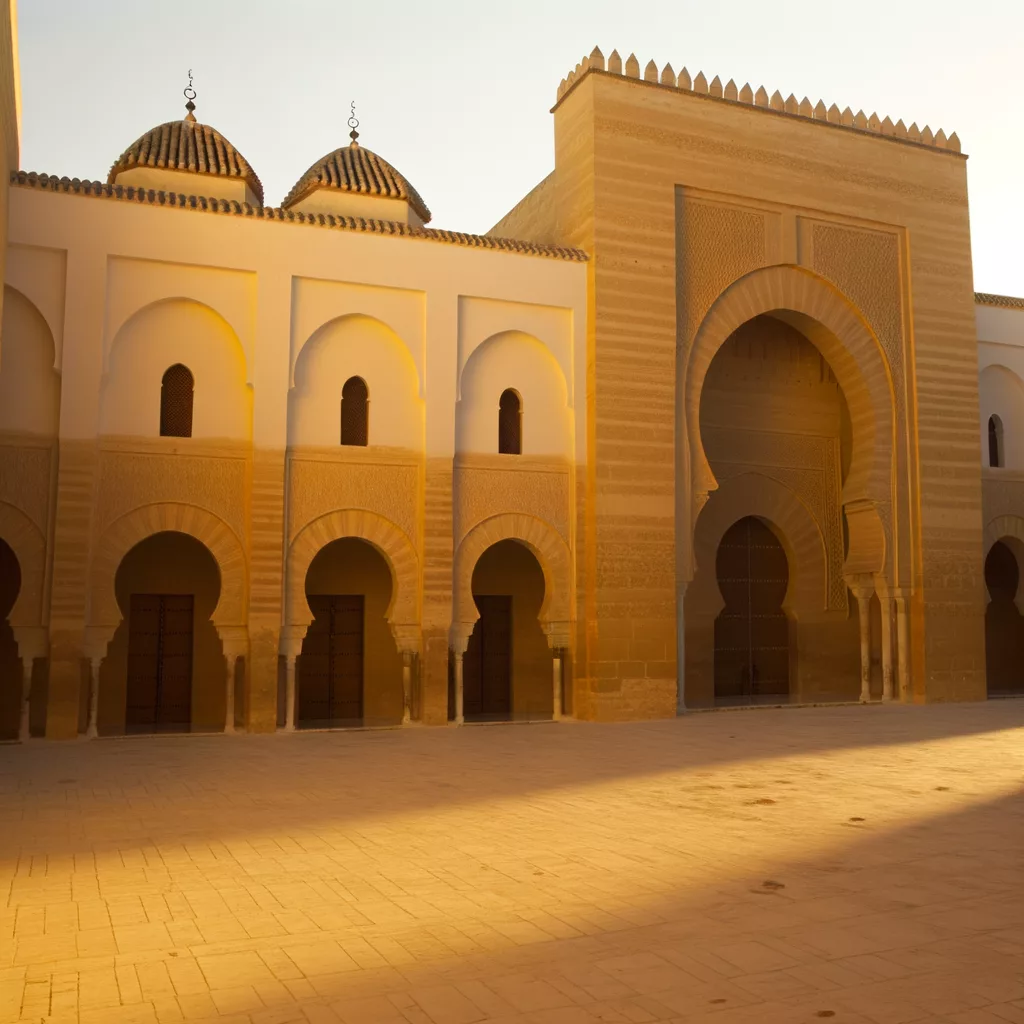
When Muslim Andalusia is mentioned, a deep emotion grips the heart of anyone who longs to understand the Qur’an in its original setting, to savour the sweetness of the literary Arabic language, and to recover the fragrance of Islamic civilisation at its height. The Andalusian Caliphate, that golden age nestled between East and West, is not just a glorious page of history: it is an inexhaustible source of inspiration for all those who wish to learn Arabic, immerse themselves in Islamic spirituality and reconnect with the light of knowledge, faith and beauty that shone there.
In cosmopolitan and learned Cordoba, learning Arabic went beyond simply acquiring vocabulary: it was a deep immersion, without translation, that linked each word to centuries of Qur’an recitation, the science of hadith, prayer (salat) and the living practice of Islam. There, young Muslims grew up to the rhythm of memorising the Qur’an, pure tajwid, and the discovery of tafsir and the sunna; the language was passed on in mosques, homes and markets, but also in art, science and architecture, naturally embracing daily life. Learning Arabic then took on its full meaning: it was about opening, with patience and sincerity, the doors of the Qur’an in Arabic, deepening one’s Muslim faith, living dhikr, tasting gratitude towards Allah, perfecting khushu in prayer and embodying a radiant Muslim identity.
In this Andalusia of light, the caliphate did not only shape the memory of Muslims; it offered the whole world a living model of Islamic education, welcoming children, scholars, Muslim families and travellers in search of spiritual well-being and intellectual growth. Their debates on the sharia, fiqh, the madhahib, the sira of the Prophet, the sunna, the Companions and the ahl al-bayt became references, passed on in Arabic without translation, rich in rigour, tolerance and Islamic spirituality.
Rediscovering the Andalusian caliphate means reconnecting with a method of learning Arabic based on immersion, listening, repetition and living transmission: a natural teaching approach in which every Friday prayer, every recitation and every du’a weaves a bond between the believer’s heart and the revealed Word. It also means understanding how the practice of Islam, Ramadan, fasting, the call to prayer (adhan), the hajj, volunteering and solidarity take on their full meaning when the words resonate in their original language, carrying a singular energy.
Through this journey to the heart of the history of the Andalusian caliphate, let yourself be guided towards the roots of knowledge, faith and culture, so that learning Arabic is no longer a distant dream but a living, accessible and luminous possibility, within everyone’s reach.
The Andalusian Caliphate: a golden age of Islamic civilisation and the awakening of Arabic learning
When the Andalusian Caliphate is mentioned, the term “golden age” is neither myth nor mere nostalgia. It was during this period, unique in the history of Islam and of the Mediterranean, that learning Arabic became the keystone of a civilisation that shone as much through its faith as through its knowledge. Learning Arabic in Cordoba or Granada was far more than mastering a language: it meant entering into immersion in living Arabic, encountering the Qur’an in Arabic recited in mosques and gardens, discovering literary Arabic in sumptuous libraries, and feeling the depth of Islamic spirituality through the science of hadith, the sunna, the sira of the Prophet and the refined commentaries of Qur’anic tafsir.
In every corner of Andalusia, young and old devoted themselves to memorising the Qur’an, perfected their tajwid, and learned the art of prayer in Islam, from khushu in the salat to the invocations that lulled their daily lives. Arabic without translation became the bridge between authentic spirituality and a flourishing intellectual life: it was not only about understanding the Qur’an or teaching science; it was also an essential means of educating Muslim children, passing on the Muslim faith, reading the wisdom of the Companions of the Prophet and the ahl al-bayt, and debating aqida, fiqh and the sharia in mosques and princely courts.
Life in the Andalusian Caliphate was steeped in high points, from Ramadan to Eid al-Fitr, from the Friday prayer (jumu’a) to scholarly debates on moderation in Islam (wasatiyya) and morality (akhlaq). Muslim communities kept alive gratitude towards Allah, love of the Prophet, patience in Islam, tawba and sincerity, so many virtues that the Arabic language made it possible to embody fully through immersion and living practice. This era had an inspiring dimension: learning Arabic was not an academic constraint but a permanent celebration, a foundation for Islamic solidarity, mutual support in the community, interfaith dialogue, the transmission of rites and universal knowledge, from halal finance to the mystical poetry of Sufism. Strong in its richness, Andalusian Islamic civilisation reminds us that the key to understanding its heritage, its spirituality and its art always lies in the original language: learning Arabic means reaching out to a whole world of inner light and authentic community life.
Immersion in Arabic in Cordoba: science, the Qur’an and spirituality in Andalusian culture
Immersing yourself in Arabic in Cordoba, under the Andalusian caliphate, meant diving into the heart of a ferment in which science, the Qur’an and spirituality blended in rare harmony. Here, the Arabic language was not just a vehicle of communication: it carried Qur’anic wisdom, the learning of tajwid for a reading of the Qur’an vibrant with meaning, and direct access to the sources of Islamic spirituality. The Qur’an in Arabic resonated in the mosques, the madrasas and in hearts; memorising it, hifz, was a spiritual and intellectual horizon coveted by young and old alike. Immersion in Arabic, without translation, opened the door to a deep understanding of Qur’anic tafsir and to the rigorous study of the sunna, the hadiths and the sira of the Prophet. In the circles of scholars, fiqh, aqida, the science of hadith, jurisprudence (madhahib) and the sharia were passed on entirely in literary Arabic, without filter or alteration, bringing each student back to the authenticity of the prophetic message.
Cordoba, at its height, was a beacon: its Islamic universities attracted students who came seeking excellence in Arabic, mastery of fluent Qur’an reading and Islamic knowledge at the highest level. The scholars of Islam (imams, mufassirun, muhaddithun) introduced them to the richness of Muslim spiritual life, nourished faith, patience, sincerity and gratitude towards Allah, and passed on dhikr, du’a, repentance (tawba) and love of Allah and His Prophet. This natural immersion shaped Muslim identity and strengthened the understanding of rituals such as prayer (salat), the Ramadan fast, the Friday prayer (jumu’a), zakat, the hajj, the adhan and all the great Islamic festivals, well beyond mere practice.
Learning Arabic was part of an art of living and an aspiration to spiritual excellence; it connected Muslim youth to Islamic culture, to the Companions of the Prophet and to the ahl al-bayt, while fostering community solidarity and mutual support. Knowledge, secular or sacred, was passed on in literary Arabic, proof of the unity between faith and reason, piety and learning. In this context, living the Arabic language, absorbing it without translation, was the key to savouring the beauty of the Qur’an, entering into the meaning of the sunna, relishing every word of a hadith, contemplating Islamic calligraphy and embodying Muslim ethics even in the education of children, the couple, the family, trade and dialogue with other religions. In Cordoba, immersion in Arabic was therefore far more than language learning: it was an experience of inner transformation, a path towards inner peace and spiritual maturity, a bridge between Andalusian Islamic civilisation and the whole of humanity.
The legacy of the Andalusian caliphate: from learning literary Arabic to understanding the Qur’an
The legacy of the Andalusian caliphate still shines today through the Arabic language and its deep roots in Islamic spirituality. Learning literary Arabic, as it was taught and practised in Muslim Andalusia, goes far beyond acquiring a simple tool of communication: it opens the way to an authentic understanding of the Qur’an, to an immersion in Arabic that reconnects with the very roots of the Muslim faith. Here, learning Arabic was not content with following vocabulary lists or mechanical translations: it was part of a natural and living approach, in which the language was imbued with the breath of the Qur’an, the science of tajwid, tafsir, the hadiths, the sunna and the sira of the Prophet, carried by the voices of imams, scholars of Islam and the Companions of the Prophet. Praying in Islam, tasting khushu in prayer, and savouring Islamic invocations and the beauty of dhikr and du’a require a direct relationship with Arabic without translation, as the Andalusian communities lived it at the Friday prayer, during Ramadan, and when reading or memorising the Qur’an in Arabic.
This linguistic and spiritual immersion was the common thread of Islamic education in Andalusia: Muslim families, Muslim children and Muslim youth were steeped in an atmosphere where science and faith merged, where Qur’anic recitation was not separated from its understanding, and where patience in Islam, gratitude towards Allah, love of the Prophet and sincerity became qualities rooted in daily practice. The influence of the Andalusian caliphate lives on through Islamic universities, Islamic calligraphy, the Muslim calendar marked by festivals such as eid al-fitr, eid al-adha or dhul hijjah, rites such as the hajj or the umrah, and even the call of the adhan in every mosque. In today’s reality, learning Arabic in the light of this heritage invites you to immerse yourself in living Islamic culture and to connect, without filter, with the wisdom passed down from generation to generation. Understanding the Qur’an, savouring the wonders of tafsir, and grasping the depth of aqida, fiqh and the sharia is a tribute to Andalusian Islamic civilisation: a source of inner peace, balance and spiritual well-being for any Muslim community seeking to reconnect with the original light of Islam.
The Andalusian caliphate and the transmission of faith: mosques, scholars and the flourishing of Islamic practice in al-Andalus
Under the Andalusian caliphate, the transmission of the Muslim faith flourished as never before, deeply rooted in the richness of literary Arabic and of the Islamic tradition. The great mosques, such as the majestic mosque of Cordoba, were not only places of prayer in Islam, but true centres of intellectual, spiritual and community influence. Here, learning Arabic became a living bridge: Muslim children, scholars of Islam, imams and ordinary believers naturally absorbed the language of the Qur’an through daily immersion in Arabic, without resorting to translation. Understanding the Qur’an in Arabic was the ideal pursued and shared by all, because reading the Qur’an, memorising it and mastering tajwid were at the heart of spiritual and social life.
The scholars, guides of faith and architects of knowledge, taught far more than the science of hadith, Qur’anic tafsir or the sunna of the Prophet. Their work went beyond the mere transmission of texts: they breathed a living Islamic spirituality into the Muslim community, giving an essential place to the Friday prayer (jumu’a), the daily salat, khushu in prayer, Islamic invocations such as dhikr and du’a, and sincere tawba. This central role of practice was present in every moment of life, from Ramadan to the hajj, from the rites of marriage in Islam to the education of children in Islam.
The Muslim family drew from this climate of immersion a strong and balanced Muslim identity. Young people were taught patience in Islam, gratitude towards Allah, sincerity, modesty and noble Islamic conduct (akhlaq), while love of the Prophet, the Companions and the ahl al-bayt was cultivated. Islamic studies and dialogue with other cultures, carried by Islamic universities and abundant libraries, contributed to a flourishing Islamic civilisation. In this way, in the wake of the Andalusian caliphate, the practice of Islam, Islamic education and Islamic culture became intimately intertwined with learning Arabic, giving al-Andalus the spiritual and intellectual splendour for which it still shines in the memory of the history of Islam.
In the light of the fascinating history of the Andalusian caliphate, one thing becomes clear: learning Arabic is not reduced to mastering a language, but is part of a true search for meaning, identity and connection with our spiritual heritage. Behind the walls of Cordoba and beneath the minarets of the prestigious Andalusian mosques, learning Arabic was the foundation of a society in which science, the Muslim faith and Islamic culture intertwined harmoniously. Thus immersion in Arabic, far from being merely a tool, became a way of awakening the heart and the intellect: to grasp the depth of the Qur’an in Arabic, to savour the beauty of tajwid when reading the Qur’an, to relish the richness of tafsir, or to marvel at the nobility of the sunna and the sira of the Prophet.
The Andalusian caliphate beautifully illustrates the transformative power of learning Arabic without translation, where overall meaning and sensory experience take precedence over mere word-for-word equivalence. Opening yourself to literary Arabic means drawing closer to the Companions of the Prophet and the ahl al-bayt, but also to the scholars of Islam, the Sufi poets and the brilliant thinkers who forged Islamic civilisation. This choice to learn Arabic engages more than reason: it nourishes Islamic spirituality, deepens khushu in prayer in Islam, and contributes to a living understanding of Islamic invocations, dhikr, du’a, patience, sincerity and gratitude towards Allah.
By following the path of the Andalusian masters, of the imams, and of the Muslim community gathered by the call to prayer (the adhan) and united by the rites of Ramadan, the hajj or Eid, every Arabic word learned becomes a step towards authenticity, inner peace and the rediscovery of Muslim spiritual life. Immersion in Arabic, inherited from this golden age, remains today a precious tool of Islamic education, from the young child to the adult in search of meaning, from the ordinary believer to the researcher passionate about the history of Islam, fiqh, jurisprudence, or Islamic calligraphy and Islamic art.
Finally, the legacy of the Andalusian caliphate reminds us that the transmission of knowledge, interfaith dialogue, ethics and Islamic solidarity rest on a deep understanding of the language and the sources. Choosing to learn Arabic means setting your life in the footsteps of the generations who, through the Qur’an, the hadiths, the practice of salat, Ramadan or zakat, transcended borders and sowed the seeds of fraternity, moderation, volunteering and peace, which are more essential than ever today in a plural society.
May the inspiration of al-Andalus rekindle in each of us the sincere desire to reconnect with the greatness of learning Arabic, to explore the richness of the Islamic heritage, and to weave, through language, the living thread of faith and knowledge.
Further reading: discover our online Arabic courses for adults, or read “Learning Arabic to understand fiqh and the practice of Islam” and “Learning Arabic to understand the rules of inheritance in Islam“.



