
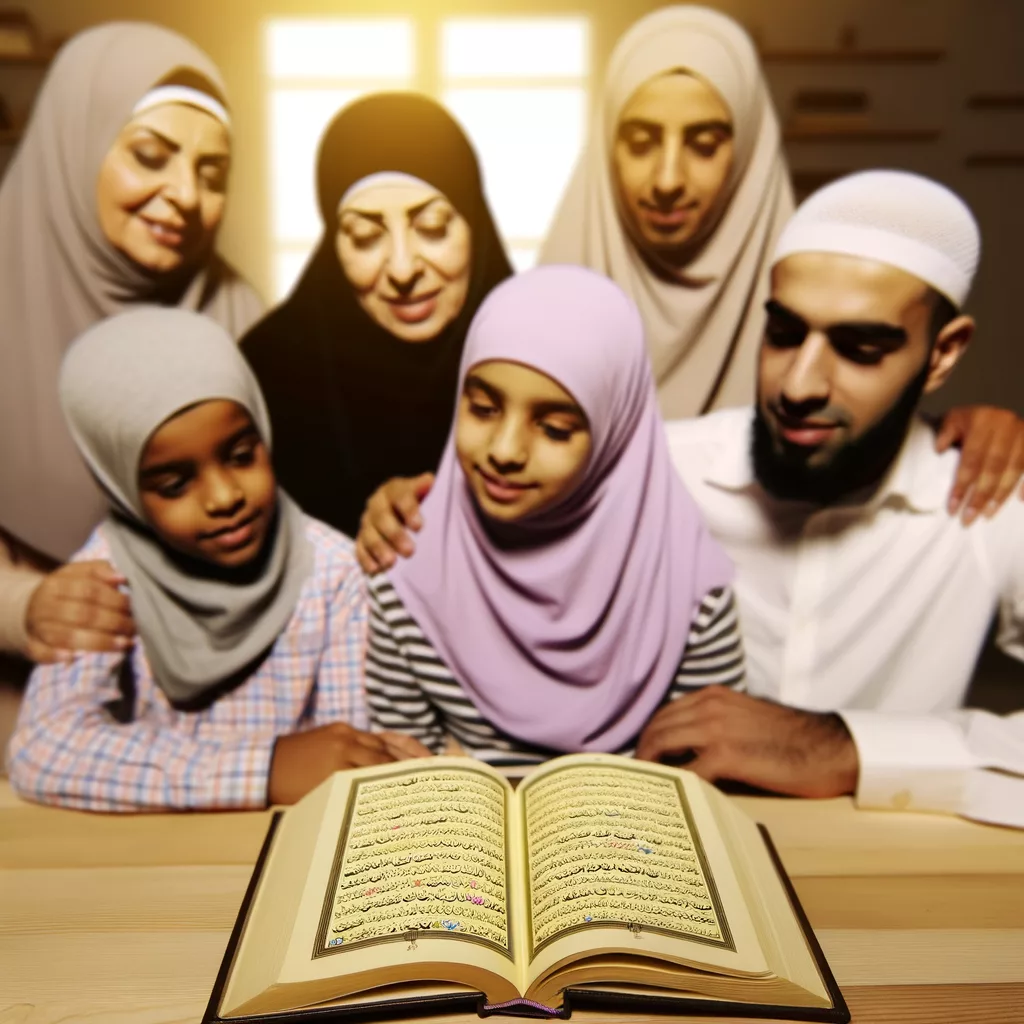
Choosing a Muslim name for your child: understanding the origins, the meaning and the spiritual heritage
Giving your child a name is never a trivial choice. For Muslim families, this moment holds a particular depth: it is the reflection of a faith, the trace of a heritage and the beginning of a spiritual story passed down from generation to generation. A name is not just a word or a string of sounds. It carries meaning, hopes and powerful links with the Qur’an, the Sunna, the companions of the Prophet, the ahl al-bayt and the whole of Islamic spirituality. But understanding the true significance of a Muslim name is not limited to a quick translation or an approximate definition read on the Internet. To grasp the beauty, depth and subtlety of these names, you need to go back to their origins: to the very heart of the Arabic language, the language of the Qur’an, of reading and memorising the sacred Book, of the hadiths and of tafsir, a language that carries meaning and light.
Many parents would like to give their children a name that resonates with the history of Islam, the sira of the Prophet, or the great figures of Islamic civilisation. But how can you be sure of the true meaning of the name you choose? How can you pass on to your child, from birth, a solid spiritual heritage and a Muslim identity anchored in faith and authentic culture? The key lies in learning Arabic and, even more, in immersion in Arabic: breaking down the barrier of translation, tasting the overall meaning, appreciating the beauty of literary Arabic without a filter, and allowing the soul to absorb a living tradition.
In a world where Muslim identity is sometimes put to the test, and where cultural reference points are fading, giving your child a consciously chosen name becomes an act of faith and love. It is, in a way, building a bridge between the practice of Islam, family spirituality, daily prayer, dhikr and Islamic invocations, and an openness to the history of Islam, Sufism and the wisdom of scholars – past and present. This name, murmured hundreds of times in the believer’s life, accompanies every prayer (salat), every religious festival (such as Ramadan, Eid al-Fitr or Eid al-Adha), every event in community life, and carries within it the hope of a destiny guided by faith.
Through this article, we invite you on a journey to the heart of the meaning of Muslim names: exploring their spiritual and Qur’anic roots, understanding why learning Arabic is essential to this process, discovering how linguistic transmission illuminates family identity, and reflecting on the place of the name in tradition, spirituality and the transmission of Islamic culture. Get ready for a fascinating dive which, beyond the choice of a simple name, opens the doors to a more intimate and more authentic understanding of the Muslim heritage, in constant dialogue with the language of the Qur’an, the life of the Prophet, the richness of the hadiths and the depth of Islamic education.
The spiritual roots of Muslim names: understanding the Qur’an, the sunna and the choice of a name
Giving your child a Muslim name is much more than a choice of identity or culture: it is an act rooted in Islamic spirituality and nourished by the living heritage of the Qur’an and the sunna. The prophetic tradition attaches considerable importance to the beauty and meaning of names, encouraging believers to select names that carry virtue, piety and nobility of character. Since the time of the companions of the Prophet and the ahl al-bayt, the name has linked the child to a long line of Muslim faith, justice and the search for closeness to Allah. This choice goes well beyond mere sound: it refers to the models presented in the literary Arabic of the Qur’an, to the richness of the hadiths, to the stories of the sira of the Prophet, to the du’a contained in prayer in Islam and to edifying stories of patience, sincerity or gratitude towards Allah.
Understanding the depth of a Muslim name sometimes requires opening up the world of the original text. Learning Arabic, or moving towards immersion in Arabic, gives direct access to the overall meaning of these names, without going through translation, which can impoverish their spiritual and historical significance. A name such as Maryam or Idris is not just a pretty word: it evokes reading the Qur’an, memorising the Qur’an with tajwid, the tafsir of the Qur’an to grasp the prophetic dimension of the story, or the science of hadith to draw inspiration from the tradition and the practice of Islam. In some cases, the choice of name draws on knowledge of the Muslim calendar and of the great festivals such as Ramadan, eid al-fitr or eid al-adha, or on the wish to honour the memory of a scholar of Islam or a pious ancestor, thus weaving a continuous thread between the past, present and future of the Muslim community.
This search for meaning is all the deeper in a context where Muslim identity is sometimes built between several linguistic or cultural worlds, as is the case for Muslims in France. Learning Arabic without translation allows the child and their family to deepen their relationship with the divine, to reach salat with khushu, the richness of Islamic invocations (dhikr, tawba) and love of the Prophet, but also the living transmission of the values of akhlaq and spiritual well-being. The name then becomes a door: one that opens onto an authentic Islamic education, the discovery of Islamic civilisation and a soothing spiritual routine, from the very first days of Muslim childhood.
Learning Arabic to grasp the true meaning of Islamic names
Discovering a Muslim name opens the door to a world of deep meaning, Islamic spirituality and living tradition. Yet grasping the true significance of an Islamic name is only possible by understanding the language in which it was forged: literary Arabic. Learning Arabic offers much more than a simple language skill: it gives access to the original richness of words, their Qur’anic symbolism, their roots in the history of Islam and the inspiration of the sunna. Many Muslim names draw their essence from the Qur’an in Arabic, the sirah of the Prophet Muhammad, the science of hadith and the virtues embodied by the companions of the Prophet or the ahl al-bayt.
Without immersion in Arabic, translation quickly falls short; it retains only the surface, leaving out the nuances, the sacred etymology and the beauty of the overall meaning. A name like “Ayman” carries within it light, blessing, the right side evoked in prayer in Islam (salat), the character of sincerity in Islam and the uprightness so valued in the Qur’an. Likewise, “Maryam” holds patience in Islam and a spiritual depth that is difficult to explain through a simple translation. Learning Arabic, and above all learning Arabic without translation, means reconnecting with the source of names, feeling their echo in reading the Qur’an, in memorising the Qur’an, in tajwid and the tafsir of the Qur’an, as well as in the ongoing discovery of the history of Islam and of the values passed down from generation to generation.
For the Muslim family, for any young Muslim in search of identity or for any Muslim couple wishing to pass on a pure heritage, learning Arabic becomes an act of love and faithfulness. It sheds light on the choice of names through understanding Islamic invocations, dhikr and du’a, as well as through awareness of their meaning during the great Islamic festivals, from Ramadan to eid al-fitr. Ultimately, choosing a name in the authentic light of the Arabic language means offering your child a precious key: that of direct access to Islamic culture, to the history of Islamic civilisation, to the practice of Islam with khushu in prayer, and to the transmission of a message of love of Allah and of the Prophet that will resonate throughout their life.
Names and identity: immersion in Arabic and cultural transmission within the Muslim family
Choosing a Muslim name for your child goes beyond simply assigning a name: it is deeply bound up with the construction of identity, spirituality and the link to tradition within the Muslim family. By opting for a name with an Arab-Muslim resonance, parents give themselves the chance to weave an invisible but powerful thread between their family history, their faith and the universal heritage of Islam. A name drawn from the Arabic language — whether inspired by the Qur’an, the sunna, the companions of the Prophet, the ahl al-bayt or the great figures of the history of Islam — often becomes a first gateway to immersion in Arabic, not only as a language, but as an essential vehicle of meaning, spirituality and culture.
The deep meaning of the name in Arabic, sometimes impossible to translate without losing nuances, naturally invites learning Arabic from a very young age. The name carries values and stories: it refers to patience in Islam, to tawba as lived by certain prophets, to the science of hadith, to eloquence in expressing du’a. Thus, bearing a name such as Maryam, Idriss, Younes, Fatima or Bilal — anchored in the collective memory of the Qur’an in Arabic and the prophetic stories — becomes a subtle but powerful invitation to learn Arabic without translation, to open up to literary Arabic, and to taste the beauty of reading the Qur’an and the precision of tajwid.
Over the years, this name passes through every stage of family and ritual life: during prayer in Islam as a family, while listening to the adhan, during Ramadan, collective invocations, memorising the Qur’an or studying tafsir. It punctuates the major religious festivals such as Eid al-Fitr or Eid al-Adha, and accompanies the sira of the Prophet and the stories passed down orally about the virtuous companions or Muslim spiritual life. The name then becomes an anchor point for Muslim youth, a way of strengthening Muslim identity in a multi-ethnic context, sometimes marked by secularism and debates about Islam in France.
When the child wonders about the meaning of their name or discovers its story in Islamic culture, it is an opportunity for the Muslim family to open a space for dialogue and learning. Learning Arabic together to better understand the Qur’an, to grasp the deep meaning of an invocation, to feel khushu intensely in salat… all of this makes it possible to pass on more than a simple tradition: a living, conscious identity, open to the diversity of the Islamic heritage.
Ultimately, the Muslim name plays, often without our realising it, a role in the transmission of the linguistic and spiritual heritage. It encourages immersion in Arabic, nourishes curiosity for Islamic studies, and invites reading, questioning and openness to the scholars of Islam, both classical and contemporary. It connects the child to the whole Umma, stimulates Islamic solidarity and pride in an inherited culture, and prepares the ground for an intimate understanding of rites and practices, from fiqh to Islamic ethics in daily life. Choosing a name is thus to educate, awaken and pass on, anchoring each generation in the depth and timeless beauty of the Arabic language and of Islam.
The name as an act of faith: Islamic spirituality, invocation and the link with the history of Islam
Giving your child a Muslim name is much more than a personal or social choice: it is a deeply spiritual act, intimately linked to the Muslim faith, the prophetic tradition and the history of Islam. From the first moments of life, the name becomes an invocation, a message of love of Allah, a way of connecting the child to the light of the Qur’an in Arabic and the richness of the sunna. By choosing a name borne by a prophet, a companion of the Prophet, a member of the ahl al-bayt or any other notable figure of Islamic civilisation, parents offer their child a share of living history and a spiritual orientation that will accompany them throughout their life. This name resounds every day in Islamic invocations, in prayer in Islam, the salat, and sometimes even in the du’a or dhikr that punctuate the daily life of a Muslim family.
Giving such value to the name is rooted in a sincere Islamic spirituality: each chosen name evokes a model, a quality, a dimension of the Muslim faith. Learning Arabic or living an immersion in Arabic then gives access to the full beauty of its meaning: understanding the Qur’an in Arabic, deepening the memorisation of the Qur’an, discovering tajwid and tafsir, but also grasping the deep meaning of the hadiths and of the science of hadith around the chosen name. Over the course of their Islamic education, the child will thus be invited to discover the history of Islam, to draw inspiration from the sira of the Prophet and from the stories of the scholars of Islam, contemporary scholars and models of patience in Islam, sincerity, gratitude towards Allah and tawba. The name becomes a living reminder of a thousand-year-old tradition, a bridge between the Muslim family and the Muslim community, between past and future, between the vastness of the literary Arabic language and the daily practice of faith.
No need for translation: through learning Arabic without translation, the name lives, sings and inspires in its original form, steeped in meaning and spirituality. It invites transmission, love of the Prophet, inner peace and a Muslim identity affirmed at the heart of society, and breathes the strength of example into every prayer, every fast in Islam, every moment of Ramadan or eid. Thus, choosing a Muslim name means placing your child in the living chain of faith, in the continuity of the history of Islam, offering them a spiritual heritage and an open door onto the infinite beauty of the Arabic language, the key to understanding the Qur’an, the hadiths and the whole of Islamic culture.
Choosing a Muslim name for your child is a luminous undertaking, deeply rooted in faith, Islamic spirituality and respect for the family heritage. Over the generations, this choice links each Muslim child to the history of Islam, to the companions of the Prophet, to the ahl al-bayt, and to the inspiring figures mentioned in the Qur’an in Arabic, the hadiths, the sira and the great eras of Islamic civilisation. But more than a sound or a simple tradition, a name only carries its full meaning when one truly grasps its spiritual, cultural and linguistic content.
This is where learning Arabic takes on an unequalled dimension. Learning Arabic, particularly through immersion in Arabic or Arabic without translation, gives access to the real source of these names: the Qur’anic text, the sunna, Islamic invocations and the subtleties of the language of the Prophet. Understanding the Qur’an, delving into tafsir and the science of hadith, tasting the beauty of tajwid while reading the Qur’an, or savouring the depth of du’a: all of this breathes into names a share of light and faith that a simple translation is never enough to convey. In this way, each syllable and each root becomes an open door towards a flourishing Muslim identity, a living dialogue with Islamic culture and an authentic connection with the tradition of Islam.
In passing on the name within the Muslim family, the whole of Islamic education is nourished. The chosen name is an invitation to salat and to khushu in prayer, a reminder of the values of love of Allah, patience in Islam, sincerity and gratitude. It accompanies the child in key moments: Ramadan, Eid, the adhan, hajj, Umrah and laylat al-qadr. It becomes the living symbol of the Muslim community, of mutual aid, Islamic solidarity and kindness, whether in France, in the world or within a new family.
Through learning Arabic and immersion in literary Arabic, each parent, each child and each family gives themselves the possibility of reviving an intimate bond with the original meaning of the name, of vibrating to the stories and invocations of the Qur’an, and of opening up to the wisdom of fiqh, aqida and sharia. Ultimately, it is about reconnecting with the creative breath of the source language, the one that unites the Friday prayer with prayer at the mosque, and today’s Muslim youth with the scholars of Islam and the inspiring stories of Islamic history.
A name chosen in this way not only tells of Muslim identity but is steeped in Islamic spirituality, in awareness of the umma and in a search for inner peace and spiritual well-being. This humble and sincere journey illuminates daily life, nourishes the spiritual routine and magnifies the family story. It reminds us that every name, every intention, every invocation carries within it a prayer, a hope, a commitment to Allah.
In our world where people are searching for reference points, learning Arabic and opening up to its authenticity means offering each child a priceless gift: that of a living heritage and deep meaning, together with a peaceful and confident sense of belonging to the tradition, the family, the community and the Muslim faith as a whole. The name passed on is then not just a word, but the beginning of a story, a light and a direction for a whole life.
Further reading: discover our Arabic programmes for children, or also read “Learning Arabic and celebrating Eid as a family: traditions and sharing” and “Learning Arabic and raising Muslim children in a secular environment“.



