
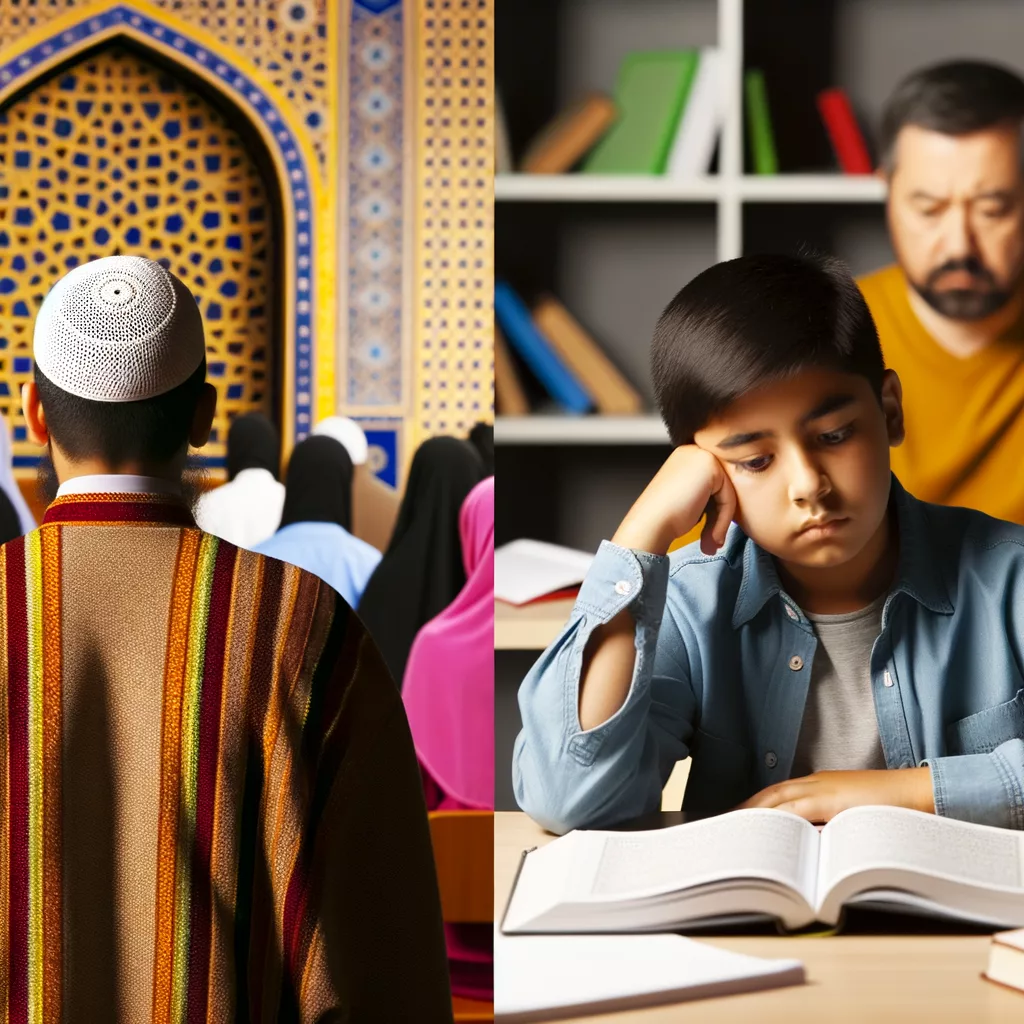
At the heart of every Muslim community there is a discreet yet essential presence: that of the imam. His voice rings out at dawn for the adhan, leads the Friday salat and accompanies the daily prayers. But behind the peaceful figure walking towards the mihrab, what do we really know about his role, his responsibilities and the expectations everyone places in him? Through the ages, from Mecca to Córdoba, from the quiet alleys of the Maghreb to the lively mosques of Europe and France, the figure of the imam embodies far more than a mere officiant of worship: he is the living heir of the prophetic tradition, the transmitter of the science of the Qur’an in Arabic, the link between the history of Islam and our daily lives.
Yet in a world where Islamic spirituality meets new challenges – secularism, Muslim identity, interfaith dialogue, young people in search of meaning – the role of the imam is renewed, and sometimes questioned. How does one become this spiritual guide, this teacher of aqida, this confidant in dhikr, this support during Ramadan, at the time of istikhara, at the bedside of the sick, or in the face of vulnerable young people? Why are mastery of literary Arabic and learning Arabic without translation more than ever the foundation of Islamic education and of understanding the Qur’an?
Far from reductive clichés, the imam’s journey begins with his immersion in Arabic, in listening to and memorising the Qur’an, the science of hadith, the sunna, and the sira of the Prophet ﷺ and his Companions. It is with patience, humility and gratitude to Allah that he cultivates his knowledge of tajwid, perfects his recitation of the Qur’an and deepens his understanding of tafsir. His commitment goes far beyond the walls of the mosque: he contributes to community life, advises couples and families, supports young people in Islamic education, answers everyday questions, keeps an attentive eye on Islamic solidarity, and encourages sincerity, modesty and patience in Islam.
This article invites you to step, little by little, into the reality of the imam’s role today. You will discover why Islamic education and learning Arabic are the beating heart of his mission, how he accompanies each person in the practice of Islam, prayer and spirituality, and why his place is at once a pillar of the community and a beacon for the soul. For being an imam means being the trustee of a heritage of knowledge, patience, listening and love of Allah, in the service of Muslim spiritual life and the well-being of all.
Why Islamic education and learning Arabic are at the heart of the imam’s role
Authentic Islamic education is naturally founded on learning Arabic, an essential skill at the heart of the imam’s role. To guide the Muslim community in understanding the Qur’an in Arabic, the hadiths, the sunna and the great questions of the practice of Islam, the imam must embody excellence in immersion in Arabic. It is not simply a matter of reciting the text during prayer in Islam or Friday prayer, but of conveying the deep meaning of the divine message, fostering khushu in prayer, and teaching the art of tajwid, the subtle science of hadith or the principles of Qur’anic tafsir without distortion, dilution or approximate translation. Understanding the Qur’an in literary Arabic is not optional; it is a necessity in order to access Islamic spirituality in its fullness, nourish Muslim spiritual life and strengthen the Muslim faith of every believer, from the youngest Muslim children to the elderly.
As an educator, the imam takes care to convey the beauty of reading the Qur’an, to encourage memorising the Qur’an in its original form, and to teach dhikr, Islamic supplications and du’a in the language of the Prophet, but also to reveal the deep link between the practices of Ramadan, Muslim festivals such as Eid al-Fitr and Eid al-Adha, the Hajj, the Umra and the context revealed in Arabic. This mastery of Arabic, acquired through a living approach to learning Arabic without translation, also allows him to introduce Muslim youth to the sira of the Prophet, the accounts of the Companions of the Prophet and the ahl al-bayt, the history of Islam, fiqh, aqida and the ethical values of Islamic civilisation. Through his example and his teaching, the imam invites balance, patience in Islam, sincerity in Islam, gratitude to Allah, love of the Prophet and the quest for spiritual well-being, an essential condition for a fulfilling spiritual routine. Thanks to his expertise, he sheds light on the everyday questions of Muslim families, from raising children in Islam to Islamic and social ethics, while combating racism and Islamophobia and promoting interfaith dialogue and Muslim identity within society.
Over time, the imam’s responsibility evolves, but his grounding in the mastery of literary Arabic remains. This linguistic and spiritual rootedness enables him to offer sound fatwas suited to the contexts of Muslims in France and elsewhere, to share the heritage of the great scholars of Islam and the Islamic universities, to pass on the richness of Islamic calligraphy and Islamic art, and to run the mosque’s Islamic library with full authenticity. Thus, placing the learning of Arabic at the heart of the imam’s training amounts to guaranteeing the preservation of faith, moral excellence (akhlaq), inner peace and the whole of Islamic culture, for a future rooted in the light of the Qur’an and the wisdom of the Prophet.
The imam, a spiritual guide between the practice of Islam, communal prayer and reading the Qur’an in Arabic
At the heart of the Muslim community, the imam embodies far more than a mere leader of prayer in Islam. He is a spiritual guide, the living link between the practice of Islam, performing the salat in congregation, and deepening faith through reading the Qur’an in Arabic. His mission begins before the faithful at Friday prayer, jumu’a, where he conveys not only the rulings of fiqh but also the warmth of Islamic spirituality. Through his example, he teaches humility, patience in Islam, sincerity in daily practice and gratitude to Allah, inviting balance of the heart and inner peace.
However, the imam’s guidance takes on its full dimension in the living transmission of the language of the Qur’an. He encourages, often with delicacy, the learning of Arabic, the indispensable key to understanding the Qur’an in Arabic, exploring tajwid in recitation and tasting the beauty of literary Arabic without going through translation. Through immersion in Arabic, he inspires young and old to immerse themselves in the word of Allah, to feel the power of dhikr, and to open up to the treasures of Qur’anic tafsir, the memorisation of verses, and the authentic Islamic supplications and du’a that the Prophet, peace and blessings be upon him, recited with fervour.
The imam also accompanies Muslim families on their journey: he introduces children to Muslim spiritual life, guides young people in understanding the hadiths and the sunna, and offers precious support at key moments – marriage in Islam, birth, funeral rites in Islam. Oral transmission, active listening and learning without systematically going through translation bring each person closer to the spirit of the Qur’an and the sira of the Prophet, the virtues of the Companions of the Prophet, and the exemplary conduct of the ahl al-bayt. Thus the imam never ceases to instil the love of Allah and love of the Prophet, awakening a sincere aspiration to a balanced spiritual routine of prayer, fasting in Islam and Islamic solidarity, in which every aspect of life finds its meaning in the light of the prophetic tradition and the Qur’anic message.
The imam’s responsibilities: passing on the sunna, the sciences of hadith and strengthening Muslim faith
One of the imam’s main responsibilities lies in the living transmission of the sunna and the sciences of hadith, to show the community the way to a solid and enlightened Muslim faith. Through his mastery of literary Arabic and his commitment to immersion in Arabic, the imam offers far more than a simple translation of the prophetic teachings: he conveys their deep essence, linking them directly to the authentic words of the Prophet and to the sira of the Prophet. This authenticity makes learning Arabic accessible to all, allowing every believer – beginner or advanced – to draw closer to the Qur’an in Arabic, to taste the reading of the Qur’an, to feel the beauty of tajwid and to be introduced to Qur’anic tafsir in its original context.
The imam also plays a founding role in rooting Islamic spirituality, constantly recalling the importance of dhikr, Islamic supplications and du’a, while valuing patience in Islam, sincerity in Islam and gratitude to Allah. Beyond the salat and Friday prayer (jumu’a), he develops in believers the capacity to experience khushu in prayer, that presence of heart essential to inner peace and spiritual well-being. Through teaching hadith and the sciences of hadith, the imam helps the Muslim community to distinguish what belongs to the authentic sunna, to recognise the sira of the Companions of the Prophet and the ahl al-bayt, and to understand the meaning of repentance in Islam (tawba) and the values of love of Allah, love of the Prophet and brotherhood.
His involvement in Islamic education goes far beyond the acquisition of knowledge: he accompanies Muslim youth, Muslim families and Muslim couples in the practice of Islam and in raising children in Islam. By fostering a deep understanding of the foundations of aqida and fiqh, and by passing on the history of Islam, Islamic culture and the great figures among the scholars of Islam – from the time of the Andalusian caliphate to contemporary scholars – the imam becomes a true bridge between generations, transmitting the universal values of Islamic civilisation. He embodies moderation (wasatiyya), a sense of community, Islamic solidarity and the wisdom needed to live in peace with oneself, with others and in society, while preserving a fulfilled Muslim identity capable of dialogue and kindness in the context of Islam in France.
The imam as a pillar of the Muslim community: listening, solidarity and the flourishing of spiritual life
The imam embodies far more than the role of leader during prayer in Islam. A true pillar of the Muslim community, he stands at the heart of collective life, where listening and solidarity blend with the flourishing of spiritual life. A reassuring presence at Friday prayer or in the daily routine of dhikr and salat, the imam interweaves the light of the Qur’an in Arabic with the warmth of an ear attentive to each person. Through his ability to welcome the concerns, small or large, of the faithful – whether a Muslim family worried about the Islamic education of its children, a young person seeking to understand the science of hadith, or an elderly person questioning patience in Islam and tawba – he unites and reassures.
His listening goes far beyond a simple legal answer or spiritual reminder; it is imbued with empathy and understanding, enlightened by his learning of literary Arabic and his mastery of Qur’anic tafsir or the sira of the Prophet. He often facilitates access to immersion in Arabic, subtly guiding those who wish to learn Arabic without translation, thus giving them the keys to feel the depth of Islamic supplications, the beauty of tajwid and the unique flavour of reading the Qur’an in Arabic. Through his sermons, his advice and his involvement during Ramadan, the Hajj or Islamic festivals such as Eid al-Adha, he awakens gratitude to Allah, strengthens Muslim faith and invites Islamic solidarity.
By opening the door to interfaith dialogue and providing a frame of reference on questions of racism or Islamophobia, he becomes a creator of social bonds and a guardian of inner peace in Islam. The imam instils the importance of a spiritual routine, of balance between knowledge and Islamic spirituality, of moderation in Islam, of community solidarity and mutual aid, while keeping a gentle watch over sincerity in Islam and the love of Allah. His example inspires Muslim youth in search of identity, Muslim couples building their future, and all those who wish to combine spiritual well-being and Islamic ethics amid the turmoil of contemporary society.
Through this discreet but constant presence, the imam weaves a fabric of brotherhood, sharing and trust. He helps each person advance on the path of spiritual fulfilment, develop patience in Islam, awaken dormant faith and restore meaning to everyday actions. The pillar he embodies is therefore made not of stone but of compassion and depth, bearing a light that illuminates the mosque as much as hearts, so that the Muslim community may advance together towards peace, knowledge and fulfilment.
Further reading: discover our training to become an Arabic teacher, or also read “Learning Arabic through calligraphy: running a spiritual workshop“.
Conclusion
At the heart of every mosque, the imam embodies far more than a mere leader of prayer: he is the attentive guardian of Islamic spirituality and of community bonds. His daily commitment reflects the depth of the responsibility that falls to him: conveying the beauty of the sunna, awakening love of the Qur’an in Arabic through reading it, memorising it, tajwid and Qur’anic tafsir, and fostering a living understanding of the hadiths and the sira of the Prophet, but also of the Companions and the ahl al-bayt.
In contemporary society, marked by diversity and challenges of identity, the imam remains the essential reference point around which Muslim spiritual life revolves. Thanks to his mastery of literary Arabic and his innovative teaching of Arabic without translation, he offers the faithful the unique opportunity to access the original meaning of the prophetic message directly. This living, unfiltered contact with the divine Word fosters a sincere, deep and luminous practice of Islam. This is where immersion in Arabic takes on its full meaning: it immerses young and old, Muslim children, couples, families and young people in the linguistic, cultural and intellectual richness of Islamic civilisation.
By leading prayer in Islam, the salat, dhikr, du’a and jumu’a, by overseeing the Islamic education of the youngest, and by guiding preparation for key stages such as marriage in Islam, the Ramadan fast, the Hajj or the Umra, the imam builds bridges between past, present and future. He enlightens hearts in patience, sincerity, gratitude to Allah, love of the Prophet and inner peace in Islam. Through his advice and his listening, he accompanies each person on the path of repentance, tawba, modesty and good conduct (akhlaq), and works to strengthen solidarity within the Muslim community, whatever the context – from Islam in France to the preservation of secularism and interfaith dialogue, from respect for Islamic rites and festivals to managing the social, economic and environmental challenges that shape the lives of Muslims today.
The role of the imam, rooted in Islamic tradition and open to contemporary reality, thus proves inseparable from learning Arabic, from the living transmission of the religious sciences and from rootedness in Islamic culture. Thanks to this subtle balance, every believer finds not only the reference points needed to practise Islam in today’s society, but also a gateway to the light and serenity of a faith renewed each day, at the heart of an umma united in diversity, mercy and the quest for meaning.



