
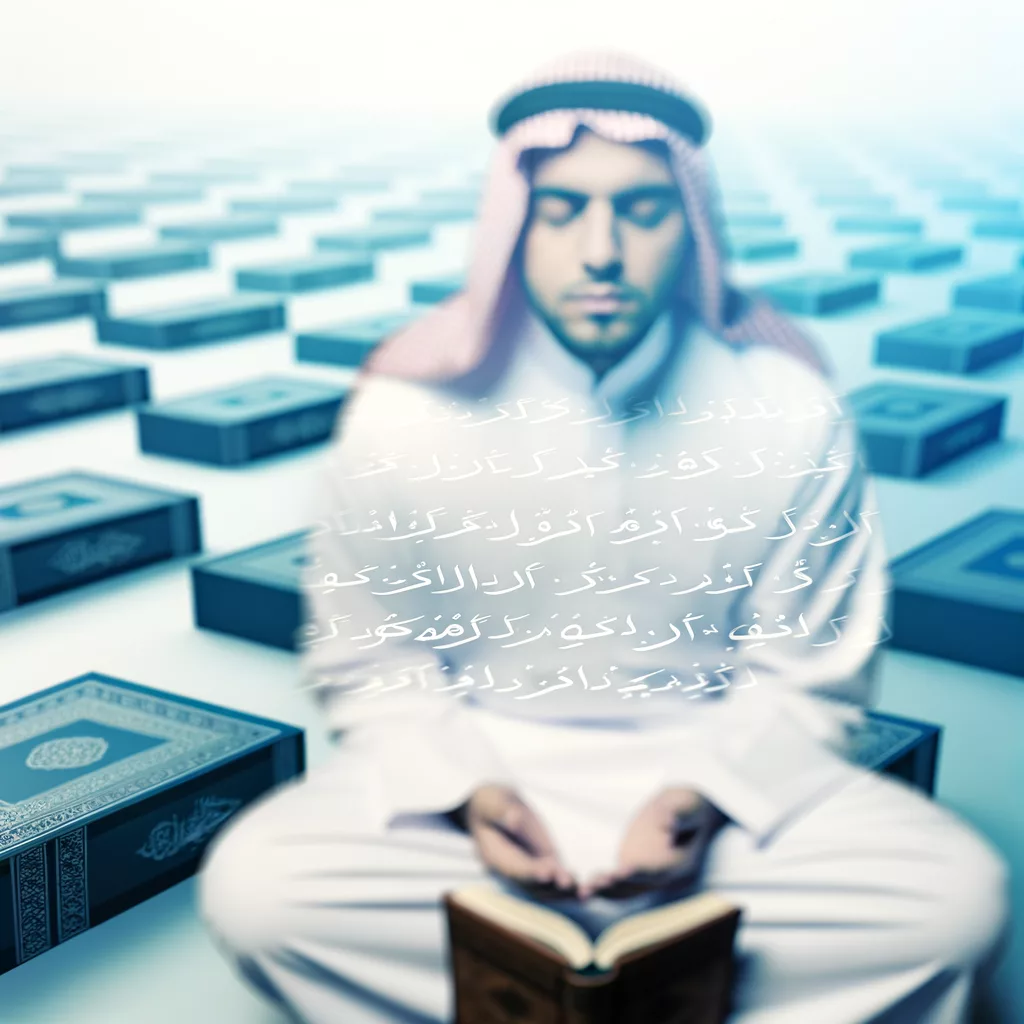
The modern world makes constant demands on us. Between daily responsibilities, social pressure and uncertainty about the future, everyone is looking for a refuge to soothe their heart and regain emotional stability. For many, this quest for serenity takes on a spiritual dimension, drawing on the age-old treasures of the Muslim faith. But have you ever felt the power of dhikr, the remembrance of Allah, when it is spoken in literary Arabic, like a secret whispered to the soul? Learning Arabic then becomes much more than a practical goal: it is the key to a return to deep inner peace, accessible in every prayer, every supplication and every verse of the Qur’an recited in its original language.
Dhikr in Arabic, far from being a mere repetition of words, acts like a beneficial wave through the mind and heart. It touches the vulnerable place that difficulties shake and brings lasting emotional stability, to the point of transforming our relationship with salat, patience in Islam, gratitude towards Allah or repentance (tawba). Understanding the Qur’an in Arabic, hearing it resonate through reading the Qur’an with tajwid, or immersing yourself in the commentary (tafsir of the Qur’an) without translation, means rediscovering a pure, living meaning in every word – an experience that classic methods struggle to provide.
In the Islamic tradition, from the time of the Prophet and the companions of the Prophet through to Sufism, du’a, dhikr and salat were lived first of all in their Arabic breath. It is this immersion in Arabic, without filter, that offers every generation a rampart against emotional storms. The science of hadith, the stories of the ahl al-bayt and the beauty of Islamic supplications resonate fully when they are understood, felt and spoken in the language of the divine message. Learning Arabic is thus no longer a mere skill: it becomes a path to true emotional stability and the rediscovery of spiritual well-being.
Let us set out together on this path, where literary Arabic – through dhikr and a living understanding of the Qur’an – proves to be a precious ally for cultivating inner peace and going through trials with strength, confidence and light.
Learning Arabic to live dhikr: the key to deep emotional stability
The quest for true emotional stability in the Muslim faith often begins with a deep understanding of dhikr, the unceasing remembrance of Allah that anchors the heart beyond the storms of modern life. Learning Arabic is not just an intellectual exercise; it is total immersion in the spiritual dimension of dhikr: grasping the beauty of subhanAllah, Alhamdulillah and Allahu Akbar with heart and mind, without filter or translation. When words spoken in literary Arabic resonate directly in the soul, the remembrance of Allah becomes the key to lasting calm, because it transcends language barriers and reaches the depths of one’s being.
Through learning Arabic and regular practice of dhikr in the original language, every supplication, every du’a and every memorised verse of the Qur’an in Arabic sinks into the emotional memory. This authentic connection creates a solid emotional anchor: attentive listening to the Qur’an during Ramadan or applying tajwid while reading not only refines pronunciation, but awakens a presence, a khushu in prayer that mere translation cannot convey. Thanks to immersion in Arabic, dhikr stops being a mechanical repetition; it becomes once more a living art, a science of the heart, inspired by the sunna and lived as a family tradition, passed on to Muslim children during the Islamic festivals or in moments of gratitude towards Allah.
This art of remembering Allah through mastering Arabic without translation offers a refuge from stress and strengthens patience in Islam. When the words of the Prophet, the authentic hadiths told in their original language, or the supplications drawn from the sira of the Prophet and the companions of the Prophet take on their full depth, emotional stability becomes a natural fruit of faith. The richness of Qur’anic vocabulary, the subtle nuances of the tafsir of the Qur’an, and the emotion of dhikr at the mosque or at home create an inner fortress: every difficulty of daily life then resonates differently, inviting sincerity in Islam, gratitude and tawba, repentance, lived in the light of divine words truly understood.
In the end, learning Arabic and Islamic culture through the immersive method not only lets you understand the Qur’an and perfect your prayer in Islam, but also lets you taste spiritual well-being, savour your Muslim identity and weave deep bonds with the Muslim community. Dhikr, lived in its original language, then becomes an inexhaustible source of well-being, inner peace and emotional stability, a balm for the soul accessible to all who embrace immersion in Arabic as a path of transformation.
Immersion in Arabic and dhikr: finding inner peace without translation
Learning Arabic, when it is lived through immersion, opens a unique door to taste the depth of dhikr – the remembrance of Allah that can calm inner storms and anchor the Muslim faith in the quietude of the heart. Many people experience, often without realising it, a split between the daily practice of Islamic supplications and an understanding of their deep meaning. Yet every word of dhikr, every breath of reading the Qur’an in Arabic, every subtlety of tajwid carries a scent of eternity that reveals itself when you approach the language without filter, without translation. Immersion in Arabic thus allows you, far beyond simply acquiring vocabulary, to absorb the sacred rhythm, the original musicality and the emotion contained in the words handed down from the Prophet and his companions.
By reciting the Qur’an in literary Arabic, practising tajwid in prayer, or murmuring the morning and evening du’as, the mind frees itself from the distance of translation to plunge back into the source. It is no longer just about performing a rite, but about living a direct experience of Islamic spirituality, cultivating khushu in prayer, that presence of heart sought during salat and strengthened at jumu’a. In learning Arabic through immersion, you gradually feel inner peace settle in: the words of repentance in Islam, gratitude towards Allah or patience in Islam stop being foreign and become familiar, comforting daily companions.
This direct access to the language of the Qur’an also makes it easier to memorise the Qur’an, meditate on the sunna, understand the tafsir of the Qur’an and discover the science of hadith, without the meaning being distorted or impoverished by passing through another language. Muslim children, like young people or adults seeking spiritual renewal, then benefit from a rooted and living Islamic education, where dhikr becomes a source of emotional stability and spiritual well-being, and an essential milestone in the routine of the Muslim family. Reading the history of Islam in Arabic, connecting with the sira of the Prophet, drawing inspiration from the wisdom of the ahl al-bayt or the scholars of Islam: all this builds a strong Muslim identity, a direct link with Islamic civilisation, and an Islamic culture lived from within.
Ultimately, living dhikr through immersion in Arabic without translation means recovering the authenticity of your relationship with Allah, feeling the deep peace that is born the moment meaning springs forth in the sacred language. It means offering your soul lasting inner peace, purifying your thoughts, and walking sincerely in the practice of Islam, whatever the outward circumstances, doubts or turbulence of society. Dhikr practised in this way, in the original language of the Qur’an, becomes for the Muslim an intimate refuge, a breath of mercy, rooted in memory, vibrant in every prayer, and gradually weaving the fabric of a peaceful life.
Understanding the Qur’an in Arabic: dhikr as a source of spiritual and emotional well-being
Understanding the Qur’an in Arabic, through real immersion in Arabic and learning Arabic without translation, turns dhikr into a deep and continuous source of spiritual and emotional well-being. When we engage our heart and mind in reading the Qur’an in literary Arabic, every word resonates with a power and gentleness that translation cannot restore. Dhikr, which consists of remembering Allah through His Names, His Words and His teachings, then takes on a living dimension: the verses become intimate companions in the practice of Islam, not mere translated words but realities lived inwardly.
Direct access to the Qur’an in Arabic, without an intermediary, lets you taste the beauty of tajwid and deepen the meaning through the tafsir of the Qur’an and knowledge of the sunna, the hadiths and the sira of the Prophet. This immersive approach nourishes khushu in prayer (salat), awakens gratitude towards Allah and love of the Prophet, and offers emotional stability in the face of trials thanks to the patience taught in the verses. Memorising the Qur’an, or simply reciting it in its original language, creates a soothing spiritual routine, where meaning, musicality and intention come together to ease tensions, erase anxiety and strengthen the Muslim faith.
In daily life, this direct bond with the Word of Allah acts as an inner refuge: even in times of stress, reading the Qur’an or repeating the formulas of dhikr settles into consciousness, offering a haven of inner peace and spiritual well-being. It is then that Islamic spirituality, in all its richness – from the Friday prayer to preparing for Ramadan, from patience with difficulties to gratitude during the Islamic festivals such as eid al-fitr or eid al-adha – comes to life, strengthened by the power of the Arabic language. Learning Arabic thus becomes a path to emotional balance, a way to reconnect with the living tradition of the companions of the Prophet, the ahl al-bayt, and the great Muslim community throughout history and Islamic civilisation. Understanding the Qur’an in Arabic means finding in dhikr the source of a deep serenity, an intimate joy and a renewed trust in the mercy of Allah.
From the Qur’an to daily life: bringing dhikr and literary Arabic together to cultivate serenity
When dhikr – the remembrance of Allah with the heart and the tongue – takes root in daily life, its power is multiplied by a deep connection with literary Arabic. Every word of the Qur’an recited, every supplication (du’a) spoken, every formula of gratitude towards Allah becomes a living act, carrying light and peace. To get there, learning Arabic is not a mere academic exercise: it is a key that opens the hidden meaning of the Qur’an in Arabic, the sunna and the hadiths, and also of the supplications handed down for generations, from the companions of the Prophet to our own day. Immersion in Arabic, far from word-for-word translation, lets you taste dhikr at its source and feel the gentleness of words such as As-Salam (Peace) or Ar-Rahman (the Most Merciful), which act as balms for the heart and soul.
Bringing dhikr into your daily routine means weaving a living bond, in every moment, between Islamic spirituality and modern reality. Whether it is prayer in Islam (salat), remembering Allah on the metro or in the silence of a Ramadan night, understanding the meaning of supplications in Arabic without translation gives the simplest acts back their full transformative power. Memorising the Qur’an, together with tajwid, invites perfect pronunciation and heightened inner listening that calms the turmoil of the mind. Moments of stress and uncertainty find balance through the rhythm of dhikr and the revealed words, which carry patience in Islam, sincerity, trust and moderation (wasatiyya). The tafsir of the Qur’an and the science of hadith shed light on the deep meaning of the passages recited, allowing you to apply their teachings with intelligence and love of Allah in Muslim married life, children’s education and relationships with the Muslim community.
By exposing yourself naturally to literary Arabic through reading the Qur’an, practising dhikr, listening to the adhan at the mosque or talking with scholars of Islam, your practice of Islam is shaped after the spirituality of the first Muslims. Learning Arabic through immersion thus becomes an art of living that breathes serenity and inner peace (inner peace in Islam) into every choice, every trial and every celebration, from the Friday prayer to eid al-fitr and eid al-adha. So every bead of the prayer beads, every verse whispered in contemplation, every word of the Prophet becomes, for anyone who understands Arabic without barriers, a direct source of emotional stability and of anchoring in the mercy of Allah.
Further reading: discover our programme for learning to read Arabic (adults), or also read “Learning Arabic and making du’a for success in your studies and career” and “Learning Arabic to memorise the Qur’an for the long term“.
Conclusion
Learning Arabic opens an inner sanctuary, a dwelling where dhikr takes on its full depth. When the word of Allah in Arabic, in its original beauty, unfolds to the rhythm of breath and awareness, it gradually shapes the emotional stability and inner peace so sought after in modern life. Immersion in Arabic, without the barrier of translation, allows every believer to absorb the living, vibrant meaning of supplications, du’a and the verses of the Qur’an. It transforms Islamic spirituality, the practice of Islam, and even the daily life of the Muslim couple, the Muslim family and Muslim children.
Understanding the Qur’an in Arabic, memorising the Qur’an with the rules of tajwid, or contemplating the tafsir of the Qur’an and the science of hadith broaden the horizon of dhikr. Every word, every supplication, every account from the sunna, the companions of the Prophet or the ahl al-bayt becomes a support in moments of stress, sadness or doubt, recalling patience in Islam, gratitude towards Allah, love of Allah and love of the Prophet. So learning Arabic is not just acquiring a language; it is a journey to the heart of the Muslim faith, a reunion with the living tradition of Islamic civilisation, from the Andalusian caliphate to the wisdom of Sufism.
Bringing dhikr into every act – from prayer in Islam (salat, khushu in prayer, Friday prayers or jumu’a) to fasting in Islam, from Ramadan to the night of laylat al-qadr, from the adhan resounding in the mosque to reading a page of the Qur’an in Arabic – means offering the soul deep emotional stability. It means finding, in the spiritual routine and sincere practice, the strength of tawba (repentance), inner peace in the face of trials, the light of moderation (wasatiyya) and the serenity that lights up daily life.
On this path, learning Arabic becomes an act of love for tradition and Islamic spirituality, a renaissance for community life, a key to dialogue with the past and the future, and a source of a calm, confident and open Muslim identity. Diving into literary Arabic, without an intermediary, means choosing to live dhikr in the intimacy of the soul, and to embody spiritual well-being and emotional stability. Where words become light, there is born the inner peace that Islam promises to whoever walks patiently on the path of remembrance, faith and awakening.



